On March 12, 2026, the landscape of local commerce changed forever. Google officially integrated Gemini into its core navigation product, launching Ask Maps. This wasn’t just a UI update; it was a fundamental shift from a list-based directory to a conversational discovery engine. For growth leads and marketers, the 2026 reality is stark: legacy local SEO methods that relied on keyword stuffing and proximity are no longer enough. To survive, brands must pivot to an AI local marketing strategy that prioritizes entity trust and intent alignment over mere location.
The New Conversion Benchmark: 14.6% vs. 1.7%
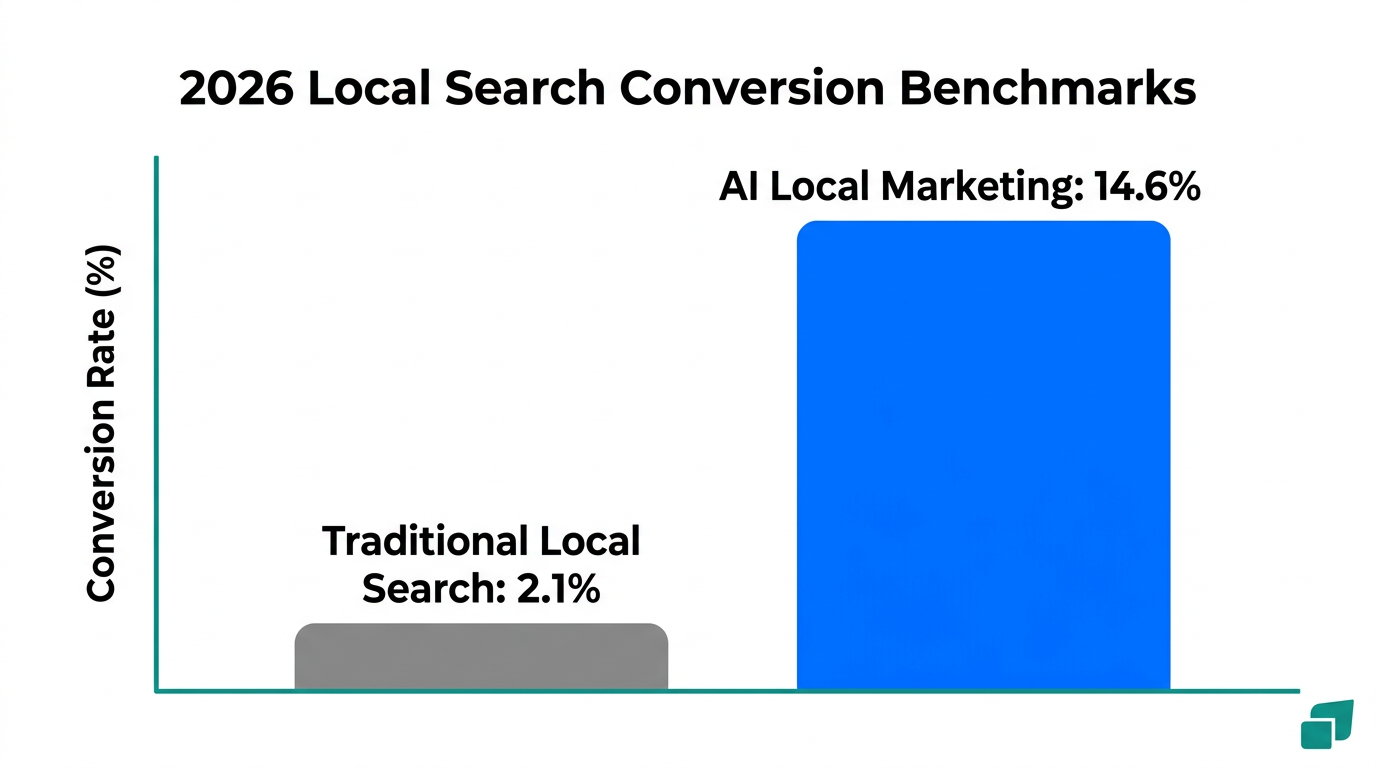
The most compelling reason to pivot your strategy is the sheer performance gap. According to research by SEOmator, AI-driven local SEO strategies are achieving a 14.6% conversion rate. In comparison, legacy SEO methods have plummeted to a meager 1.7% conversion rate. This performance delta exists because AI discovery tools like Ask Maps do the heavy lifting for the consumer—vetting options against complex, multi-condition queries before presenting a recommendation.
Furthermore, the global "AI in Marketing" market is projected to reach $217.33 billion by 2034, with a massive acceleration starting this year, as reported by Precedence Research. As of early 2026, 92% of businesses have already integrated or are planning significant investments in Generative AI for their marketing stacks, according to the Digital Marketing Institute. If your business isn't optimized for these conversational interfaces, you aren't just losing rank; you're becoming functionally invisible to 2 billion monthly Google Maps users.
"AI local discovery is 30x more challenging than traditional ranking. It evaluates 7 trust factors including entity verification and structured content quality." — Naveed Ganatra, AI Search Specialist
Understanding the 'Citation Premium'
In the pre-AI era, a click was the primary unit of value. In 2026, the goal is the Citation Premium. When a brand is cited directly within a Google AI Overview or an Ask Maps response, its organic click-through rate (CTR) is 35% higher than a standard organic link, according to data from SEOmator. This occurs because the AI acts as a trusted intermediary, effectively pre-selling the user on your business before they even visit your website.
This shift has led to the rise of "agentic" platforms like Birdeye, which use AI-employee workflows to manage reputation and messaging automatically. For multi-location brands, maintaining this citation premium requires a level of data accuracy that manual workflows can no longer sustain. Tools like Semrush Local now offer specialized AI Visibility Toolkits specifically designed to track how LLMs perceive and cite your business entities.
From Proximity-Based Ranking to Intent Alignment
For a decade, local SEO was simple: be the closest relevant business to the user. In 2026, the algorithm has evolved toward Intent Alignment and Entity Trust. Users no longer type "Coffee shop Austin"; they ask Gemini: "Find a quiet coffee shop with fast Wi-Fi and a latte that isn't too sweet."
To answer this, Google's Places API now relies on what are known as Atmosphere SKUs. These include granular details like price level, amenities, and even the "vibe" of a location. If your Google Business Profile (GBP) lacks 100% attribute completion—down to wheelchair accessibility and dog-friendliness—you are excluded from the high-value Enterprise-level search calls Gemini makes to build its answers, as noted by Nicola Lazzari.
| Feature | Traditional Local SEO | AI Local Marketing (2026) |
|---|---|---|
| Input | Keywords (e.g., "Plumber NYC") | Natural Language (e.g., "Who can fix my sink today?") |
| Main Factor | Proximity & Star Rating | Intent Alignment & Entity Trust |
| Discovery | List-based (3-Pack) | Contextual (Ask Maps Recommendations) |
| Strategy | Citation Volume | Review Specificity & Attribute Accuracy |
Managing the Risk of 'Geographic Hallucinations'
While the rewards of AI local search are high, the risks are equally significant. Geographic hallucinations remain a major hurdle for brand safety. Research from Novum World indicates a 38.6% chance that AI-generated geographic data contains inaccuracies, such as non-existent roads or incorrect business hours.
Furthermore, businesses are now facing defamation liability from AI errors. In a landmark 2025 case reported by the Economic Times, a solar company successfully sued after an AI summary falsely claimed the business was facing fraud litigation. Protecting your brand in 2026 requires "listing locks" found in tools like Local Viking, which prevent AI or competitors from suggesting unauthorized edits to your core data.
"The 'Pizza Glue' legacy proves that AI can still provide dangerous local advice. Your data must be the source of truth, or the AI will fill in the gaps with fiction."
Ask Maps vs. OpenAI's SearchGPT: The Local Discovery War
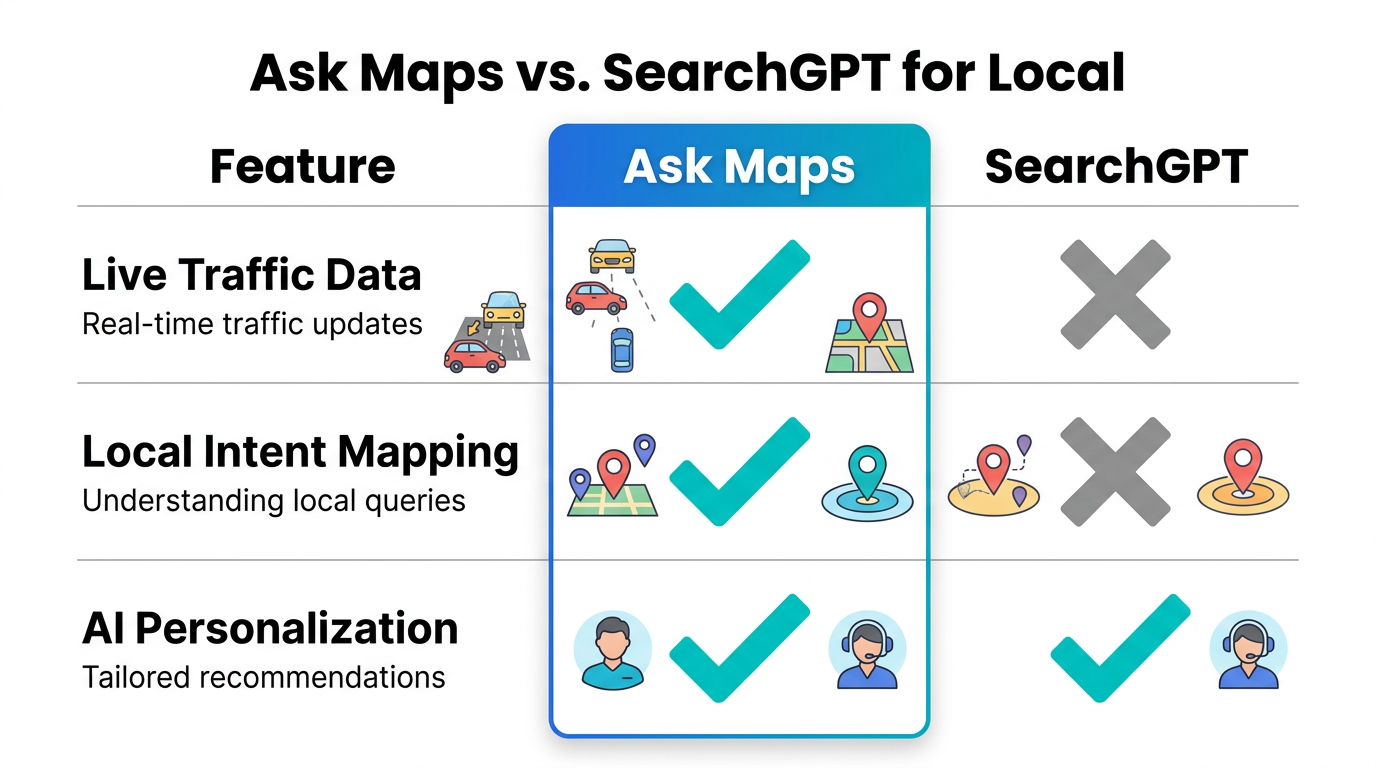
While Google dominates the utility-based search market, OpenAI's SearchGPT has emerged as a primary threat for "opinion-based" discovery. SearchGPT is often the preferred choice for users asking queries like "Where's the trendiest brunch spot for a birthday?" because it synthesizes social sentiment more aggressively than Maps.
However, Google’s Immersive Navigation, which uses 3D tiles and landmark-based voice guidance (e.g., "Turn left after the blue Starbucks"), provides a utility that SearchGPT cannot yet match, as highlighted by MacRumors. To compete in both ecosystems, brands must leverage high-quality User-Generated Content (UGC). Sourcing authentic video reviews through platforms like Stormy AI provides the "semantic proof" that both Gemini and SearchGPT use to verify a business's real-world popularity and atmosphere.
The 2026 Local Dominance Playbook
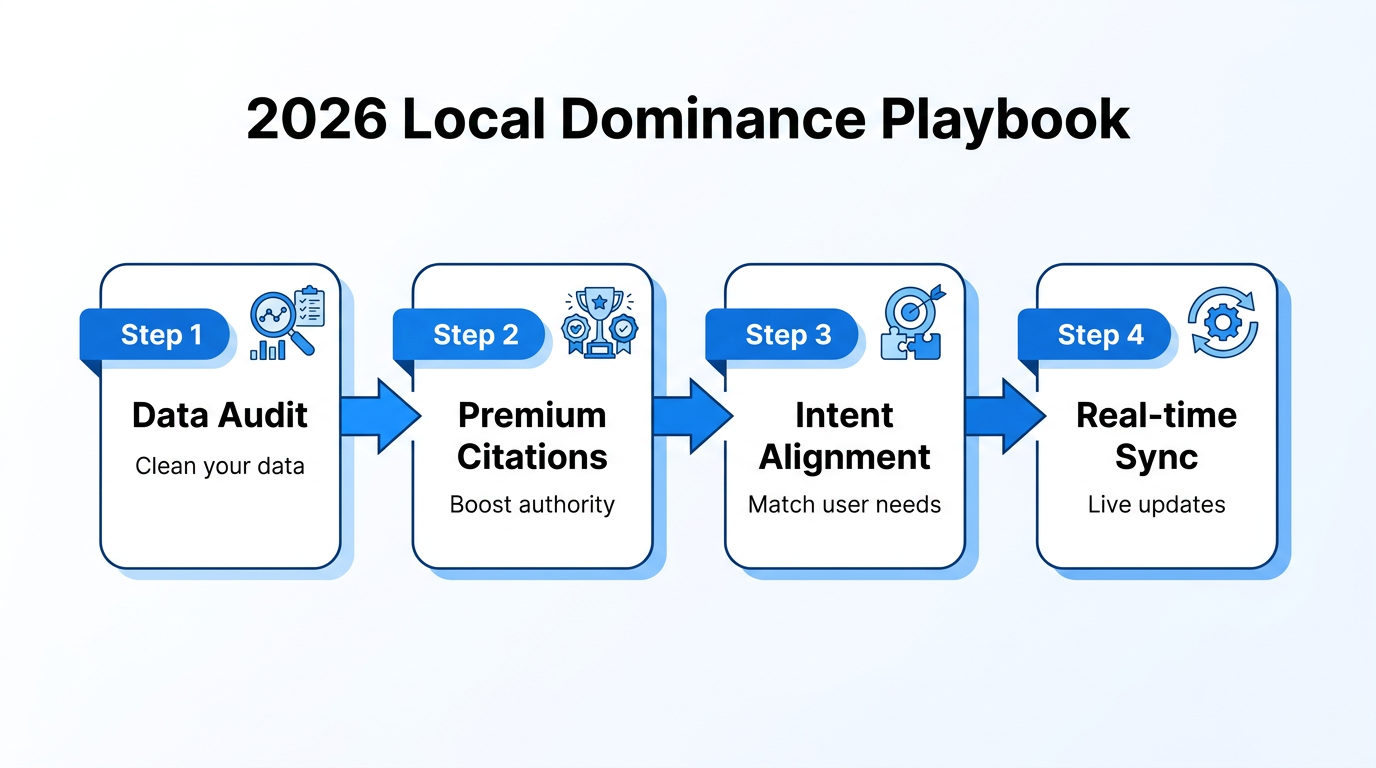
To "Own Any Local Market" in 2026, practitioners are following an 8-step blueprint developed by Mention First AI. This playbook moves away from backlink building and toward active entity management.
Step 1: Profile Integrity
Ensure 100% field completion on your GBP. Thin profiles are functionally invisible to Gemini's 2026 reasoning engine. Use the Google Places API update to check how your data is categorized across Essentials, Pro, and Enterprise tiers.
Step 2: Signals of Activity
Post 1–2 updates per week to your GBP. This provides "Proof of Life" to the algorithm. AI tools like Localo can automate these tasks by generating smart, localized content updates.
Step 3: Visual Proof and 3D Assets
Upload weekly "Before & After" photos or interior videos. AI now "reads" images to confirm your services. If you are a restaurant, 3D photos of your interior are essential for ranking in Immersive Navigation.
Step 4: Keyword-Rich Reviews
Encourage customers to include the service and suburb in their text. A review saying "Best HVAC repair in Nashville" is now more valuable than 50 generic five-star ratings. This is where Stormy AI can help by connecting you with local creators who can produce authentic, keyword-rich video testimonials that search engines prioritize.
Step 5: Rapid Response Speed
Respond to all reviews within 24 hours. In 2026, response speed is a high-engagement metric. Brands using AI agents to handle reputation management see significantly higher visibility in Ask Maps results.
Step 6: Location-Specific Landing Pages
Create suburb-specific pages (400–700 words) on your site using tools like Leverage Local. These pages pass geographic relevance back to your GBP, acting as an anchor for the AI to verify your physical presence.
Step 7: Schema Markup Mastery
Use Local Business Schema to let your website "talk" to the Google Maps API. This technical layer ensures that the Atmosphere SKUs correctly reflect your business's current status and offerings.
Step 8: The Conversational Audit
Run test queries in Ask Maps. If you ask, "Where can I work for 3 hours with a dog?" and your business doesn't appear despite being a dog-friendly cafe, your attributes are misaligned. Use Local Dominator to visualize your geo-grid ranking and identify conversational gaps.
Conclusion: The Future is Conversational
The 2026 local search shift isn't just another algorithm update; it's a total reimagining of how humans interact with their environment. By focusing on Ask Maps ROI and moving beyond legacy SEO, businesses can capture the 35% Citation Premium that defines market leaders today. Whether you are using BrightLocal for citation auditing or Stormy AI to generate the social proof needed to build entity trust, the message is clear: optimize for the conversation, or be left off the map.