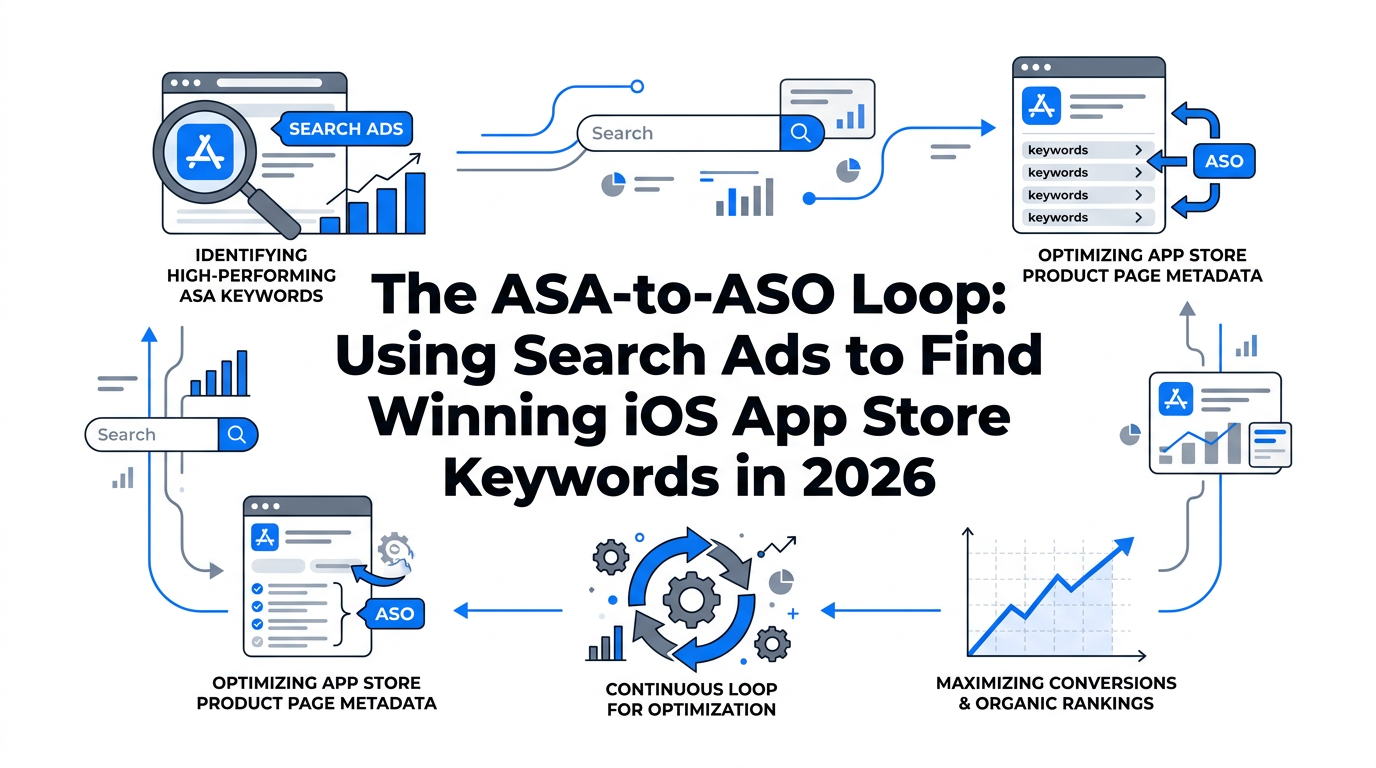
In 2026, the App Store is more crowded than ever, with roughly 2.0 million apps vying for user attention. While high-budget marketing campaigns can drive short-term spikes, the long-term survival of an iOS app depends on one metric: search visibility. Statistics from Apple Developer resources show that approximately 65% to 70% of all App Store downloads originate from organic search queries. However, guessing which iOS App Store keywords will drive downloads is a recipe for wasted budget. The most successful developers today use the "ASA-to-ASO Loop"—a strategy where Apple Search Ads (ASA) act as a laboratory to identify high-converting terms before they are cemented into organic metadata.
Understanding the 2026 SAP Score Shifts
To master ASO keyword research in 2026, you must understand how Apple reports Search Ads Popularity (SAP) scores. SAP scores range from 5 to 100, providing a proxy for search volume. However, recent shifts in Apple’s API reporting have changed the game. Many keywords that were previously considered "medium" traffic (20–40 SAP) are now showing as a flat "5" unless they meet a much higher traffic threshold—typically an SAP of 35 or higher. This means that relying solely on static keyword tools can lead to missing out on "invisible" long-tail app keywords that still drive significant, high-intent traffic.
The Discovery Campaign Playbook: Mining for Long-Tail Gold
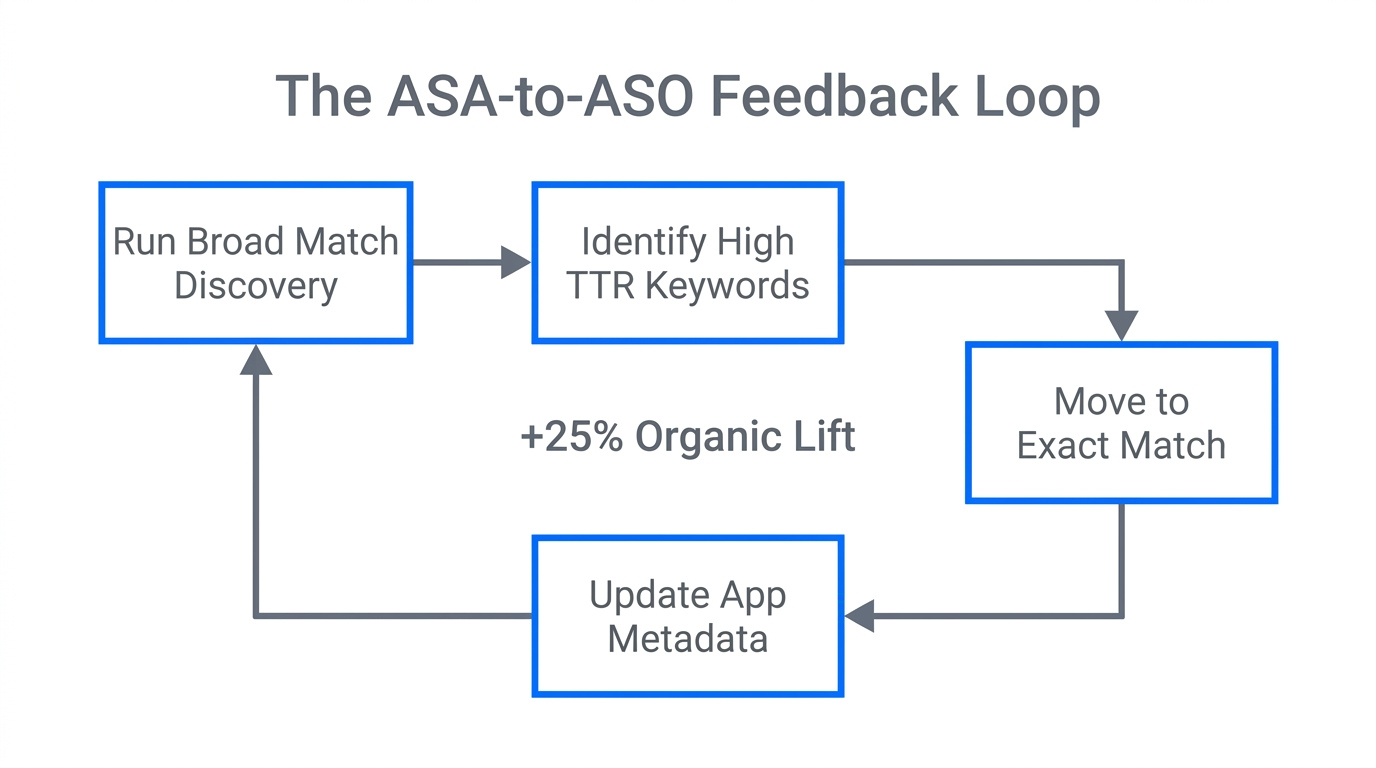
The core of the ASA-to-ASO loop is the Discovery Campaign. Unlike "Exact Match" campaigns where you target specific words, a discovery campaign uses Apple’s "Search Match" feature to automatically show your ads for relevant queries you haven't even thought of yet. This is the most effective Apple Search Ads strategy for uncovering user intent in 2026.
"The goal of a discovery campaign isn't volume—it's intelligence. You are paying Apple to tell you exactly what users type when they want an app like yours."
Step 1: Setting Up the Laboratory
Create a new campaign in your Apple Search Ads dashboard specifically for discovery. Enable Search Match and use Broad Match on a few of your core category terms. This allows Apple’s algorithm to explore "semantic clusters"—grouping keywords like "meditation" with "mindfulness" or "anxiety relief" based on user behavior rather than just text matching.
Step 2: Identifying the ROI Flip
After running your discovery campaign for 2-4 weeks, export the search term report. Do not just look at the Click-Through Rate (CTR). Focus on the Conversion Rate (CVR) and Cost Per Install (CPI). This is what we call the "ROI Flip." A keyword might have a high search volume, but if it doesn't result in an actual install, it shouldn't be in your organic metadata. Conversely, long-tail app keywords with low volume but 40%+ conversion rates are your most valuable assets.
Hierarchical Metadata: Where to Place Your Winners
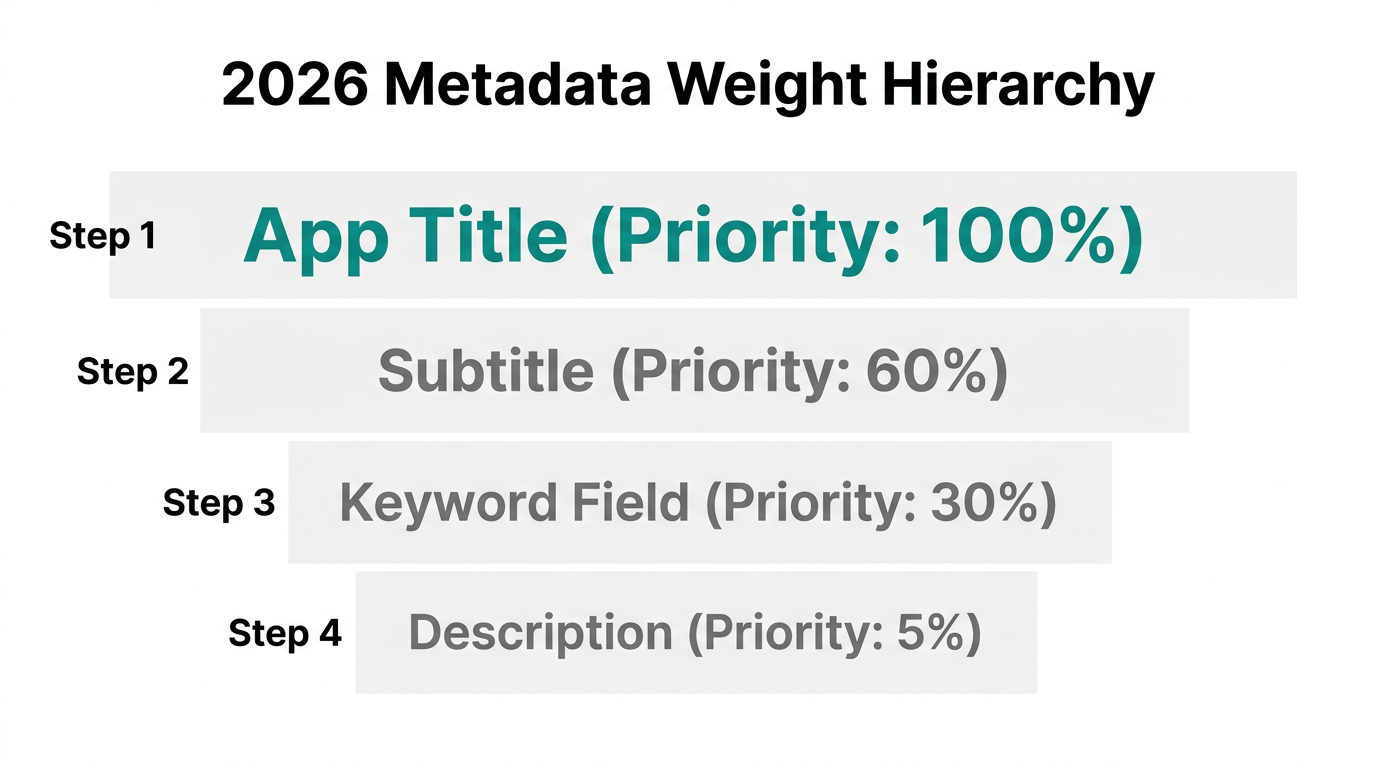
Once you’ve identified your winning keywords through ASA, you need to update your organic metadata. Experts at App Radar suggest a hierarchical approach based on the "weight" Apple’s algorithm gives to different fields.
| Field Name | Char Limit | Weight | Strategy for 2026 |
|---|---|---|---|
| App Title | 30 | Highest | Include your primary high-converting keyword. (e.g., "Calm: Meditation & Sleep"). |
| Subtitle | 30 | High | Focus on secondary keywords and your unique value proposition. |
| Keyword Field | 100 | Medium | Hidden from users. Use for variations, long-tail terms, and localized keywords. |
According to research from Dotcominfoway, a title containing a keyword can increase rankings by up to 10.3%. To maximize this, avoid repeating words across different fields. If "Fitness" is in your title, do not put it in your keyword field; Apple automatically combines these terms to create permutations.
AI-Generated Metadata and Competitor Sentiment
In 2026, manual keyword research is being replaced by AI-driven analysis. Advanced tools now use Large Language Models (LLMs) to scan thousands of competitor reviews to identify high-intent phrases. For example, if users consistently complain that a competitor app is "too expensive for students," you can test the keyword "affordable fitness tracker" in your ASA discovery campaign. Platforms like Neoads.tech allow you to automate this sentiment analysis, turning competitor weaknesses into your keyword strengths.
When you are sourcing User-Generated Content (UGC) or influencer partnerships through Stormy AI, pay close attention to the vernacular these creators use. The way a TikTok creator describes your app’s "vibe" is often exactly what their followers will type into the App Store search bar. Integrating these organic "creator phrases" into your ASA testing loop is a pro-level move for 2026.
"2026 is the year of semantic search. Stop optimizing for bots and start optimizing for the way people actually talk to their phones."
Seasonal Keyword Management: The 4-6 Week Cycle
A common mistake in ASO keyword research 2026 is the "set-it-and-forget-it" mentality. The App Store is a dynamic marketplace. Consumer intent shifts every few weeks based on seasons, holidays, and cultural trends. For instance, a fitness app should shift metadata toward "New Year Resolution" in late December, and toward "Beach Body" in May.
Successful developers update their metadata every 4 to 6 weeks. This cycle should always begin with an ASA test. Before changing your organic subtitle to "Back to School Organizer," run that phrase as an Exact Match in ASA to ensure it actually converts. If the CPI is too high, you’ve saved yourself a month of poor organic performance.
The Impact of Creative Indexing
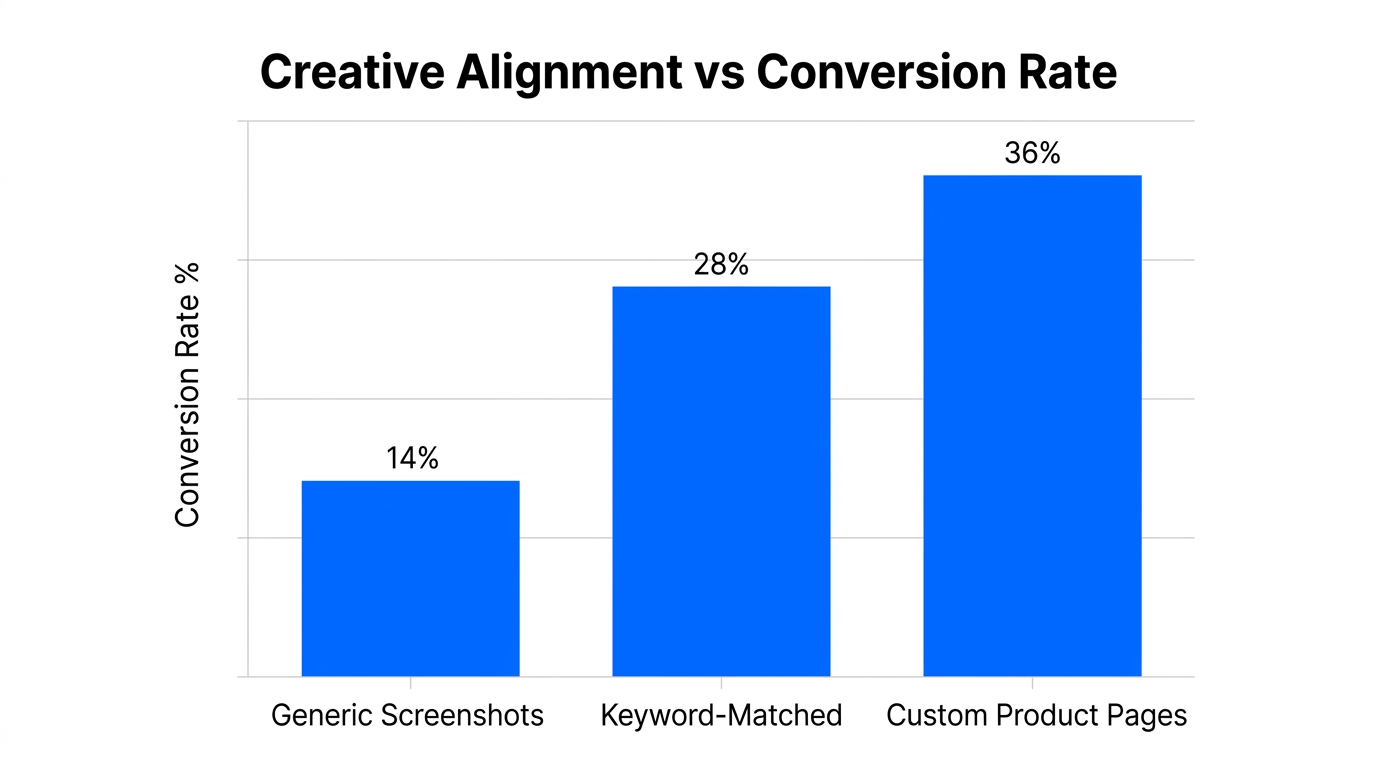
One of the most significant trends noted by experts at App Guardians is that Apple’s algorithm is increasingly indexing text within screenshots. Your creative assets are no longer just for conversion; they are part of your discoverability signal. If your screenshots prominently feature the text "No-Equipment Home Workout," Apple may associate your app with that search query even if it isn't in your metadata. This makes the synergy between your app acquisition strategy and your creative production team more critical than ever.
Top ASO & ASA Tools for 2026
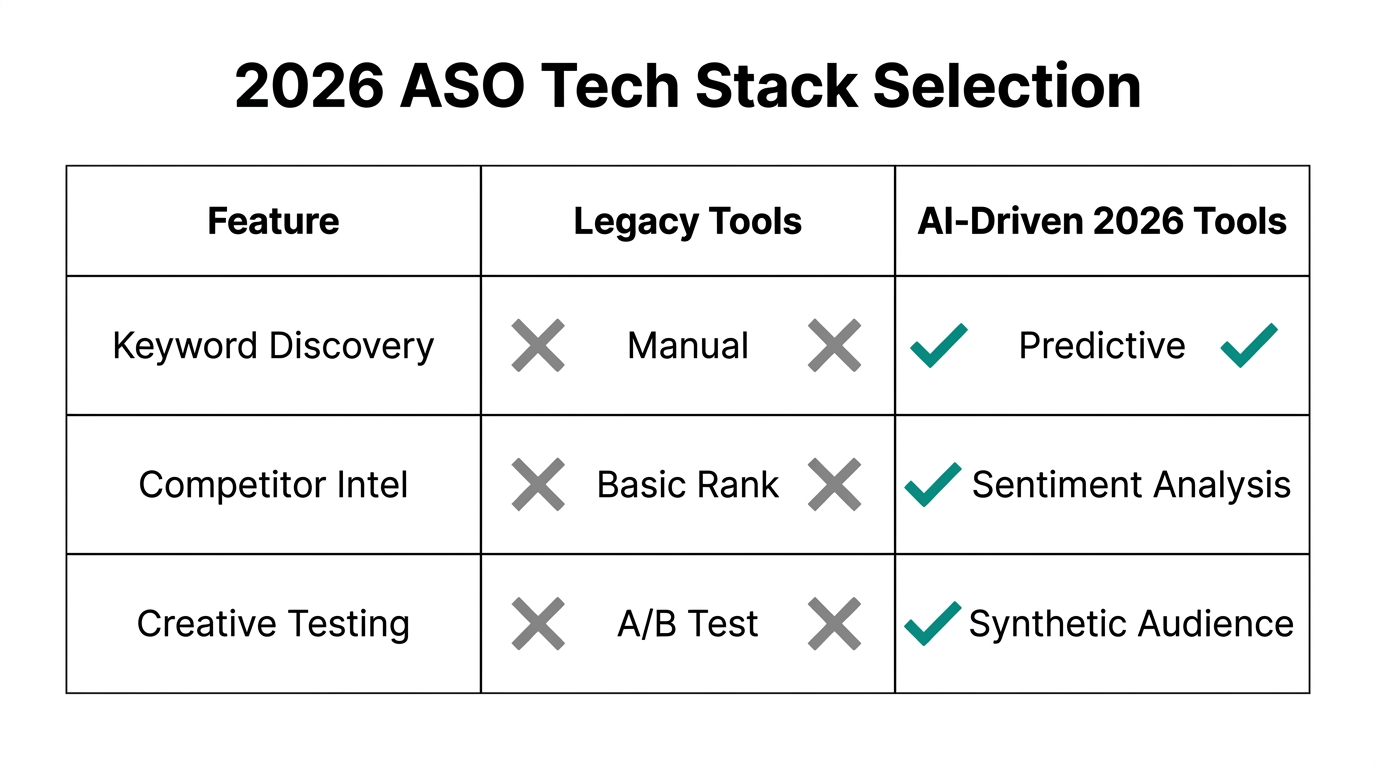
To execute this loop effectively, you need a modern tech stack. Here are the tools leading the market this year:
| Tool | Primary Strength | Use Case |
|---|---|---|
| AppTweak | ASA Intelligence | Spying on competitor ad spend and keyword bids. |
| ASO.dev | Real-time Monitoring | Tracking SAP score volatility and algorithm shifts. |
| SplitMetrics | A/B Testing | Optimizing CPPs and screenshots for specific keywords. |
| MobileAction | Keyword Tracking | Monitoring organic rank history across 100+ countries. |
| Stormy AI | Influencer Discovery | Finding creator-led keywords and vernacular for ASA testing. |
Conclusion: Building Your Sustainable Growth Engine
The ASA-to-ASO loop is not a one-time task; it is a continuous growth engine. By using Apple Search Ads to identify winning iOS App Store keywords, you remove the guesswork from your organic strategy. Remember to prioritize conversion over volume, update your metadata every 4-6 weeks, and leverage AI tools to stay ahead of competitor sentiment. In a market where 70% of users find their next favorite app through search, your ability to master this loop will be the difference between scaling to the top of the charts or getting lost in the noise of 2 million apps. Start your next discovery campaign today, find your high-intent long-tail keywords, and turn those paid insights into organic dominance.