In the traditional world of asset management, research is a proprietary secret locked behind high-priced paywalls and mahogany doors. For decades, the industry operated on the belief that information was the ultimate moat. But Cathie Wood, founder of ARK Invest, flipped the script. By treating financial research not as a product to be sold, but as a content distribution strategy to be shared, she built a brand with nearly $40 billion in assets under management. This shift represents more than just a change in investment style; it is a masterclass in brand building for founders within the modern creator economy.
The Death of the 1970s 'Closed-Door' Research Model
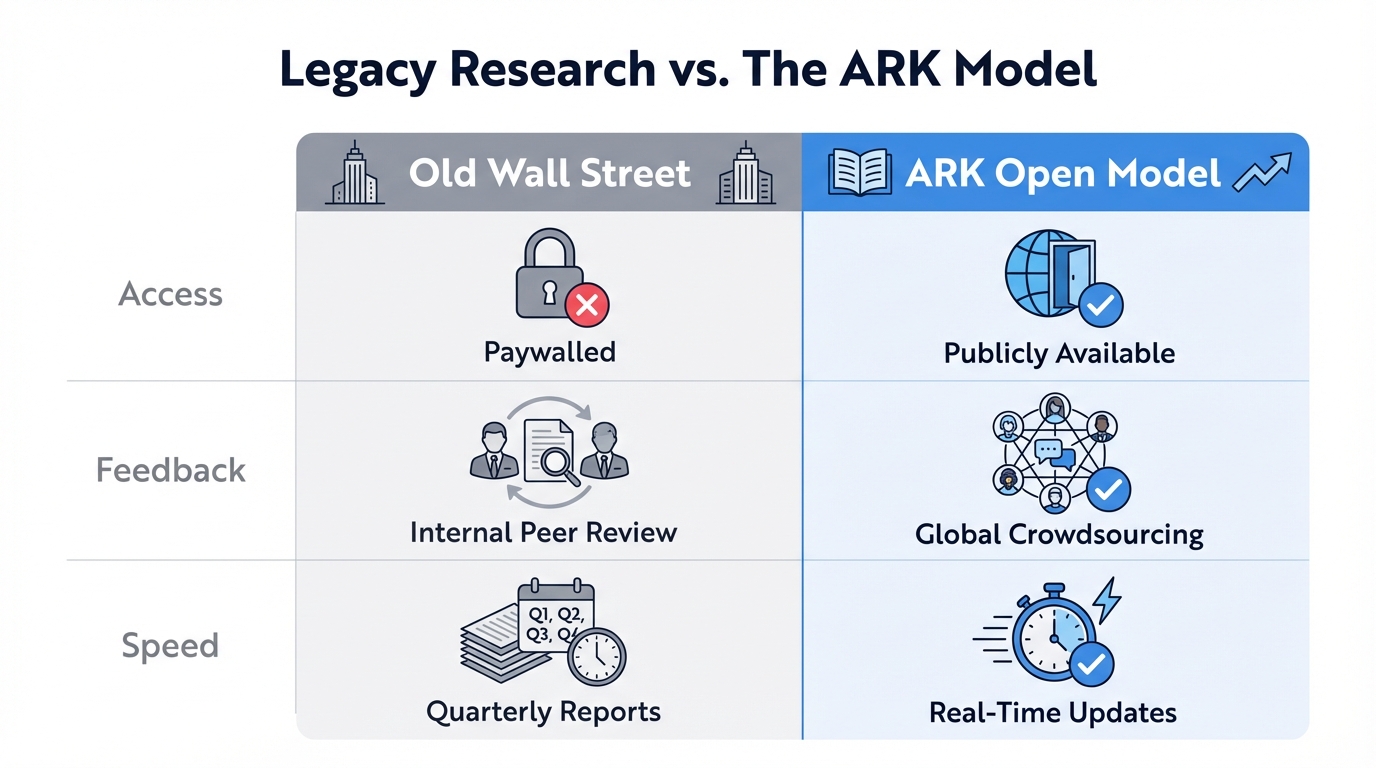
To understand why ARK’s strategy is so disruptive, we have to look at where the industry started. In 1977, when Cathie Wood began her career at Capital Group, information was scarce and incredibly expensive. Accessing economic data meant using time-sharing systems where a single set of charts could cost between $5,000 and $10,000 in today’s dollars. In that environment, a firm's "secret sauce" was its ability to gather data that no one else had.
Today, information is ubiquitous. We live in an era where data is free, but insight is rare. Wood recognized that in a world of infinite information, the old model of hoarding data was dead. Instead of trying to own the information, ARK focuses on information synthesis—taking what is publicly available and putting it together in a way that challenges prevailing wisdom. This transition from high-cost gathering to high-value synthesis is a core pillar of any successful organic growth strategy in the 21st century.
"Information is ubiquitous and it is all over the place. It is how you put it together and the assumptions you make that become the more important factor."
| Feature | Legacy Wall Street Model (1970s) | ARK Innovation Creator Model |
|---|---|---|
| Data Access | Proprietary and expensive | Open-source and ubiquitous |
| Distribution | Closed reports for clients only | Viral social media and public whitepapers |
| Feedback Loop | Internal committee only | Global community 'brainstorm' |
| Growth Engine | Sales teams and cold calling | Organic content and daily transparency |
Stirring the Pot: Hypothesis Validation Through Social Media
While most CEOs view social media as a PR risk, Wood uses X (formerly Twitter) as a live laboratory for validating business hypotheses. ARK doesn’t wait for a research paper to be "finished" before sharing it. They push out evolving thoughts to stir the pot and invite debate. This isn't just about getting likes; it's about battle-testing ideas against a global audience of engineers, entrepreneurs, and skeptics.
For founders, this content distribution strategy serves two purposes. First, it creates a top-of-funnel awareness that traditional marketing cannot match. Second, it provides real-time feedback that can prevent costly strategic errors. When ARK posts a price target for Tesla or an analysis of Nvidia, they aren't just broadcasting; they are inviting the world to find the holes in their logic. This level of transparency builds a unique network effect where the community actually improves the product.
Transparency as a Viral Growth Loop
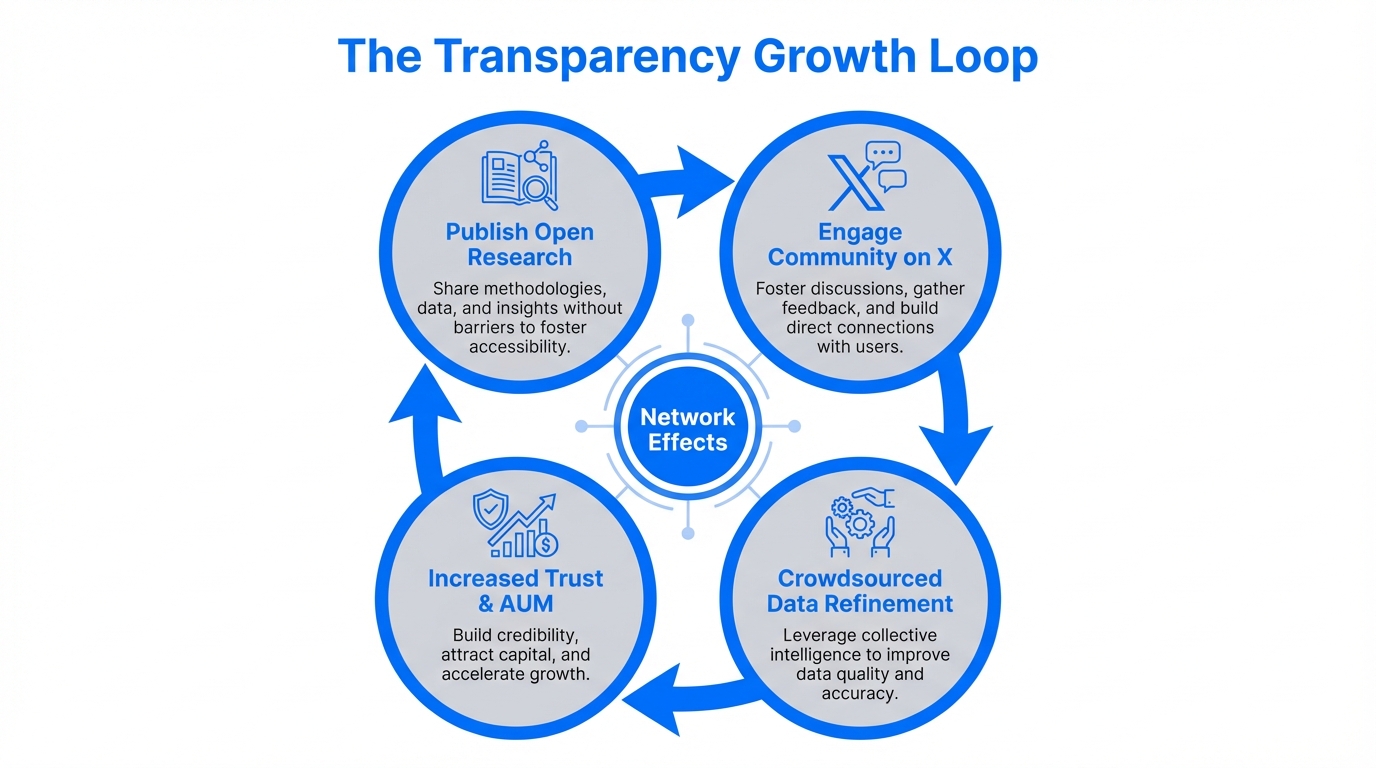
One of the most radical aspects of the ARK Innovation ETF is the daily trade log. Every day, ARK emails its subscribers a list of every buy and sell order they made. In the secretive world of hedge funds, this is considered heresy. But for ARK, it became a viral growth loop. During the 2020 pandemic, this transparency caused the firm to go viral. As millions of new investors entered the market, they didn't turn to legacy firms; they turned to the one that was teaching them how to invest in real-time.
This radical transparency builds a level of trust that traditional advertising can't buy. By showing their "work in progress," ARK turned their customers into students and their students into brand evangelists. This is a classic creator economy business model: provide so much value for free that the paid product (in this case, the ETF) becomes the natural next step for the audience.
"We were the only investment firm putting our research out on social media and the only one posting our trades every day. We went viral because we were teaching people about investing."
To manage this level of community engagement and creator-led growth, modern brands often need specialized tools. Just as Stormy AI helps marketers discover and vet the right creators to scale their message, ARK uses its own research team as "internal creators" to source insights from a global network of experts.
The Step-by-Step Guide to Building a Community-Driven Research Engine
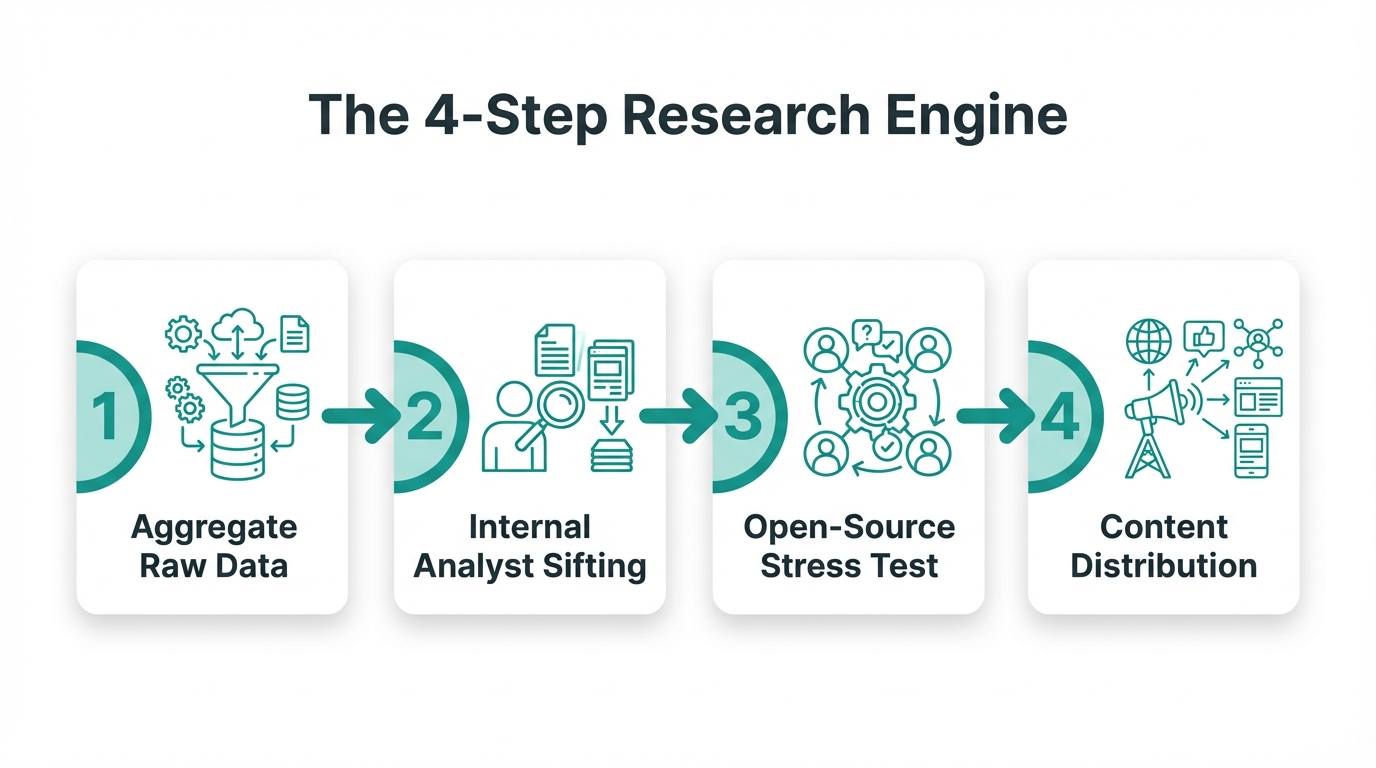
How can a founder replicate the ARK model? It requires moving away from the "Not Invented Here" syndrome and embracing external push-back. Here is the playbook for building a community-driven research engine:
Step 1: Open-Source Your Knowledge
Don't wait for the final version. Share your frameworks, your Wright’s Law calculations, and your industry observations as they happen. Use platforms like Beehiiv or Notion to create living documents that your audience can follow.
Step 2: Institutionalize the 'Brainstorm'
ARK holds a Friday Brainstorm where they invite venture capitalists, retired engineers, and professors to tear apart their research. You can do this by hosting regular webinars, X Spaces, or even a dedicated Slack or Discord community. The goal is to get out of your own bubble.
Step 3: Incentivize Push-Back
The most valuable members of your community are not the ones who agree with you; they are the ones who find the flaws in your GTM strategy. Publicly acknowledge and reward those who provide high-quality critiques. This builds intellectual honesty into your brand DNA.
Step 4: Use Content as a Filter
Your content should act as a lighthouse, attracting the right talent and partners while repelling those who don't align with your vision. ARK uses its bullishness on Coinbase and Bitcoin to attract the brightest minds in crypto, even when the mainstream media is skeptical.
From Information Gathering to High-Value Synthesis
In the age of AI, the act of gathering information is becoming automated. Tools like OpenAI and Claude can summarize reports in seconds. The real edge now lies in interpretation. Wood’s team doesn't just look at the cost of a ride-hail; they look at the learning curves of electric vehicles and autonomous technology to predict a drop in cost from $2.50 to $0.25 per mile.
This is the ultimate organic growth strategy for any founder: become the primary source of truth for your niche. When you own the narrative through superior synthesis, you don't need to spend millions on Google Ads or TikTok Ads. Your research becomes the advertisement.
By leveraging platforms like Stormy AI to find creators who are already discussing these niche technological shifts, brands can amplify their open-source research and reach a hyper-targeted audience without the