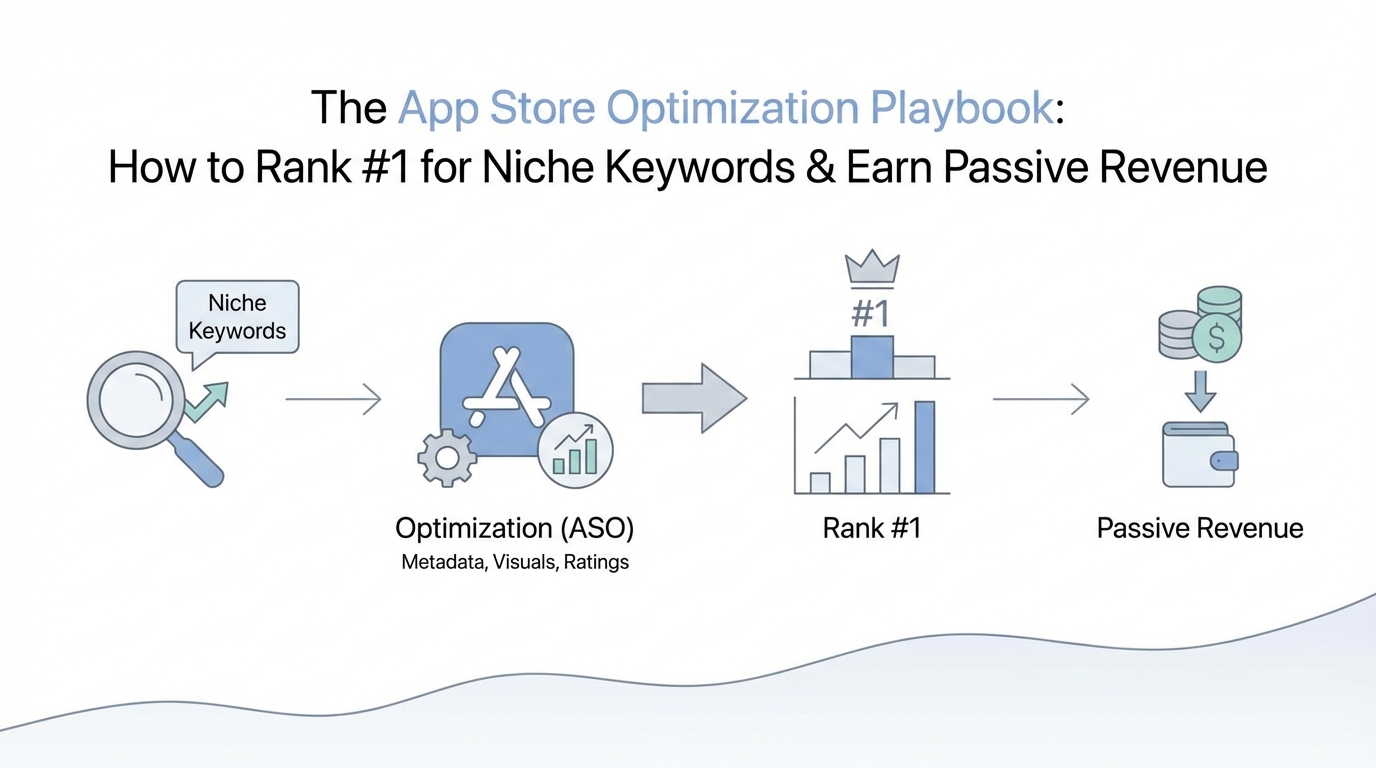
In the gold rush of the mobile app economy, most founders believe they need a venture capital war chest and a massive ad budget to survive. They focus on complex viral loops or burn thousands on Meta ads, hoping for a breakthrough. But what if the key to $41,000 in monthly recurring revenue (MRR) wasn't a flashy marketing campaign, but a calculated app store optimization strategy? Kyle Fowler, a developer who built his success while still in college, proved that by identifying underserved niches and dominating specific keywords, you can build a passive income engine that runs for years. This isn't just about building a product; it’s about ensuring that when a user has a specific problem, your solution is the first and only thing they see.
The ASO Moat: Why Ranking First Matters
Many developers fall into the trap of the "build it and they will come" mentality. In reality, the App Store is a crowded marketplace where organic mobile app growth is the only sustainable way to survive as a bootstrapper. Kyle Fowler’s journey began when he wanted to digitize his own baseball card collection and found... nothing. No app existed for that specific purpose. This gap in the market is where the most profitable aso for beginners journeys begin. By being the first to solve a niche problem, you create a "ranking moat." Once you secure that #1 spot for a high-intent keyword, the App Store’s algorithm tends to keep you there as long as your conversion rates remain steady.
Kyle's apps, Cardstock and Scanon, have generated over $700,000 in lifetime revenue. For two years, these apps brought in roughly $10,000 per month almost entirely passively. How? By holding the top spot for keywords like "baseball card scanner." When you rank #1 for a term with high commercial intent, you aren't just getting views; you are catching users at the exact moment they are looking to solve a problem. This is why app store keyword research is the highest-leverage activity a founder can perform during the development phase. Platforms like Stormy AI emphasize that finding the right niche is half the battle; the other half is making sure you are visible to the people already searching for you.
Identifying High-Volume, Low-Competition Keywords

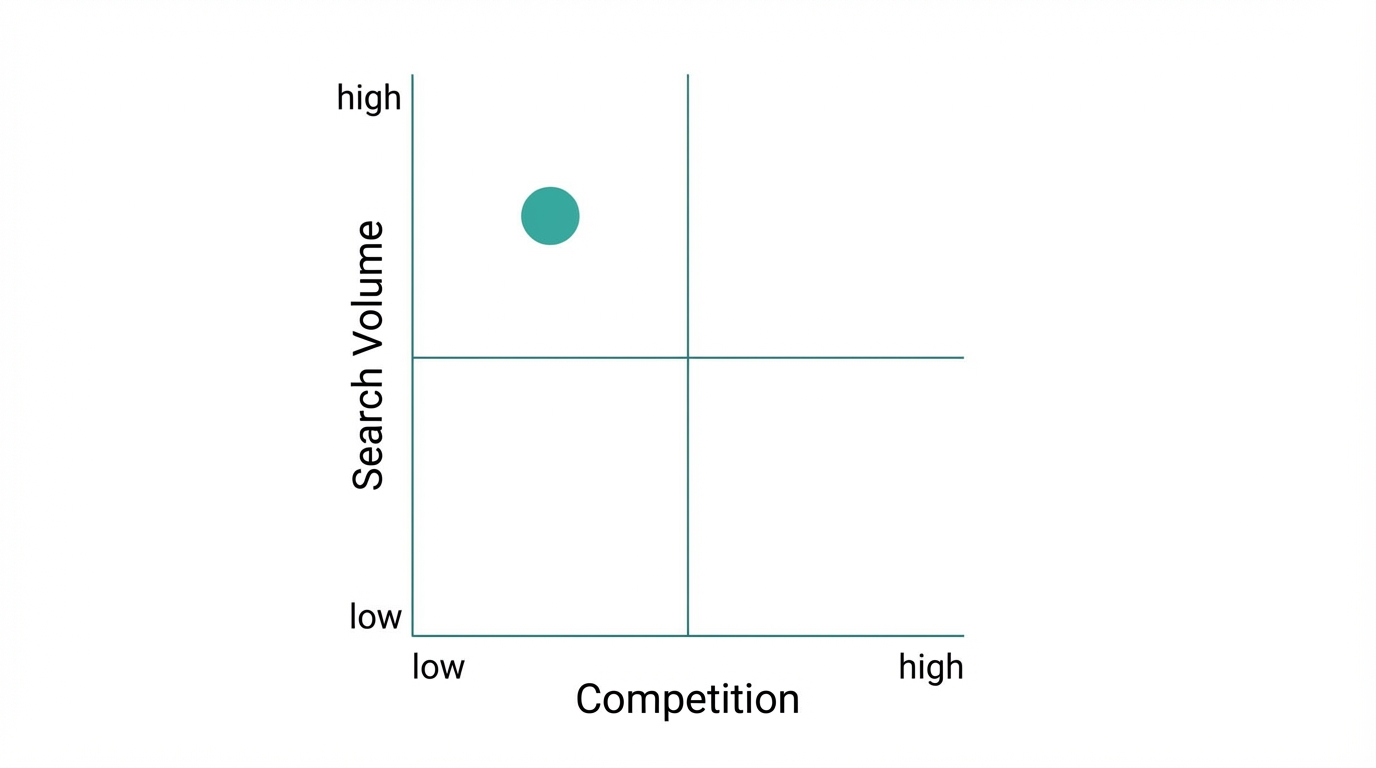
To replicate this success, you need to move beyond guesswork. App store keyword research requires looking at data to see what users are actually typing into that search bar. Kyle spent two weeks diving deep into keyword data before settling on his final strategy. You don't need expensive enterprise software to start; you can utilize free tools or trial versions of industry standards like Sensor Tower and App Figures to audit search volume and competition levels.
The goal is to find "underserved" keywords. These are terms with decent search volume but low-quality results. If you search for a term and find only generic apps that haven't been updated in a year, you’ve found a goldmine. For Fowler, the terms were "baseball card scanner," "sports card scanner," and "find value for baseball cards." By weaving these specific phrases into his app title and subtitle, he ensured he was the most relevant result for those queries. While generic terms like "card scanner" might have more total volume, they are hyper-competitive. Niche, long-tail keywords allow you to increase app downloads by capturing 100% of a smaller, more dedicated audience.
Long-Tail Keywords: The Secret to Organic Growth
One of the biggest mistakes in aso for beginners is trying to rank for a single, broad word. If you try to rank for "Fitness," you are competing with multi-billion dollar companies. However, if you target "kettlebell workout for seniors," your competition drops significantly. In the card scanning niche, "baseball card scanner" is a long-tail keyword that signals exactly what the app does. Specific titles lead to higher conversion rates because the user knows exactly what they are getting before they even click.
Apple allows for a title and a subtitle, both of which are heavily weighted by the search algorithm. Kyle’s strategy involved using the title for the primary brand and function (e.g., Cardstock Sports Card Scanner) and the subtitle for secondary high-value search terms (e.g., Find value for baseball cards). This dual-pronged approach covers multiple search intents. If you are struggling to find the right creators to demonstrate these niche use cases for your marketing, using Stormy AI, which is an AI-powered platform for creator discovery, especially for mobile app marketing and UGC campaigns, can help you find UGC creators who already exist within those specific communities, further boosting your social proof and organic reach.
The Step-by-Step ASO Playbook
If you want to how to increase app downloads without a massive ad spend, follow this repeatable playbook for keyword optimization:
Step 1: Brainstorm and Validate
Start by listing every possible way a user might describe your app. Don't just think about what it is, think about what it does. For Kyle, he used Reddit to validate his idea first. By posting in r/baseballcards, he confirmed that users actually wanted a digital sorting tool. This community feedback should inform your initial keyword list.
Step 2: Competitor Audit
Use Sensor Tower to see what keywords your competitors are ranking for. While auditing keywords, you can also use Stormy AI to analyze the creator landscape and see which influencers are already dominating your niche on TikTok and Instagram, giving you a clear picture of the content quality required to rank. Look for gaps where no app perfectly matches the search term.
Step 3: Priority Ranking
Not all keywords are created equal. Use a Mac-based app like Astro or similar keyword trackers to rank your list by Priority vs. Difficulty. Your primary keyword (the one you MUST rank for) should go in your App Title. Your secondary keywords should go in your Subtitle and the hidden keyword field in App Store Connect.
Step 4: The "Hard" Paywall Switch
Surprisingly, monetization affects ranking. Higher revenue often signals to the App Store that your app is valuable. Kyle found that switching from a one-time paid app ($4.99) to a subscription model ($5/month, $50/year) caused a massive jump in revenue. Apps with consistent revenue and high conversion rates on their paywalls—often optimized with tools like Superwall—tend to maintain better organic rankings.
Navigating the May 2024 Algorithm Shift
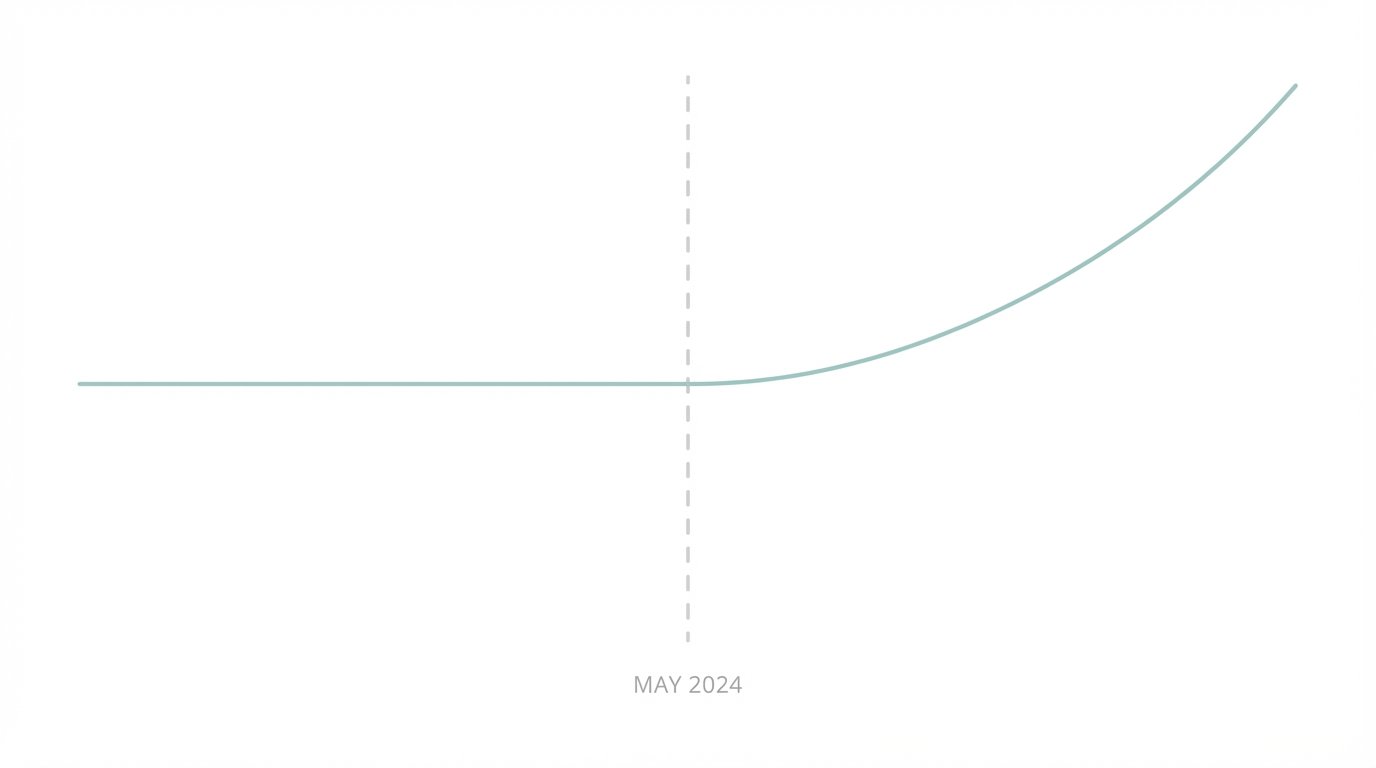
In May 2024, many developers—including Kyle—saw a sudden dip in their organic rankings. This is the reality of organic mobile app growth; you are at the mercy of the platform. When your ASO rankings slip, you need a backup plan. Kyle’s response was to pivot to User-Generated Content (UGC) and social media marketing. He hired a friend to start making TikToks, and though they started with 20 likes per video, they eventually cracked a winning format: the "Value Reveal."
The format was simple: show a desirable card for 3-5 seconds, scan it with the app, and reveal the value. This repeatable loop generated thousands of downloads. They even utilized platforms like Noise to scale this content to thousands of creators at a low CPM. This synergy between ASO and UGC is the future of app marketing. While ASO provides the baseline passive revenue, social content provides the spikes and viral growth. For app developers looking to scale this process without the manual headache, Stormy AI provides a streamlined way to find and manage creators who can execute these specific, high-converting video formats.
Conclusion: The Power of Persistence
The story of Cardstock and Scanon is a masterclass in app store optimization strategy. It proves that you don't need a massive team or millions in funding to build a successful app business. By spending just two weeks on intense app store keyword research and being willing to iterate on your monetization and marketing, you can build a sustainable, passive income stream. The App Store is still a place where "doing the thing"—actually launching, testing, and optimizing—beats over-planning every single time. By leveraging modern AI discovery engines like Stormy AI to find the right influencers to drive traffic, and identifying that one underserved niche, you can master its keywords and let the organic traffic do the rest.