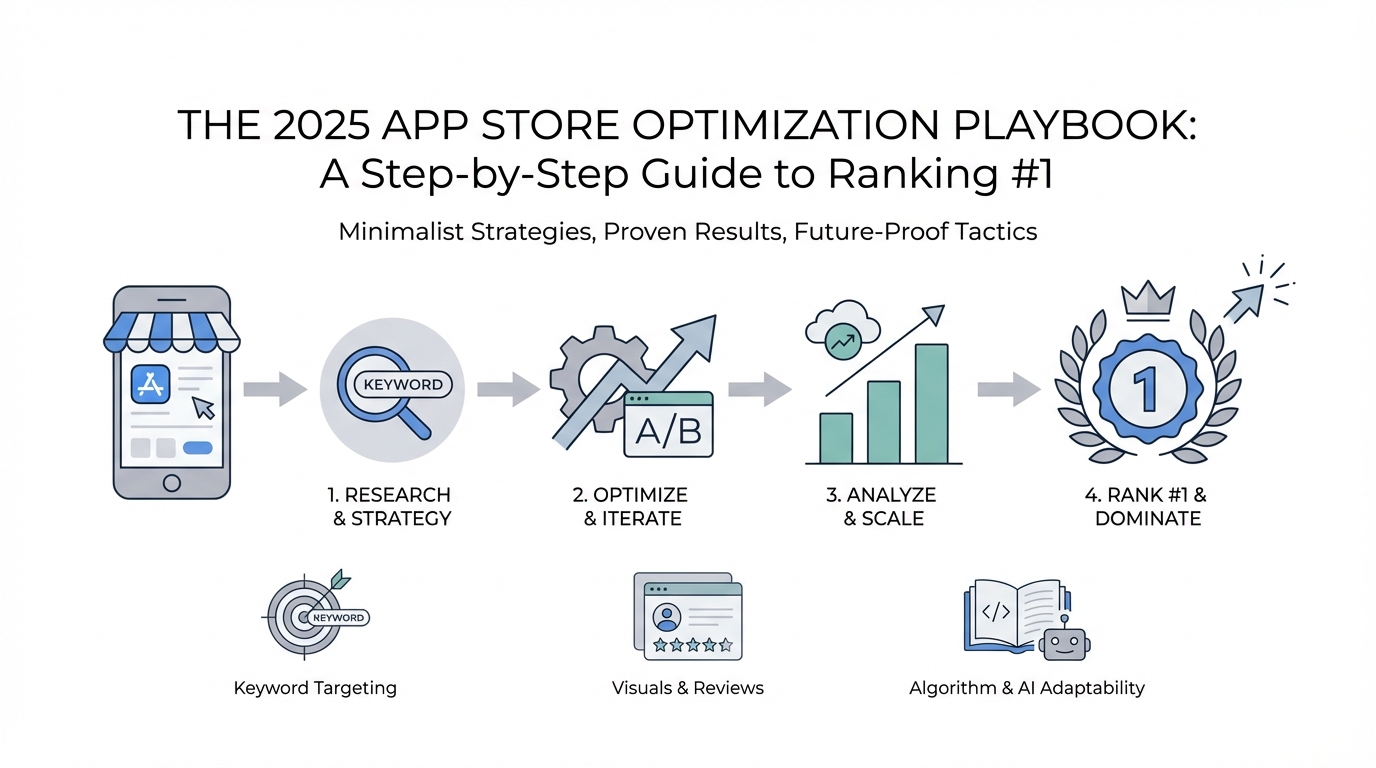
In the rapidly evolving mobile landscape, the difference between an app that tops the charts and one that gathers digital dust often comes down to a single discipline: App Store Optimization (ASO). As we move into 2025, the old tactics of keyword stuffing and repetitive metadata are no longer just ineffective—they are actively penalized. Today, ranking #1 requires a sophisticated understanding of how search algorithms have matured into semantic, intent-driven engines. This app store optimization guide will walk you through the fundamental shifts in the industry and provide a clear, actionable mobile app growth strategy to ensure your product stands out in an increasingly crowded marketplace.
Data shows that the stakes have never been higher. According to research from Dotcominfoway, approximately 65–70% of all app discoveries occur directly through App Store searches. For non-gaming utilities, that number can skyrocket to 80%. If you aren't visible in search, you effectively don't exist for the majority of your potential user base.
The Evolution of Semantic Search and NLP in 2025
The most significant change in ASO ranking factors 2025 is the transition toward Natural Language Processing (NLP). Both Apple and Google have moved away from simple character-string matching to a semantic model. This means the algorithms now prioritize the "context" of a search query over the presence of a specific word. Instead of just looking for the word "fitness," the stores now understand that a user searching for "get in shape for summer" is looking for high-intensity interval training or weight loss apps.
This shift toward NLP means your app store keyword research must be more nuanced. Experts at ASOMobile highlight that keywords found within user reviews are now heavily indexed by Google Play, creating a loop where user sentiment directly impacts organic visibility. To how to rank mobile apps effectively, you must align your metadata with the natural language your users use when describing their problems.
"The algorithm now understands 'context' rather than just matching character strings, making traditional keyword stuffing a relic of the past."Intent-Driven Keyword Research: Generic vs. Branded
In the world of app store keyword research, understanding the split between branded and generic searches is vital. Industry data reveals that 70% of searches are branded (e.g., "Instagram" or "ChatGPT"), while 30% are generic (e.g., "photo editor" or "AI chatbot"). While it is tempting to focus on brand protection, the real growth for new or scaling apps lies in winning that 30% generic market. This is where users are actively looking for a solution but haven't decided on a provider yet.
To capture this generic traffic, you must focus on high-intent long-tail keywords. As noted by KeyApp.top, targeting phrases like "meditation for anxiety" rather than just "meditation" allows you to compete in niches with lower competition and higher conversion potential. In 2024 and 2025, "AI"-related terms saw a 300% increase in search volume, demonstrating how quickly market trends can shift your keyword priorities.
Step 1: Identify Seed Keywords
Start by listing the core features of your app. Use tools like the Google Keyword Planner to see what users are searching for on the web, as web search trends often precede app store trends. Focus on "jobs to be done"—what is the specific task the user wants to accomplish?
Step 2: Competitor Gap Analysis
Analyze the metadata of your top five competitors. Look for keywords they are ranking for that you might have missed. However, avoid the mistake of chasing high-volume terms where the competition is too fierce. Instead, look for "mid-traffic, low-competition" opportunities, a strategy successfully used by top-tier travel apps like Skyscanner to increase organic installs without battling for the word "flights."
Step-by-Step Metadata Setup: Apple App Store (iOS)
The mechanics of ranking on iOS are strict and character-limited. You must be precise with your placement to maximize the ASO ranking factors 2025. On iOS, the Title and Subtitle are your most powerful tools. You should never repeat keywords across these fields, as Apple does not reward density, only presence. If "Fitness" is in your title, using it in your subtitle is a waste of 7-8 characters.
- App Title (30 Characters): This is the heaviest-weighted field. Include your brand name and your most important high-volume keyword.
- Subtitle (30 Characters): Use this to explain the app's value proposition using secondary high-intent keywords.
- Keyword Field (100 Characters): This is a hidden field. Separate words with commas, avoid spaces, and don't repeat words used in the title or subtitle.
A hidden gem in iOS optimization is Optical Character Recognition (OCR). Apple's algorithm now scans the text within your screenshots to index content. This means including your primary keywords in your screenshot captions can provide a subtle but measurable boost to your search visibility, as discussed in recent ASO strategy sessions regarding Apple's Vision framework.
Step-by-Step Metadata Setup: Google Play Store (Android)
The Google Play Store functions much more like traditional SEO. Google indexes your entire description, meaning keyword density and frequency actually matter. To how to rank mobile apps on Android, you need a balance between readability and optimization. Aim for a keyword density of 1–2% (roughly 3–5 mentions of your core terms) within your 4,000-character long description.
- App Title (30 Characters): Like iOS, this is your primary ranking signal.
- Short Description (80 Characters): This affects both ranking and Conversion Rate (CVR). It’s the first thing users see.
- Full Description (4,000 Characters): Use this space to naturally weave in long-tail keywords and related semantic terms.
According to ConsultMyApp, ignoring user reviews on Google Play is a critical mistake. Google indexes the keywords used by your users in their feedback. Encouraging users to mention specific features in their reviews can indirectly improve your rankings for those feature-related terms.
Understanding Conversion Rate (CVR) as a Primary Ranking Signal

In 2025, ASO is no longer just about getting people to find your app; it’s about getting them to download it. Conversion Rate (CVR) has become a direct ranking factor. If your app ranks #1 for "habit tracker" but has a 1% CVR while the app at #2 has a 5% CVR, the algorithm will eventually swap their positions. The store's goal is to show the most relevant and high-quality apps to the user.
This is where the intersection of ASO and social proof becomes vital. Driving high-quality traffic that actually converts requires trust. Many brands are now utilizing User-Generated Content (UGC) within their app store listings to boost CVR. Using tools like Stormy AI, marketers can discover and vet UGC creators who produce the kind of authentic video content that resonates with modern audiences. Placing these creator-led videos in your app store preview can significantly increase the likelihood of a download, thereby protecting your keyword rankings.

"If you rank #1 for a term but fail to convert, the algorithm will demote you. Conversion is the ultimate proof of relevance."Furthermore, GetPassionFruit emphasizes that "Download Velocity"—the number of installs you receive in a short 24–72 hour window—is the single biggest booster for temporary ranking spikes. Coordinating your ASO updates with an influencer marketing campaign or a burst of paid ads can create the momentum needed to break into the top three positions.
Localization: More Than Just Translation
One of the most overlooked ASO ranking factors 2025 is proper localization. Simply translating your English keywords into Spanish or Japanese is a recipe for failure. To truly rank mobile apps globally, you must engage in "culturalization." This involves researching local slang, regional search habits, and cultural nuances that dictate how users search.
For example, a "soccer" app in the US must be a "football" app in the UK and a "fútbol" app in Mexico. Research from PracticalLogix shows that apps that localize their metadata and creative assets see up to a 200% increase in organic downloads in non-English speaking markets. If you are using a mobile app growth strategy that ignores localization, you are leaving the majority of the global market on the table.
Setting Up a 6-Week Optimization Cycle
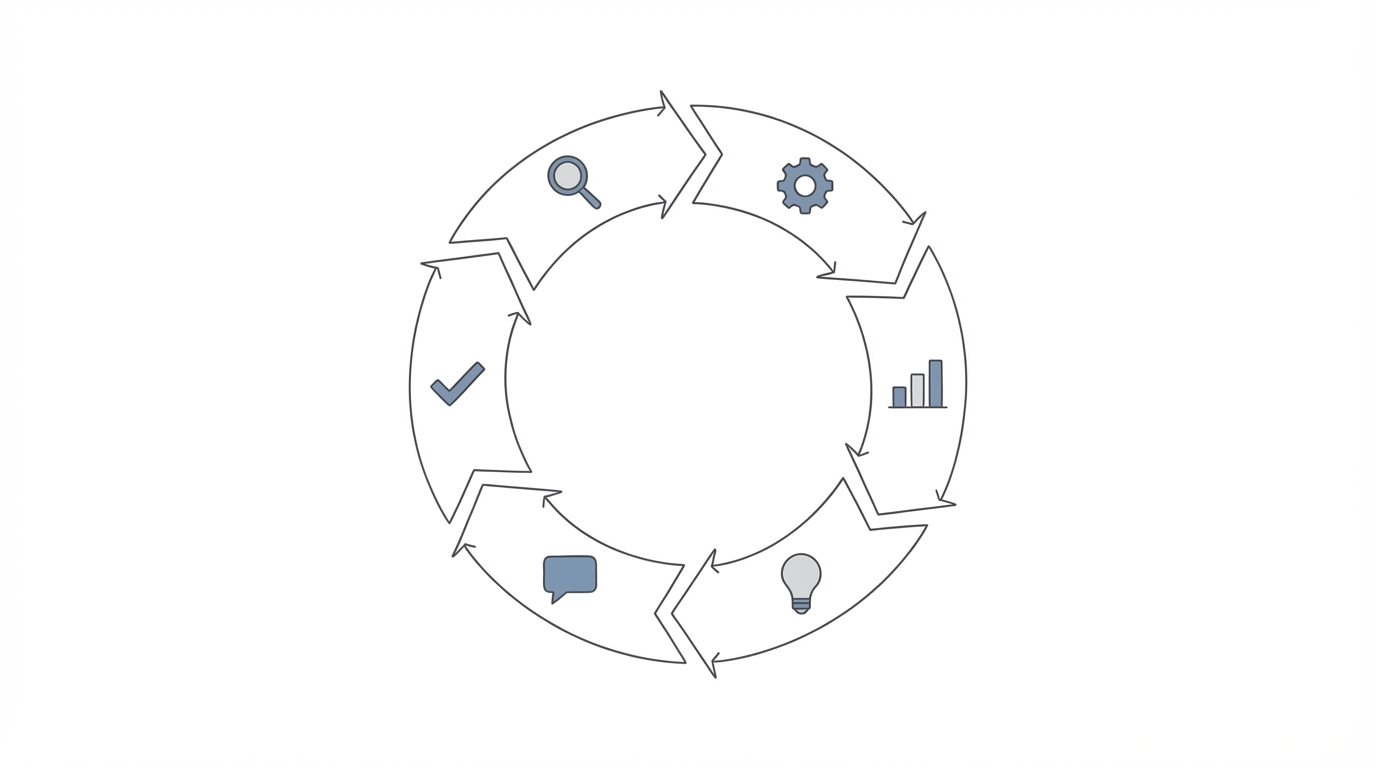
ASO is not a "set it and forget it" task. It is a continuous cycle of Research → Test → Analyze → Repeat. The market moves fast; seasonal trends, competitor updates, and algorithm shifts happen weekly. To stay ahead, you should implement a rigorous 6-week update schedule.
- Weeks 1-2 (Research): Monitor your current keyword rankings and identify new high-intent terms. Check the Apple Search Ads popularity scores to see which terms are driving actual intent.
- Week 3 (Implementation): Update your metadata and creative assets (screenshots/videos). Focus on one major change at a time to accurately measure impact.
- Weeks 4-5 (Observation): Allow the algorithm to index the new data. Monitor your ranking position and CVR closely.
- Week 6 (Analysis): Use tools to determine if the changes led to a net gain in organic installs. If a keyword didn't perform, swap it out in the next cycle.
As you scale these efforts, managing the relationships with creators who provide the visual proof for your store listing becomes a logistical challenge. Modern platforms like Stormy AI offer a creator CRM that allows you to manage these collaborations, ensuring you always have a fresh supply of high-converting UGC to test in your ASO cycles.
Conclusion: Ranking #1 in 2025
Ranking #1 in the app stores today is a multidisciplinary challenge. It requires the technical precision of app store keyword research, the creative flair of high-converting visual assets, and the strategic patience of a 6-week optimization cycle. By moving beyond keyword stuffing and embracing the semantic, intent-driven nature of modern search, you can build a sustainable engine for organic growth.
Remember that ASO does not exist in a vacuum. It is the foundation of your mobile app growth strategy, but it must be supported by social proof, user engagement, and consistent product quality. Start by auditing your current metadata against the platform-specific rules we’ve outlined, and begin your first 6-week cycle today. The top of the charts is waiting.