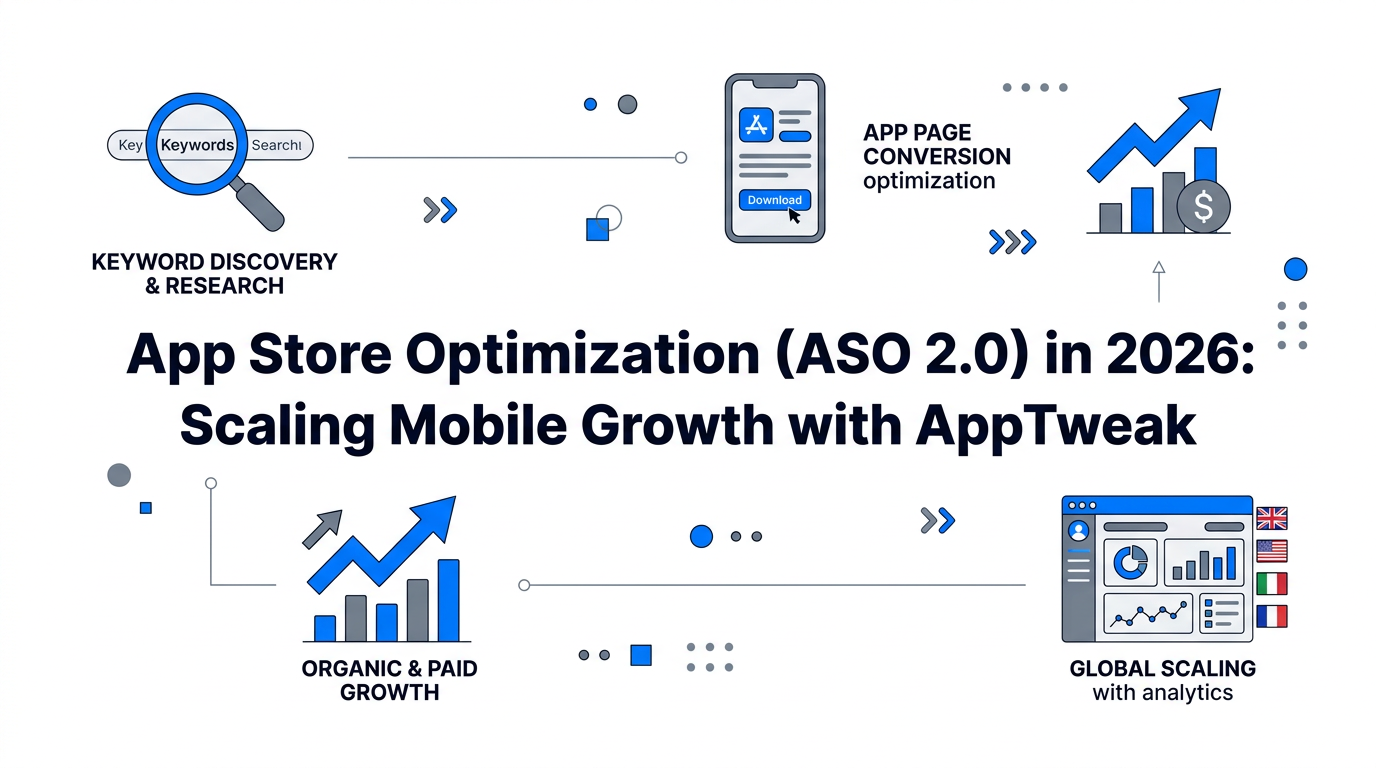
In 2026, the mobile landscape has shifted from a volume-based acquisition game to a conversion-centric survival race. The days of simply ranking for high-volume keywords and watching the installs roll in are over. Today, organic discovery is fragmented across AI-powered search overviews, social discovery loops, and highly personalized app store algorithms. App Store Optimization (ASO) 2.0 is no longer just about being found; it is about converting intent into long-term retention. With organic search still driving over 50% of all global traffic, the stakes for your app store presence have never been higher.
The 2026 App Abandonment Crisis: Why Installs Are No Longer Enough
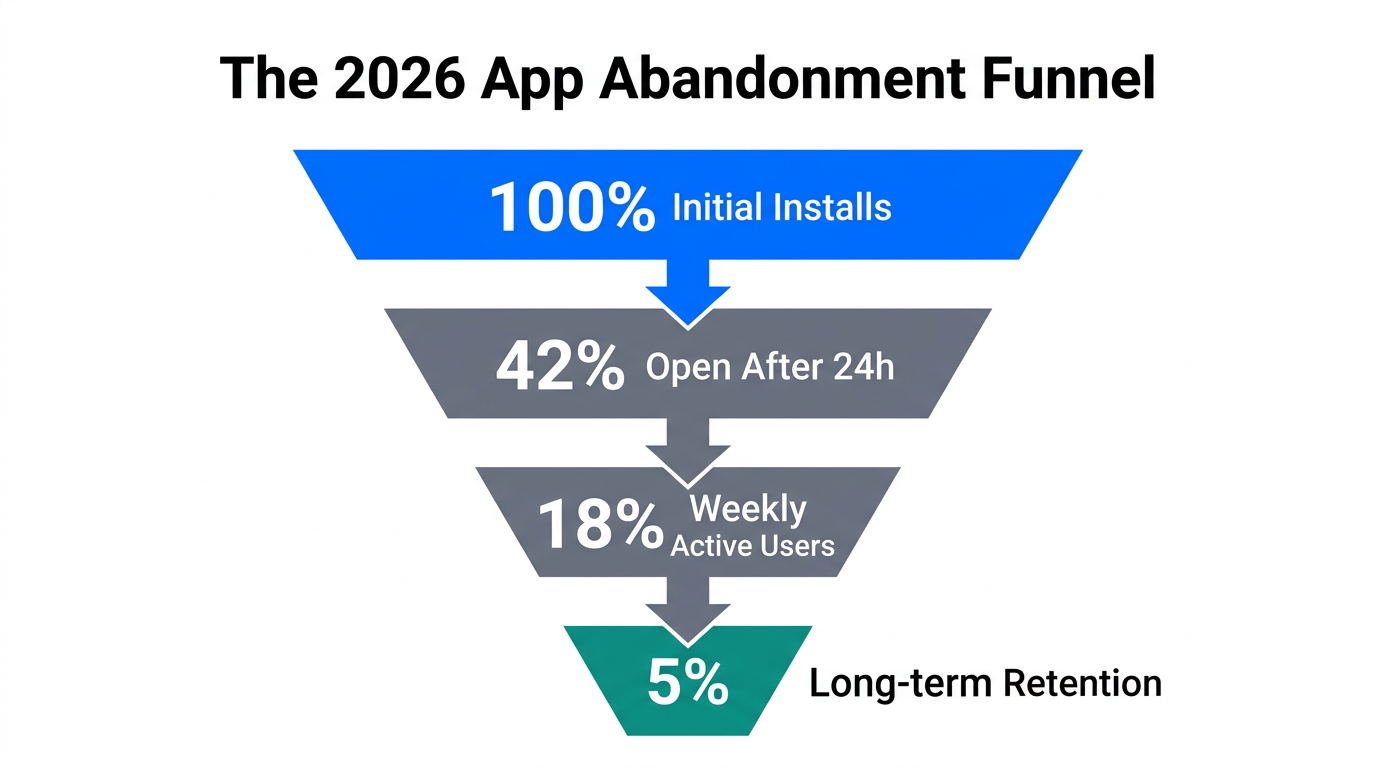
The biggest threat to mobile growth this year isn't a lack of discovery—it's the post-install drop-off. Current data from Statista shows a staggering reality: nearly 80% of users abandon an app within 3 days of an organic install. This "leaky bucket" syndrome suggests that acquisition without a focus on the user’s immediate needs is a sunk cost for marketing teams. If your app store listing promises one thing and your app delivers another, the algorithm will quickly penalize your ranking as retention rates plummet.
To combat this, growth marketers are moving toward a Retention-First Acquisition model. This involves aligning the "mental model" of the user—what they expect when they click "Get"—with the first 60 seconds of the app experience. This alignment starts with App Store Optimization 2.0, where your metadata and creative assets act as a filter to attract high-LTV users rather than just curious clickers.
AppTweak ASO Strategy: Leveraging Custom Product Pages (CPPs)
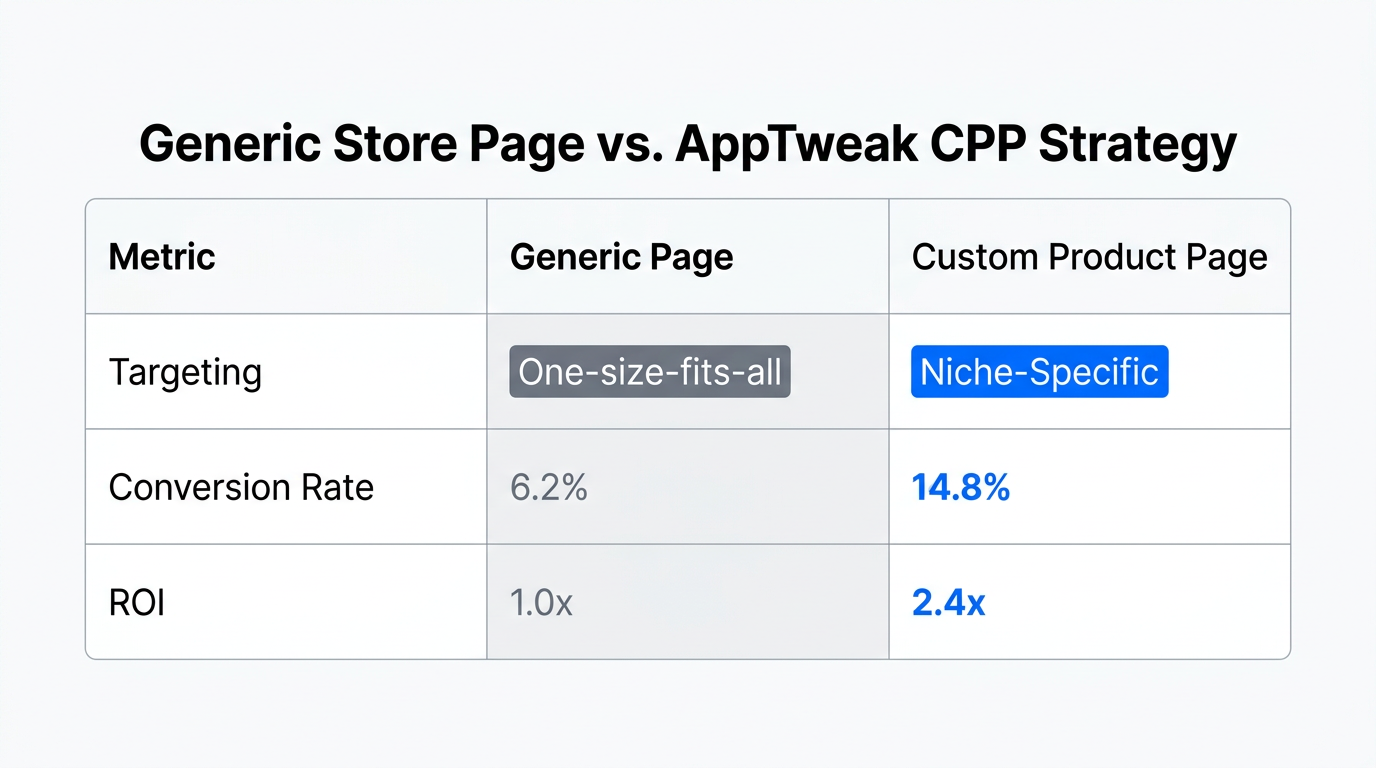
One of the most powerful tools in the modern ASO arsenal is the AppTweak platform, specifically for its ability to optimize Custom Product Pages (CPPs). In 2026, a one-size-fits-all product page is a relic of the past. Users arriving from a TikTok health influencer's video have different motivations than those searching for "best keto recipes" on the App Store.
CPPs allow you to create up to 35 different versions of your app store listing, each with unique screenshots, preview videos, and promotional text as outlined in Apple's developer guidelines. Using AppTweak, marketers can A/B test these pages against specific organic traffic sources to see which visuals resonate most with different segments. For example, a fitness app might show "Weight Loss" focused screenshots to one segment and "Muscle Building" visuals to another.
"The future of ASO isn't a single front door; it's a personalized welcome mat for every possible user persona."
| Feature | ASO 1.0 (Legacy) | ASO 2.0 (2026 Standard) |
|---|---|---|
| Focus | Keyword volume & density | Conversion Rate Optimization (CRO) |
| Product Pages | One static default page | 35+ Custom Product Pages (CPPs) |
| Creative Assets | Generic feature lists | Persona-based storytelling |
| Success Metric | Raw Download Count | Day-3 Retention & LTV |
By tailoring the message to the source, you ensure that the user's journey is seamless. When the expectations set in the ad or search result match the app store listing, the likelihood of that user becoming a long-term subscriber increases significantly. Referral marketing also plays a role here; data shows that referred leads convert significantly better than other channels, and a specific CPP for referred users can further boost lifetime value.
Moving Beyond Keywords: The Shift to App CRO
While keywords still matter for indexing, the Zero-Click Crisis has changed how users interact with search. With studies from SparkToro indicating a massive rise in searches ending without a click due to AI-generated summaries, your app's metadata must be optimized for Generative Engine Optimization (GEO). This means providing clear, structured information that AI search engines can easily parse to recommend your app as the "answer" to a user's problem.
Optimizing Screenshots for 2026 Intent
Your screenshots are no longer just a place to show the UI. They are billboard advertisements. In 2026, top-performing apps use the first two screenshots to solve a specific pain point immediately. Avoid generic phrases like "Easy to use interface" and replace them with outcome-oriented captions like "Track your macros in under 30 seconds."
- Visual Hierarchy: Use large, bold text that is readable even in the search results view.
- Social Proof: Incorporate user testimonials or award badges directly into the screenshot design using tools like Canva or Figma.
- Video Previews: High-energy, 15-second "speed-runs" of the app's core value proposition perform better than slow, cinematic trailers.
To source the creative insights needed for these screenshots, many brands are turning to user-generated content (UGC). Platforms like Stormy AI allow developers to discover creators who are already making content in their niche. By analyzing which creator hooks generate the most engagement on TikTok or Instagram—where brand follower counts continue to rise—marketers can mirror those successful visual cues in their app store assets.
Privacy-First Attribution: Tracking Organic Success in a Cookieless World
As privacy regulations tighten and tools like the Google Privacy Sandbox become the norm, attribution has become the "last-mile" challenge. Traditional tracking is being replaced by SKAN 4.0 (StoreKit Ad Network) and a heavy reliance on first-party data. For organic tracking, this means growth teams must get creative.
To manage this complex data, a modern growth stack requires a robust Mobile Measurement Partner (MMP). Integrating tools like AppsFlyer or Adjust is essential for tying together organic social, ASO efforts, and web-to-app journeys. Without an MMP, you are essentially flying blind, unable to see which ASO tweaks are actually driving high-quality users who pass the 3-day retention mark.
"In 2026, attribution is a mosaic, not a single line of code. You need surveys, SKAN data, and MMP insights to see the full picture."
The ASO 2.0 Audit Checklist for Mobile Marketers
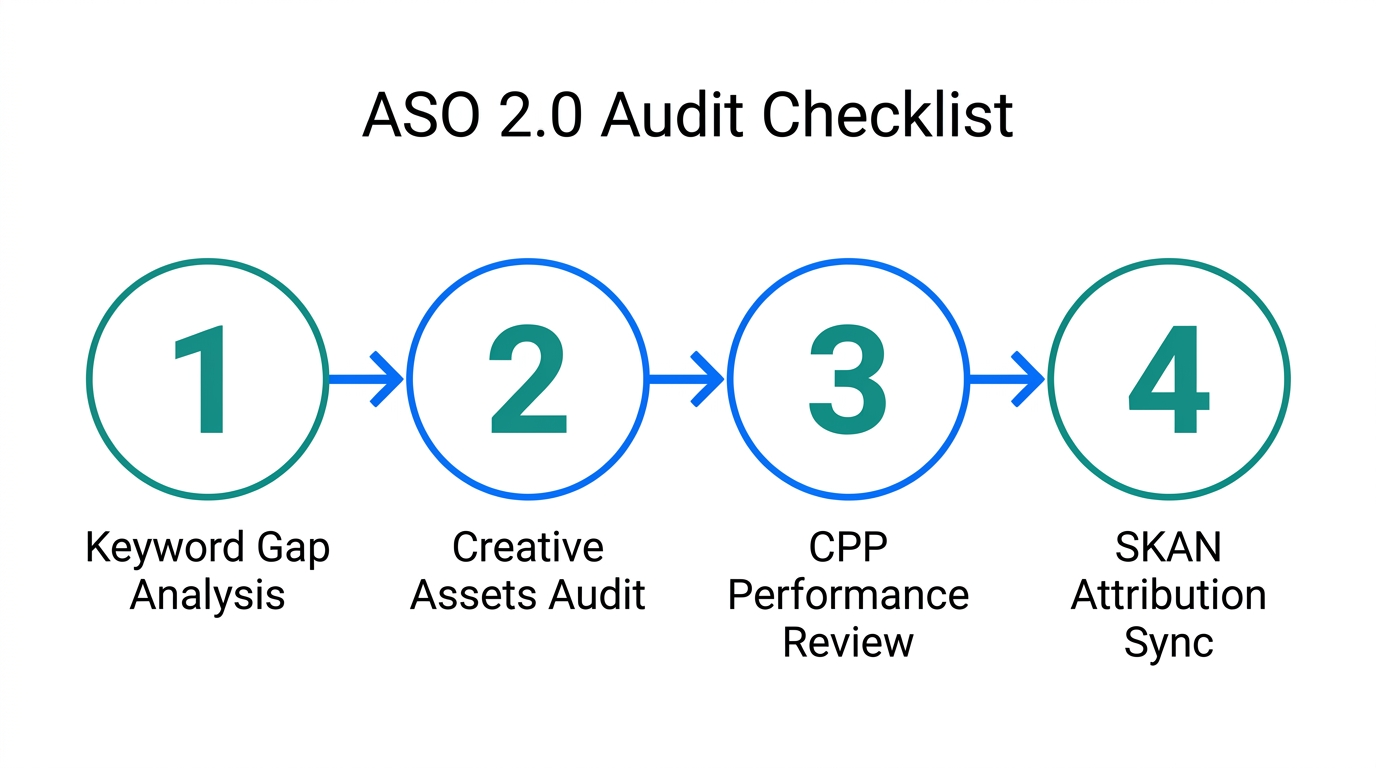
If you haven't updated your ASO strategy since last year, you are likely losing share to more agile competitors. Use this step-by-step checklist to ensure your app is ready for the 2026 search environment.
- Analyze the "Why": Use Semrush or AppTweak to identify "Information Density" keywords. Are you answering the user's questions in your description?
- Audit Your CPPs: Ensure you have at least 5 Custom Product Pages live, targeting your top 5 acquisition channels (e.g., TikTok, Facebook Ads, Referral links).
- Review Creative E-E-A-T: Does your listing demonstrate Experience, Expertise, Authoritativeness, and Trustworthiness? Include developer history and high-quality user reviews in your metadata.
- Check Your Load Times: Organic ranking is now heavily influenced by technical performance. Ensure your app's vitals are within the top 25th percentile according to Google PageSpeed Insights.
- Implement a Viral Loop: Use tools like Cello or GrowSurf to build referral mechanisms that drive organic downloads, which in turn boosts your store authority.
- Sync with Influencer Campaigns: When running creator campaigns through Stormy AI, ensure your ASO team is prepared to update the app’s "What’s New" section or screenshots to match the campaign theme.
Conclusion: Retention is the Ultimate ASO Hack
The evolution of App Store Optimization 2026 proves that you cannot separate acquisition from product value. As AI search disruption continues to lower direct click-through rates, building brand recall and community becomes the only sustainable moat. As noted by the MarTech Editorial Panel, if your traffic is down but impressions are up, you must pivot to strategies that make users search for you by name.
By leveraging AppTweak for precise A/B testing, focusing on Conversion Rate Optimization for your assets, and embracing privacy-first attribution, you can turn your app store listing into a high-performance growth engine. Remember, the goal of ASO 2.0 isn't just to get the install—it's to invite the user into an ecosystem where they actually want to stay.