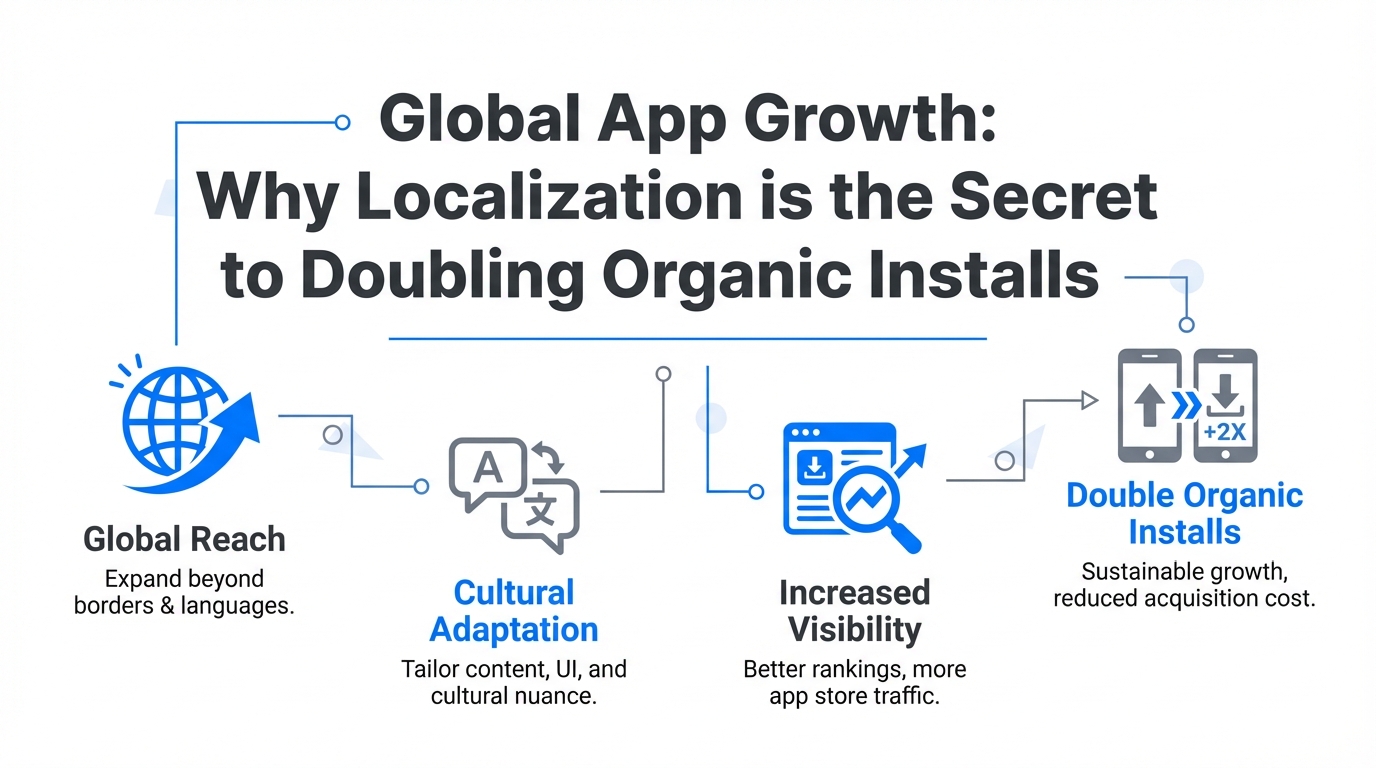
With over 7.5 million apps competing across the Apple App Store and Google Play Store, simply launching a great product is no longer enough to guarantee success. In the modern landscape of global app marketing, growth is a game of relevance, and relevance is deeply rooted in language and culture. For developers looking to capture a slice of the $138 billion App Store ecosystem projected for 2025 by Business of Apps, the strategy must shift from a US-centric model to a truly international ASO strategy.
The Economics of Localization: A 48% Jump in Organic Installs
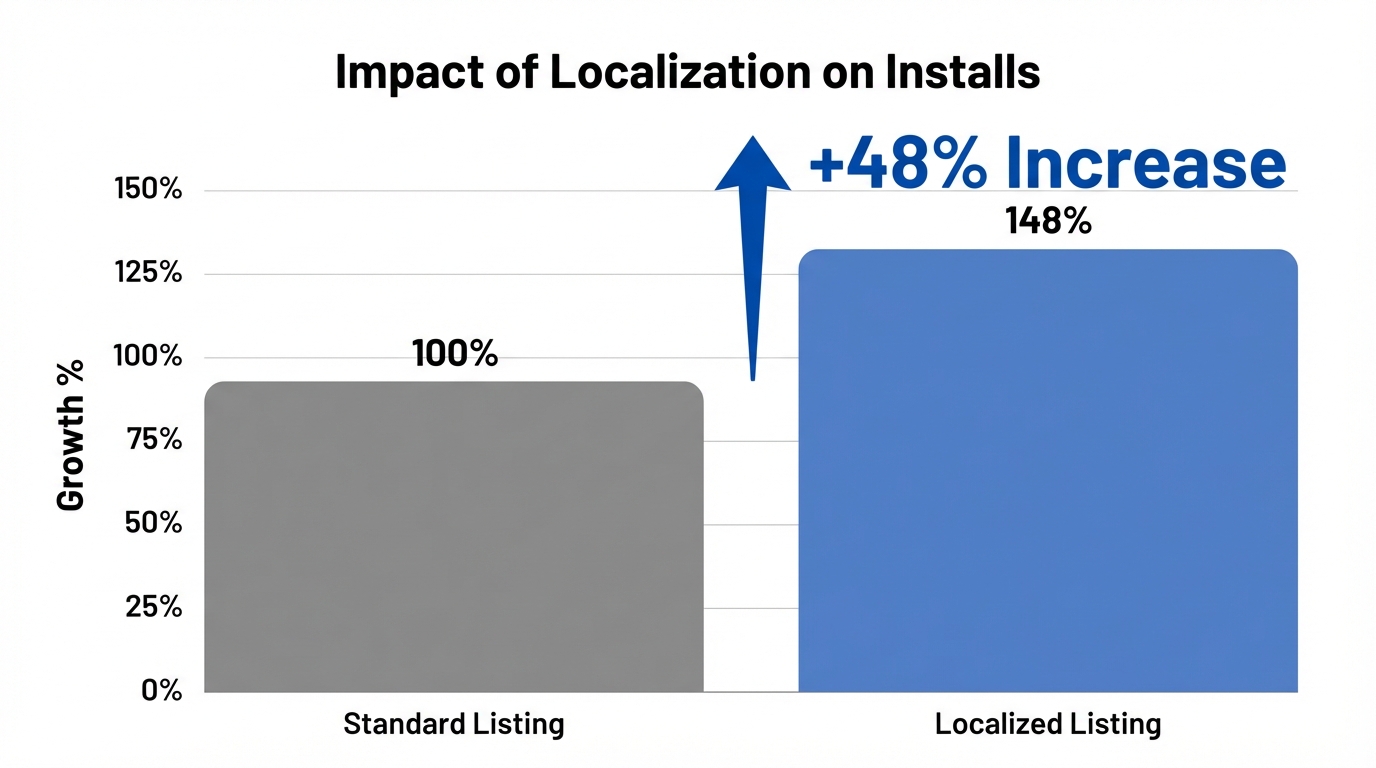
Data from leading analytics platforms suggests that app store localization is the single most effective lever for increasing top-of-funnel growth. On average, apps that localize their metadata for top markets—including the US, UK, France, Germany, and Japan—see a staggering 48% increase in installs compared to those that maintain English-only listings. This isn't just about language; it is about meeting the user where they are. Currently, 70% to 80% of all app installs originate from organic search according to Apple Search Ads data, meaning your ability to rank for localized app store keywords determines your global revenue ceiling.
"In a $138 billion market, being invisible in international search results is equivalent to leaving half of your potential revenue on the table."The Crucial Difference: Translation vs. True 'Culturalization'
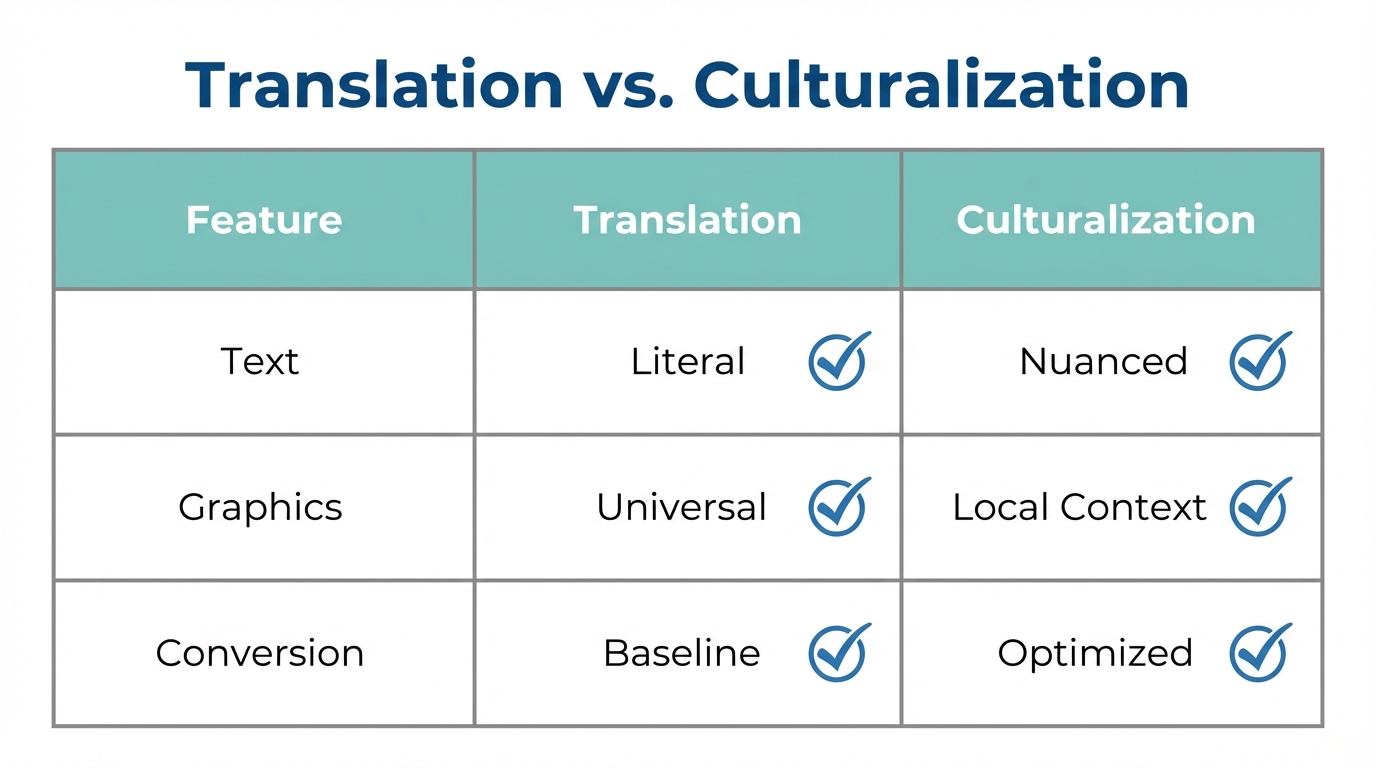
Many developers make the mistake of using automated tools to translate their title and description. While this satisfies the technical requirement of having text in another language, it fails to achieve culturalization. Culturalization involves adapting your metadata to the specific search habits, regional slang, and visual preferences of a local audience. For example, a "fitness tracker" in the US might be searched for using entirely different terminology in Germany or Japan. Using tools like ASOMobile allows marketers to identify these regional nuances and local search habits that basic translation tools miss.
Adapting Visuals and Metadata
True localization extends to your screenshots and preview videos. Experts at Practical Logix note that Apple’s algorithm now utilizes Optical Character Recognition (OCR) to "read" the text inside your screenshots. If your screenshots contain English text while targeting the Brazilian market, you are missing out on keyword relevance. Relevance engineering requires that every element—from the app name to the text overlay on a video—is optimized for the local context.
Case Study: AutoScout24's 74% Visibility Surge
The car marketplace app AutoScout24 provides a masterclass in the power of localized ASO strategy. Instead of a blanket European strategy, they adapted their keyword sets to specific local dialects. The result? A 74% increase in visibility and a 38% boost in downloads. They didn't just translate "used cars"; they found the specific terms users in different regions used when talking to their friends about buying a vehicle. This level of granularity is what separates market leaders from also-rans in the app store global expansion race.
| App Name | Strategy Used | Result |
|---|---|---|
| AutoScout24 | Local Dialect Optimization | +74% Visibility |
| iSharing | 2-Week Keyword Refresh | Ranked #160 to #92 |
| Breathwrk | Low-Difficulty Keyword Targeting | +15% Organic Installs |
| CoinSwitch | Custom Product Pages (CPPs) | +400% Conversion Rate |
The Global Localization Playbook: Step-by-Step
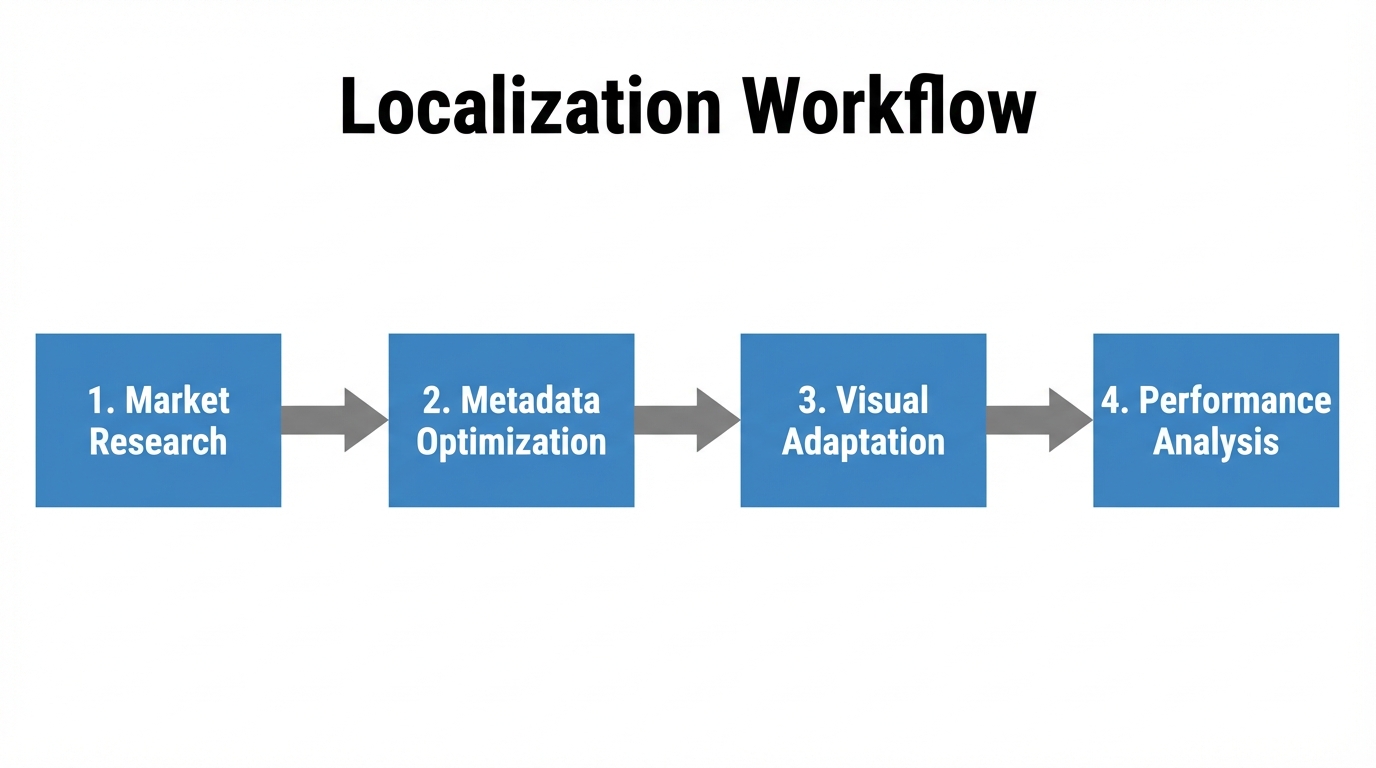
Scaling your app internationally requires a systematic approach. Follow this playbook to ensure your international ASO strategy is built for 2025 and beyond.
Step 1: Identify Priority Markets
Don't try to localize for 40 languages at once. Use market intelligence from Adjust to see where organic demand for your niche is growing. Focus on high-LTV (Life Time Value) regions like the US, Tier-1 Europe, and East Asia.
Step 2: Research Local Search Habits
Use tools such as ASOMobile or AppTweak to find high-intent, low-difficulty keywords in the local language. Remember that direct translations often have zero search volume because they aren't what real people type into the search bar.
Step 3: Optimize Your Metadata Real Estate
The App Name is your most valuable asset. Place your localized app store keywords within the first 25 characters. For the subtitle, focus on your Unique Selling Proposition (USP) in the local tongue. On iOS, as per Apple Developer guidelines, do not repeat keywords across fields; the algorithm combines them automatically, so repeating "Fitness" in the title and keyword field is a waste of 7 characters.
Step 4: Leverage Local Creators for UGC
Localization isn't just about the store listing; it's about the social proof surrounding it. To build trust in new markets, platforms like Stormy AI can help source and manage UGC creators who speak the local language and understand the cultural nuances. Having a creator in Berlin explain your app in German is far more effective than a dubbed English video.
"The future of ASO is 'Discovery Engine Optimization.' It’s about being cited by AI and recognized by local culture, not just appearing in a list."Avoiding Common Pitfalls in Global Scaling
Even the best global app marketing plans can fail if they fall into standard traps. Keyword stuffing is now heavily penalized by modern algorithms. Instead, aim for a natural density of 1-2% in Google Play descriptions. Furthermore, ignoring your ratings in specific regions can create a "ranking ceiling." An app with a 4.5-star rating in the US but a 3.2-star rating in France due to a local bug will struggle to rank in the French App Store, regardless of how perfect the keywords are.
Another common mistake is neglecting seasonal trends. Markets like China or India have massive shopping and cultural festivals like Lunar New Year or Diwali that drive huge spikes in search volume. Failing to update your keywords for these windows means missing out on the most valuable traffic of the year. High-growth apps that update their metadata every 2-4 weeks see up to 30% higher organic growth than those that set it and forget it.
The Future of Ranking: AI and Voice Search
As we look toward 2026, search intent is shifting toward conversational and voice-based queries. Users are no longer just typing "budget app"; they are asking Siri for the "best budget app for college students." This shift requires a move toward long-tail, question-based keywords in your localized descriptions. Furthermore, tools like Stormy AI allow you to automate the discovery of influencers who can drive the "engagement velocity" needed to sustain these rankings. Algorithms now weigh 7-day retention and crash rates as heavily as metadata, making App Experience Optimization (AXO) a critical component of your global strategy.
Conclusion: Localize to Monetize
In the $138 billion App Store ecosystem, localization is the bridge between a regional hit and a global powerhouse. By moving beyond simple translation and embracing true culturalization, you can tap into the 48% install boost that separates market leaders from the rest. Start by identifying your highest-potential markets, use regional analytics to find the right dialects, and never stop iterating on your metadata. The world is searching for your app—make sure you're speaking their language.