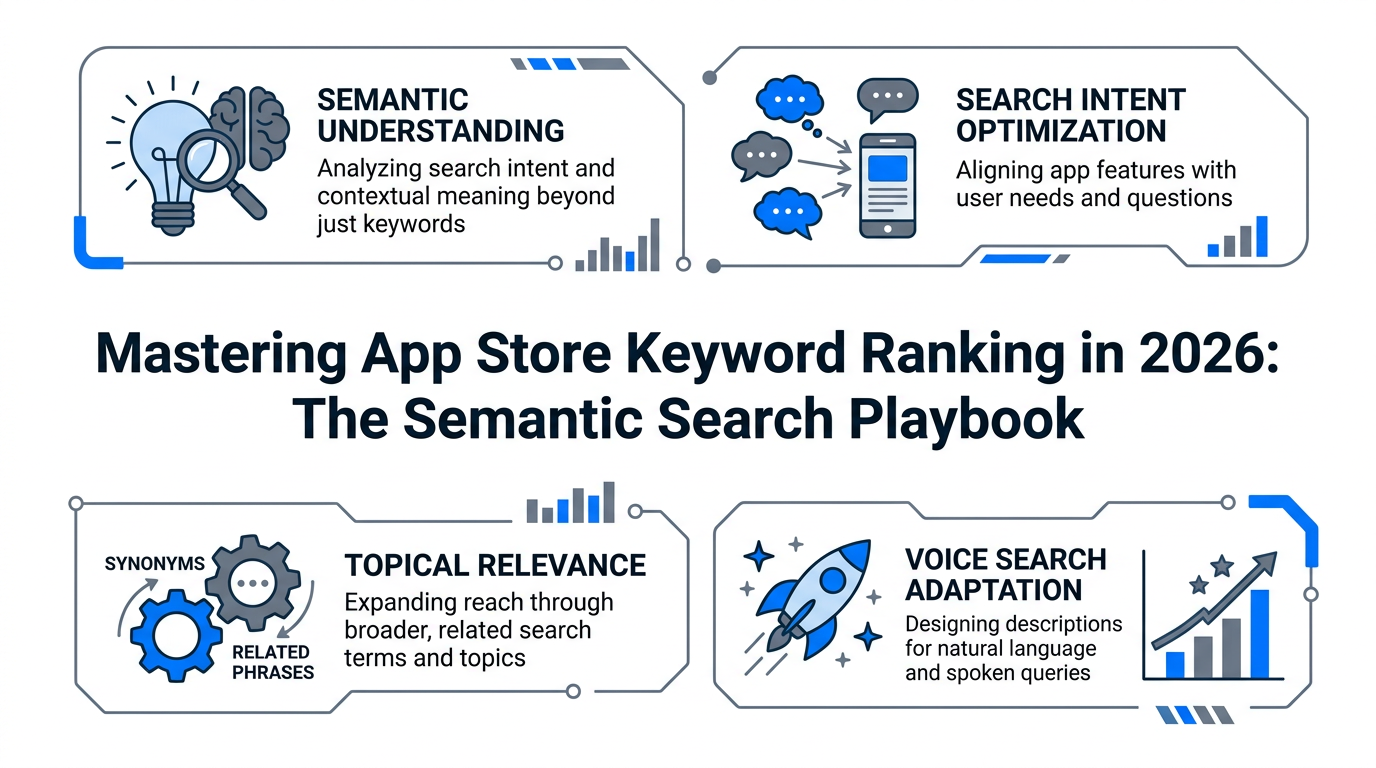
In 2026, the battle for the home screen isn't won by those who simply stuff keywords into a metadata field; it is won by those who master the psychology of intent. As we navigate this year, the data is undeniable: approximately 70% of all app installs originate from an app store search, according to research by AppTweak. For growth marketers, this means that app store keyword ranking remains the single most powerful organic lever for mobile app growth 2026.
However, the mechanics of discovery have fundamentally changed. We have moved past the era of simple lexical matching—where the algorithm looked for exact character strings—and entered the age of semantic indexing. Today, Apple’s App Store and Google Play utilize advanced Natural Language Processing (NLP) to understand what a user means, not just what they type. If you aren't optimizing for this semantic shift, you're leaving 50% of your potential visibility on the table.
The Semantic Shift: Why Intent Beats Character Strings
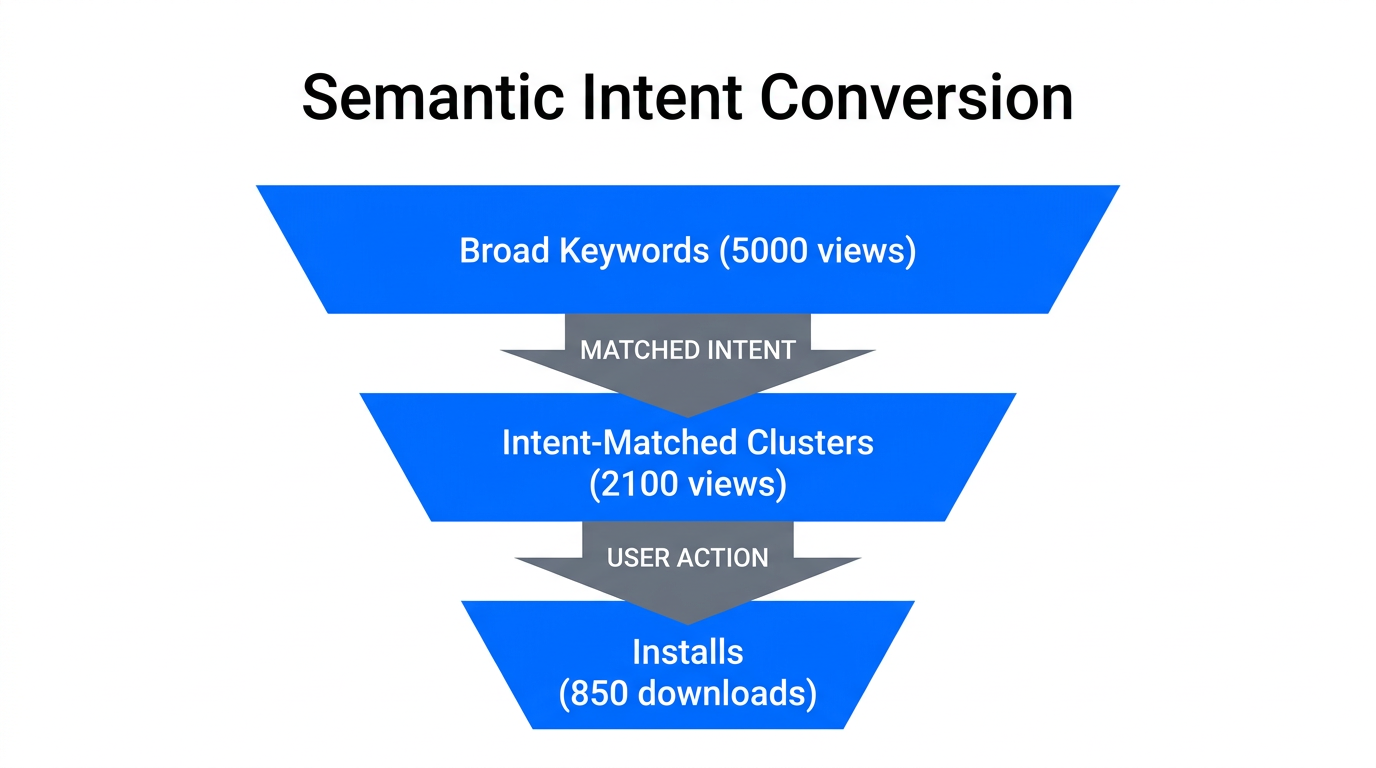
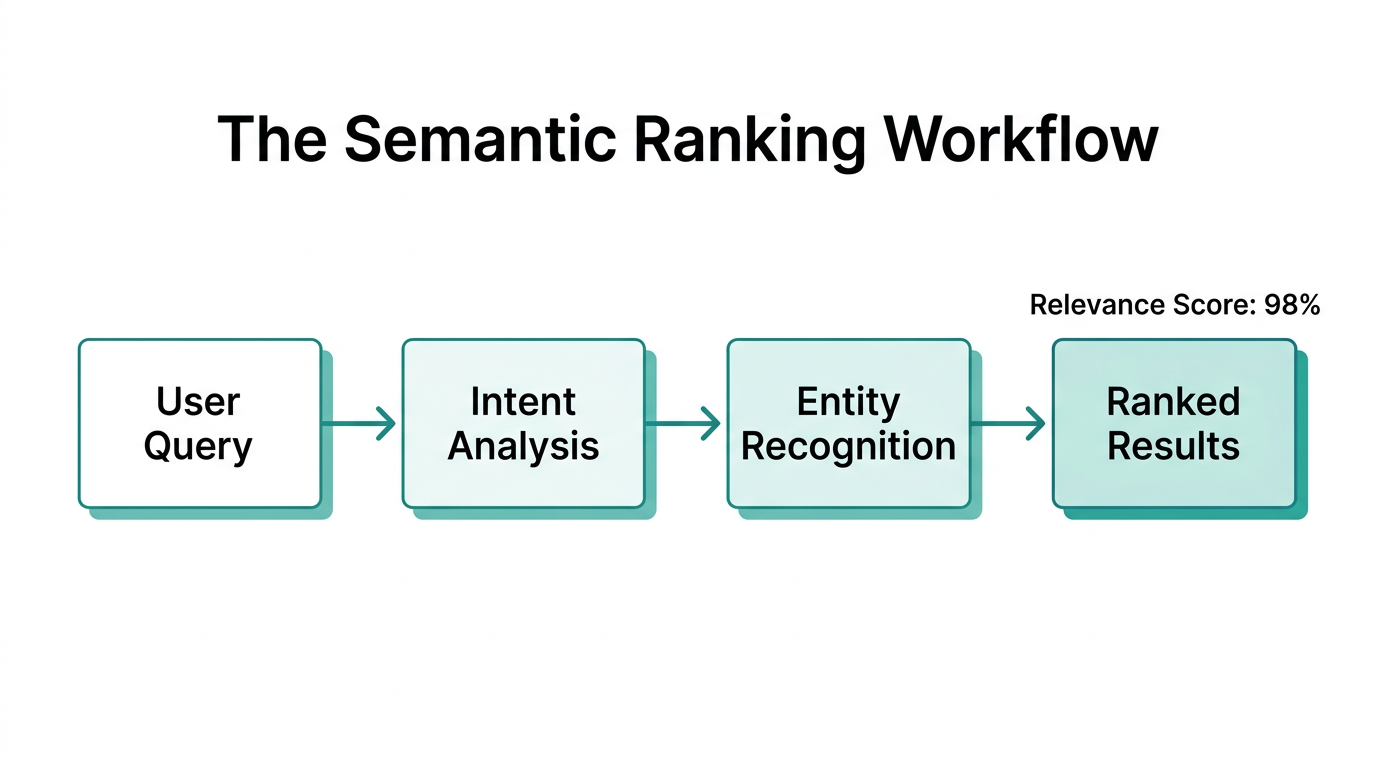
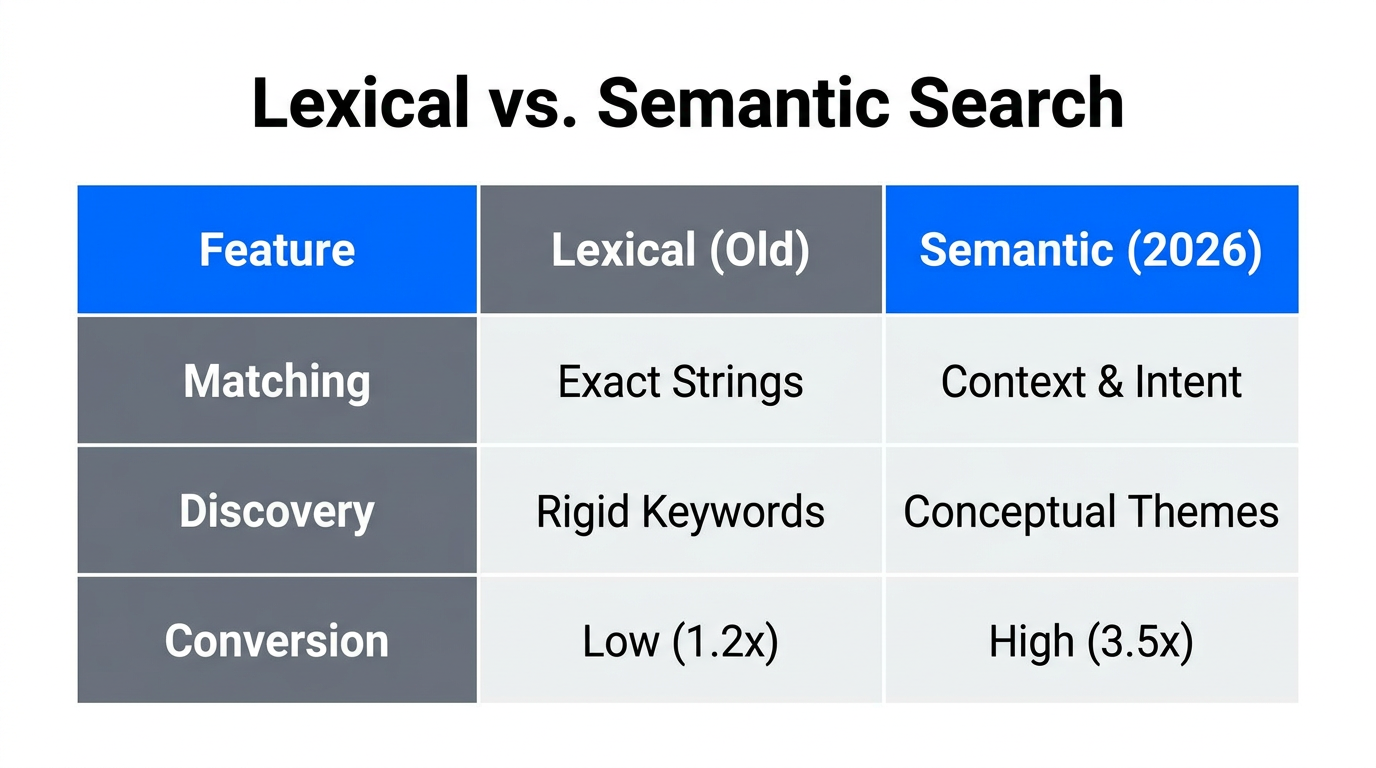
The traditional "exact-match" strategy is a relic of the past. In 2026, both major app stores rank apps for terms that are not explicitly included in their metadata. For instance, if your app is indexed for "calorie tracker," the store’s AI may automatically rank you for "diet log" or "nutrition diary" based on category relevance and user behavior patterns. This transition from lexical to semantic search means that app store discovery is now a game of context.
"In 2026, the algorithm no longer just reads your keywords; it interprets your app's purpose through the lens of user intent and category clusters."
To succeed in this environment, marketers must focus on semantic ASO strategy. This involves building a metadata profile that covers an entire niche rather than just high-volume individual words. According to Asolytics, apps that prioritize semantic clusters over isolated keywords see a 25% higher retention of ranking positions during algorithm updates. This is because semantic relevance is harder to disrupt than keyword density. Leading platforms like Stormy AI are now helping brands bridge the gap between organic search intent and creator-led discovery, ensuring your app remains visible across every touchpoint of the user journey.