Imagine generating $17,000 per month from a mobile app you built in just 30 days without writing a single line of code. For George, an 18-year-old college freshman, this isn't a pipe dream—it is reality. By leveraging the power of AI-driven development and a psychological framework known as the 'Gotcha Moment,' he transformed 2 million social media impressions into a thriving subscription business. The secret to this success doesn't lie in complex algorithms or massive engineering teams; it lies in mastering mobile app conversion rate optimization through a specific, repeatable onboarding and marketing playbook.
The Purple Cow Philosophy: Why Uniqueness Trumps Distribution
In the modern app economy, there is a common misconception that distribution is the only thing that matters. While getting eyes on your product is essential, George’s experience proves that distribution without a 'viral idea' is a recipe for failure. He recently launched two apps: one was a generic AI tool similar to ChatGPT wrappers, and the other was Wrestle AI, a niche tool for wrestling coaches. Despite both apps receiving nearly 2 million impressions, the generic app (codenamed 'Green') only secured 100 downloads. In contrast, Wrestle AI converted those impressions into thousands of paying users.
This discrepancy is explained by the Purple Cow Philosophy. To achieve high-converting app UI and viral growth, your product must be inherently novel and eye-catching. It needs to be something that has never been seen before in its specific niche. When your app is a 'Purple Cow,' your marketing creatives naturally convert better because the user's curiosity is piqued instantly. Platforms like Stormy AI help brands use AI-powered search across TikTok and Instagram to find the right UGC creators who can highlight these unique features in high-energy video ads, ensuring the 'Purple Cow' is seen by the right audience.
Defining the 'Gotcha Moment'

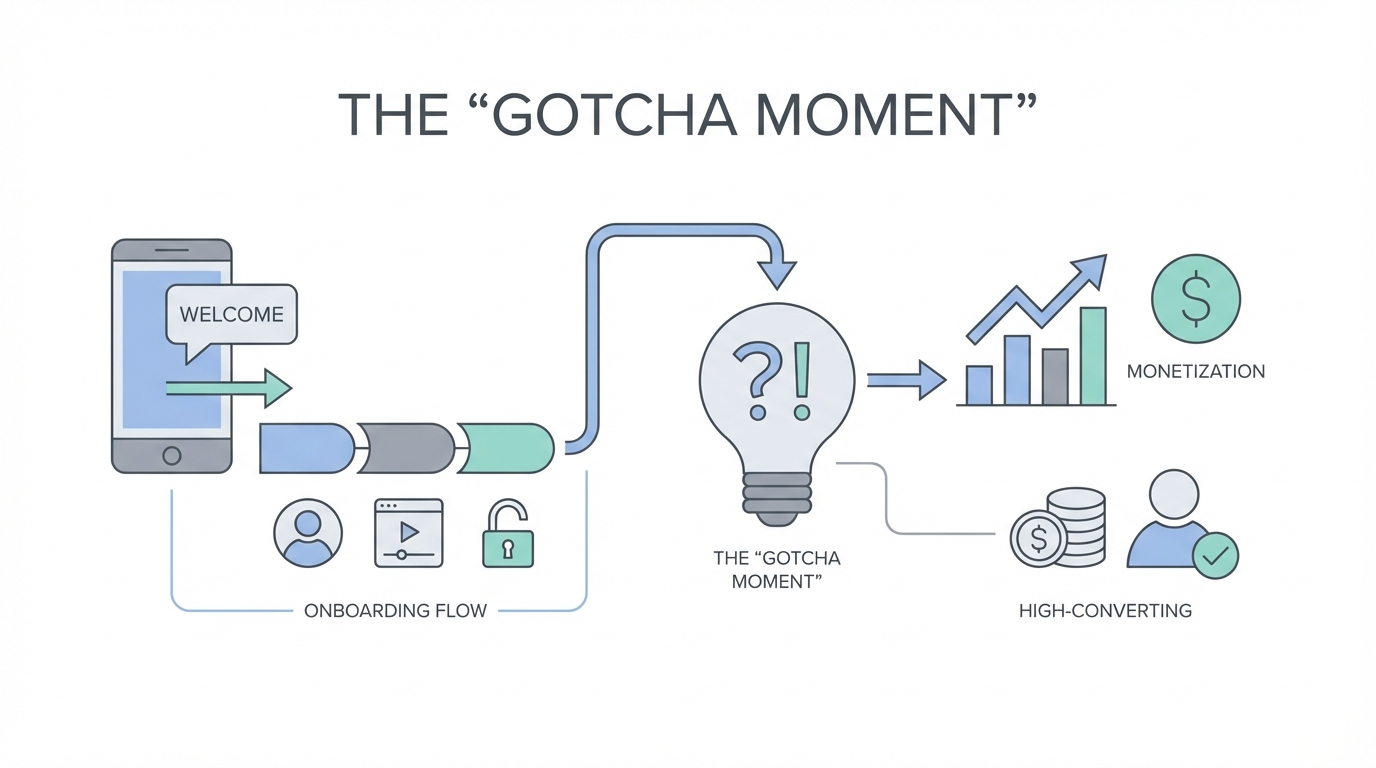
The core of George’s success is the 'Gotcha Moment.' This is a feature or demo built into the app that immediately conveys the app's value in about 5 seconds. For Wrestle AI, the gotcha moment is a video analysis tool where a user uploads a clip of a wrestling match, and the AI instantly breaks down their performance. It stops the scroll on social media because it provides an immediate, tangible result that looks like magic.
When planning your app monetization strategies, you must identify what your 'Gotcha Moment' is. It should be the focal point of your marketing and the climax of your onboarding process. By showing the user the results they desire—without giving away the full report until they hit the paywall—you create a powerful psychological bridge to conversion. This is a hallmark of app onboarding best practices: give them a taste of the magic, then ask for the subscription to unlock the full potential.
The 4-Step Onboarding Formula for Maximum Conversion
Getting a user to download your app is only half the battle. The transition from 'new user' to 'paid subscriber' happens during the onboarding flow. George suggests a specific formula that incorporates user retention tactics and psychological triggers to drive 100% higher conversions than standard flows.
Step 1: Educate the User
The first few screens should not just be a tutorial; they should be a value proposition. Use high converting app UI elements like bold typography and clear iconography to explain exactly what the app does. This sets the stage and manages expectations before the user encounters any friction.
Step 2: Personalize the Experience
Ask the user questions. How often do they train? What are their goals? This data collection serves two purposes. First, it makes the app feel tailored to the individual. Second, it forces the user to mentally commit to the solution the app provides. You can use tools like Supabase to store this user data and deliver a customized experience later in the funnel.
Step 3: Enact FOMO (Fear Of Missing Out)
Before showing the price, remind the user of what they stand to lose. Show testimonials, success stories, or a summary of the 'gaps' the AI found in their profile during the personalization phase. Creating a sense of urgency or loss aversion is a critical part of app monetization strategies that convert at high rates.
Step 4: The 'Gotcha' Demo and the Paywall
This is where the magic happens. Have the user perform the core action of the app (e.g., uploading a photo or video). Show them that the processing is happening. Display a 'sneak peek' of the result, but blur or lock the final actionable insights behind a paywall. By the time they reach this point, they have already invested time and effort, making them much more likely to start a free trial.
The Psychology of Friction: Why Longer Onboarding Works
Many developers fear that long onboarding processes will cause users to drop off. However, George argues that friction can be your best friend. This is due to the Sunken Cost Fallacy. When a user spends three minutes answering questions and interacting with your UI, they feel a psychological need to see the result of their effort. They have 'invested' in the process.
By the time they hit the paywall, the mobile app conversion rate optimization has already done its job. The users who make it through a 10-15 screen onboarding process are high-intent leads. They are significantly more likely to convert to a $59.99 yearly subscription because they don't want to let their 'work' go to waste. This is why apps like Opal and Caliber use extensive onboarding flows to qualify their users before ever asking for a credit card.
Vibe Coding: Building Without Code
George’s story is a testament to the new era of 'vibe coding.' He built Wrestle AI in a single month using AI tools and public APIs. For those looking to replicate this success, the technical stack is surprisingly accessible. He primarily used RoR (Roric), a vibe coding platform that allows you to prompt your way to a functional app. Unlike traditional development, vibe coding focuses on describing the logic and 'vibe' of the app while the AI handles the syntax.
To handle the more technical aspects, like payment integration or authentication, George used Fiverr to hire affordable developers for small, specific tasks. This allowed him to focus on the high converting app UI and marketing strategy while the pros handled the plumbing. The AI inference itself—the 'brains' of the wrestling analysis—was powered by OpenAI, costing only $40 to $60 per month despite serving thousands of users. For brainstorming and troubleshooting code logs, ChatGPT Plus acted as a 24/7 technical advisor.
The Influencer Marketing Playbook
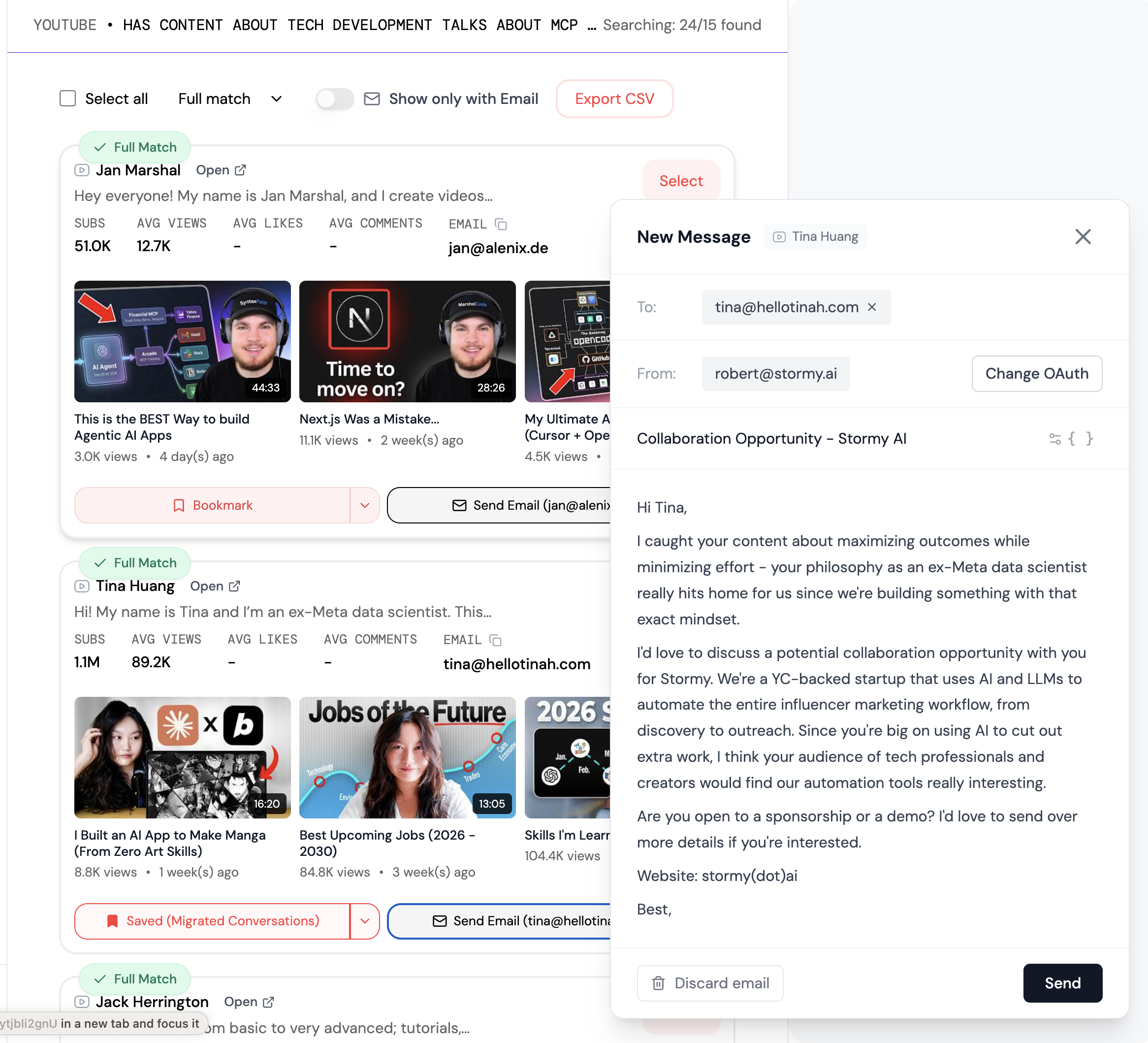
Once you have a high-converting product, you need fuel for the fire. George’s primary growth lever was influencer marketing. He didn't just send cold emails; he followed a strict 5-step playbook to land profitable deals. To find the right talent, he suggests using Stormy AI, which lets you paste any creator URL to get an AI-powered quality report and detect fake followers instantly before starting your outreach.
Step 1: The 'Paid Promo' Hook. Start every DM with the words 'Paid Promo?' influencers receive thousands of messages, and they prioritize those that offer immediate financial value. Step 2: Establish Credibility. George suggests verifying your account and having a professional-looking profile to increase response rates. Step 3: Get Them on the Phone. Negotiating via DM is slow. Getting an influencer on a call allows you to build a personal connection and 'sell' the vision of the app. Step 4: View Guarantees. Don't pay for just a post; pay for views. George structures deals with $2 to $5 CPMs and minimum view guarantees. If a video underperforms, the influencer must keep posting until the guarantee is met. Step 5: Scaling with Automation. Once you know what works, you could hire a virtual assistant, or better yet, use Stormy AI to set up an autonomous AI agent that discovers, outreaches, and follows up with creators on a daily schedule automatically while you sleep.
Benchmarking Success: Studying the Greats

You don't need to reinvent the wheel to master app onboarding best practices. The most successful developers spend hours deconstructing the onboarding flows of top-tier apps. George specifically points to Opal (a focus app) and Caliber (a fitness app) as gold standards for high converting app UI. By recording their onboarding screens and analyzing where they place their 'Gotcha Moment,' you can adapt these proven patterns to your own niche.
Study how these apps use progress bars, social proof, and 'fake' loading screens to build anticipation. These elements aren't just for show; they are user retention tactics designed to keep the user engaged until the final paywall. If you are looking to accelerate this learning curve, programs like Starter Story Build offer bootcamps that teach the exact vibe coding and marketing frameworks used by successful solo founders like George.
Conclusion: Turning Ideas into Income
The success of Wrestle AI proves that in 2025, determination and psychology are more important than traditional coding skills. By focusing on a unique 'Purple Cow' idea, building a 'Gotcha Moment' that provides instant value, and utilizing a high-friction onboarding flow to leverage the Sunken Cost Fallacy, any developer can achieve mobile app conversion rate optimization that rivals major tech companies. Start by identifying a niche, use AI tools to vibe code your MVP, and find the right UGC creators on Stormy AI to launch your 'Gotcha Moment' to the world. The hard part is the fun part—now it's time to start building.