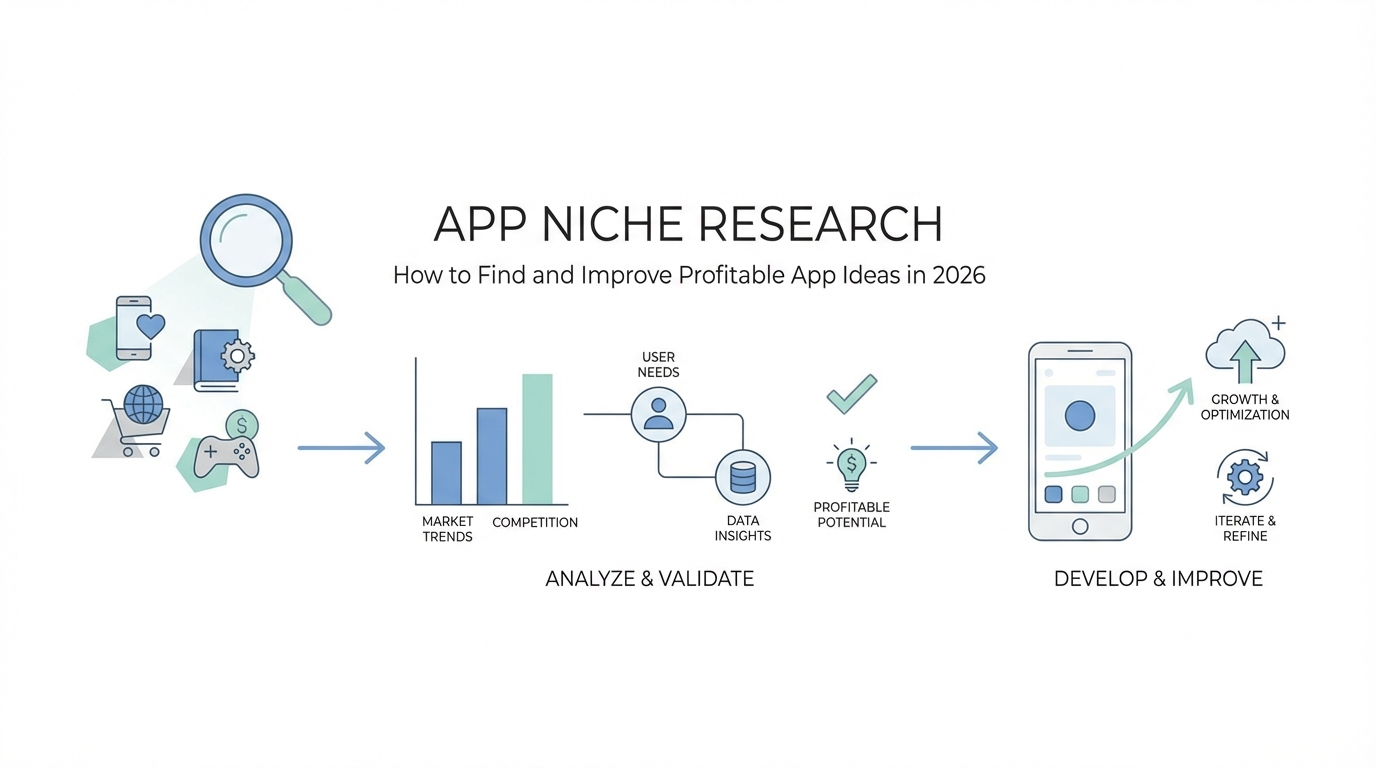
In 2026, the barrier to building a mobile application has virtually vanished. With the advent of sophisticated AI coding assistants, the technical challenge of "how to build" has been replaced by the strategic challenge of "what to build." Success in the current landscape isn't about having the most complex code; it is about finding profitable mobile app ideas that solve specific, high-intent problems for a dedicated audience. The difference between an app that sits at zero downloads and one that generates $20,000 in monthly recurring revenue often comes down to the quality of your initial app market research.
The Sensor Tower Strategy: Finding Proven Markets
The biggest mistake first-time founders make is trying to invent a completely new category. In 2026, the smartest move is to look at what is already working. To perform effective saas niche research, start by identifying niches where existing apps are already generating significant revenue. Using tools like Sensor Tower, you can filter for applications that are currently earning over $50,000 per month in revenue.
When you find an app in this revenue bracket, you aren't just looking at a competitor; you are looking at market validation. If users are willing to pay for a specific solution, the demand is real. For instance, recent case studies on Starter Story highlight how founders are entering crowded markets like productivity or wellness and finding massive success simply by identifying gaps in the market leader's offering. The goal isn't to be unique; it is to be better and more focused than the current incumbent.
The 'Improvement Strategy': How to Build a Better Version

Once you have identified a profitable niche, the next step in your mobile app business model is the "Improvement Strategy." This involves a deep dive into the top-performing apps to identify their flaws. Are the users complaining about a cluttered UI? Is the onboarding process too short or too confusing? Is the distribution strategy outdated? Platforms like Stormy AI (an all-in-one AI platform for creator discovery and analysis) are increasingly used by savvy developers to see how competitors are using creators and UGC to drive growth, providing a roadmap for where you can outperform them. You can use Stormy AI to vet creators and get AI-powered quality reports that detect fake followers and engagement fraud in seconds.
Take, for example, the success of Mal Baron, who built the Prayer Lock app. He didn't invent the concept of a prayer app; he found an existing app called "Praycreen" and realized he could do a better job with the design, features, and execution. By studying the onboarding screens of successful apps in and out of his niche using resources like Starter Story, he was able to craft a user experience that resulted in a 43% conversion rate. This level of optimization is only possible when you treat app market research as a competitive study of user friction.
Pivoting to Purpose: Faith and Wellness Niches
When searching for how to find app niches, many developers get lured into high-competition or ethically ambiguous categories like adult content AI. However, the data for 2026 suggests that pivoting toward personal faith and wellness niches often unlocks more sustainable growth. These niches have higher retention rates and a more loyal user base, which is critical for a long-term mobile app business model.
Shifting from a saturated, "disgusting" niche to a purpose-driven space like Christian tech can lead to explosive growth. In Baron's case, moving to the faith space led to 58,000 downloads and a 4.9-star rating in just six months. These niches allow you to connect more deeply with your customers, understanding their daily struggles and spiritual goals, which in turn informs your feature set and marketing copy. When your app serves a genuine purpose, users become advocates, contributing to a high review rate—sometimes over 12%—without forced prompts.
Market Validation: The 2-Week Hard Limit

In the age of AI, there is no excuse for spending six months building an unvalidated product. For effective saas niche research, you must set a hard limit of two weeks for development. If you cannot build a functional MVP (Minimum Viable Product) in that timeframe, the idea is likely too complex for initial testing. Using AI tools like Cursor as your primary code editor allows you to move from concept to code in days, not months.
While building, do not waste time on unnecessary features. Many successful apps making $20k/month don't even use a database or user authentication. By saving data locally on the device, you reduce friction for the user and lower your own server costs. This lean approach, often supported by asking architectural questions in ChatGPT, ensures you spend your energy on the only thing that matters: distribution. If the market doesn't want the simple version, they won't want the complex one either.
Simplicity as a Feature: Solving One Simple Problem
One of the most profitable mobile app ideas is the "Single-Task App." Many developers fall into the trap of building all-in-one solutions that confuse the user. Instead, find a niche that solves one specific problem remarkably well. For Prayer Lock, that problem was phone addiction interfering with prayer. The app blocks other apps until the user recites a prayer—a simple, elegant solution to a very modern problem.
Simplicity also extends to your technical stack. High-growth apps are currently being built using Google Gemini for in-app AI services and PostHog for analytics. This focus on a lightweight, functional stack allows for rapid iteration. When you aren't bogged down by complex infrastructure, you can spend more time on your onboarding funnel, which is where the money is actually made. An onboarding process that tells a story and adds value can 3x your conversion rate compared to a generic signup screen.
The Distribution Playbook: UGC and Spark Ads
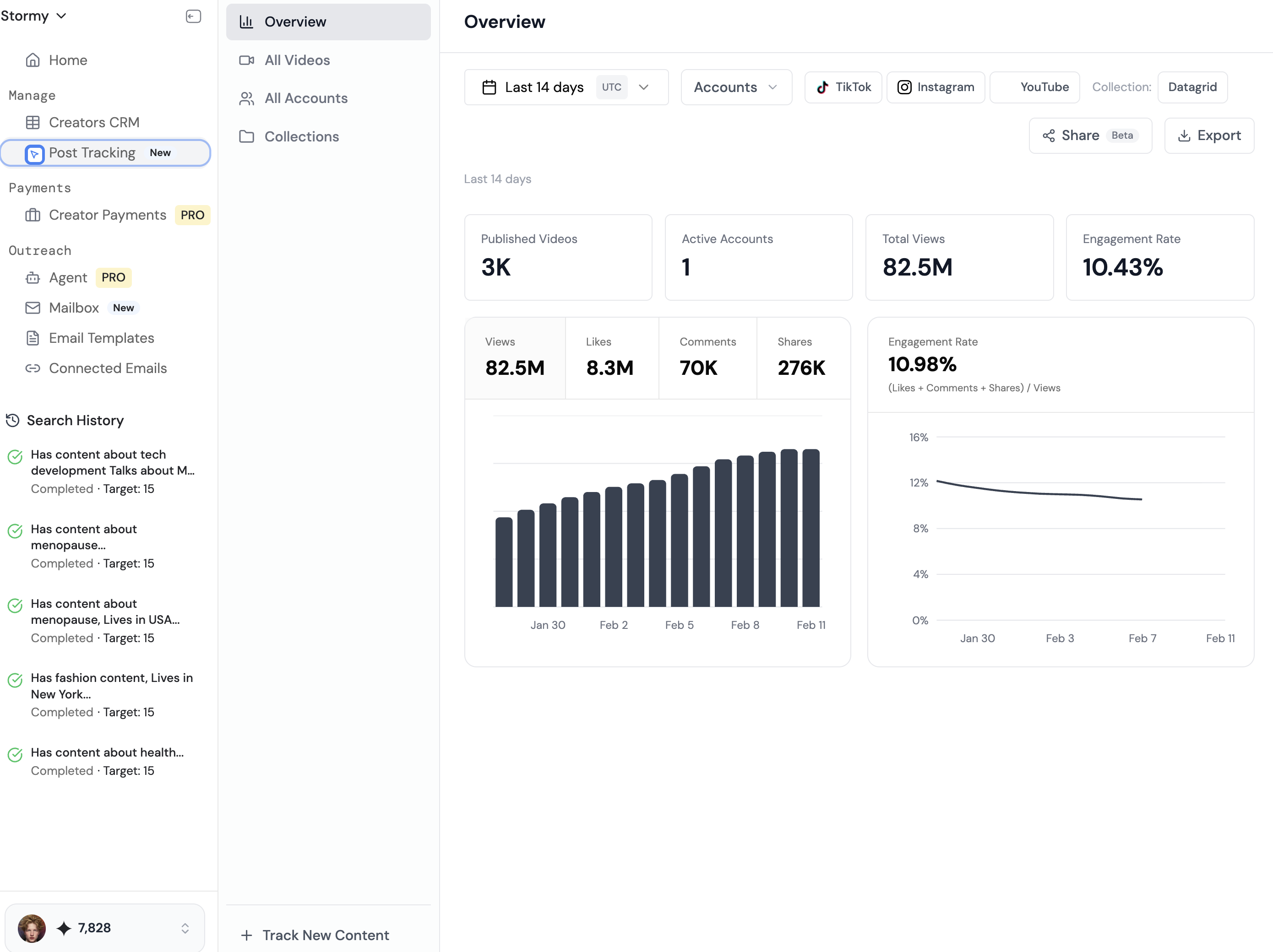
Building the app is 20% of the battle; distribution is the other 80%. In 2026, organic volume is the primary engine for early growth. This means posting content up to 20-40 times a day across multiple accounts. The most effective format currently is the UGC (User Generated Content) reaction video. If you are struggling to find the right faces for your brand, Stormy AI is an AI search engine that lets you find UGC creators and influencers by typing natural-language prompts like "tech creators in NY."
Once you find a video hook that works organically, you should transition to paid advertising. Starting with Meta Ads at a small budget of $20/day can provide initial data, but TikTok Spark Ads are currently the gold standard for app scaling. By boosting organic videos that are already performing well, you can achieve a cost per trial started as low as $3.00. You can then use Stormy AI to track individual videos and monitor views, likes, and engagement across all your campaigns in one dashboard.
Optimizing the Funnel: Paywalls and Analytics
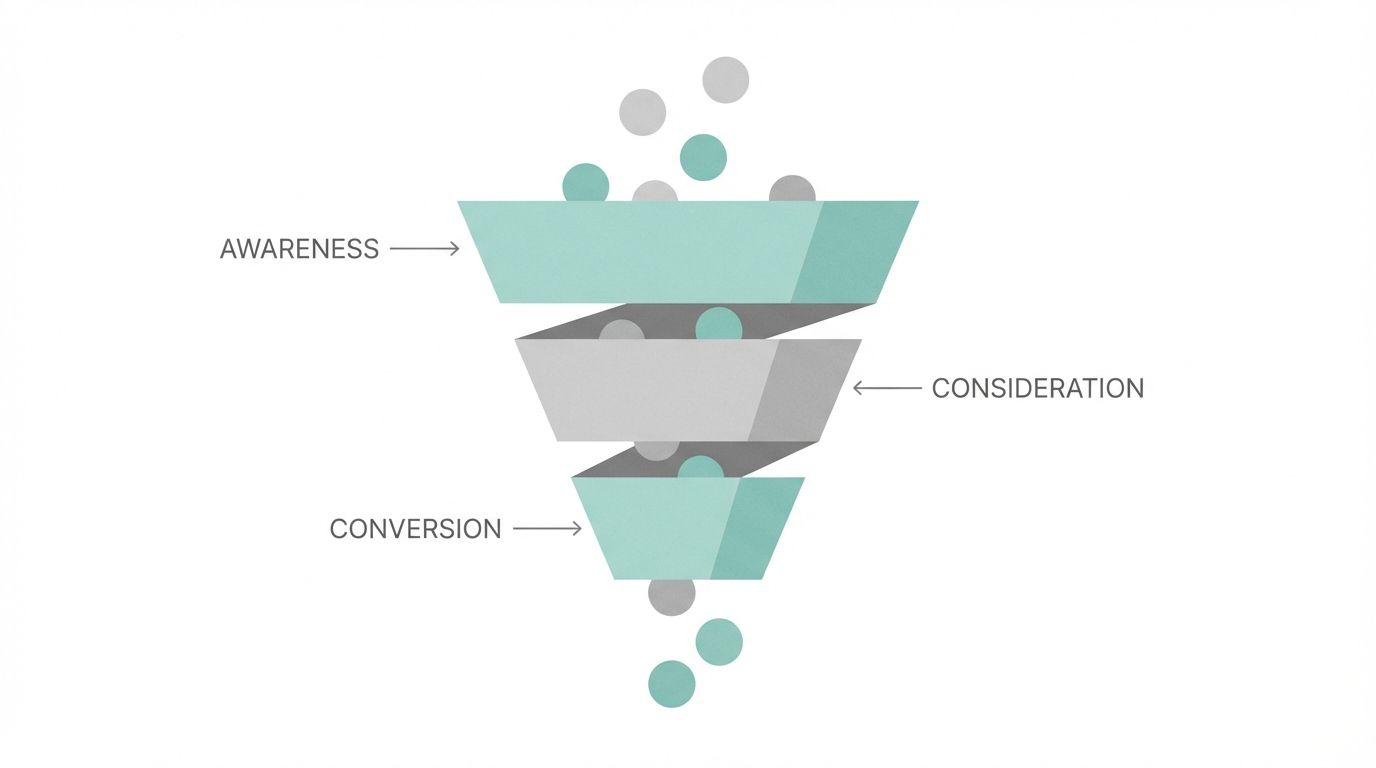
To sustain a mobile app business model that supports heavy ad spend, you must be a "maniac" about your onboarding and paywall optimization. You should aim for at least a 10% download-to-trial conversion rate before scaling your paid ads. Tools like Superwall allow you to iterate on paywalls without submitting new app updates, which is vital for testing price points like $49.99/year or $9.99/week.
Furthermore, using a Mobile Measurement Partner (MMP) like Singular is essential for tracking where your paying users are coming from. Without accurate attribution, you are essentially flying blind with your ad spend. By combining deep analytics with constant onboarding iterations—sometimes increasing the onboarding length from 5 minutes to 15 minutes to better qualify the user—you ensure that every dollar spent on TikTok Ads returns maximum profit.
Conclusion: Your Roadmap to App Success
Finding profitable mobile app ideas in 2026 requires a shift from "invention" to "improvement." By utilizing app market research to identify high-revenue niches, setting strict development deadlines, and obsessing over UGC-driven distribution, you can build a life-changing business in a matter of months. Remember, the goal is to find a proven problem and solve it with more focus and better design than anyone else.
Whether you are building a faith-based utility or a simple productivity tool, the playbook remains the same: validate with speed, optimize for conversion, and scale with volume. Start by using Stormy AI to find the creators who will help you launch, and you can even set up an autonomous AI agent within the platform that discovers, outreaches, and follows up with creators on a daily schedule automatically. Turn your research into a revenue-generating reality by letting Stormy AI handle your influencer marketing pipeline.