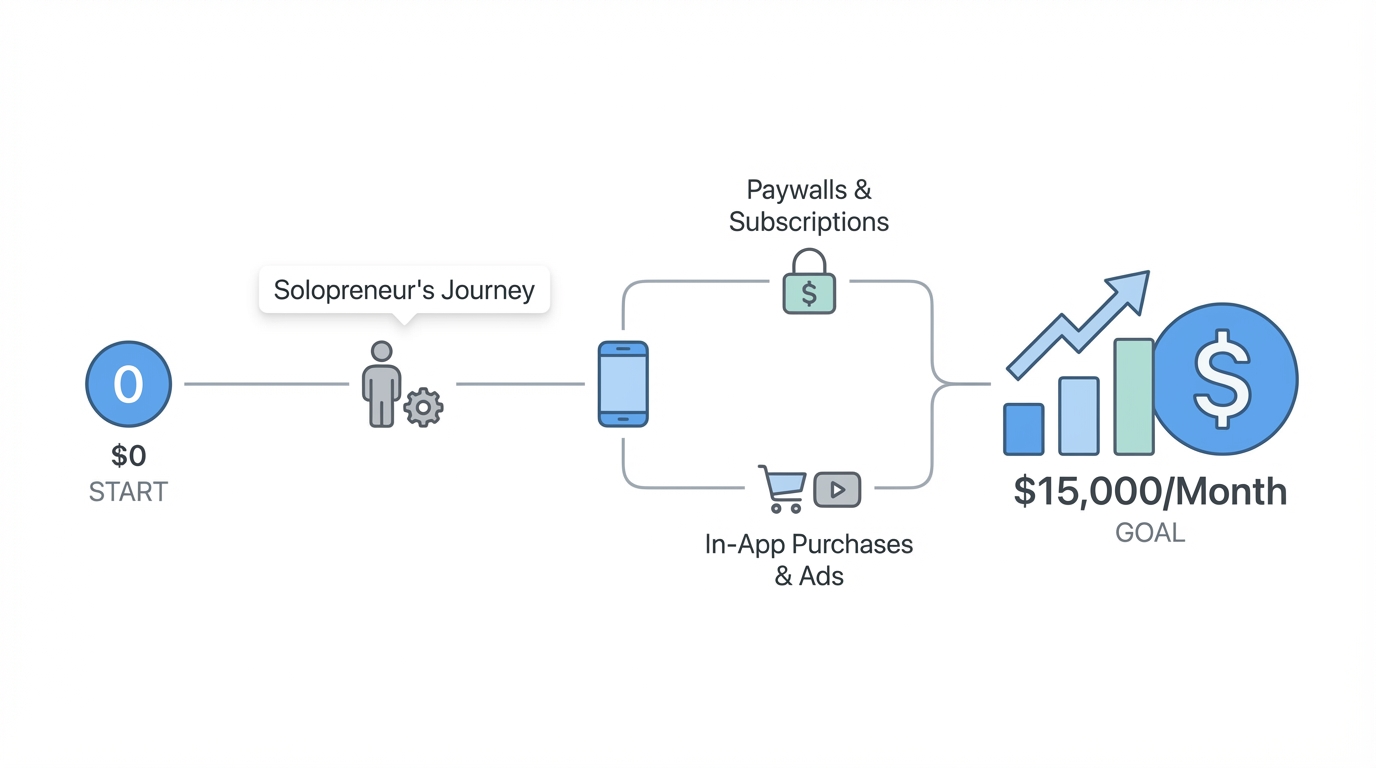
Building a mobile app is one thing; making it profitable is an entirely different battle. Many developers spend months or even years perfecting a product only to realize that downloads do not equal dollars. Jack Frics, a successful developer who has built four apps, experienced this firsthand when his first major project took eight long months to make its first dollar. However, once he cracked the code on app monetization strategies, that same app exploded to $15,000 in a single month. His journey provides a masterclass for any solopreneur app business looking to transition from a passion project to a high-revenue machine.
The Realization: Why Downloads Do Not Equal Dollars
The most dangerous trap for a developer is focusing solely on traffic. Jack’s app, Curiosity Quench, managed to garner thousands of downloads and 5 million views on social media, yet the revenue remained stagnant. In the early stages, he was seeing 50 to 60 downloads a day but making almost nothing. This gap exists because many creators overlook the importance of a high-converting paywall optimization tips strategy. Without a clear, frictionless path to purchase, users will simply use the free version or abandon the app entirely when they hit a roadblock.
Jack discovered that the key to mobile app revenue growth isn't just getting more people through the door; it's about what happens the moment they walk in. If your onboarding doesn't lead to a compelling offer, your viral traffic is essentially wasted. To fix this, solopreneurs must move away from complex monetization models and embrace the industry standards that users already trust and understand.
Transitioning from Confusing Credit Shops to Standard Paywalls

One of the biggest mistakes Jack made early on was using a "credit-based" system. Users had to buy "Quench Credits" to access specific features, which created cognitive friction. Most users didn't understand the value of a credit, how many they needed, or why they couldn't just pay a flat fee. This confusion is a conversion killer. To optimize his revenue, Jack moved away from the shop model and toward a standard, high-converting paywall.
By implementing platforms that allow for rapid design changes, such as Superwall, he was able to replace his clunky shop with a professional subscription screen. This change alone helped shift his revenue from $500–$1,000 a month to the $2,000–$4,000 range before his viral peaks. When users see a familiar subscription layout, they feel more secure. For those looking to find creators to showcase these polished app experiences, platforms like Stormy AI for finding and vetting UGC creators can help identify the right voices to bridge the gap between content and conversion. Unlike legacy tools like Tagger or impact.com, you can paste any creator profile URL into Stormy to get an AI-powered quality report and detect fake followers in seconds.
The Impact of the 'Free Trial' on Conversion Rates
If you want to see an immediate spike in your mobile app revenue growth, you must test a free trial. Jack noted that he didn't even realize free trials were the industry standard until he began studying top-performing apps. Adding a 3-day or 7-day free trial allows users to experience the premium features without immediate financial risk, which significantly lowers the barrier to entry.
According to data from over 422 profitable paywall experiments, trials are one of the most consistent winners for increasing lifetime value (LTV). You can explore these specific data points for free at paywallexperiments.com. When Jack introduced the trial, he saw his average revenue per user (ARPU) climb. The psychology is simple: once a user integrates your app into their daily routine during a trial, they are far less likely to cancel when the first billing cycle hits.
The AB Testing Playbook: Finding the Perfect Paywall
To truly master app monetization strategies, you cannot guess what works—you have to test it. Jack’s success came from iterative testing rather than a single "lucky" design. Here is the playbook for how a solopreneur app business should approach testing:
Step 1: Test Your Header and Visuals
Your header is the first thing a user sees. Jack found that using a clean, template-based design often outperformed his custom-coded attempts. Use high-quality assets that reflect the app’s core value proposition. If your app is about productivity, your header should feel calm and organized.
Step 2: Optimize the Copy
Don't just list features; sell benefits. Instead of saying "Get 10 AI Plans," try "Stop Scrolling and Start Your Hobby Today." Jack used AB test paywalls to find which phrases resonated most with his audience. Small tweaks in wording can lead to double-digit increases in conversion rates.
Step 3: Experiment with Price Points
Is your app worth $4.99 a week or $29.99 a year? You won't know until you test. Jack’s latest app, Lovely, reached 100,000 downloads in 10 weeks by balancing a freemium model with a clear upgrade path. If you are running paid campaigns through Google Ads or Meta Ads Manager, testing price points becomes even more critical to maintain a positive return on ad spend (ROAS).
Viral Marketing: Copying Beats Creating
Jack’s approach to marketing is refreshingly honest: he doesn't try to be original. Instead, he uses a 15-minute scrolling ritual. Every morning, he spends exactly 15 minutes on TikTok and Instagram specifically looking for winning formats in his niche. When he finds a video with millions of views, he doesn't just admire it—he copies the format, replaces the content with his app, and posts it.
He made one specific hobby-related video 400 times. This high-volume approach led to 5 million views and thousands of downloads. By using Stormy AI to discover creators who already understand these viral hooks, app developers can scale their organic reach without having to be on camera themselves. Stormy is an AI-powered platform that includes an autonomous AI agent to discover, outreach, and follow up with creators on a daily schedule while you sleep. Jack also recommends tools like SpyTalk, which uses AI to find viral outliers that promote apps in subtle, organic ways. This allows you to focus on the pieces of gold—formats that actually drive downloads rather than just vanity metrics.
Case Study: How Curiosity Quench Hit $15,000
Curiosity Quench was built to solve Jack’s own problem with "doom scrolling." For the first eight months, it made almost nothing. The turning point was a combination of viral organic content and paywall optimization. Jack found an Instagram format involving four pictures and a funny caption about hobbies. He adapted this for his app and pinned a comment with the download link. This single strategy, repeated over and over, drove the app to its peak month of $15,000 in revenue.
He eventually built a tool called PostBridge to manage this volume, which itself grew to $20,000 MRR. This highlights a key solopreneur lesson: often, the problems you solve while building your first app become the basis for your most profitable second app. Jack even turned down a million-dollar acquisition offer for PostBridge because he was enjoying the process of building and scaling his portfolio.
Case Study: The 100,000 Download Surge for Lovely
Jack’s newest app, Lovely, is a couple’s widget app that achieved 100,000 downloads in just 10 weeks. This success was fueled by a "gold" format on Instagram: an 8-10 second video of someone directly using the app. This converted 20 times better than his previous slideshow formats because it felt authentic and demonstrated immediate value.
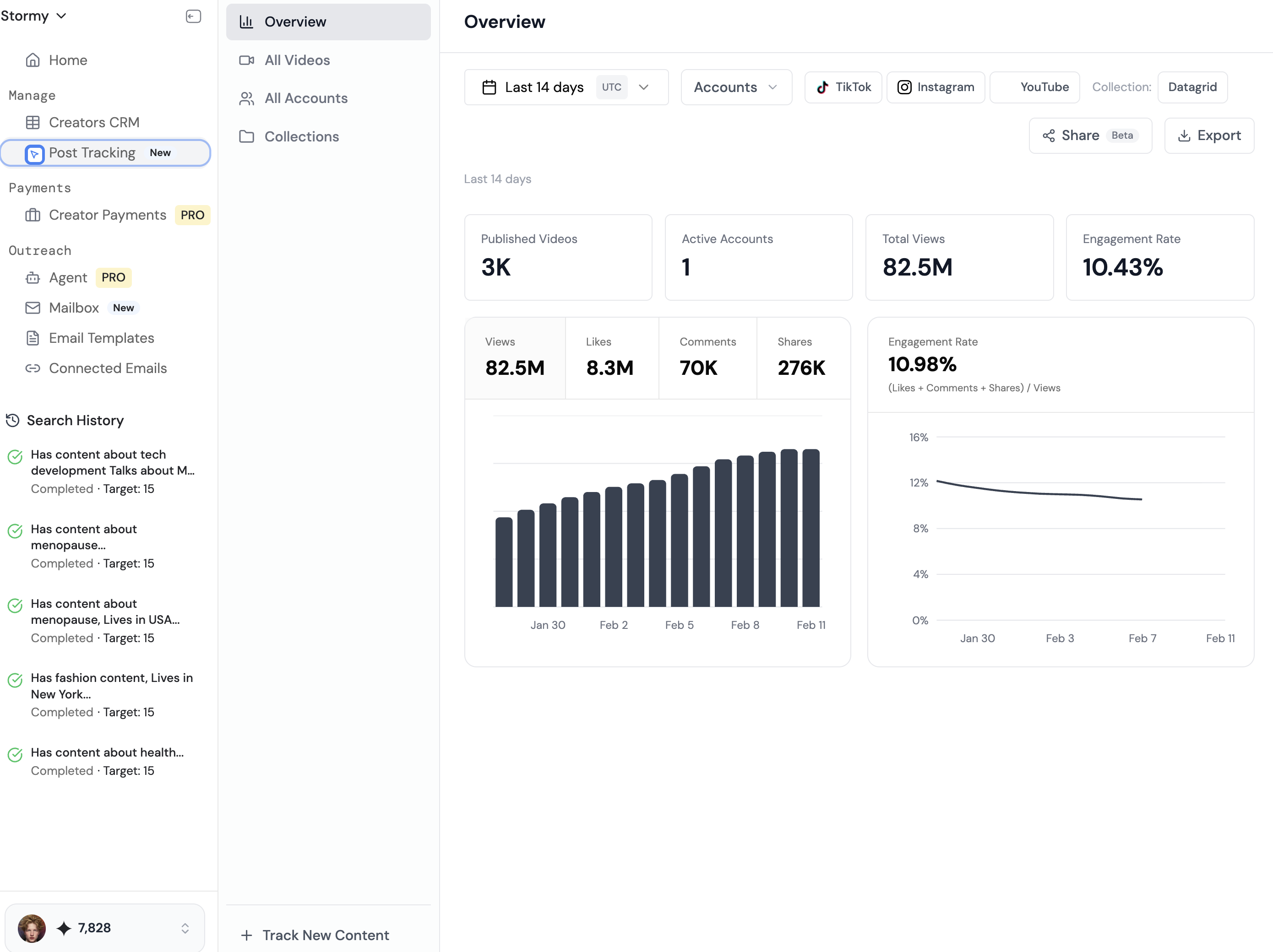
The app also saw massive success on Twitter, where a single tweet about a user turning the app into a grocery list garnered 16 million views and 40,000 downloads overnight. By staying agile and reacting to how users were actually using the app, Jack was able to lean into those trends. Developers can also use Stormy AI for post tracking and analytics to monitor individual videos and see exactly which content is driving the most engagement across all platforms. He is now reinvesting that revenue into scaling his distribution, aiming for $5,000 MRR by the end of the year.
Conclusion: The Solopreneur’s Path to Scale
Scaling a solopreneur app business from $0 to $15,000 a month isn't about a single stroke of genius. It's about closing the gap between traffic and revenue through paywall optimization tips and relentless AB testing. By moving to standard paywalls, offering free trials, and aggressively repurposing viral content formats, you can turn a hobby app into a significant income stream. Remember to use data-driven tools like Apple Search Ads for targeted growth and maintain a high volume of creative output. To manage the scaling process, Stormy AI provides a full creator CRM and integrated payment system to handle all your collaborations in one place. Stop wondering why your downloads aren't turning into cash—start testing your paywalls today.