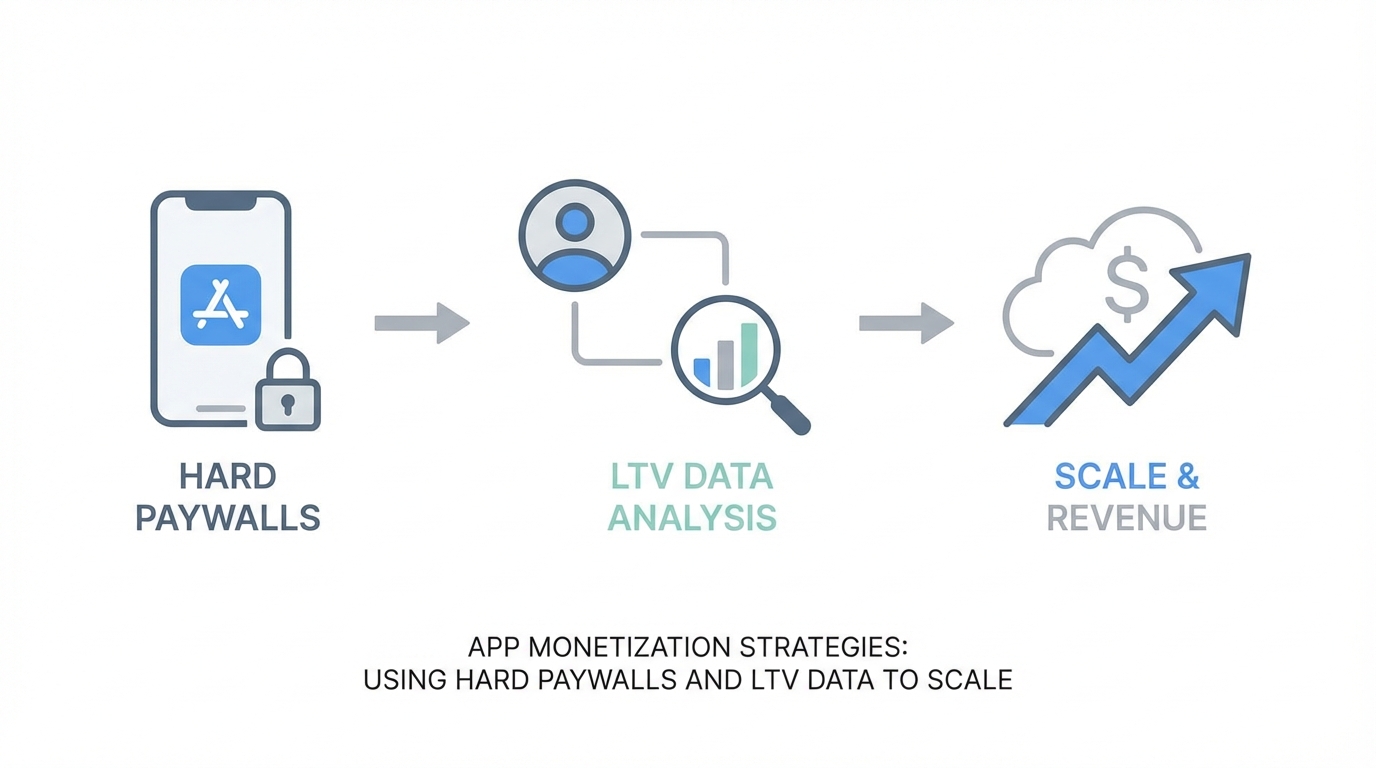
In the current mobile landscape, the difference between a struggling hobby project and a $40,000-per-month business often comes down to a single screen: the paywall. For years, the conventional wisdom in mobile app monetization was to offer a frictionless entry, allowing users to explore the app before asking for a subscription. However, a new wave of founders is flipping this script, utilizing the "hard paywall" to drive massive conversion rates and predictable recurring revenue business models. By combining high-friction onboarding with data-driven unit economics, developers are turning simple utilities into high-growth assets.
Success in the App Store is no longer just about code; it is 95% marketing and monetization strategy. As highlighted by entrepreneurs like Stephen Cravatta of Starter Story, who built the vaping cessation app Puffcount to over $40k in monthly revenue, the shift toward aggressive subscription models is the most reliable path to scale. This approach requires a deep understanding of lifetime value app analytics and the psychological triggers that turn a casual downloader into a long-term subscriber. To replicate this success, you must master the interplay between user psychology, pricing elasticity, and the tools that measure them.
The Hard Paywall Revolution: Why Friction Increases Conversions

The term "hard paywall" refers to an unskippable subscription screen that appears immediately after onboarding, requiring a user to start a free trial or purchase a subscription before accessing any core features. While this sounds counterintuitive, it has become the gold standard for high-performing app subscription models. When implemented correctly, a hard paywall can spike conversion rates to 20% or even 25%, a massive leap from the 1-3% seen in traditional "freemium" models.
The logic is simple: by forcing a decision at the moment of highest intent—immediately after a user has downloaded the app to solve a specific problem—you capture the users most likely to find value. For apps like Puffcount, moving to a hard paywall changed the business overnight. It filters out low-intent users and focuses the developer's efforts on the paying cohort. To manage these users effectively and understand their journey, many top developers use a creator CRM from Stormy AI to track interactions and feedback from their highest-value segments, providing far more specialized functionality than legacy business CRMs.
However, a hard paywall is only effective if the perceived value is established before the screen appears. This is where app paywall optimization begins—not on the payment screen itself, but in the steps leading up to it. If a user understands the transformation the app provides, the paywall becomes a gateway to a solution rather than a barrier to entry.
Onboarding Psychology: The Power of the Questionnaire
Modern monetization strategy relies heavily on onboarding psychology. Instead of a quick "Sign Up" button, successful apps use extensive, multi-step questionnaires. This serves two purposes: it collects vital data to personalize the experience, and it leverages the "sunk cost" or investment effect. When a user spends three minutes answering questions about their habits, goals, and struggles, they become psychologically invested in seeing the result.
For example, in the health and wellness niche, an app might ask about daily water intake, sleep patterns, and weight goals. By the time the user reaches the paywall, the app has "diagnosed" their problem. Tools like Typeform or custom-built internal flows are used to create these experiences. This high-friction onboarding actually increases the likelihood of conversion because the user feels the product is now tailored specifically to them. They aren't just buying an app; they are buying a personalized plan to solve the problem they just spent minutes describing.
Scaling the Top of the Funnel with AI-Powered Creator Discovery
While paywalls handle conversion, you still need a steady stream of high-intent traffic. In the current market, TikTok and Instagram organic content are the most potent drivers of app installs. The strategy is to create "entertainment-first" content that highlights a problem and positions the app as the solution. If a video goes viral, it can drive tens of thousands of downloads in a 24-hour period.

To scale this beyond your own accounts, you need to collaborate with influencers. This is where Stormy's AI search becomes essential. Instead of manually scrolling through hashtags or using outdated database tools like Julius or Tagger, you can use natural language prompts like "creators in the health and wellness niche with high engagement in the US" to find the perfect partners across TikTok, YouTube, and Instagram. Stormy allows you to filter by niche and audience quality, ensuring you only work with creators who can actually move the needle for your app's growth. Once you find these creators, Stormy's AI outreach can handle the personalized emails and automated follow-ups, allowing you to build a creator army while you sleep.
A/B Testing Price Points for Maximum LTV
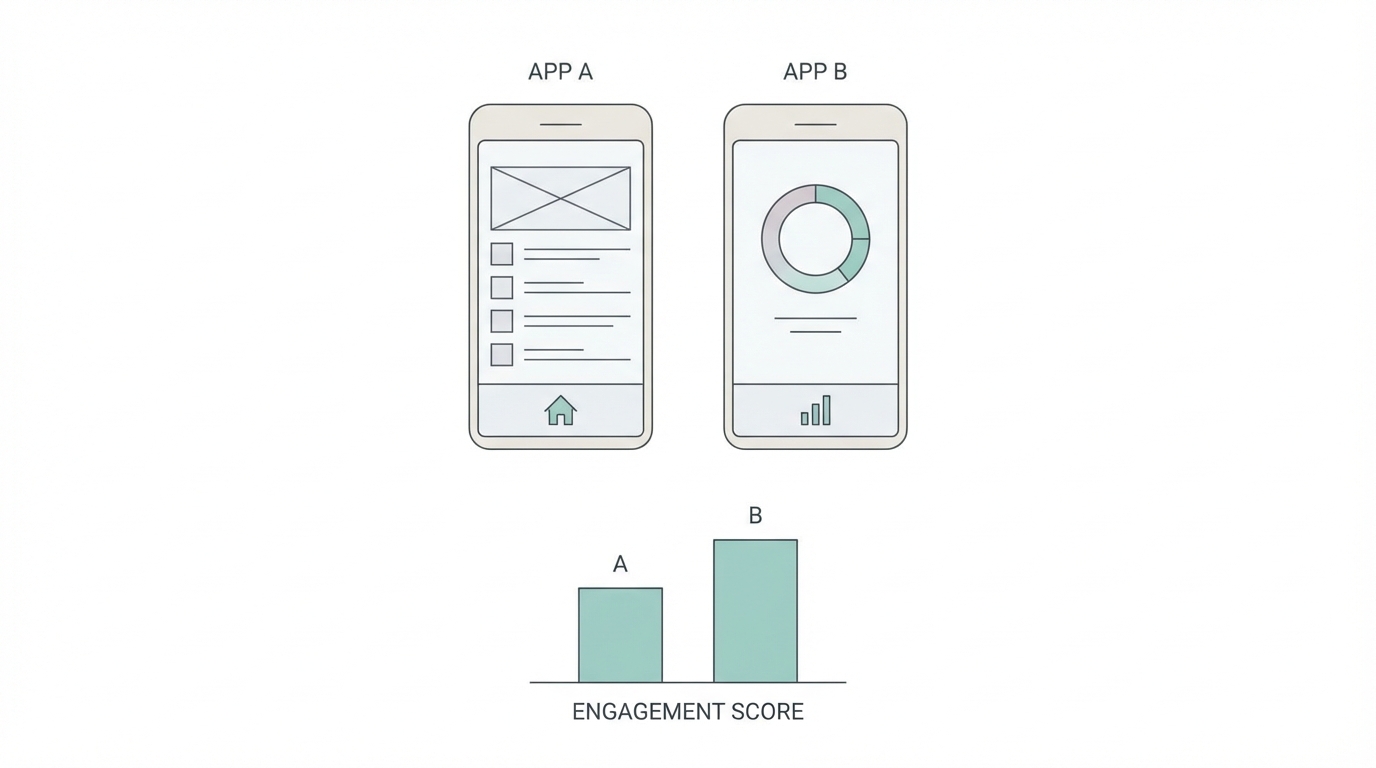
Determining the right price for an app subscription is rarely a matter of intuition; it is a matter of lifetime value app analytics. Should you charge $4.99 a week or $59.99 a year? The answer lies in A/B testing. Platforms like Superwall allow developers to remotely configure paywalls and test different price points without submitting new app updates to the App Store. This speed of iteration is critical for finding the "sweet spot" where conversion rates and long-term retention intersect.
When testing, the metric to watch is Lifetime Value (LTV). LTV represents the total revenue you expect to earn from a user throughout their entire relationship with your app. A higher price point might lower the initial conversion rate but significantly increase the LTV if the remaining users are highly loyal. Conversely, a lower price might drive more volume but lead to a lower overall profit margin. By using app paywall optimization tools, you can find the price point that maximizes the total revenue generated per install, which is the foundation of a scalable business.
Mastering Unit Economics: LTV vs. CAC
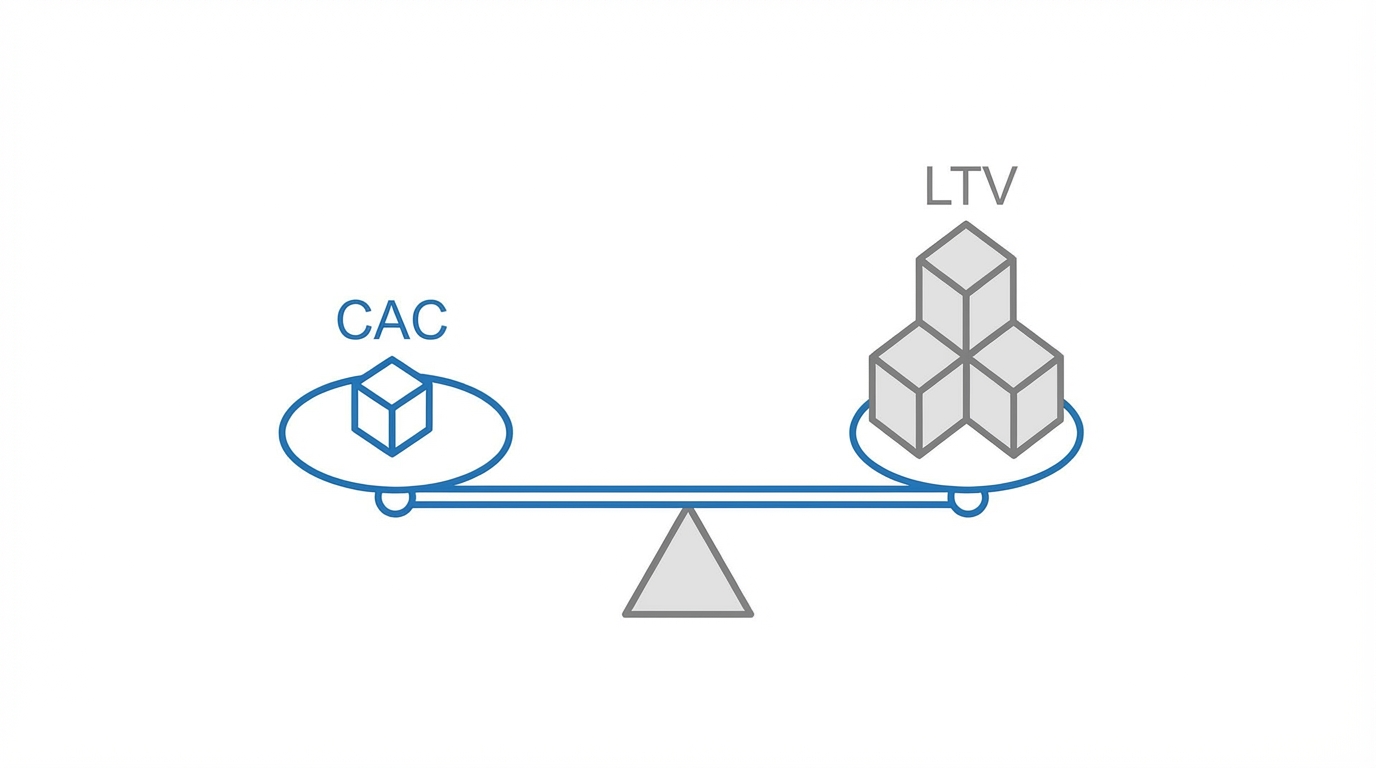
Once you have a high-converting paywall and an optimized price point, scaling becomes a mathematical exercise in unit economics. The goal is to maintain a healthy LTV to CAC (Customer Acquisition Cost) ratio. If your LTV is $30 and your CAC is $10, you have a 3:1 ratio, which is generally considered the benchmark for a healthy, venture-scale business. This means for every dollar you spend on marketing, you get three dollars back over time.
To track this accurately, developers use a sophisticated tech stack:
- RevenueCat: Essential for tracking recurring revenue business metrics, subscription churn, and cohort-based LTV. RevenueCat provides the source of truth for all in-app purchase data.
- AppsFlyer: As a Mobile Measurement Partner (MMP), AppsFlyer attributes every install to a specific marketing source (e.g., a specific TikTok ad or an influencer campaign).
- Stormy AI Post Tracking: To monitor how specific creator content performs over time and its impact on your brand's social presence, Stormy's post tracking provides the necessary analytics to see which creators are driving the most engagement and potential intent across multiple platforms.

By constantly monitoring these numbers, you can aggressively reinvest profits back into Meta Ads or Google Ads. If you know that every install will eventually yield a profit, the only limit to your growth is how much capital you can deploy into your mobile app monetization engine.
Profitable Niches: Where the Money is Moving
Not all niches are created equal when it comes to app subscription models. Currently, the most lucrative categories are those that help people "be better." Health, wellness, fitness, and self-improvement apps command the highest premiums and the best retention rates. People are willing to pay for solutions that solve "painful" problems—quitting a bad habit (like vaping), losing weight, or managing anxiety.
Research from Sensor Tower and Google Trends shows a massive surge in demand for these transformation-focused utilities. While legacy giants like MyFitnessPal dominate the general market, nimble entrepreneurs can win by carving out ultra-specific sub-niches. A small, focused app that solves one problem exceptionally well—and markets it via viral social content—can easily outperform a generic health app with a massive features list. The "young founder advantage" lies in being faster to iterate on marketing trends that larger, slower-moving companies miss.
The App Scaling Playbook: A Step-by-Step Guide
Building a $40k/month app doesn't require a decade of coding experience. It requires a commitment to a proven process. Here is the playbook for modern mobile app monetization:
Step 1: Problem Identification
Identify a painful problem you experience personally. You are your own best customer. Validate the demand by looking at competitors on the App Store and checking viral trends on TikTok.
Step 2: Rapid Prototyping
Don't build from scratch. Use 99designs for UI and find developers on Upwork (Eastern Europe is highly recommended for quality/price balance). Alternatively, download a starter template from ThemeForest to launch an MVP for under $1,000.
Step 3: Implement the Hard Paywall
Build an extensive onboarding questionnaire followed by an unskippable paywall. Offer a free trial to lower the barrier to entry while securing the subscription commitment upfront.
Step 4: Execute a Viral Marketing Strategy
Focus on organic social content. Use Stormy AI's influencer analysis to vet potential creator partners, detecting fake followers and engagement fraud automatically before you sign any deals. Aim for entertainment first, with a clear 2-second call to action at the end.
Step 5: Optimize and Reinvest
Use Superwall to test prices and RevenueCat to track LTV. Once your LTV is significantly higher than your CAC, use your profits to scale paid acquisition and creator collaborations.
Conclusion: Building for the Long Term
Scaling a mobile app in today's market is a game of data and psychology. By embracing app paywall optimization and focusing on high-LTV niches, you can build a sustainable recurring revenue business that offers unlimited scale. Remember that success rarely happens overnight; for many top apps, it took years of iteration before the marketing and monetization clicked into place. However, with the right tech stack—ranging from Superwall for testing to Stormy AI for creator-led growth—you have the tools to compete with the industry giants.
The most important takeaway is to take action. Use the data available to you, relentlessly talk to your users, and don't be afraid to add friction if it leads to higher-quality customers. The path to $40k a month is paved with A/B tests and optimized paywalls. Start building your machine today.