Most mobile app growth strategies fail not because of a lack of traffic, but because of a leaky bucket. You can pour thousands of dollars into TikTok ads or influencer collaborations, but if your funnel has a massive structural flaw, that budget is effectively being set on fire. The secret to unlocked growth isn't just getting more people into the top of the funnel; it is identifying the specific tipping points where your users are vanishing and fixing them with surgical precision.
For many developers and growth marketers, the goal is often incremental: a 5% improvement here, a 10% lift there. However, industry leaders like Yev, Head of Growth at Sizzle AI, suggest a different approach. By focusing on app funnel analytics to find stages with drop-offs exceeding 50%, you can achieve 2x or 3x growth moments in a single week rather than waiting months for marginal gains. This technical deep dive explores how to identify these tipping points and implement mobile app CRO strategies that actually move the needle.
The 50% Drop-Off Rule: Why One Massive Leak is Better Than Ten 10% Improvements
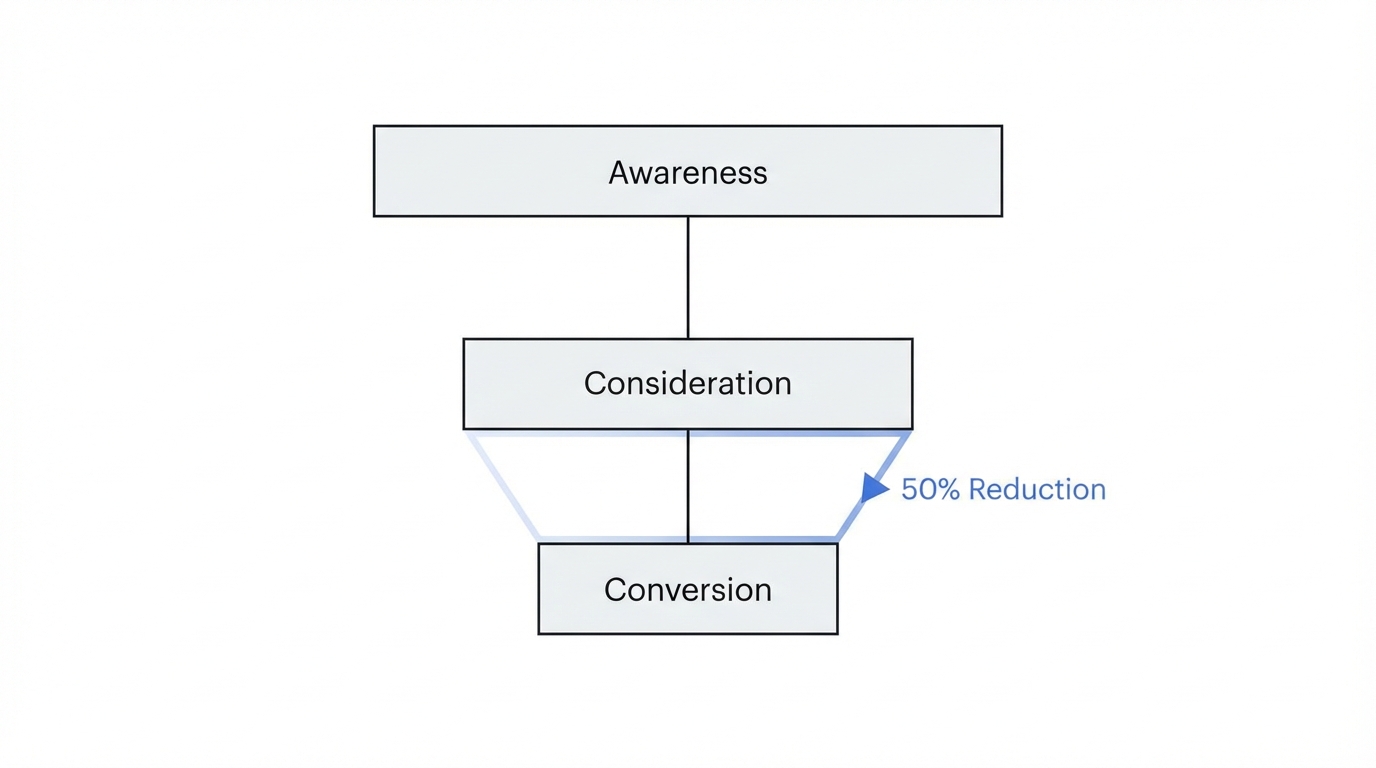
In the world of app conversion rate optimization, we often get distracted by "minor optimizations." We spend weeks testing a button color or a font size. While these have their place, they rarely lead to the explosive growth required to scale a modern mobile app. The 50% drop-off rule states that you should ignore 10% improvements until you have solved every stage of your funnel where more than half of your users are exiting.
When you look at your user journey, from the first install to the final purchase, there are inevitably stages where the friction is too high. According to research from Superwall, identifying these high-friction points allows a team to focus their entire energy on one problem. If 60% of users drop off at the registration screen, fixing that one screen provides a higher ROI than optimizing the entire rest of the app combined. This is the difference between linear growth and exponential scaling, a concept frequently highlighted in AppsFlyer’s retention benchmarks.
Setting Up Custom Metrics: Tracking the Journey from Install to Purchase
To fix a funnel, you first have to see it. Generic analytics often fail to capture the nuance of a mobile user's psychology. Effective app funnel analytics require custom metrics that track conversion percentages between specific milestones: Install → Registration → Engagement → Paywall View → Purchase.
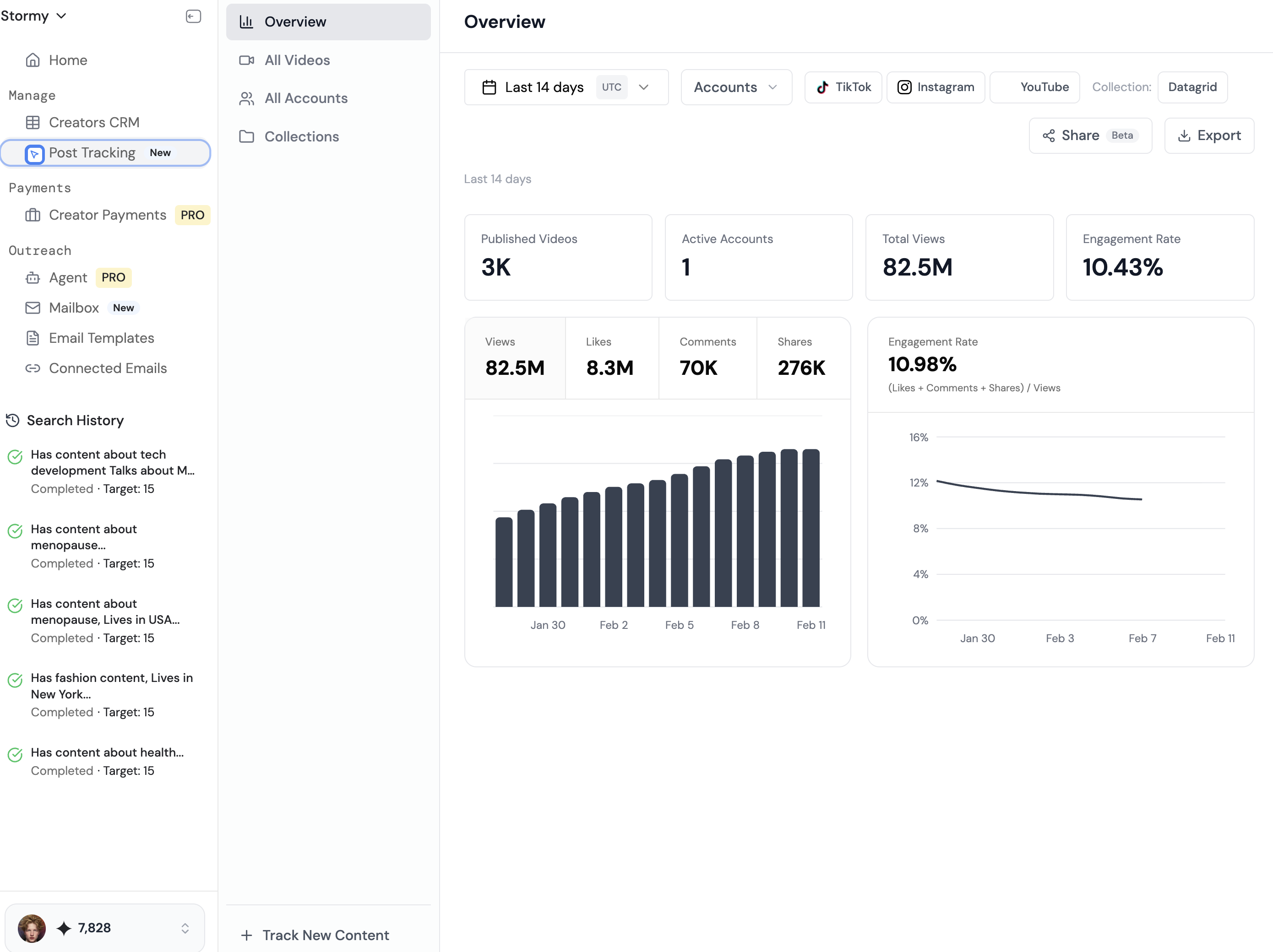
You shouldn't just look at total numbers; you need percentage-wise comparisons. For instance, if you see that 80% of users register but only 10% ever see the paywall, the problem isn't your pricing—it’s your onboarding flow best practices. You aren't leading the user to the value fast enough. This is where Stormy AI's post tracking becomes invaluable. By monitoring how users interact with content that leads them into the app, you can correlate specific creator campaigns with high-retention user cohorts, ensuring your top-of-funnel traffic is high-quality from the start.
When setting up your dashboard in a tool like Adjust or Mixpanel, prioritize these three custom metrics:
- Install-to-Registration Rate: Measures the friction of your initial sign-up flow.
- Registration-to-Value Rate: How many users actually perform the core action of your app (e.g., solving a math problem in an edtech app).
- Value-to-Purchase Rate: Measures the efficacy of your app paywall optimization.
The Role of Assisted Conversions: Using 'Tie-Breaker' Metrics
One of the biggest mistakes in mobile app CRO is making decisions based solely on the final purchase event. This is especially dangerous in split testing. Sometimes, a new onboarding screen might show a "neutral" effect on purchases—meaning the purchase rate stayed the same. In these cases, most marketers would discard the test. However, sophisticated growth hackers use assisted conversions as a tie-breaker.
An assisted conversion metric tracks whether a specific screen or interaction increased downstream engagement, even if it didn't immediately trigger a sale. For example, a social proof screen might not increase day-one purchases, but it might increase the retention rate of users who eventually buy on day seven. If your purchase data is neutral, look at assisted conversions to see if the screen is "warming up" the lead. This second-order thinking is what separates top-tier growth teams from the rest of the pack. Tools like Meta Ads Manager and Apple Search Ads can provide some of this data, but your internal database must be the source of truth for in-app assisted events.
Rapid-Fire Split Testing: 3-Way and 4-Way Experiments

Velocity is the only sustainable competitive advantage in the App Store. Instead of running one A/B test per month, high-growth apps run 3-way and 4-way experiments simultaneously. This allows you to test vastly different hypotheses at once: a social proof-heavy flow, a minimalist "quick-start" flow, and a feature-focused flow.
When conducting app paywall optimization, don't just test the price. Test the information architecture. Should you show a comparison table between Free and Pro? Should you use a "trial-to-pay" countdown? By testing multiple variations using platforms like Optimizely, you find the directional patterns faster. As Yev mentions in his growth playbook, the goal isn't just the result of the test, but the learning that unlocks the 10th test. If you can shorten your testing cycle from 30 days to 7 days, you are essentially moving 4x faster than your competition.
Using Paid Traffic Velocity to Get Significant Data in Days
Waiting for organic traffic to provide statistically significant data is a death sentence for a startup. To optimize a funnel quickly, you must use paid traffic velocity. This involves spending a small, targeted budget to send thousands of users through a specific funnel variation in a matter of hours.
A common strategy is the "Low-Sample Size Approach." You don't need 10,000 purchases to see that one ad or one onboarding flow is outperforming another by 5x. If you spend $20 on 20 different TikTok Ads variations, 18 of them might get zero clicks. But one will get 15. That is a directional outlier. You don't need a PhD in statistics to know that the 15-click ad is your winner. Once you find that winner, you can use Stormy AI for influencer vetting and fake follower detection to find similar creators who can replicate that high-performing creative style at scale.
The Synergy of Organic and Paid: Finding Creator Outliers

The most effective growth engine is one that combines the virality of organic with the predictability of paid. The modern playbook involves testing 20-30 pieces of organic content from different creators. Most will fail. But when you find one that naturally resonates—even if it only gets a few thousand views—you immediately turn it into a paid ad.
This is where discovery becomes critical. To run this experiment, you need a constant stream of fresh creators. You can discover creators on Stormy using natural language prompts like "fitness creators on TikTok in the US with 50k followers" to find the exact personas needed for your UGC (User-Generated Content) strategy. By using Stormy's AI search, you bypass the manual slog of searching through social apps and get straight to the vetting process.
Once you have your creators, the process looks like this:
- Micro-Testing: Send 20 creators a brief and have them post organically.
- Identify Outliers: Use app funnel analytics to see which creator’s audience has the lowest drop-off at the registration stage.
- Amplify: Put paid spend behind the top 10% of videos.
- Iterate: Take the hook from the winning video and test it with 10 different headlines in the ad platform.

The 7-Day Funnel Optimization Playbook
If you want to fix your app's high-drop-off points this week, follow this step-by-step playbook:
Step 1: Audit the Tipping Points
Look at your app funnel analytics. Where is the drop-off higher than 50%? Is it from Install to Registration? Registration to Paywall? Identify the single biggest leak and commit to fixing nothing else until that percentage improves.
Step 2: Generate 20+ Hypotheses
Don't just try one new screen. Force yourself to come up with 20 different angles. Change the hook, the social proof, the pricing structure, and the onboarding flow best practices based on successful patterns seen on Growth.design. Use tools like Stormy AI's creator CRM to manage the different assets and creators involved in these variations.
Step 3: Run the "Dollar-Boost" Test
Put the minimum budget ($5-$20) behind each variation on Facebook or TikTok. Run them for 24-48 hours. You are looking for directional outliers in click-through rates and registration starts.
Step 4: Analyze Assisted Conversions
For the tests that look "neutral" on revenue, check if they increased in-app engagement or registration. If a screen increases engagement but not purchases, it's a "tie-breaker" winner that you should keep and further optimize.
Step 5: Horizontal and Vertical Scaling
Once you have a winning flow and creative, scale horizontally by targeting different countries or demographics. Scale vertically by testing micro-variations of the winning headline or intro hook. Leverage Stormy AI's personalized outreach to instantly contact hundreds more creators with automated follow-ups to keep the content engine running while you sleep.
Conclusion: From Leaky Bucket to Growth Machine
Optimization is not a one-time event; it is a velocity game. By shifting your focus from 10% improvements to fixing 50% tipping points, you transform your app's economics. Remember that paid ads are an amplifier for your funnel's efficiency. If your funnel is broken, ads are an expense. If your funnel is optimized, ads are an investment with a predictable return.
Stop guessing which creators will work or which onboarding screen is best. Use paid traffic velocity to get the data, use assisted conversions to break the ties, and use AI-powered platforms like Stormy AI to find, vet, and manage the creators who will fuel your top-of-funnel growth. The difference between a struggling app and a top-chart success is simply the speed at which you find and fix your tipping points.