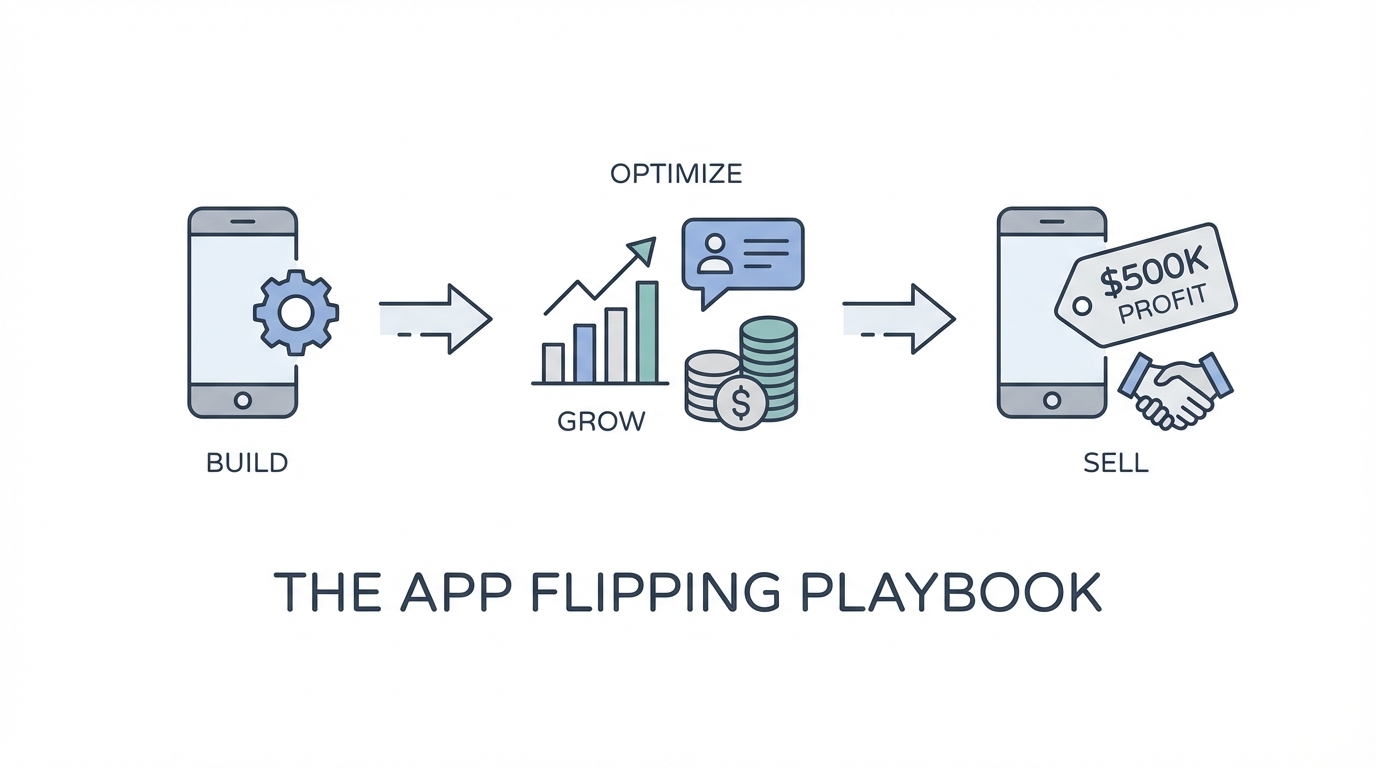
In the high-stakes world of technology, we are often sold the myth of the decade-long grind. We are told that to be a successful founder, you must raise millions in venture capital, scale a team of hundreds, and pray for an IPO that might never come. But a new generation of entrepreneurs is rewriting the rules by focusing on a build to sell app business model. Instead of chasing unicorn status, these founders are building high-margin, lean assets, scaling them to healthy monthly recurring revenue (MRR), and flipping them for significant cash deals. This is the strategy used by builders like Lots, a London-based founder who has successfully flipped four apps for a total profit of over $500,000 since 2022. By treating mobile apps like digital real estate, you can stack cash and achieve financial freedom without the 10-year commitment of a legacy startup.
The Shift from Legacy Building to Cash Flow Assets
The traditional startup model is often described as "legacy building." You find a massive problem, raise capital, and spend years iterating on a product while remaining "paper rich" but "cash poor." For many, this path leads to burnout or failure. The alternative is how to flip apps for profit by focusing on velocity and liquidity. In today's market, tech is no longer the bottleneck; the ability to market and distribute is where the value lies. This makes the market for mobile apps highly liquid, as buyers are looking for proven revenue streams they can optimize through better marketing. By building to sell, you can take two to three years of profit up front in a single exit rather than grinding for a decade for a potential payout.
When you adopt this philosophy, every decision changes. You aren't building a company that needs to survive 20 years; you are building an asset that needs to be attractive to a buyer in 6 to 12 months. This approach requires a detached, clinical view of your ideas. As highlighted in research from Starter Story, successful flippers don't get obsessed with their ideas. They ask one simple question before writing a single line of code: "Is this my legacy, or is this cash flow?" If it is cash flow, the goal is to reach $10K to $20K MRR and exit as quickly as possible. This mindset allows you to ride market trends, such as the AI boom, without getting bogged down in long-term operational complexity.
Step 1: Spotting Trends and Validating $100K+ MRR Potential

A micro-saas flipping guide would be incomplete without a rigorous validation framework. You don't need a groundbreaking original idea to make half a million dollars flipping apps. In fact, it is often safer to look at what is already working and find a specific niche or a better way to execute. To find profitable app ideas 2025, you should start by monitoring the top charts in the Apple App Store and Google Play Store. Look for categories where multiple apps are performing well but the user experience is lacking or the branding is generic.
Tools like Sensor Tower are essential for this stage of the playbook. By analyzing the revenue data of competitors, you can validate whether a niche has the legs to reach six-figure monthly revenues. If you see five apps in a category all doing over $100K MRR, you know there is enough meat on the bone for a newcomer to capture a slice of that market. For instance, the Christian app market is a prime example of an underserved niche where technology often arrives last. Apps like Bible Buddy or Pray Screen have capitalized on this by providing AI-driven emotional support or productivity tools tailored to a specific religious audience, scaling to over 1 million users collectively.
Step 2: The Single Player Rule for Immediate Value
One of the most common mistakes new founders make is trying to build the next social network. They focus on features that require a "network effect," meaning the app only becomes valuable once a user's friends are also on it. This is a recipe for failure in the app flipping world. Your mobile app exit strategy starts with building a "single player" experience. The user must get immediate value from the app within seconds of downloading it, without having to invite a single person. This reduces the friction of user acquisition and ensures that your retention numbers are based on the utility of the product itself, not the behavior of a user's social circle.
High retention is the ultimate metric that buyers look for during due diligence. For example, the app Pray Screen achieved a staggering 60% Day 30 retention rate. This was achieved through a simple, high-utility mechanism: the app blocks other distracting apps (like social media) and requires the user to complete a short prayer to unlock them. To ensure your growth metrics aren't skewed by low-quality traffic, you can use Stormy AI to vet the creators promoting your app, automatically detecting fake followers and engagement fraud that could tank your valuation during an exit. When your app provides this level of value to a single user, it becomes a much more stable and attractive asset for potential acquirers on platforms like Acquire.com (formerly MicroAcquire).
Step 3: Building with Technical Simplicity and a Plug-and-Play Stack
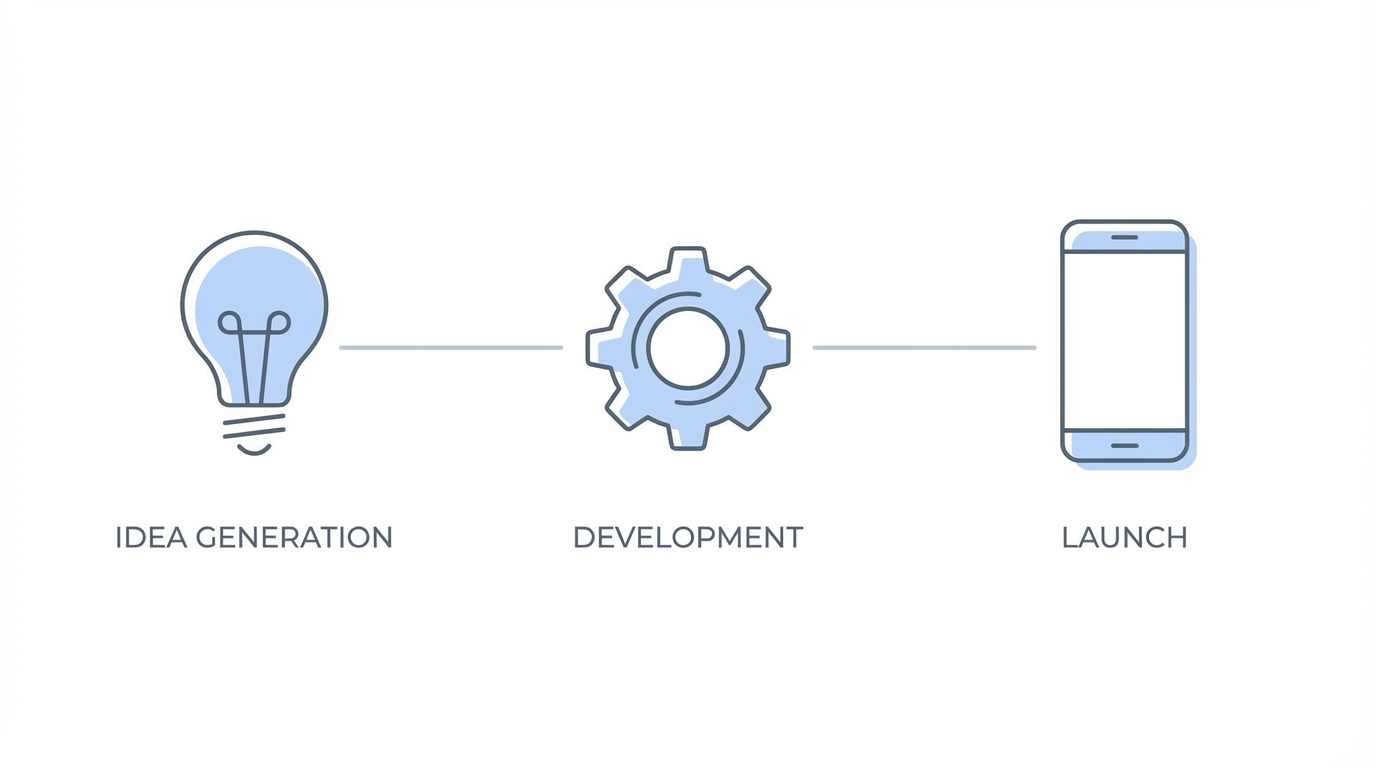
To maximize your build to sell app business, your tech stack should be as simple as possible. Remember, you aren't just selling a product; you are selling a business that someone else has to operate. If your backend is a "spaghetti code" nightmare or requires a team of five specialized engineers to maintain, you will scare away non-technical buyers who are looking for passive or semi-passive cash flow. Successful flippers often use a standardized stack like React Native to ensure the app works seamlessly across both iOS and Android with a single codebase.
This "plug-and-play" approach makes the asset incredibly attractive. A buyer can hire a single contractor from a platform like Upwork to handle updates and bug fixes, keeping the overhead low. Your goal is to keep your monthly operating costs below $1,000, excluding marketing. By using AI tools and third-party APIs for complex features like LLM processing, you can maintain profit margins of 70% or higher. When you present a clean, easy-to-understand technical architecture to a buyer, it drastically reduces the time needed for technical due diligence, leading to faster closing times.
Creating Sharability without Social Friction
While the app should be "single player," it should also be "highly sharable." The trick is to allow users to share an asset created within the app rather than the app itself. For instance, an AI music generator could allow users to share a link to a song they created. When the recipient clicks the link, they see a web view of the song and a clear call-to-action to "create your own." This creates a viral loop that drives low-cost installs. Integrating these features early can help you lower your average Cost Per Install (CPI), making your growth metrics look exceptional to investors and buyers alike.
Step 4: The UGC and Meta Ads Growth Playbook
Growth is the engine of your exit. To scale an app to $20K MRR quickly, you need a repeatable marketing system. The most effective route today is a User-Generated Content (UGC) first approach. This involves partnering with creators to produce short-form videos for TikTok and Reels that don't feel like ads. The most successful ads often use "rage bait" or highly relatable hooks that force viewers to stop scrolling and engage. High engagement signals to the algorithms that the content is valuable, which in turn lowers your advertising costs.
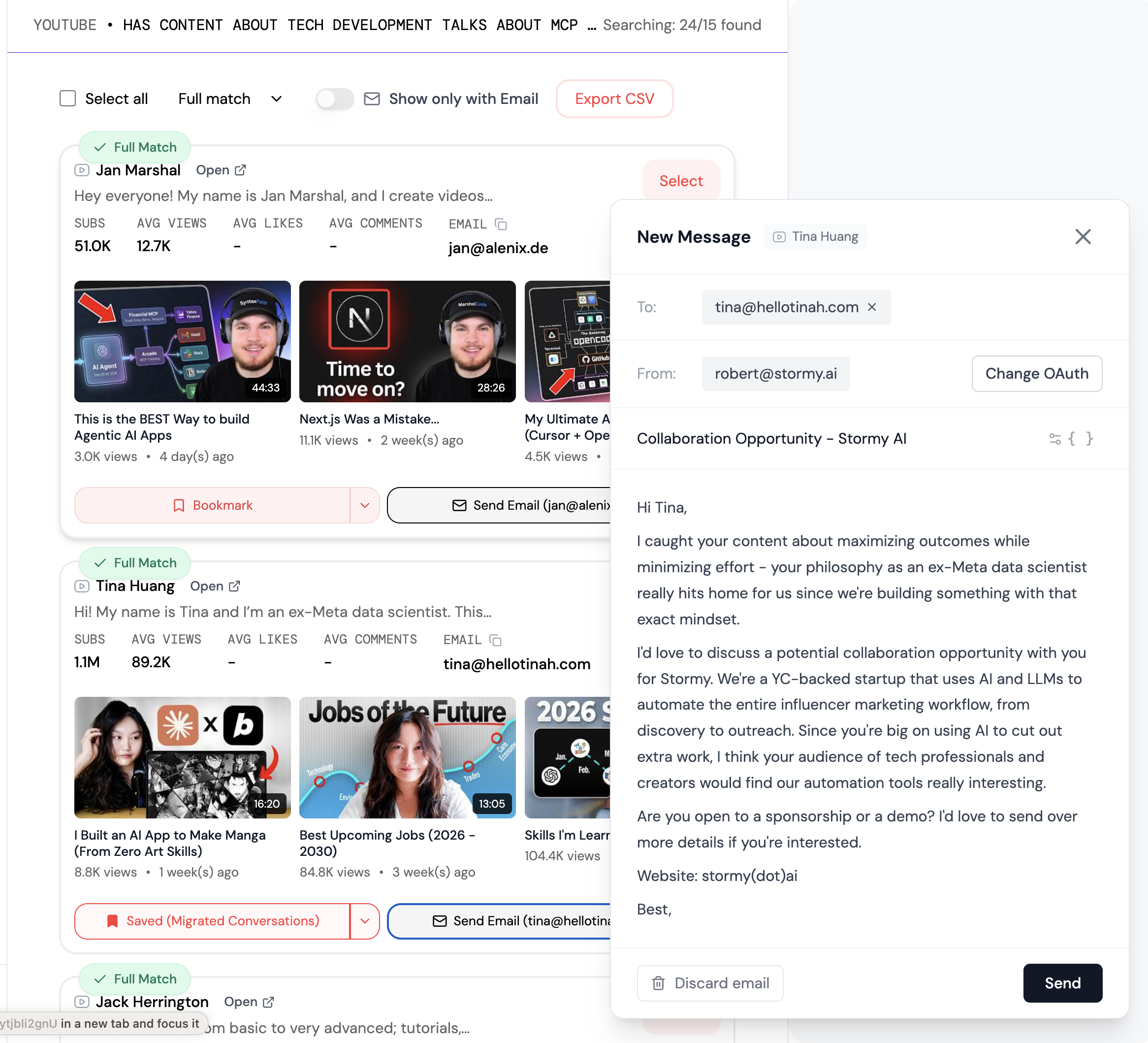
Stormy AI is an AI-powered platform for creator discovery, especially for mobile app marketing and UGC campaigns, allowing brands to find creators who specialize in high-converting content through natural-language search. By sourcing creators who understand the nuances of app marketing, you can generate dozens of creative iterations. You can even set up an autonomous AI agent in Stormy AI to handle personalized outreach and follow-ups with these creators while you focus on product development. Once you identify a winning hook that produces a low CPI—sometimes as low as 30 to 50 cents in the US market—you can pour fuel on the fire using Meta Ads Manager or TikTok Ads. This data-driven approach to growth ensures that your revenue growth is predictable and scalable, which is exactly what a buyer wants to see.
Step 5: The Exit Strategy—Selling to the Third-Highest Bidder
When it comes to the mobile app exit strategy, many founders get greedy. They wait for the highest possible multiple, often dragging out negotiations for months, only for the deal to fall through because market conditions changed or the buyer got cold feet. A more effective strategy is to prioritize certainty and speed. Listings on Acquire.com can attract dozens of inquiries. The secret is often selling to the third-highest bidder if they can close in cash within a few days.
Valuations for these types of cash-flow apps typically range from 2x to 4x EBITDA (annual profit). If your app is generating $15K in profit per month ($180K per year), a 3x multiple results in a $540,000 exit. While you might get a 4x offer from a strategic buyer, that deal might take six months to close and involve complex earn-outs. By taking an all-cash deal from a motivated buyer who wants to close in a week, you lock in your gains and can immediately move on to your next project. This high-velocity approach is how you stack half a million dollars in profit across multiple micro-exits.
Profitable App Ideas for 2025
If you are looking for profitable app ideas 2025, focus on high-intent niches where users are already spending money on offline solutions. One area is specialized health and relationship tracking. For example, a simple app that tracks whether a user has met basic self-care needs (like eating three meals or drinking water) targeted at the 18-30 demographic can thrive because the targeting on social media is very precise. Another trend is the "looksmaxxing" or skincare niche. An AI-powered tracker for Korean skincare routines could capitalize on the massive global interest in "glass skin" trends.
You can also look at "automation of thoughtfulness." An app that uses AI to remind users to book date nights or send flowers—and handles the booking with one click—solves a genuine pain point for busy professionals. By using Stormy AI for finding UGC creators and influencers, you can build a massive audience quickly and track all your campaign performance in one unified dashboard. Remember, the key is to "play games you can win." If you have an edge in a particular niche—like an existing email list or deep knowledge of a community—build there. Your edge reduces your acquisition costs and increases your terminal value.
Conclusion: Build, Flip, and Repeat
Building a successful build to sell app business is about discipline, not genius. It requires the discipline to stop building when the app is "good enough," the discipline to focus on boring metrics like retention and CPI, and the discipline to exit when the price is right. By following this playbook—spotting trends with Sensor Tower, keeping the tech stack simple with React Native, and scaling with Stormy AI for creator marketing—you can build a portfolio of assets that generate life-changing wealth. Don't get stuck in the legacy grind. Start building your first flip today, and aim for that $500K milestone by focusing on the apps that people actually use and buy.