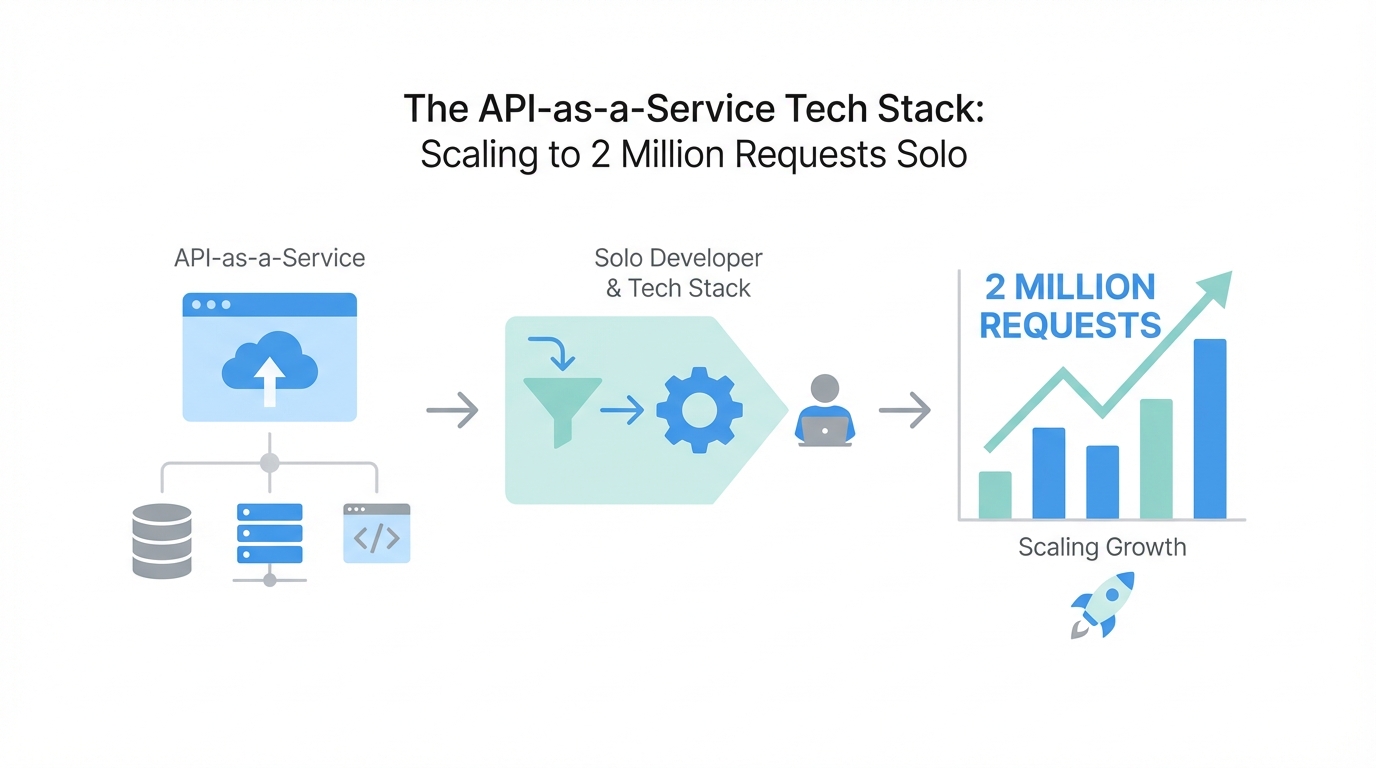
Transitioning from a 9-to-5 developer role to a successful solopreneur is a dream for many in the engineering world, but few manage to cross the threshold into true profitability. Recently, founders like Dmitro of ScreenshotOne have proven that the api as a service business model is one of the most viable paths to reaching $10,000 in monthly recurring revenue (MRR) while maintaining high agility. Building a high-volume API business requires more than just coding skills; it demands a strategic saas tech stack 2024 that balances high-performance requirements with cost-effective infrastructure. By focusing on a technical niche where you already possess a 'super skill,' it is possible to build a product that serves millions of requests while keeping overhead manageable and operations solo.
Choosing the Right Languages for Headless Browser API Architecture
When building apis for profit, language selection is not just a matter of preference—it is a performance and maintenance decision. For a product that revolves around screenshot automation, a headless browser api architecture is the core engine. Dmitro’s stack utilizes TypeScript for the heavy lifting of browser management. Specifically, the Puppeteer library in TypeScript is the industry standard for controlling Chromium. It provides the most robust set of APIs for handling complex web interactions, rendering CSS, and ensuring that the output is pixel-perfect for the end user.
However, TypeScript isn't the only player in this high-volume game. To handle the orchestration layer—things like managing API keys, processing requests, and implementing strict rate limiting—Go (Golang) is the ideal companion. Go is renowned for its concurrency model and low memory footprint, making it perfect for the networking layer of an API business. While TypeScript handles the high-memory task of spinning up headless browsers, Go ensures the gateway stays responsive under the pressure of 2 million monthly requests. This dual-language approach allows a solopreneur to optimize for both developer velocity and system performance, ensuring the tech stack doesn't become a bottleneck as the user base grows.
Infrastructure Optimization: Leveraging Cloudflare at Scale
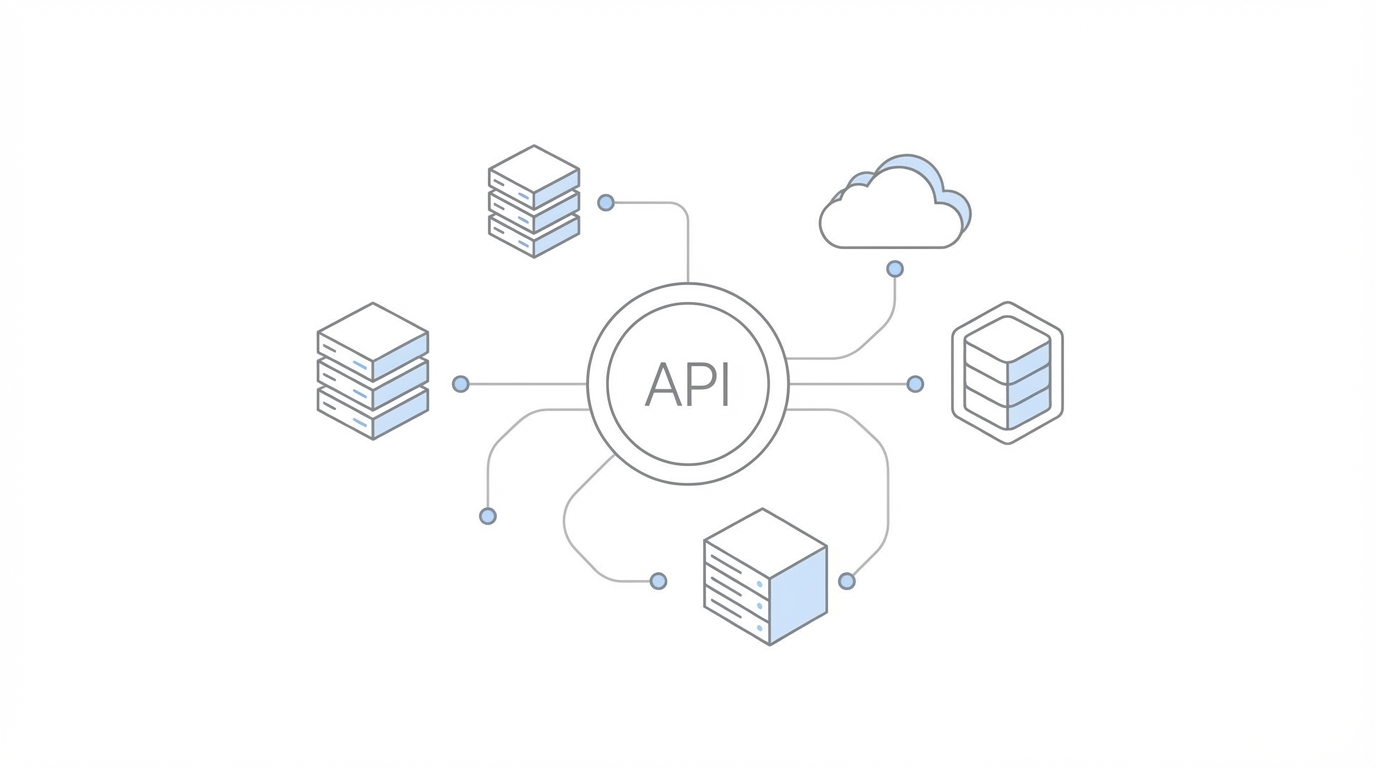
Scaling an API to millions of requests can quickly lead to astronomical server bills if not managed correctly. In the world of solopreneur developer tools, infrastructure costs are the primary killer of profit margins. Dmitro reports spending between $3,000 to $4,000 per month on servers alone to support his high-volume output. To keep these costs in check while maintaining global availability, Cloudflare serves as a critical component of the architecture. By using Cloudflare as an API gateway, developers can offload security, caching, and even some storage requirements to the edge.
For an API-as-a-service, storage is often the second most expensive line item after compute. Storing millions of screenshots requires a solution that is both performant and affordable. Cloudflare’s R2 storage solutions offer a way to serve these assets with minimal latency. When you are processing roughly 2 million screenshots per month, every millisecond saved in the request-response cycle translates to a better user experience and lower compute time. Efficiently managing these $4,500/month infrastructure expenses is what allows a solo founder to maintain healthy 40% to 60% profit margins, turning a technical project into a sustainable $100K+ ARR business.
Finding and Vetting Paying Customers with Stormy AI

Validation is the hardest part of the journey. As noted in the Starter Story interview with Dmitro, having competitors is actually a positive signal—it proves there is a market of people already willing to pay for a solution. However, finding those people as a solo developer can be daunting. While SEO and platforms like Product Hunt are great for initial awareness, long-term growth often requires proactive outreach.
Modern developers are moving away from manual searching and adopting AI-driven discovery. Using Stormy's AI search for discovery across TikTok, YouTube, Instagram, LinkedIn, and newsletters, a founder can instantly identify potential customers by searching for specific niches—such as "marketing agencies in New York" or "SaaS founders on LinkedIn"—who might need automated screenshotting for their internal tools. Instead of spending hours on manual prospecting, Stormy allows you to filter by niche and engagement, ensuring you are reaching out to high-quality leads who actually have a use case for your API.
Furthermore, once those leads are identified, the outreach process can be entirely automated. Rather than sending generic cold emails, Stormy AI provides AI-personalized outreach to contact creators or technical founders instantly with hyper-personalized emails generated for each lead. For an API business, where the value proposition is often technical, personalized communication that references the lead's specific business needs can significantly lower churn and increase conversion rates. This level of automation is essential for the solopreneur who needs to spend their time coding rather than managing an inbox.
Monitoring the User Journey with PostHog


You cannot improve what you do not measure. In an API-first business, understanding how users move from your landing page to their first successful API call is vital. PostHog has become a staple in the saas tech stack 2024 for this very reason. It allows developers to build detailed funnels that track exactly where potential customers drop off. If a user signs up but never generates an API key, that is a friction point that needs to be addressed through better documentation or a simplified onboarding flow.
Dmitro uses PostHog to attribute payments to specific marketing channels. For example, if a customer discovers the product via a YouTube tutorial or a mention on Twitter, the analytics platform captures that data. This level of insight allows the founder to double down on what works—like investing more time in technical SEO or YouTube content—while cutting back on channels that don't convert. For those managing complex client relationships or large-scale collaborations, integrating these insights into Stormy's creator CRM can help track every interaction, negotiation, and deal stage in one centralized dashboard, ensuring no high-value opportunity is lost in the noise.
Monetization Strategy and Managing Churn
Pricing an API is often more of an intuition-based exercise than a mathematical one. Starting cheap is a common mistake; ScreenshotOne initially launched at $5 or $7 per month, which left almost zero margin after server costs. By raising prices to a more sustainable $17/month entry point, the business was able to attract more serious users who were less likely to churn. Higher pricing acts as a filter, bringing in customers who truly value the service and are willing to pay for reliability.
To keep churn rates low—currently sitting at around 7% with a goal to reach 5%—a manual touch is often required in the early stages. Reaching out to churning customers with a simple "yes/no" question about their reason for leaving (e.g., "Did you churn because of pricing?") can yield nearly a 100% response rate. This direct feedback loop helps build a mental model of the customer base. For instance, if users expect a "no-code" solution but the product is built for developers, the marketing copy must be adjusted to set better expectations. Once you have a handle on your users, you can use Stormy's post tracking to monitor how your product is being mentioned or used across social platforms, providing a deep analysis of campaign performance and brand sentiment.
The Solopreneur Schedule: Preventing Burnout

Operating a $100K+ ARR business alone is a marathon, not a sprint. Without a corporate structure, the risk of burnout is incredibly high. Maintaining a strict daily routine is the secret weapon of the successful solo founder. A typical high-performance day might look like this:
- Morning Routine: Assisting with family responsibilities and finding a local cafe to reset.
- Deep Learning: Spending at least one hour every morning reading a book. This expands the mind and prevents the 'tunnel vision' that comes from staring at code all day.
- Deep Work: Working on the core product until the evening.
- Physical Activity: Engaging in social sports like soccer or football to decompress.
- Weekends: Complete disconnection to spend time with family and friends.
Protecting your mental health is a business decision. A founder with a clear mind makes better architectural choices and more strategic marketing moves. By using automation tools like Stormy AI's autonomous agent that discovers, outreaches, and follows up with creators on a daily schedule while you sleep, you can reclaim your time and focus on the high-leverage tasks that actually grow the business.
Conclusion: Building Your Own API Empire
Scaling an api as a service business model to 2 million requests is a feat of both engineering and discipline. By selecting a high-performance stack of TypeScript and Go, optimizing your infrastructure with Cloudflare, and using PostHog for data-driven decisions, you can build a highly profitable SaaS. Remember that your goal as a solopreneur is to automate as much as possible—from your server deployments to your creator outreach.
The journey from a 9-to-5 to a 10k MRR founder is paved with persistence and the right tools. Don't outsource your decisions; build your intuition by talking to customers and analyzing the data. If you are ready to start finding the right partners and customers for your next big idea, explore how Stormy AI can automate your discovery and outreach today. The path to a $100K ARR business is open—it's time to start building.