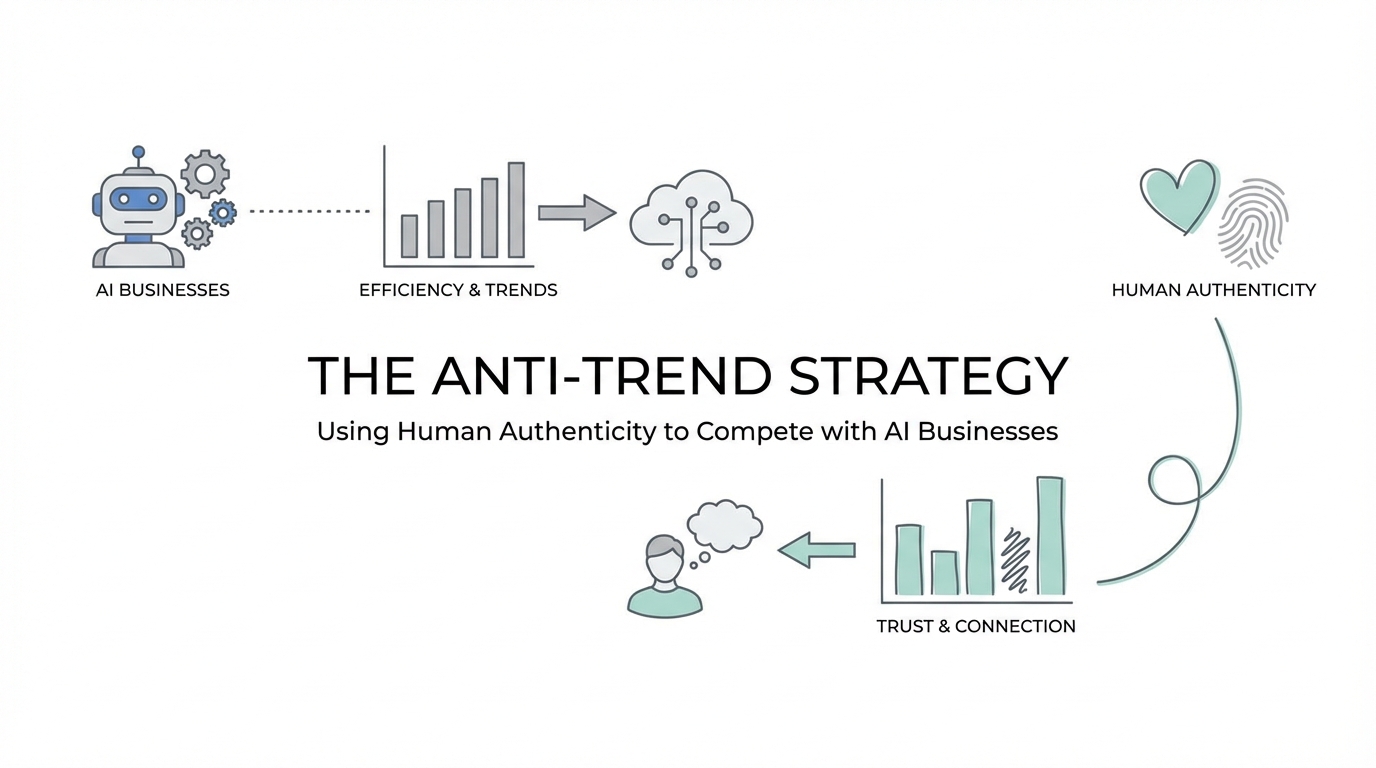
In an era where every teenager with a laptop and an OpenAI API key is launching a “disruptive” startup, the digital landscape has become increasingly crowded with synthetic experiences. We are witnessing the commoditization of intelligence. When everyone has access to the same Large Language Models, the value of AI-generated output begins to trend toward zero. This creates a fascinating opening for entrepreneurs: the Anti-Trend Strategy. While the masses rush toward automation, the real alpha is found in the premium for human intervention. The future of high-ticket coaching and services isn't about ignoring AI; it is about using AI to highlight the scarcity of the human touch.
The Psychology of Anti-Trends: Why Scarcity Creates Premium Value

History shows us that every major technological trend triggers an equal and opposite reaction. When mass production became the norm in the 20th century, the value of "hand-crafted" goods skyrocketed. Today, as we enter the age of AI vs human services, we are seeing a similar shift. The more the market is flooded with AI-generated dating advice, fitness plans, and business strategies, the more consumers will crave the validation and nuance that only a human can provide.
This is the essence of anti-trend marketing. You aren't just selling a result; you are selling the absence of automation. In a world of "perfect" AI responses, human imperfection becomes a trust signal. For a premium service business model, this means positioning your brand as the "human alternative" to the sea of bots. People don't just pay for information—they pay for the accountability, empathy, and shared experience that a ChatGPT wrapper simply cannot replicate.
The Rizz Economy: Analyzing the $190k/Month AI Wrapper
Consider the recent explosion of "Rizz" apps—AI dating assistants designed to help users generate pickup lines and responses for apps like Tinder. One such app, Plug AI (a competitor in the space alongside others like Rizz AI), has reportedly reached a staggering $190,000 in Monthly Recurring Revenue (MRR) with over 333,000 downloads per month. The business model is simple: users upload a screenshot of their conversation, and the AI provides a "rizz-ed up" response.
While these apps are incredibly profitable right now, they represent a "flash in the pan" risk. They are built on top of third-party platforms and face intense competition. However, the real takeaway isn't the app itself; it's the demonstrated demand. If people are willing to pay for an AI to help them with their social lives, they are even more likely to pay a significant premium for a high ticket coaching strategy led by a real human. The AI app proves that the problem (lack of social confidence) is worth hundreds of thousands of dollars a month to the market.
Using AI Apps as Low-Cost Lead Magnets for High-Ticket Services
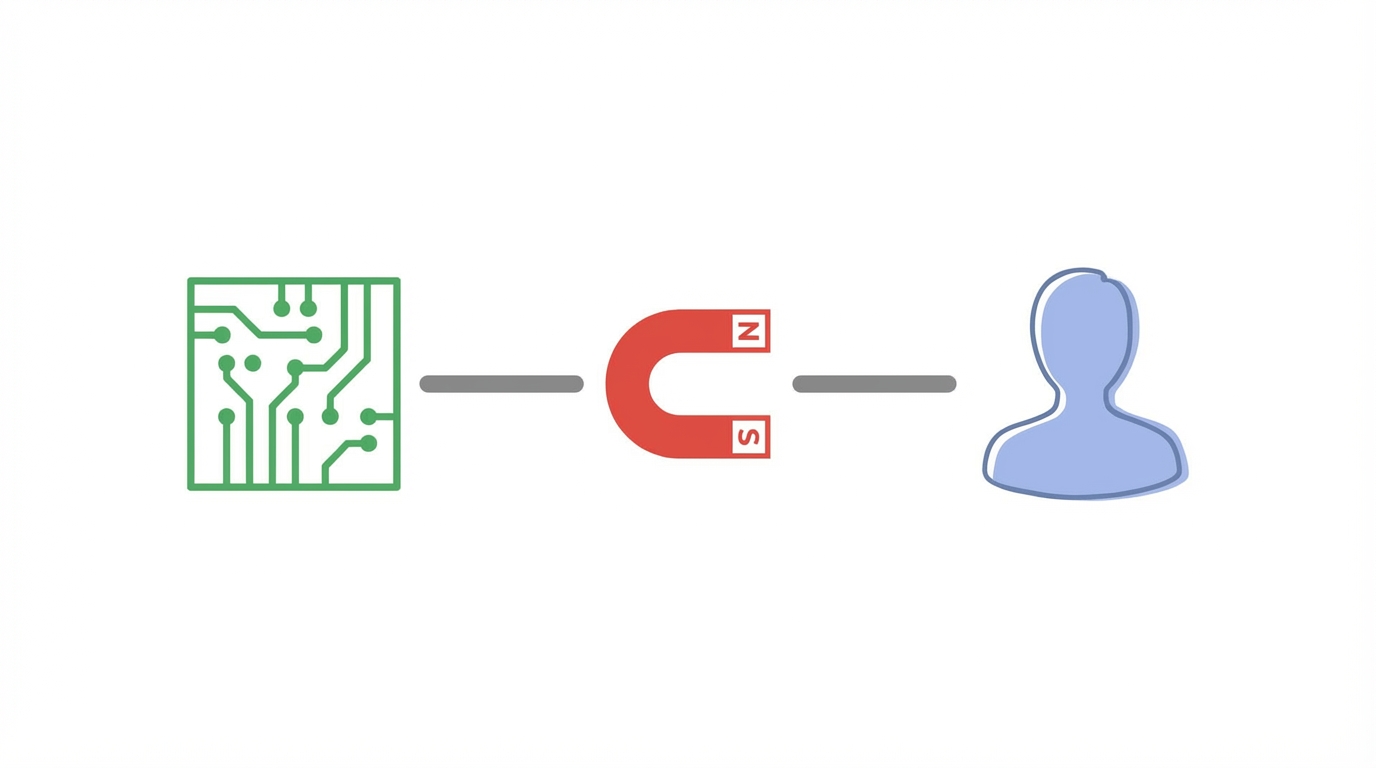
The smartest entrepreneurs aren't choosing between AI and human services; they are building hybrid models. In this playbook, the AI app serves as the "top of the funnel"—a low-cost way to acquire customers and prove initial value. Once the user is in the ecosystem, you upsell them to a human-led experience.
Step 1: Identify an Obvious Pain Point
Look at what is trending on subreddits and social media. The founder of the Rizz apps found his idea by scouring the Tinder subreddit. He identified a specific, repeatable problem that AI could solve quickly. You can use tools like Boring Marketing to find these "boring" but highly profitable niches that are ripe for disruption.
Step 2: Build the AI Entry Point
Launch a simple utility—a GPT wrapper—that solves 20% of the problem for a low monthly fee ($10-$30). This builds your base of capital and establishes your brand as an authority in the space. The goal here isn't just revenue; it's data and customer acquisition.
Step 3: The Premium Human Upsell
For the users who want 100% of the results, offer a premium service business model. If the AI helps them with pickup lines, the human coach helps them with the actual date, their wardrobe, and their long-term relationship psychology. This allows you to jump from a $20/month subscription to a $5,000 high-ticket package.
Positioning Against the ‘Optimization’ Trend: The Anti-Bryan Johnson Approach

One of the most prominent trends today is hyper-optimization, epitomized by Bryan Johnson and his "Blueprint" protocol. Johnson spends millions of dollars to optimize every biomarker, aiming for biological immortality. He has turned his body into a machine, selling olive oil and supplements to a massive audience of "don't die" enthusiasts.
The anti-trend here is the celebration of the human experience in all its messy, unoptimized glory. While Johnson sells "Don't Die" t-shirts, there is a massive opening for a brand that sells "Actually Live." This means positioning your service as the antidote to the clinical, data-driven lifestyle. Instead of tracking every calorie with an algorithm, your human-led service focuses on hedonism, connection, and intuition. This "polarizing" marketing is what builds cult-like followings. When you position yourself against the trend of robotic optimization, you attract the people who feel alienated by the "optimization-core" movement.
Scaling Authenticity: Managing Human-Led Growth

The biggest challenge of human-led services is scalability. You cannot clone yourself. However, you can scale the appearance and management of human relationships. This is where future of AI coaching tools actually help the human side of the business. You use AI to handle the logistics, while humans handle the heart.
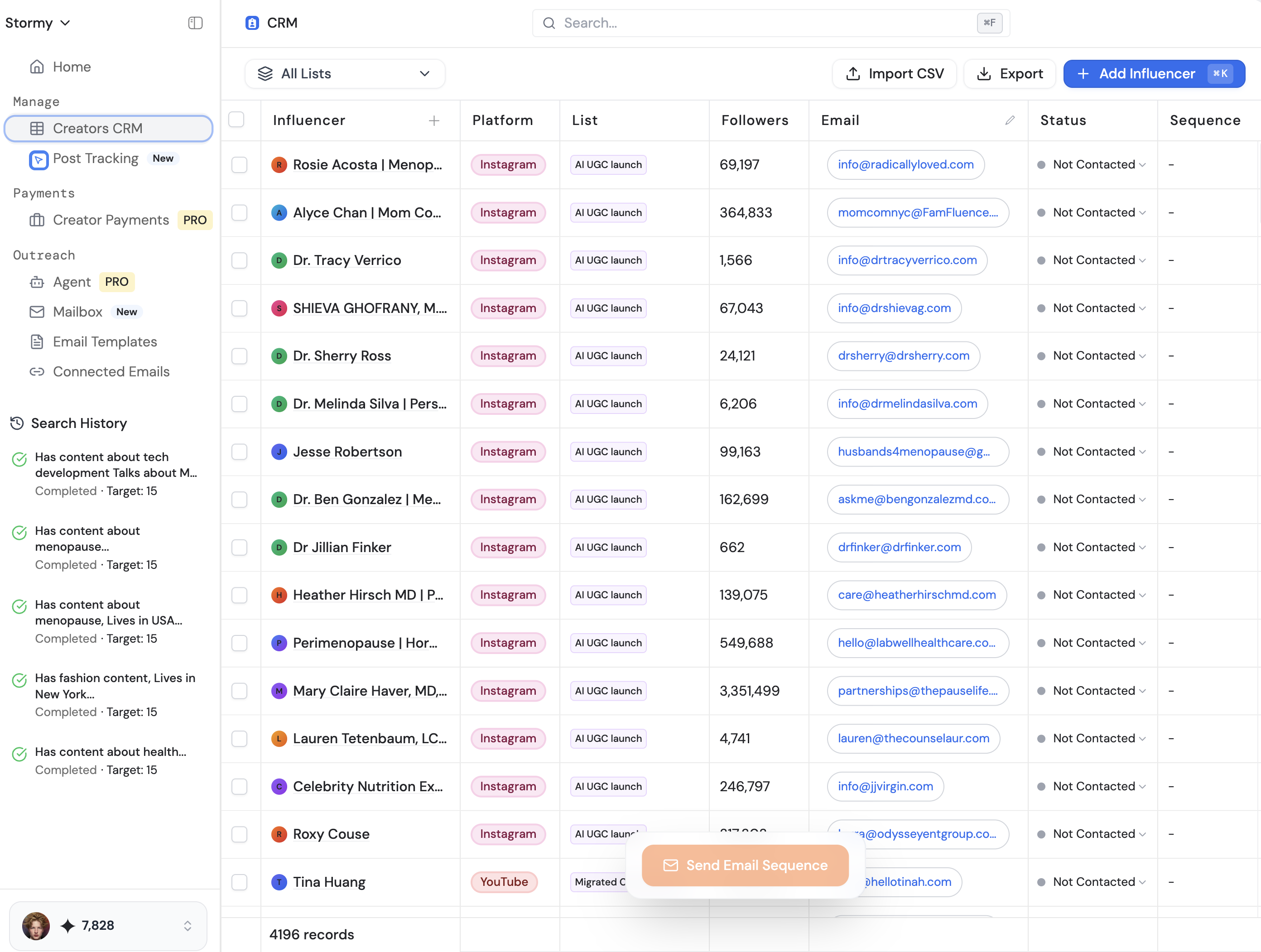
To effectively scale an anti-trend movement, you need to find authentic voices that resonate with your audience. AI-native platforms like Stormy AI can help you discover and vet UGC creators who actually embody the lifestyle your brand represents. By using an AI-powered search engine to find creators who fit your niche—whether it's "fitness for the unoptimized" or "low-tech business building"—you can maintain a human face for your brand even as it grows. Managing these relationships through a built-in creator CRM ensures that the "human" touch doesn't get lost in the spreadsheets.
The Financial Practicality of ‘Building Your Nut’

There is a lot of talk on social media about "changing the world." But for most entrepreneurs, the immediate goal is financial stability—or what some call "building your nut." Building a high-margin, human-led business is often a faster path to this stability than trying to build the next trillion-dollar AI infrastructure company.
If you can build a service that generates $50,000 a month in profit by charging 10 clients $5,000 each, you have more stability and less technical platform risk than an AI app making $190,000 in revenue with $100,000 in API costs. High-ticket coaching allows you to retire your parents or buy your first house without needing to raise VC capital or worry about what Sam Altman decides to release in the next GPT update.
Case Study: The 100 Club vs. The Zero Club
Take the sleep tech industry. Companies like Eight Sleep have gamified sleep, allowing users to track their "Sleep Fitness" score. Reaching a "100" score has become a status symbol for tech elites. This is a classic optimization trend.
The anti-trend strategy here could be the "Zero Club"—a community or service built around the reality of entrepreneurs and parents who can't get a perfect 100. Instead of a cold, automated bed that adjusts your temperature, the anti-trend service might offer human accountability groups, personalized sleep hygiene coaching that accounts for real-world stress, and a community that values resilience over metrics. By targeting the people who fail the "optimization test," you create a brand that feels like a supportive friend rather than a judging algorithm.
Conclusion: Building a Future-Proof Brand
As AI becomes better at tasks, humans must become better at relationships. The most successful businesses of the next decade will be those that use AI to handle the "boring" work while doubling down on human authenticity for their high-ticket offerings. Don't fear the AI boom—use it as a benchmark. Every time an AI service launches, ask yourself: "What is the human element that this bot is missing?" That gap is where your next million-dollar business lives.
Whether you are building a specialized agency or a high-ticket coaching program, using modern tools like Stormy AI for creator discovery and outreach helps you find the right voices to scale your message, providing your audience with the one thing AI can never give: genuine human connection. Stop trying to out-compute the machines and start trying to out-human them. That is the ultimate anti-trend strategy.