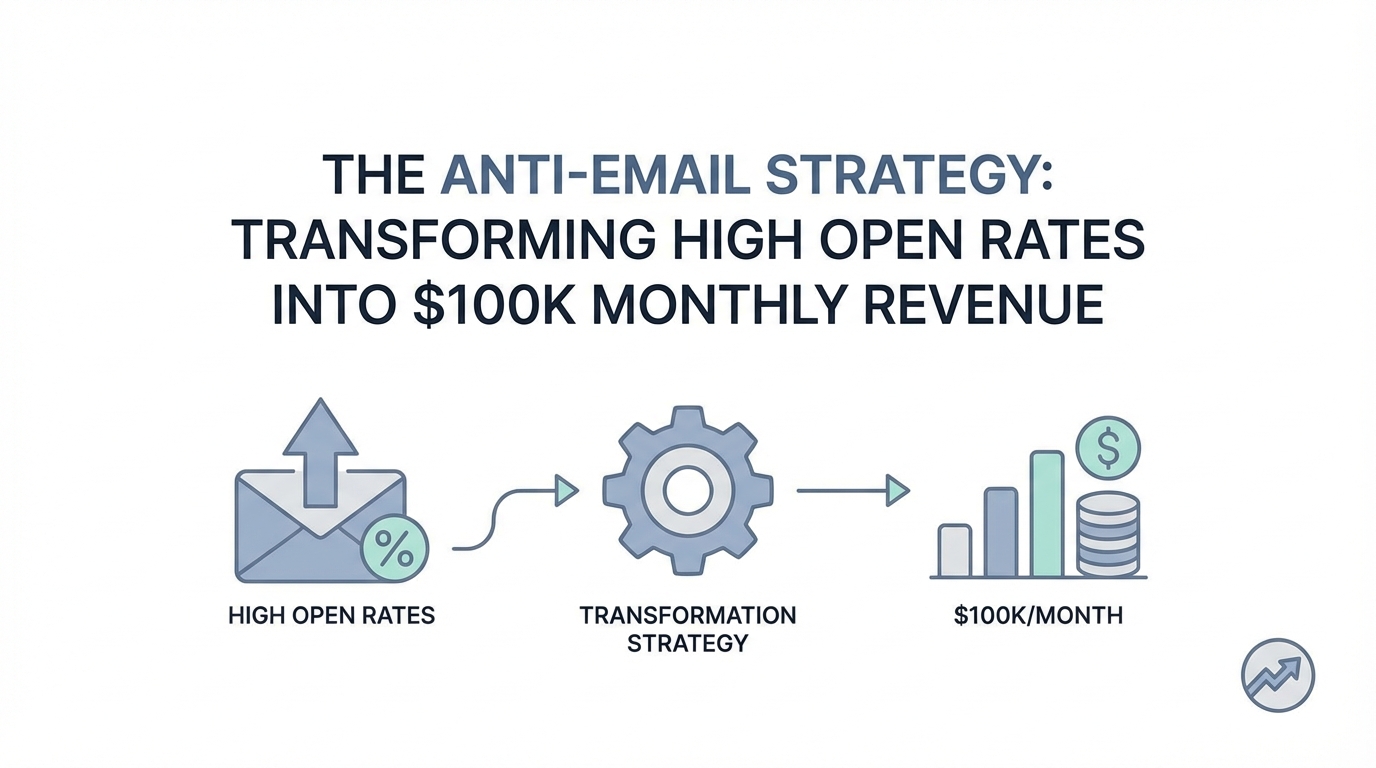
Imagine living in a custom-built Sprinter van in the heart of Boulder, Colorado, after selling your software business for a life-changing sum. For Dawson, a solopreneur and engineer, this isn't a hypothetical—it’s the reality born from a coding session that lasted less than five hours. In a world where founders obsess over complex funnels and aggressive marketing, Dawson built Earnifi, a platform that helps Ethereum users find and claim forgotten airdrops. What started as a hackathon project quickly exploded into a million-dollar ARR (Annual Recurring Revenue) business, fueled by a radical approach to user engagement: the Anti-Email Strategy.
Most startups struggle with customer retention for startups, often resorting to bombardment tactics that drive users straight to the 'unsubscribe' button. Dawson did the opposite. By refusing to send traditional marketing emails and focusing exclusively on high value email sequences that provided immediate financial ROI to his users, he scaled from zero to over 250,000 free users and 5,000 high-paying customers. This is the blueprint for how he turned a free user base into a $100,000 monthly revenue engine without spending a single dollar on paid advertisements.
The Psychology of 'Matched Value'

The core of the Anti-Email Strategy is a concept Dawson calls 'Matched Value.' In a typical SaaS environment, companies email users to remind them the product exists, to share a blog post, or to announce a minor feature update. These are low-value interactions that treat the user's attention as a commodity. Dawson realized that in the high-stakes world of Web3, attention is scarce and skepticism is high. Instead of pushing for attention, he waited until he had something tangible to offer.
The psychology is simple: never send an email unless the user has something to gain. In the case of Earnifi, that meant only contacting a user when the platform's scrapers found an unclaimed airdrop associated with their wallet address. By aligning the email trigger with a direct financial benefit, Dawson transformed his brand from a 'service provider' into a 'wealth messenger.' This alignment is a cornerstone of effective saas monetization strategies. When your notification is synonymous with "you just made money," your users don't just tolerate your presence; they actively look for you in their inbox.
Email Open Rate Optimization: The $100K Subject Line

If you are looking to improve email marketing conversion rates, the lesson from Earnifi is one of brutal relevance. Dawson discovered that the ultimate subject line wasn't a clever hook or a fear-of-missing-out (FOMO) tactic—it was a simple statement of fact: "You have money to claim." Because the platform provided a legitimate service that scanned for hundreds or thousands of dollars in unclaimed tokens, this subject line carried immense weight.
The results were staggering. While the industry average for marketing emails often hovers around 20%, Dawson’s open rates were consistently through the roof. This success wasn't just about the subject line; it was about the expectation of quality. Every time a user opened an email from Earnifi, they found exactly what was promised. To replicate this, startups should focus on monetizing free users by identifying the "aha moment" that provides the most utility and building their entire communication flow around that singular event.
High-value sequences should be designed to reduce friction. In Dawson's case, the email didn't just say money was available; it linked directly to the dashboard where the user could see the exact dollar value. According to data from Starter Story, the average Earnifi user discovered roughly $750 in unclaimed assets. When the stakes are that high, your email isn't marketing—it’s a utility.
The Strategic Paywall: Transitioning 250,000 Free Users

One of the hardest hurdles for any founder is monetizing free users without alienating the community that helped the product go viral. Dawson achieved this through strategic paywalling. Originally, Earnifi allowed users to see and claim everything for free. However, to scale the business to over $1 million ARR, he made a pivotal decision: every new airdrop discovered would be placed behind a paywall.
The genius of this transition lay in the transparency of the ROI. A user might see a notification saying they have $793 waiting for them, but they need to pay a subscription fee to see which specific protocol issued the airdrop. The cost-benefit analysis becomes instantaneous for the user: "I pay $30/month to get $793 right now." This is what Dawson calls an honest relationship. You aren't tricking users into a subscription; you are providing a tool that pays for itself multiple times over in a single transaction.
By the time he reached his liquidity event, Dawson had converted 5,000 users into high-paying subscribers. This conversion rate was driven by the quality of the data. While competitors tried to include every low-value token available, Dawson focused on high-dollar value quality. This focus on quality ensured that when a paywall appeared, the user trusted that the value behind it was worth the entrance fee.
Combating Phishing and Building Brand Trust
In high-risk industries like Crypto and Web3, trust is the only currency that matters. The space is rife with hacking and phishing attempts, making users extremely hesitant to connect their wallets or click links in emails. Dawson built brand authority by being obsessive about quality and reputation. He wasn't just another faceless app; he was a developer building in public, frequently attending conferences and engaging with the community on Farcaster and Twitter.
To combat phishing fears, he ensured the UI was polished and fast. Using a tech stack featuring TypeScript, Next.js, and Node.js, he created a user experience that felt professional and secure. Speed is often an overlooked element of trust—a slow, buggy site feels like a scam, whereas a lightning-fast, responsive dashboard feels like a premium tool.
Furthermore, his marketing tactics were intentionally organic. He famously avoided paid ads, choosing instead to lean into viral social campaigns. One such campaign was the "25 Days of Christmas," where he would publicly tag people on Twitter, showing them exactly how much money they were leaving on the table. This "healthy community pressure" validated the tool's efficacy in front of thousands of potential users, building the social proof necessary to overcome the inherent distrust in the crypto sector.
The Solo Stack and Viral Growth Tactics

Building a million-dollar business as a solo developer requires extreme efficiency. Dawson’s 4-5 hour build time for the initial MVP is a testament to the power of modern development tools. By using VS Code and a robust full-stack framework, he was able to ship directly to users without the overhead of a large team. He emphasizes that while being solo allows for speed and total creative control, it’s vital to stay connected to communities to avoid the "echo chamber" effect.
For growth, he didn't just rely on the tool's utility; he engineered virality. His initial launch tweet included a video of the search functionality in action, teasing the massive amounts of money users could find. This triggered a charitable impulse in the community—people wanted to help their friends find money, leading to 10,000 organic sign-ups in the first 48 hours.
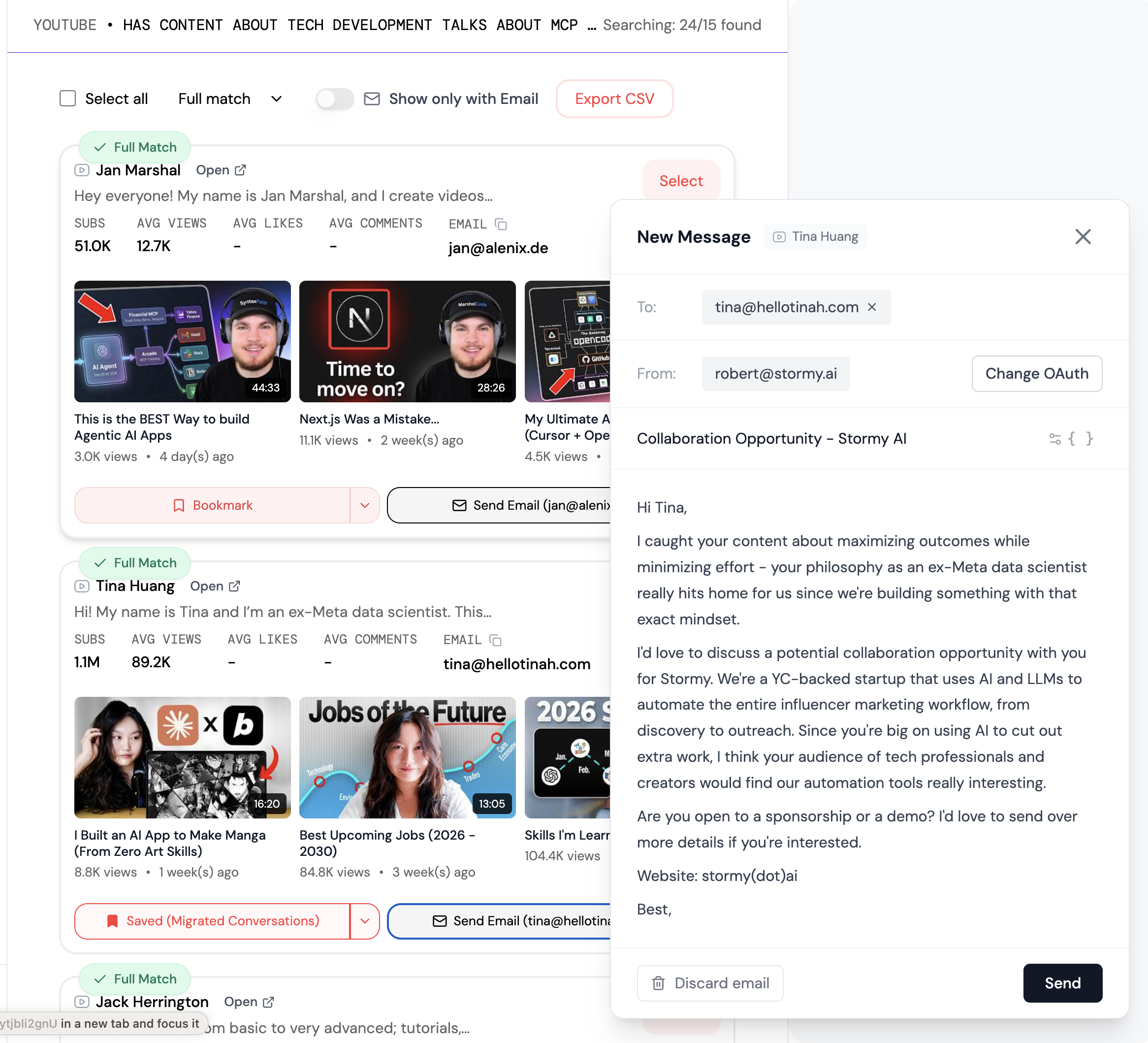
When scaling these types of organic campaigns, especially when looking for influencers to spread the word, platforms like Stormy AI can help source and manage UGC creators at scale. By finding creators who already have trust within specific niches—like the Ethereum community—brands can replicate Dawson's "community pressure" model without the manual labor of tagging individuals one by one. Managing these relationships through an AI-powered CRM ensures that the high-touch, personal feel of the outreach is maintained even as the user base grows into the hundreds of thousands.
Conclusion: The Blueprint for Honest Monetization
Dawson’s journey from an Uber engineer to a van-dwelling successful founder underscores a shift in how we think about saas monetization strategies. The traditional model of "growth at all costs"—often involving intrusive tracking and endless email nurturing—is being replaced by honest monetization. This model prioritizes the user's ROI above all else. By building a product that literally pays for itself and communicating only when it matters, you create a brand that users respect and recommend.
The key takeaways for any startup founder are clear: focus on matched value, optimize for high value email sequences, and don't be afraid to paywall your core utility once you've proven its worth. Whether you are building in Web3 or a traditional SaaS niche, the path to $100K monthly revenue lies in being the signal, not the noise. As you grow, remember that your relationship with your users is a partnership—if they win, you win. And sometimes, the best way to talk to your customers is to stay silent until you have a check to hand them [Source: Starter Story Case Study].