By March 2026, the marketing landscape has shifted from a race to collect data to a race to connect it. The era of "experimental AI add-ons" is over; as of this year, 88% of marketers use AI daily as foundational infrastructure. However, the biggest hurdle remains the "data silo"—the fragmentation of customer insights across CRM, email, and internal comms. Enter the Model Context Protocol (MCP), the open standard that acts as the "USB-C for AI," allowing enterprise-level models like Anthropic Claude to talk directly to tools like HubSpot without the need for fragile, custom-coded API integrations.
Understanding MCP: The 'USB-C for AI' for Modern Marketers
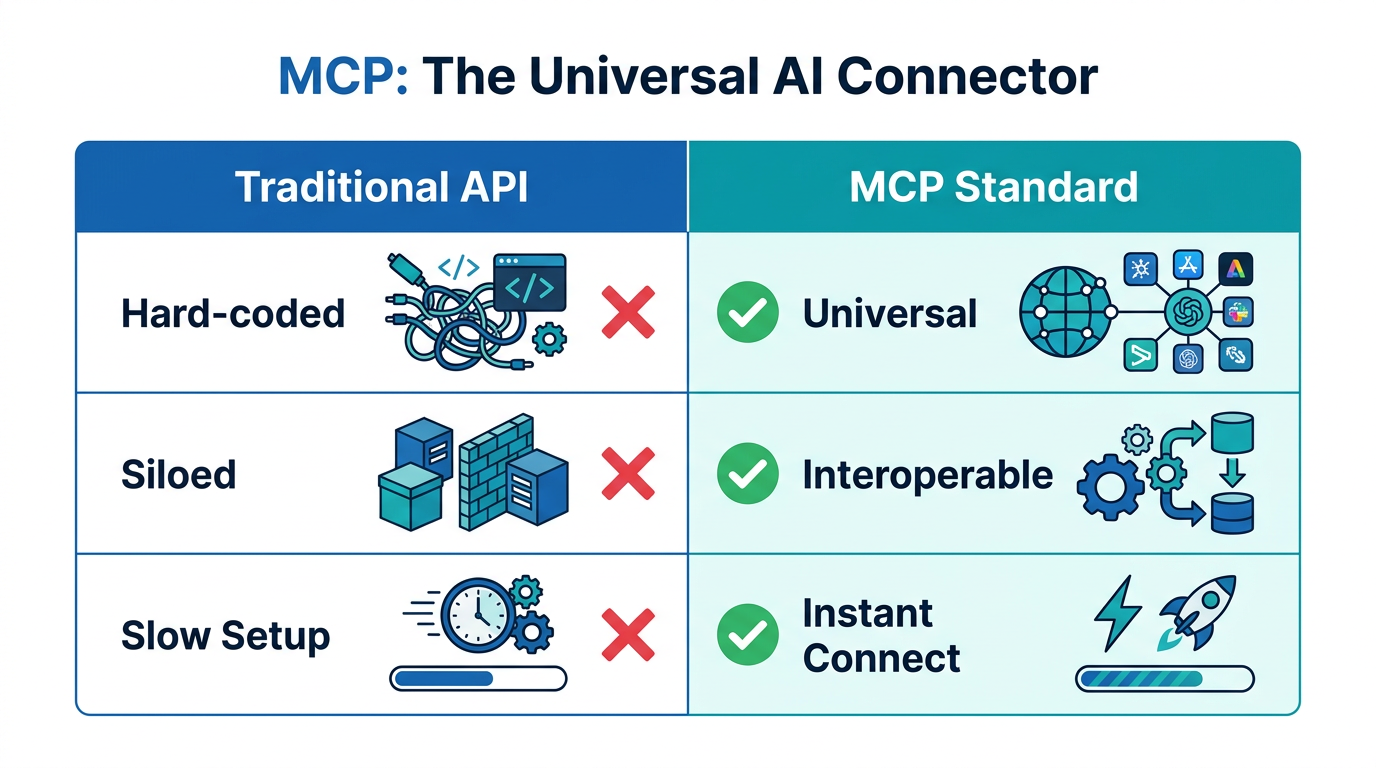
The Model Context Protocol (MCP), donated to the Linux Foundation in late 2025, has become the universal connector for the generative AI era. For growth leaders, it solves the most expensive problem in marketing: contextual relevance. Before MCP, an AI model like Claude could only "see" what you pasted into its chat box or what was fetched via a specific, rigid API call. With MCP, your AI can instantly navigate your entire tech stack—from Google Drive and Slack to your CRM—with a single, secure connector.
As industry reports from early 2026 confirm, MCP is now supported by every major player, including Google, Microsoft, and OpenAI. This standardization means that a growth team can build an automation once and deploy it across different models without rewriting the backend. This "plug-and-play" capability is what allowed the global AI in marketing market to reach a staggering $47.32 billion by the end of last year, according to latest research figures.
"Brands are playing checkers; data companies are playing chess. The real winners are those who connect data, not just collect it." — Bill Bruno, CEO of Celebrus
Creating a Unified Customer Journey: Claude 4 and HubSpot Breeze
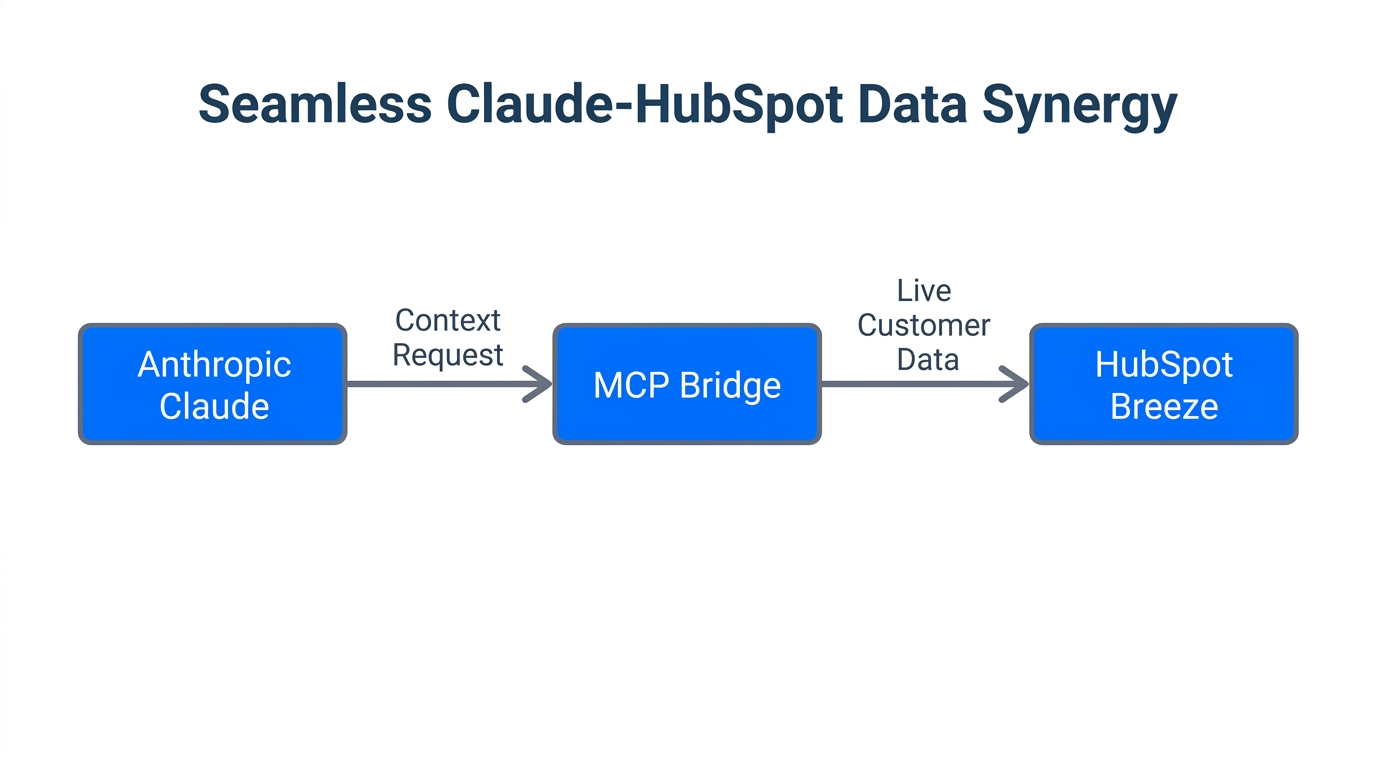
The integration of Anthropic Claude and HubSpot Breeze represents the gold standard for hyper-personalized marketing in 2026. Claude has emerged as the enterprise favorite, winning 70% of head-to-head deals against competitors due to its "Humanity First" ethical positioning and superior performance in large document analysis. When you connect Claude's reasoning capabilities to HubSpot Breeze's AI-native CRM, you unlock a "Single Source of Truth" that updates in real-time.
By using MCP to bridge these tools, growth teams can create Agentic Workflows—AI systems that don't just chat, but execute multi-step tasks. For example, a Claude-powered agent can monitor a Slack channel for a lead mention, pull that lead's entire history from HubSpot, draft a hyper-personalized email in Instantly, and schedule a follow-up—all without a human clicking a single button. For performance marketing teams, Stormy AI offers similar agentic power by automating the discovery and vetting of creators based on real-time campaign performance. This level of automation is why operational costs are dropping by 38% for early adopters of agentic technology.
Transitioning to 'Sovereign AI' and Small Language Models (SLMs)
With the EU AI Act now fully in force in 2026, data privacy is no longer optional—it is a competitive moat. Leading brands are moving toward Sovereign AI, which involves hosting their own models on private servers to ensure 100% data ownership. Instead of sending sensitive customer data to a public cloud, teams use Small Language Models (SLMs) like Mistral or Phi, which are efficient enough to run locally while maintaining high performance for specific marketing tasks.
| AI Strategy | Control Level | Best For |
|---|---|---|
| Public LLM (GPT-4/Claude 3.5) | Low | General content, long-form creative, brainstorming. |
| RAG (Retrieval-Augmented) | Medium | Grounding AI in brand-specific documents to prevent hallucinations. |
| Sovereign AI (Self-Hosted) | Highest | Sensitive customer data, PII, and EU AI Act compliance. |
This shift is a direct response to the "Trust Gap" of 2025, where only 38% of consumers felt positive about AI-driven brands. By using MCP to connect a private Claude instance to a local database, marketers can offer 1-to-1 personalization without ever risking a data leak. This approach also avoids the "Black Box" failures that led to major lawsuits in previous years, such as the iTutorGroup anti-discrimination case.
"AI is the engine of speed, but humans are the brakes of trust. In 2026, marketing isn't about being seen, it's about being believed." — Nathan Yeung, Wesley Clover
A 4-Step Implementation Playbook for Growth Teams
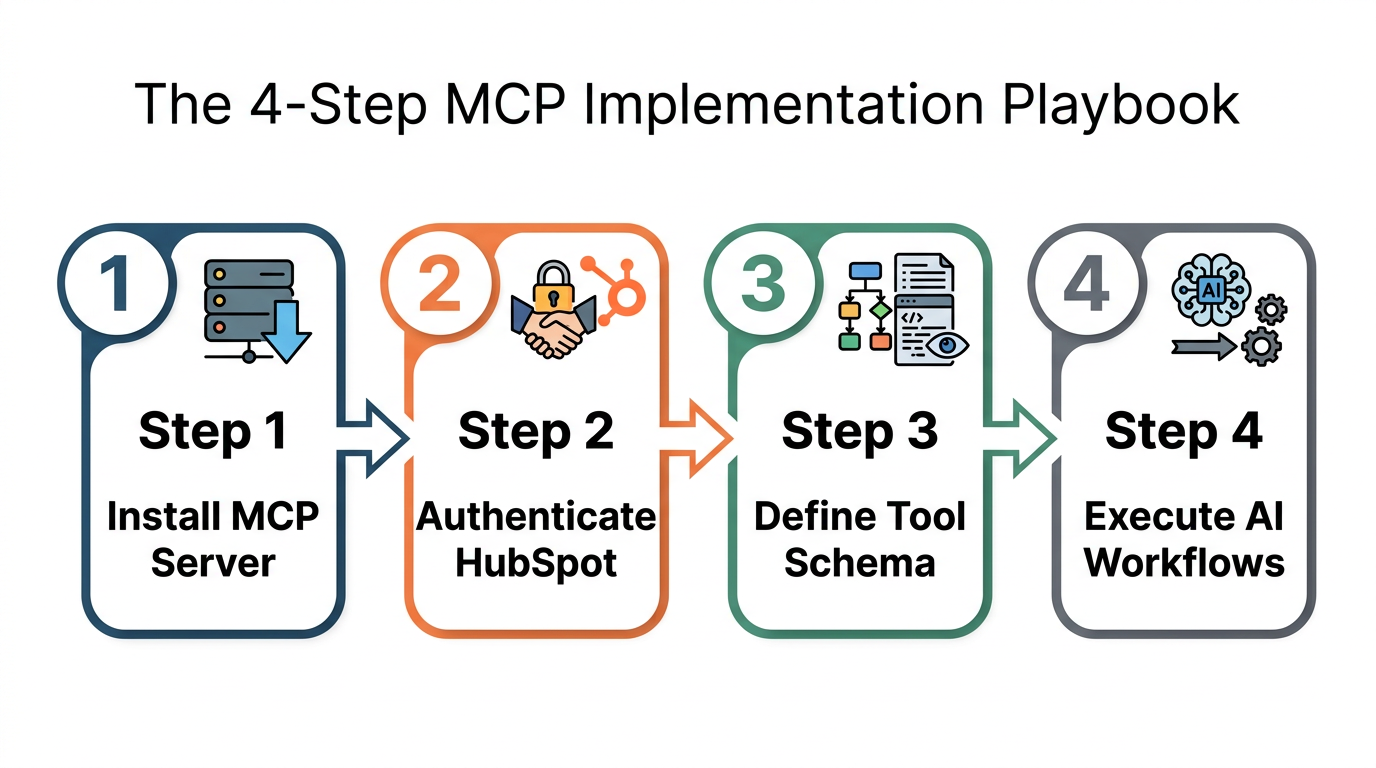
Deploying a unified AI infrastructure doesn't happen overnight. Follow this sequence used by high-maturity teams to integrate Claude and HubSpot via MCP:
Step 1: The AI and Data Audit
Identify your data "islands." Use tools like Fathom to record and extract insights from client calls, and determine which interactions are currently hidden from your CRM. The goal is to map every touchpoint that an AI agent would need to "see" to be effective.
Step 2: Establish the MCP Server Layer
Deploy an MCP Server to act as the middleware between your tech stack and Claude. While some platforms like Salesforce have native support, HubSpot users often leverage implementation guides from Warmly or open-source connectors found on GitHub. This layer ensures that Claude can query HubSpot data on-demand.
Step 3: Define Context Boundaries and Permissions
Security is paramount. You must define "Context Boundaries" that allow the AI to read history but require Human-in-the-Loop (HITL) approval to export or delete data. This prevents "panic scenarios" where an unmonitored agent might accidentally corrupt a database during a routine update.
Step 4: Deploy a 'Meeting Prep Agent'
Start with a high-value, low-risk use case. A Meeting Prep Agent can scan your calendar, pull the attendee's LinkedIn profile, check their recent tickets in HubSpot, and summarize their last three Slack mentions into a 30-second brief for your sales team. This single workflow can save a 10-person team 13 hours per week in manual research.
Performance Benchmarks: Why Integrated Teams Win
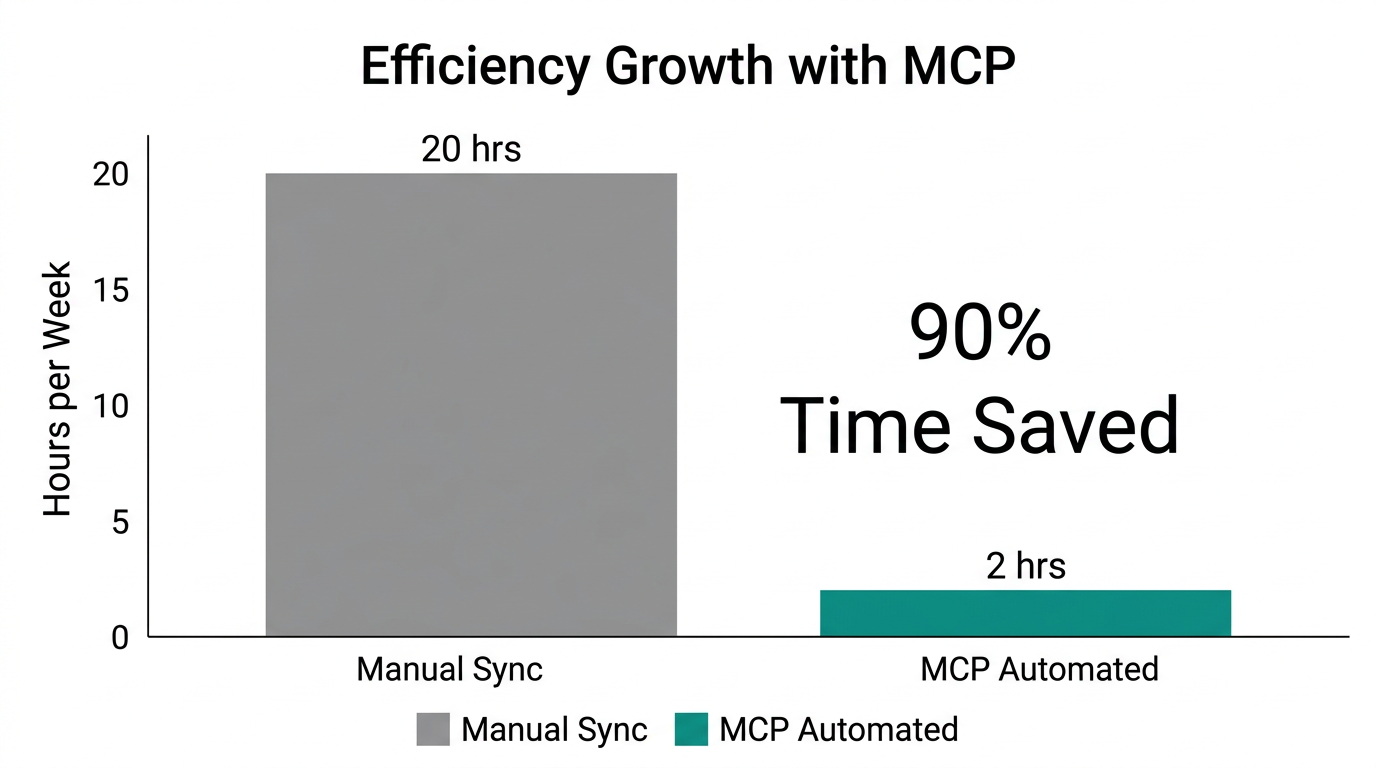
The financial results of MCP integration are no longer theoretical. Companies using integrated MCP frameworks report a 300% ROI on AI spend within the first six months. This is driven largely by a 37% reduction in Customer Acquisition Costs (CAC) and a massive boost in lead quality. When AI is grounded in real CRM data, it stops producing "AI slop" and starts generating content that actually converts.
Furthermore, as traditional search volume is predicted to decline by 25% by the end of 2026, marketers are shifting to Generative Engine Optimization (GEO). By ensuring their HubSpot data is structured and "crawlable" by their internal AI agents, brands are finding it easier to get cited as recommended solutions in platforms like Perplexity and SearchGPT. In fact, GEO-driven traffic converts at 27%, compared to just 2.1% for traditional SEO—a 12.9x improvement in lead quality according to data analyzed by Onely.
| Metric | Traditional SEO (Pre-2025) | GEO & MCP (2026) |
|---|---|---|
| Success Metric | Click-Through Rate (CTR) | Citation Share & Mentions |
| Conversion Rate | ~2.1% | 27% (High Intent) |
| Target | Search Engine Algorithms | LLMs & Generative Agents |
Conclusion: The Era of the Intelligent Growth Stack
Integrating Anthropic Claude and HubSpot Breeze via the Model Context Protocol is more than a technical upgrade; it is a fundamental shift in how businesses operate. By breaking down data silos, growth leaders can finally achieve the dream of 1-to-1 personalization at scale while maintaining the "Humanity Moat" that keeps brands trustworthy. As you build your 2026 growth stack, prioritize platforms that value connectivity and data ownership. For instance, when sourcing high-quality UGC for these automated campaigns, platforms like Stormy AI can help you find and vet the exact creators needed to fuel your AI-driven distribution engines.