The search landscape is undergoing its most radical transformation since the invention of the backlink. For over two decades, digital marketing was a simple game: rank for a keyword, drive a click, and convert a visitor. But as we move toward 2026, that linear path is collapsing. We have entered the era of Answer Engine Optimization (AEO), where the goal is no longer just traffic extraction, but becoming the definitive source of truth for Artificial Intelligence. Experts at Search Engine Land define this shift as optimizing content for AI-driven conversational interfaces.
The Zero-Click Reality and the Death of the Traditional Click
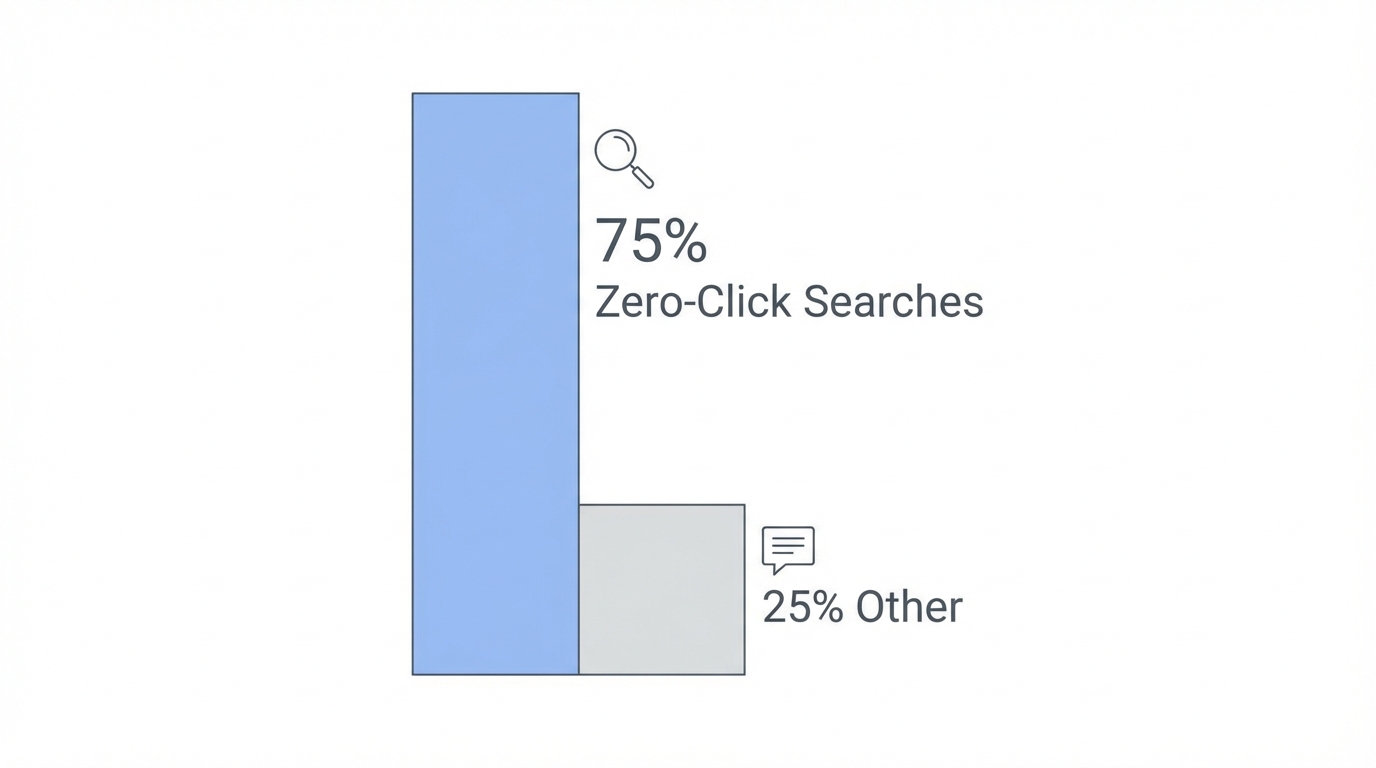
The traditional SEO funnel is leaking more than ever before. Recent data from SparkToro indicates a staggering shift in user behavior: approximately 65% of desktop searches and a massive 75% of mobile searches now conclude on the Search Engine Results Page (SERP) without a single click to an external website. This phenomenon, known as the zero-click search reality, means that the majority of your potential audience is getting their answers directly from Google’s AI Overviews, featured snippets, or knowledge panels.
As AI Overviews (AIO) now appear in roughly 13% to 15% of all informational searches, according to tracking by BrightEdge, the competition for visibility has narrowed. Interestingly, 99.5% of AIO sources are derived from the top 10 organic rankings, according to Evergreen Media. This suggests that while traditional ranking still matters, the way your content is summarized matters even more. If you aren't the answer, you are invisible.
"Visibility is no longer measured solely by clicks but by citations within AI summaries. Earning an AI citation can increase brand trust by over 80%."
AEO vs. SEO: Navigating the New Citation Economy
The transition from Search Engine Optimization to Answer Engine Optimization (AEO) represents a fundamental change in intent. Traditional SEO focuses on optimizing for algorithms to rank high in a list of links. AEO focuses on optimizing for Large Language Models (LLMs) like ChatGPT, Gemini, and Perplexity to be the "canonical source of truth."
In this new "Citation Economy," the metric of success is brand authority. When a user asks Perplexity for the "best CRM for creator management," your goal is to be the first name mentioned with a supporting link. This requires moving away from "AI Slop"—generic, robotic content that lacks unique insight. Search engines are increasingly penalizing content that doesn't provide Information Gain. According to Portent, 2026 strategies must prioritize first-hand case studies, proprietary data, and contrarian opinions that AI cannot hallucinate or replicate. [Source: Verity Ghostwriting]
For mobile-first businesses, this shift is even more critical. With global app downloads hitting 136 billion according to Business of Apps, retention is the new acquisition. Since 80% of users abandon an app within three days, as noted by ASOMobile, your AEO strategy should drive users toward high-value web-to-app (W2A) funnels that provide immediate utility before the download.
Entity-First SEO: Building Topical Authority

The days of keyword stuffing are dead. AI engines now understand the world through "entities"—people, places, things, and concepts—and the relationships between them. To win in 2026, you must adopt Entity-First SEO. This involves building deep topic clusters that signal to AI that your site is an authority on a specific subject, rather than just a collection of keywords. Research on Entity SEO highlights how search engines map these connections.
Instead of writing five separate articles on "influencer marketing," you should build a pillar page supported by 15–20 related subtopics. This structure, recommended by MentionStack, helps LLMs map your site's expertise. When an AI agent crawls your site, it should see a logical web of information that answers every possible follow-up question a user might have.
"Topical authority is the only moat left in a world where AI can generate a thousand generic blog posts in seconds."
The Inverted Pyramid: Writing for AI Overviews
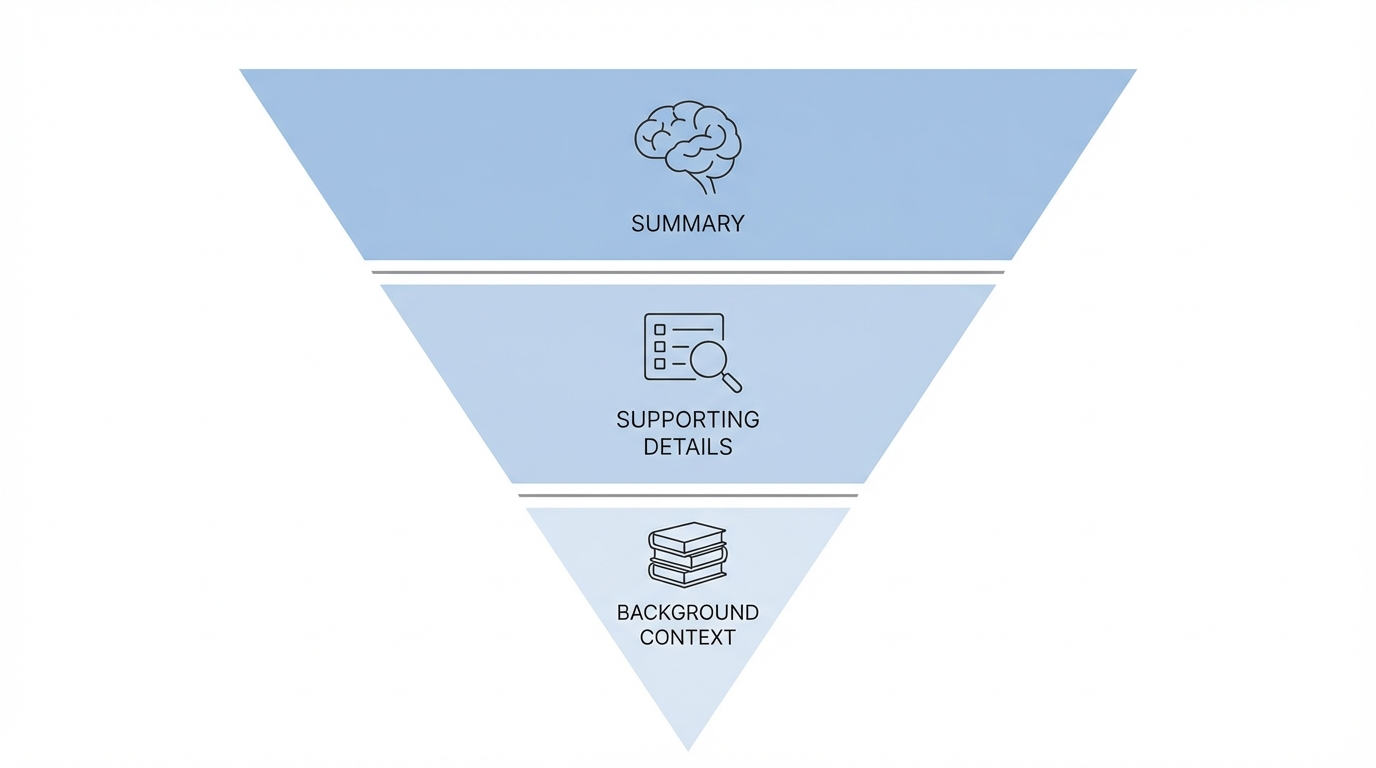
To trigger AI Overviews and featured snippets, you need to change your content's physical structure. Use the Inverted Pyramid model: place the most critical information—the direct answer—at the very top of your page. The Nielsen Norman Group has long advocated for this style to improve readability. Research from SEMAI.AI suggests that direct, 40–60 word summaries placed immediately after an H2 heading have the highest probability of being pulled into an AI overview.
How to structure your AEO content:
- The Direct Answer: Start with a concise 40-60 word definition or answer.
- The Nuance: Follow up with bullet points, data, or context.
- The Proof: Provide case studies or proprietary statistics.
- The Conversational Intent: Use FAQ schema to answer long-tail questions.
If your content doesn't answer a direct question, it won't appear in the 2026 AI-driven SERP. Platforms like Outbound Sales Pro emphasize that conversational intent is now the primary filter for answer engines.
Tracking Visibility in the AI Era

How do you measure success when clicks are no longer the primary KPI? You need a new toolkit. Legacy analytics show you where people clicked; AEO tools show you where you are mentioned. Tools like Relixir allow for autonomous AEO execution and citation tracking, while the Semrush AI Visibility Toolkit helps you measure your brand presence across various AI search models.
Testing your brand's "recommendability" is also essential. Regularly prompt Perplexity AI with queries relevant to your niche to see if your brand is the one being suggested. If you are a brand looking to scale through UGC (User Generated Content) and influencer partnerships, building this brand authority is paramount. Finding creators who generate this brand authority is easier with tools like Stormy AI, which helps discover the voices and entities that AI engines recognize and reward with citations.
"By 2026, 80% of revenue for mobile businesses will come from just 20% of existing customers, making retention-first AEO strategies vital for survival."
The Human Factor: UGC and Social Search
As AI summaries become more prevalent, users are developing "summary fatigue." To counter this, there is a massive resurgence in Social Search. Users are increasingly appending "reddit" or "tiktok" to their queries to find human opinions that AI cannot fake. Brands like Gymshark have mastered this by leveraging a micro-influencer strategy on TikTok to build an organic community that generated 193 million views without traditional ad spend.
Similarly, Spotify uses its "Wrapped" campaign to turn user data into shareable, organic content. This reduces acquisition costs by leveraging user networks for word-of-mouth growth. To replicate this, brands must ensure their "entity" is being discussed in human-centric spaces. Utilizing Stormy AI's creator discovery features allows brands to find the exact influencers who can generate the human-led signals that AI engines use to verify authority.
Conclusion: Future-Proofing for 2026
Surviving the zero-click era requires a mindset shift from traffic volume to brand resonance. While SEO is not dead, it has evolved into a more sophisticated, intent-based matching system. To thrive, you must stop chasing keywords and start building an authoritative entity that AI engines trust.
Focus on the Inverted Pyramid structure, lean into Entity-First SEO, and prioritize high-quality Information Gain. By becoming the canonical answer in your niche, you won't just survive the zero-click era—you'll own it.