In the high-stakes world of 2026 mobile app development, the conventional wisdom remains stubbornly fixed on "iOS first." Founders spend months "vibe coding" sleek interfaces for the Apple ecosystem, chasing the mythical high-spending iPhone user. But while the masses are crowded into an increasingly saturated App Store, a new generation of bootstrapped founders is quietly building million-dollar empires on the platform everyone else is sleeping on: Android. As acquisition costs on iOS skyrocket, the strategic advantage has shifted toward high-volume distribution and lower entry barriers.
The reality of mobile app marketing strategy 2026 is no longer about which platform has the prettiest buttons; it is about where your dollar goes furthest. Recent data from industry leaders like Starter Story shows that founders who prioritize Android are seeing unprecedented growth efficiency, often achieving 4x lower advertising costs while maintaining conversion rates that rival their iOS counterparts. According to Statista's 2026 market share reports, Android continues to dominate the global landscape, providing a much larger sandbox for testing. If you are bootstrapping a startup this year, the path to a million-dollar ARR likely starts in the Google Play Store, not the Apple App Store.
"The world is obsessed with iOS 'vibes,' but the real money for bootstrappers in 2026 is moving to the massive, untapped scale of Android."
The 2026 Paradigm Shift: Why the 'iOS First' Convention is Dying
 0:30
0:30For over a decade, the standard operating procedure for any app startup was to launch on iOS, iterate, and then—perhaps—port to Android. In 2026, this logic is being disrupted by a simple mathematical reality: saturation. According to recent market analysis from Sensor Tower, the number of new apps released on iOS has exploded by 500% over the last two years, while Android has only seen a 200% increase. This means iOS is effectively 5x more crowded than Android for new launches.
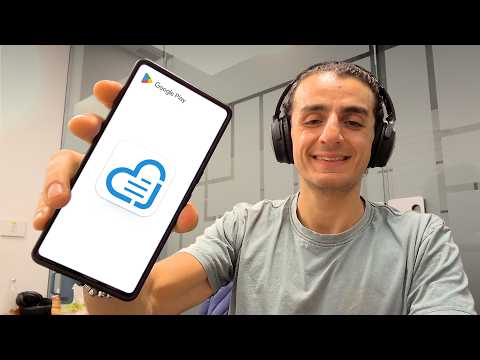
Take the example of Journalable, an AI calorie counter that scaled to over $100,000 in monthly revenue. Despite the typical bias toward Apple, 80% of their users and revenue come directly from Android. For founders like Steve, the creator of Journalable, the decision to focus on Android wasn't just a preference—it was a survival tactic. When you are capital-constrained, you cannot afford to compete in the high-rent district of the Apple App Store when the "Blue Ocean" of Android is right next door.
The Data-Driven Case for Android: 4x Lower Costs, Negligible Conversion Gaps
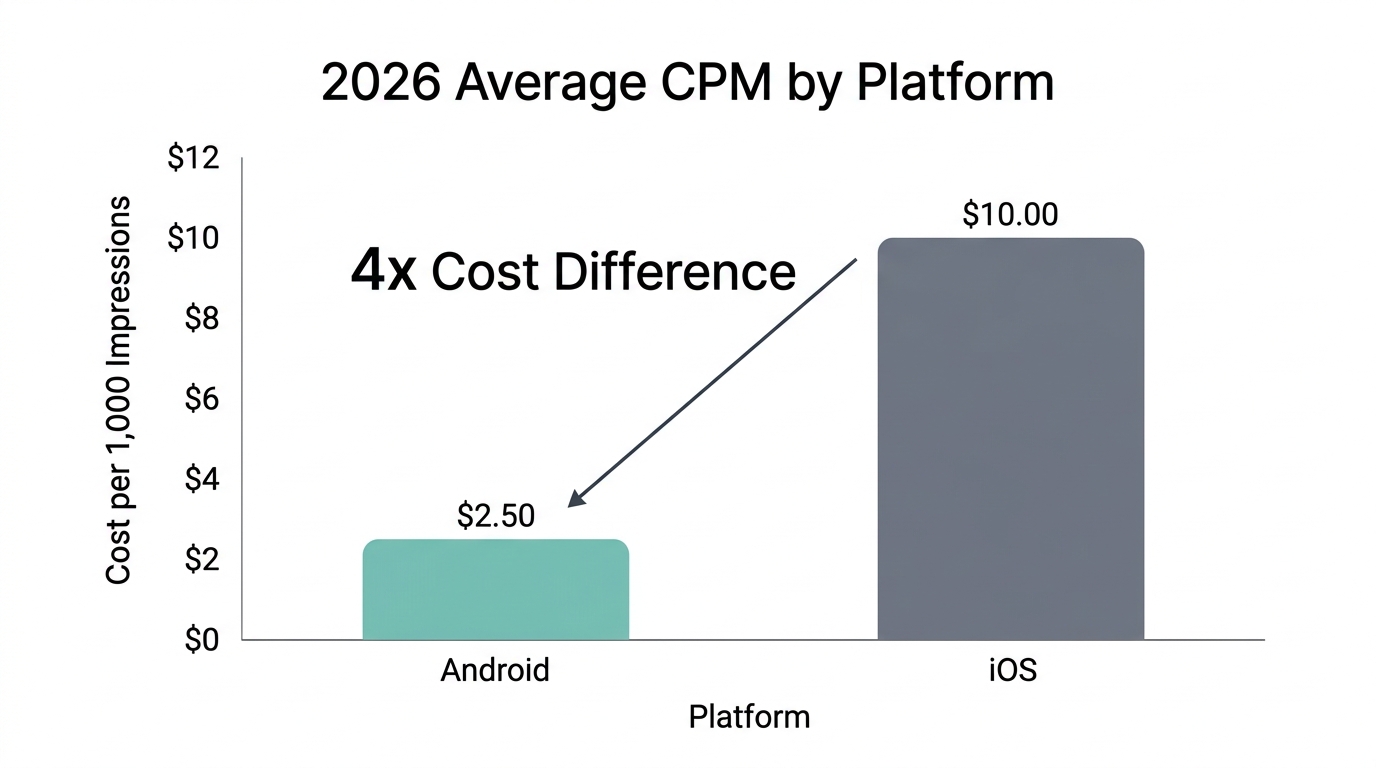
The most common argument against Android is that "Android users don't spend money." While it is true that average revenue per user (ARPU) can be higher on iOS, the gap is closing rapidly, and it is more than offset by the massive difference in low cost user acquisition. When comparing Android vs iOS revenue statistics in 2026, the cost-to-value ratio heavily favors Google's platform, as evidenced by global CPM benchmarks.
| Metric | iOS (Apple) | Android (Google) | The 'Bootstrapper' Winner |
|---|---|---|---|
| Average CPM | $24.00+ | $6.00 - $8.00 | Android (4x Cheaper) |
| Competition Density | Extreme (5x Growth) | Moderate (2x Growth) | Android |
| Conversion Rate Gap | Baseline (100%) | ~80% of iOS | Android (Efficiency) |
| Global Reach | Premium/Niche | Massive/Emerging | Android |
As noted in the RevenueCat State of Subscription Apps Report, while iOS users might convert at a 20% higher rate, they cost 400% more to reach. From a purely mathematical perspective, you can buy four times the views on Android for the price of one on iOS. If your app converts even reasonably well, the ROI on Android will outperform iOS every single time. This makes bootstrapped app growth significantly more viable on the Play Store.
The Google Ads Playbook for Mobile Apps in 2026
9:50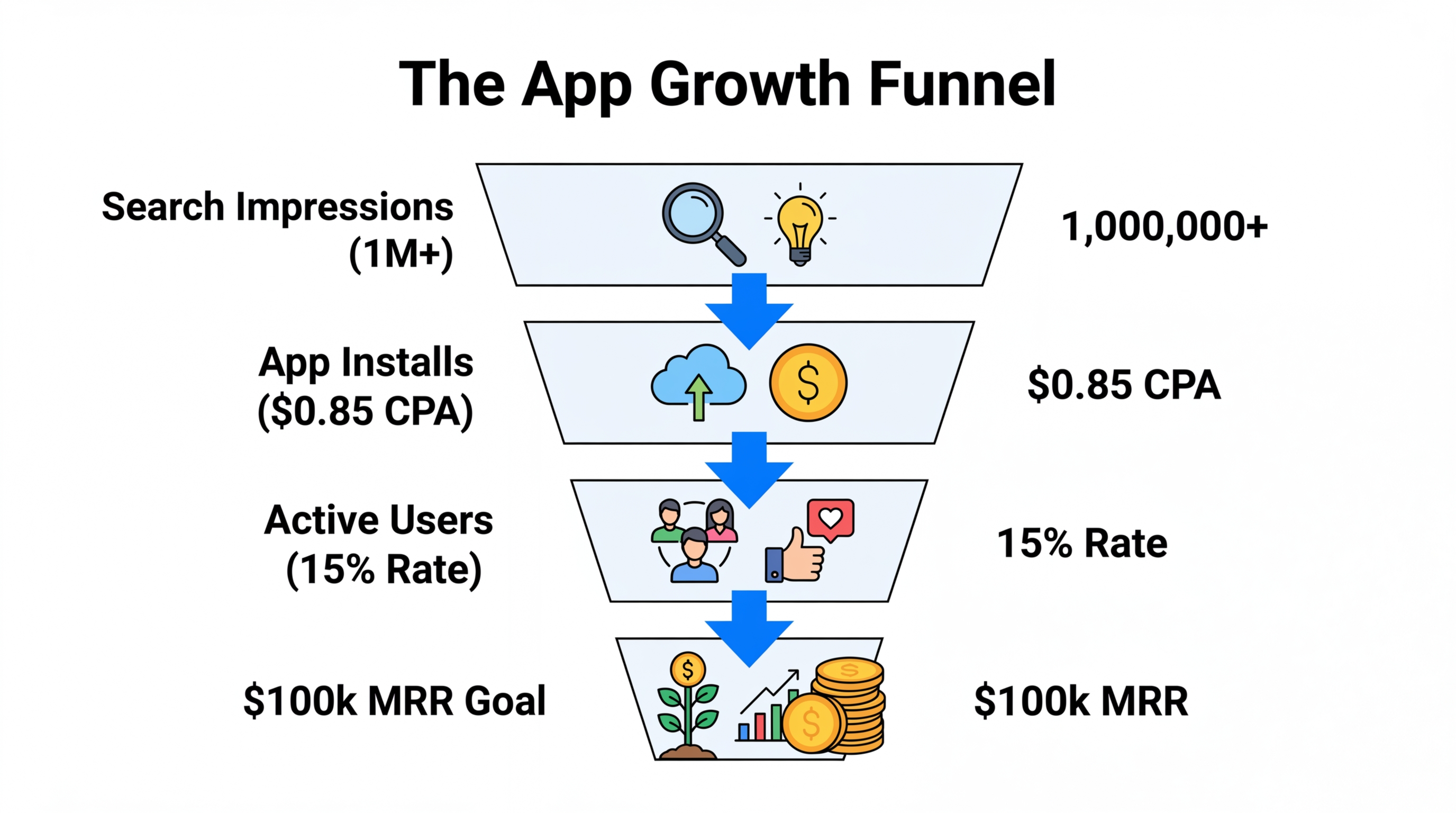
To win on Android, you must master Google Ads for mobile apps. Unlike the fragmented nature of social media advertising, Google App Campaigns allow you to tap into their entire digital ecosystem—Search, YouTube, the Display Network, and most importantly, the Play Store—from a single dashboard. Here is the 6-step playbook used by top-tier founders to scale to $1M ARR.
Step 1: Measurement and Attribution
Before spending a single dollar, you must set up deep event tracking. Use tools like Firebase and RevenueCat to send event data (installs, paywall hits, trial starts, and purchases) back to Google Ads. This data is the "heartbeat" that allows Google's AI to optimize your campaigns.
Step 2: Launch Install Campaigns
Start with simple App Install campaigns to feed the algorithm. Google needs volume to understand who your likely users are. Provide at least 10 pieces of copy (5 headlines, 5 descriptions) and a mix of images and videos. Even stock assets are better than nothing in this initial "learning phase."
Step 3: Asset Optimization & "Big Swings"
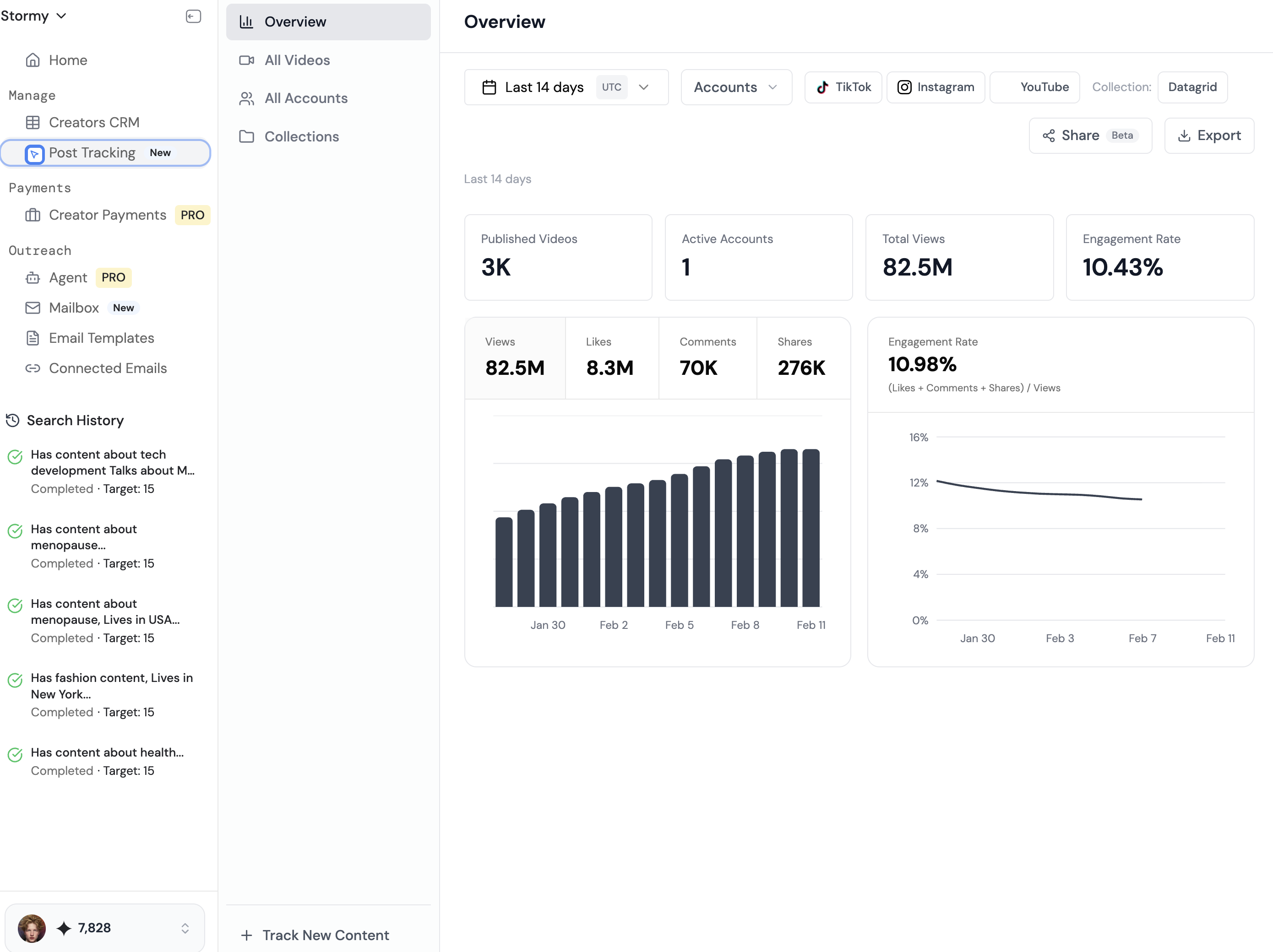
Once you have a baseline, start testing. Don't waste time tweaking font sizes; take big swings with your creative. Try radically different hooks and visual styles. Because CPMs are so low on Android, you can afford to test 20-30 variations to find the one that sticks. This is also where platforms like Stormy AI become invaluable for sourcing authentic UGC creators who can produce high-performing video assets at scale.

"Don't optimize the small stuff. Take massive swings with your creative assets until you find the hook that cuts through the noise."
Step 4: Transition to tCPA (Target Cost Per Acquisition)
Once your account has enough purchase data, switch to tCPA bidding. This tells Google exactly what you are willing to pay for a subscriber. To make this work, your daily budget needs to be at least 10x your target cost per action. If a trial costs you $15, you need a $150/day budget for the algorithm to function correctly.
Leveraging Claude Code to Maintain Lean Operational Overhead
18:04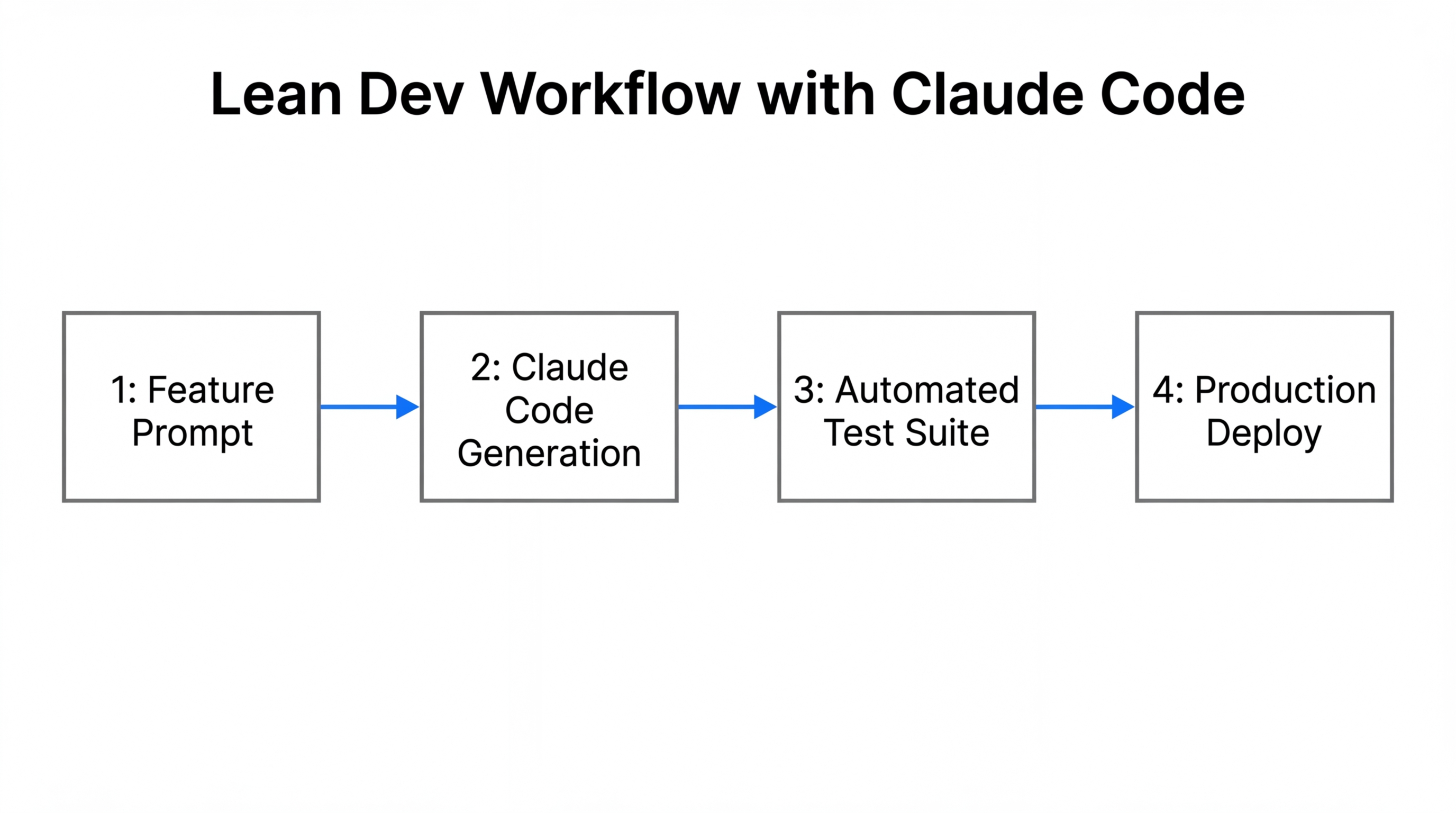
Managing a user base of over 1 million people used to require a massive team. In 2026, the "lean bootstrapper" stack has replaced the bloated engineering department. Tools like Claude Code and GitHub Copilot allow a single founder to manage complex backends, localized databases, and multi-platform updates with minimal friction.
By using Claude 3.5 as a co-pilot, founders can automate customer support via n8n, handle complex data analysis in BigQuery, and even generate localized app descriptions for global markets. The goal is to keep fixed costs low while scaling revenue vertically. A typical 2026 bootstrapper stack looks like this:
- Development: Cursor + Claude Code ($100/mo)
- Infrastructure: Firebase (Pay-as-you-go)
- Automation: n8n ($24/mo)
- Marketing: Google Ads + Stormy AI for creator discovery
- ASO: AppRadar or AppTweak ($180/mo)
Market Saturation: The International Android Opportunity
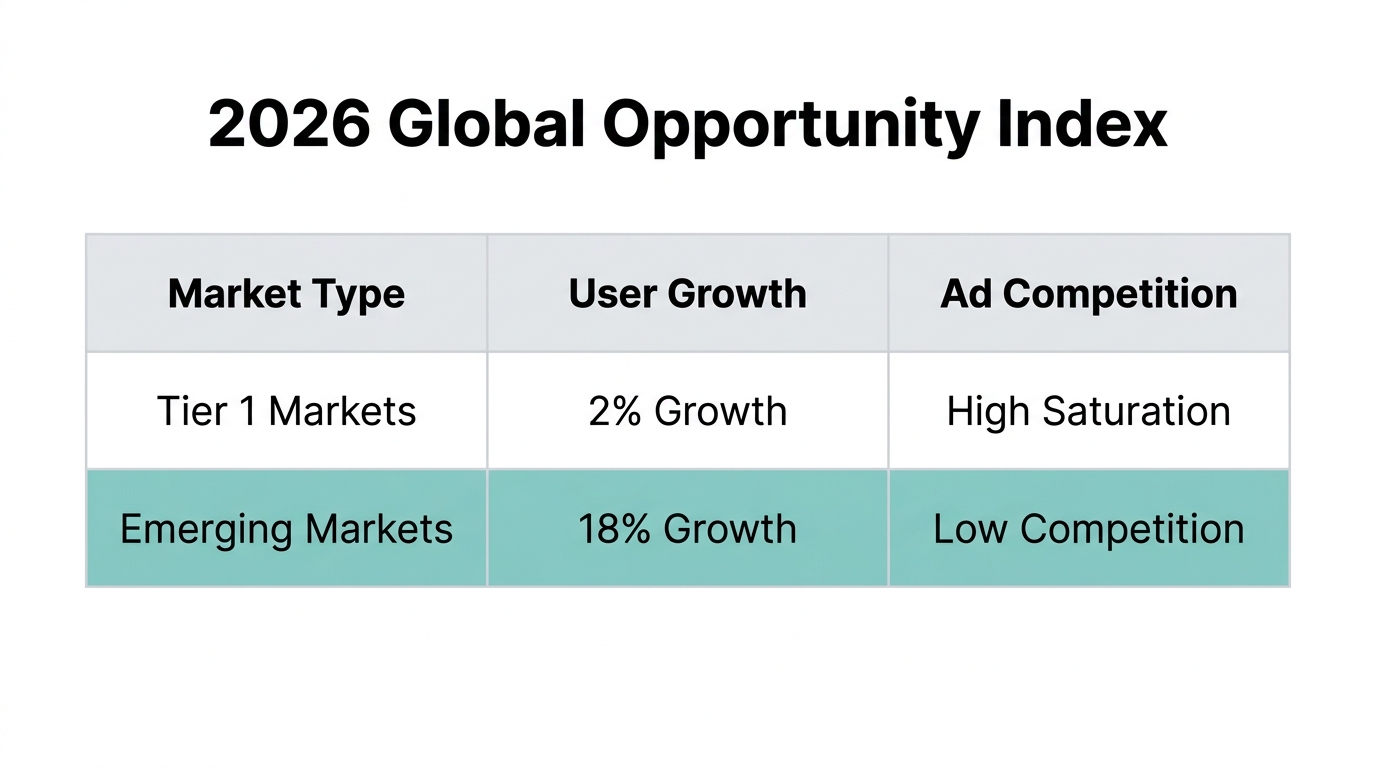
While the US market is the primary target for many, the true power of Android lies in its global dominance. In 2026, emerging markets in South America, Southeast Asia, and parts of Europe offer even lower CPMs and massive growth potential. Localization is the secret weapon here. By translating your Play Store assets and using local currency pricing, you can capture markets that iOS-first developers completely ignore.
The "Keep It Simple" philosophy is critical here. An app that solves a universal problem—like nutrition, fitness, or productivity—can be localized for 20+ countries with the help of AI, creating a global revenue stream that doesn't depend on expensive US-based iPhone users. This is a core pillar of a modern mobile app marketing strategy 2026.
Conclusion: The Data Doesn't Lie
The choice between Android and iOS isn't about brand loyalty; it's about business logic. If you have millions of dollars in VC funding, by all means, chase the prestige of the Apple App Store. But if you are a bootstrapper looking to build a sustainable, profitable business, the data points clearly toward Android.
By leveraging 4x lower CPMs, utilizing Google Ads for mobile apps, and maintaining a lean operation with AI tools like Claude Code, you can achieve a level of growth efficiency that was impossible just two years ago. Start with Android, follow the data, and build the simple, frictionless experiences that users (and their wallets) are looking for in 2026.