The February 2026 Amazon variation split has officially landed, and for many brand owners, the morning report was a bloodbath. If you woke up to see your hero listing’s 4,000 reviews suddenly fragmented into dozens of lonely child ASINs with zero social proof, you aren’t alone. This latest policy shift, aimed at curbing review manipulation across variations with "significant feature differences," has sent conversion rates plummeting. We are seeing early data suggesting a 15% to 30% drop in CVR for brands that relied on review sharing to carry their entire catalog [source].
But while the legacy playbook is dead, a new one is emerging. Survival in 2026 requires more than just high-quality products; it requires an aggressive, tactical approach to reclaiming social proof at the child ASIN level. The most potent weapon in this fight is Amazon Vine. This isn’t just about getting a few stars; it’s about a controlled, machine-readable launch that satisfies both human shoppers and the AI agents now dominating the search landscape.
The Impact of the 2026 Review Policy: Why the Split Happened
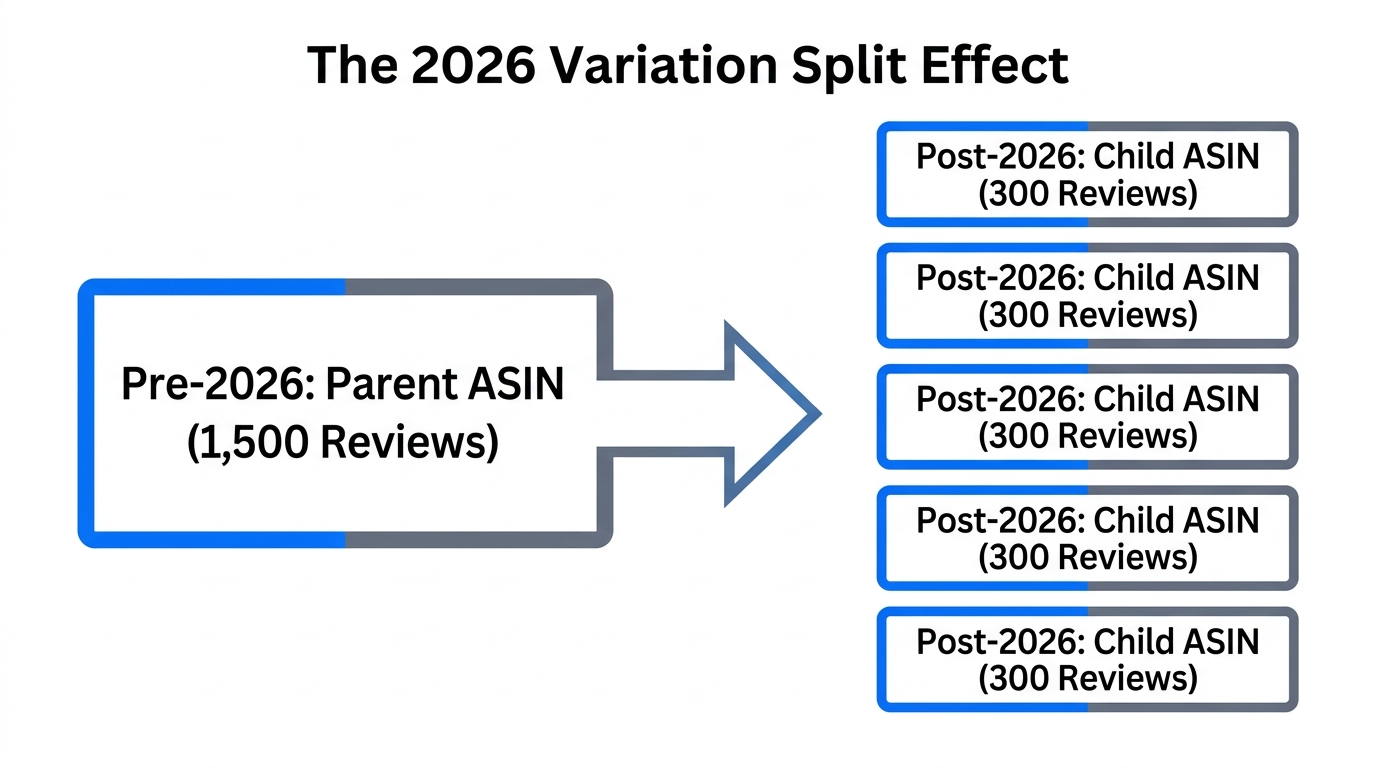
For years, sellers used the "parent-child" relationship to aggregate reviews from a single hero product across every color, size, and material variant. According to research from Marketplace Pulse, this practice often misled consumers who thought a new, untested variant had the same historical reliability as the original. In February 2026, Amazon Ads and search algorithms began strictly enforcing the split for any products with "significant differences" in material or design.
This policy change isn't just about consumer protection; it's about Agentic Commerce. AI shopping agents like ChatGPT Search and Rufus now prioritize products with high review volume *specific* to the exact item being requested. If your "Midnight Blue" variant now has 0 reviews while your "Classic Black" has 5,000, the AI agent will simply stop recommending the blue one. To fight back, you need to treat every child ASIN as a standalone brand launch.
"Success in 2026 hinges on prioritizing trust and tangible value for buyers, as AI agents start making purchase decisions for humans." — Sharyn Leaver, Forrester Research
The Amazon Vine 2026 Launch Playbook: Step-by-Step
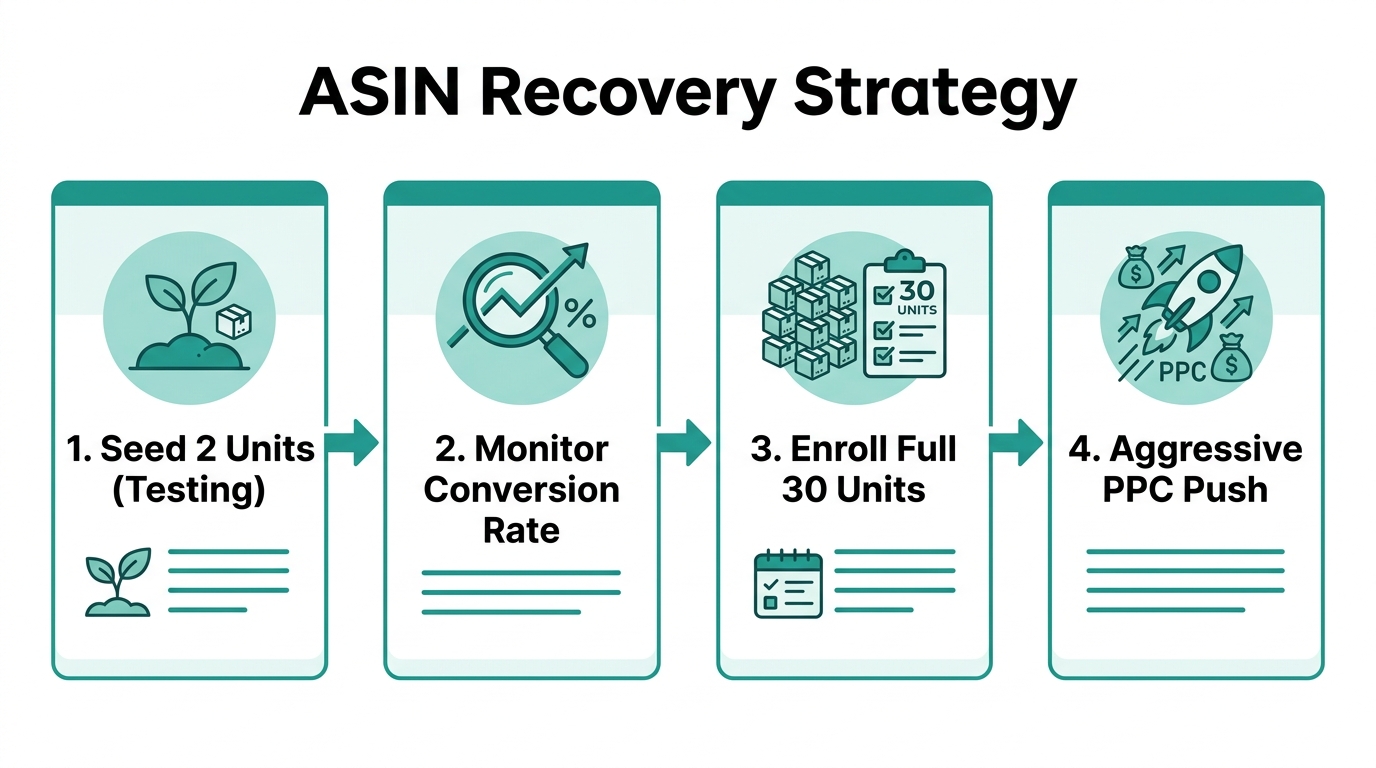
To bridge the social proof gap created by the split, you must enroll each individual child ASIN into Amazon Vine. This ensures that every variant launches with 15-30 reviews within the first 4-8 weeks. Stormy AI can handle the heavy lifting here by tracking which child ASINs fall below your "critical review threshold" (usually 25 reviews) and automatically creating a task for enrollment.
Step 1: Check Eligibility and Tiers
Thanks to a March 2025 update, even non-trademarked brands can now access limited Vine units. However, for a full scale-up, you’ll want to utilize the $200 tier for 11-30 units to get the maximum social proof. Here is how the 2026 pricing currently looks:
| Vine Tier | Unit Limit | Amazon Fee | Best Use Case |
|---|---|---|---|
| Free | 1–2 Units | $0 | Slow-moving variations or testers. |
| Basic | 3–10 Units | $75 | Low-competition niches. |
| Professional | 11–30 Units | $200 | High-volume hero variations. |
Step 2: Set Your Fair Market Value (FMV)
This is where most sellers fail. In 2026, Vine reviewers are more critical than ever because they are taxed on the "Estimated Taxable Value" (ETV) of the items they receive. If you list a $100 item with an inflated ETV, the reviewer might owe $30 in taxes for it. If the product isn't perfect, they will leave a 3-star review out of pure tax resentment. To ensure a 4.3+ star rating, you must set an attractive FMV that lowers their tax burden while still reflecting the product's quality.
Timing Your Vine Enrollment: The 3-Week Pre-Launch Window
The biggest mistake you can make is starting your Meta Ads or Amazon PPC before your Vine reviews land. In the 2026 landscape, running traffic to a 0-review child ASIN is essentially burning cash. Data from Bazaarvoice shows that products with reviews convert up to 270% better than those without.
You should enroll your child ASIN in Vine exactly 2 to 3 weeks before your planned ad launch. This allows the Vine voices to claim their units and start posting feedback just as you begin to scale spend. Stormy AI acts as your AI ecommerce employee during this phase—she can monitor the arrival of these reviews and only "wake up" your ad campaigns once a specific star rating or review count is achieved, ensuring you never waste budget on a "cold" listing.
"If you use Vine like a hack, it will punish you. If you use it like a controlled test, it can be a weapon." — Justin Bogs, Marketplace Valet
Managing Inventory Without Stock-outs
The 2026 variation split creates a logistical nightmare: you need to set aside 30 units per child ASIN for Vine, which can trigger a stock-out on your actual sellable inventory if you aren't careful. Amazon's inventory health algorithms now penalize brands that drop below a 14-day supply, even if those units are "reserved" for Vine. Using Stormy AI, you can create a dynamic spreadsheet that tracks your FBA sell-through rate against your Vine claims in real-time. If Stormy sees that your Vine units are putting your main inventory at risk, she can flag the issue and suggest a shipping plan update before you lose your search ranking.
Remember, Vine reviews are 4-10x faster than organic ones, according to Titan Network. This speed is a double-edged sword; if you move from Page 5 to Page 1 in two weeks, you must have the inventory to support that new velocity.
Bazaarvoice vs. Amazon Vine: Which Should You Use?
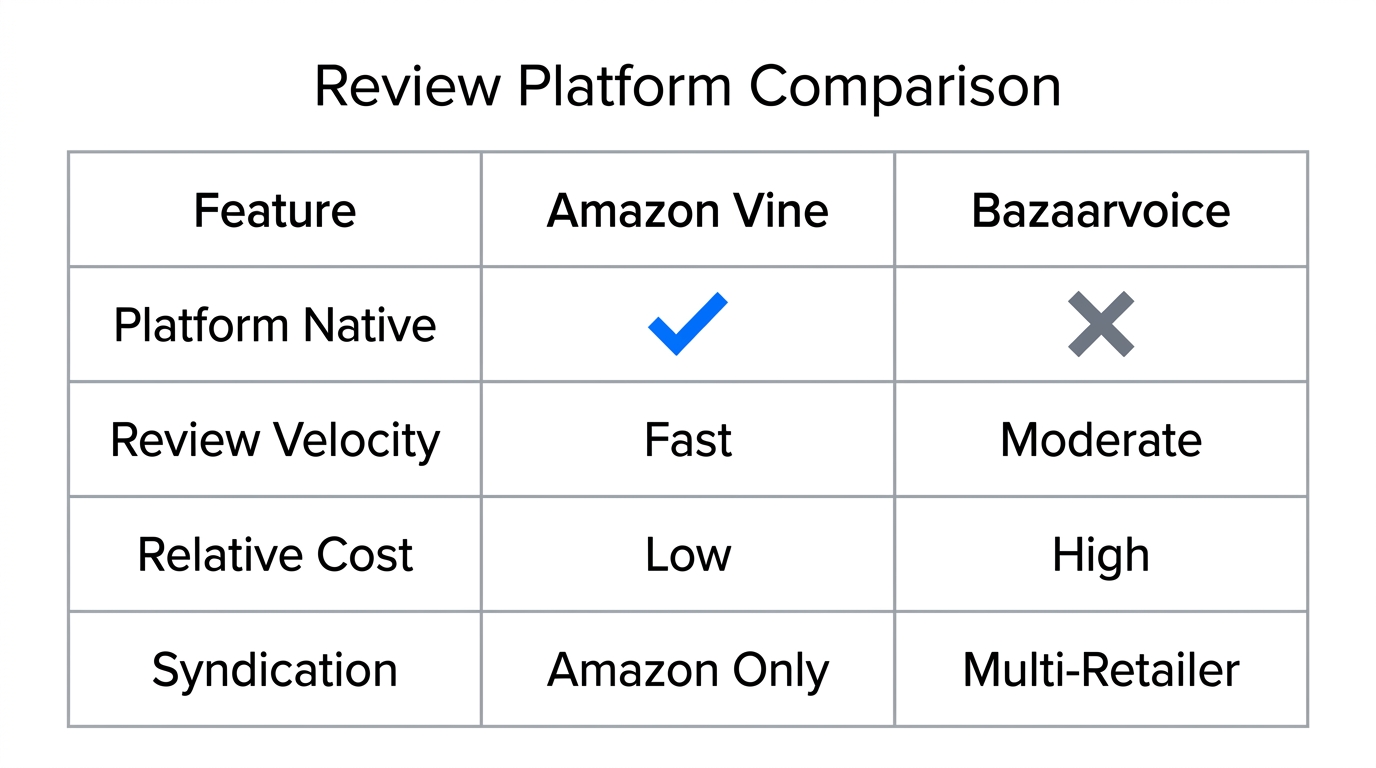
While Vine is the undisputed king of Amazon-native social proof, larger brands often look toward Bazaarvoice for multi-channel syndication. If you also sell on TikTok Shop or Walmart, Bazaarvoice's ability to syndicate reviews across 1,250+ retailers is unmatched. However, for immediate "cold start" momentum specifically on Amazon in the wake of the variation split, Vine is significantly faster and more cost-effective.
| Feature | Amazon Vine | Bazaarvoice |
|---|---|---|
| Setup Speed | Instant | 3+ Months |
| Cost | $0 - $200 | $7,000+ / Year |
| Platform Reach | Amazon Only | Multi-Channel (TikTok, Target, etc.) |
| Control | Low (Amazon Managed) | High (Advanced Moderation) |
In 2026, the best strategy is often a hybrid approach. Use Stormy AI to manage your Vine enrollments for rapid Amazon ranking, while using Bazaarvoice to synchronize your overall brand reputation across the web for AI agents to discover via their Authentic Discovery API.
"The authentic voice of the customer has become indispensable as AI agents start making purchase decisions for humans." — Keith Nealon, CEO of Bazaarvoice
Conclusion: Adapting to the New Reality
The 2026 Amazon variation split is a major hurdle, but it is also an opportunity to out-maneuver competitors who are too slow to adapt. By treating every child ASIN as a unique launch and utilizing Amazon Vine to build a foundation of social proof, you can recover your conversion rates and secure your spot in the AI-driven future of ecommerce.
Don't try to manage this manually. Let Stormy AI, your AI ecommerce employee, watch your variations, monitor your inventory, and flag when it's time to enroll. The messy back office of 2026 belongs to those who automate the boring parts so they can focus on the big picture. Start your first 2026 Vine campaign today before the competition catches up.