The era of manual Amazon bidding is officially over. As we enter 2026, the Amazon advertising landscape has undergone a tectonic shift from a keyword-matching engine to an agentic discovery platform. With average Costs-Per-Click (CPC) climbing to $1.34 and Amazon’s global ad revenue projected to hit a staggering $82.07 billion this year, the "set it and forget it" strategy of the early 2020s is a recipe for bankruptcy. Today, winning on Amazon requires more than just a high bid; it requires training Amazon’s AI assistant, Rufus, to recommend your products while an AI teammate like Stormy AI handles the messy back-office inventory monitoring to ensure you never waste a dollar on out-of-stock listings.
The 2026 Amazon Ads Landscape: Benchmarks and AI Agents
In 2026, the Amazon auction is no longer a simple contest of who pays the most for the word "yoga mat." Instead, the algorithm has evolved into a context-relevancy system. This shift has been driven largely by the massive adoption of Rufus, Amazon’s AI shopping assistant, which now mediates between 35% and 40% of all purchases on the platform. If Rufus doesn’t "understand" your product through semantic data, your ads simply won't appear in the most high-converting conversational queries.
To navigate this "efficiency era," sellers must balance high-level strategy with granular execution. Success is no longer about brute force; it's about optimizing for context-relevancy rather than just keyword density. This tutorial provides the exact playbook used by top-tier brands to achieve 20%+ conversion rates while keeping ACoS under control in a hyper-competitive 2026 market.
"Amazon is entering its efficiency era... the shift is from 'spend to grow' to 'optimize to win.'" — Enrico Babucci, CSO, OmniShopper
The Atomic Campaign Structure for 2026
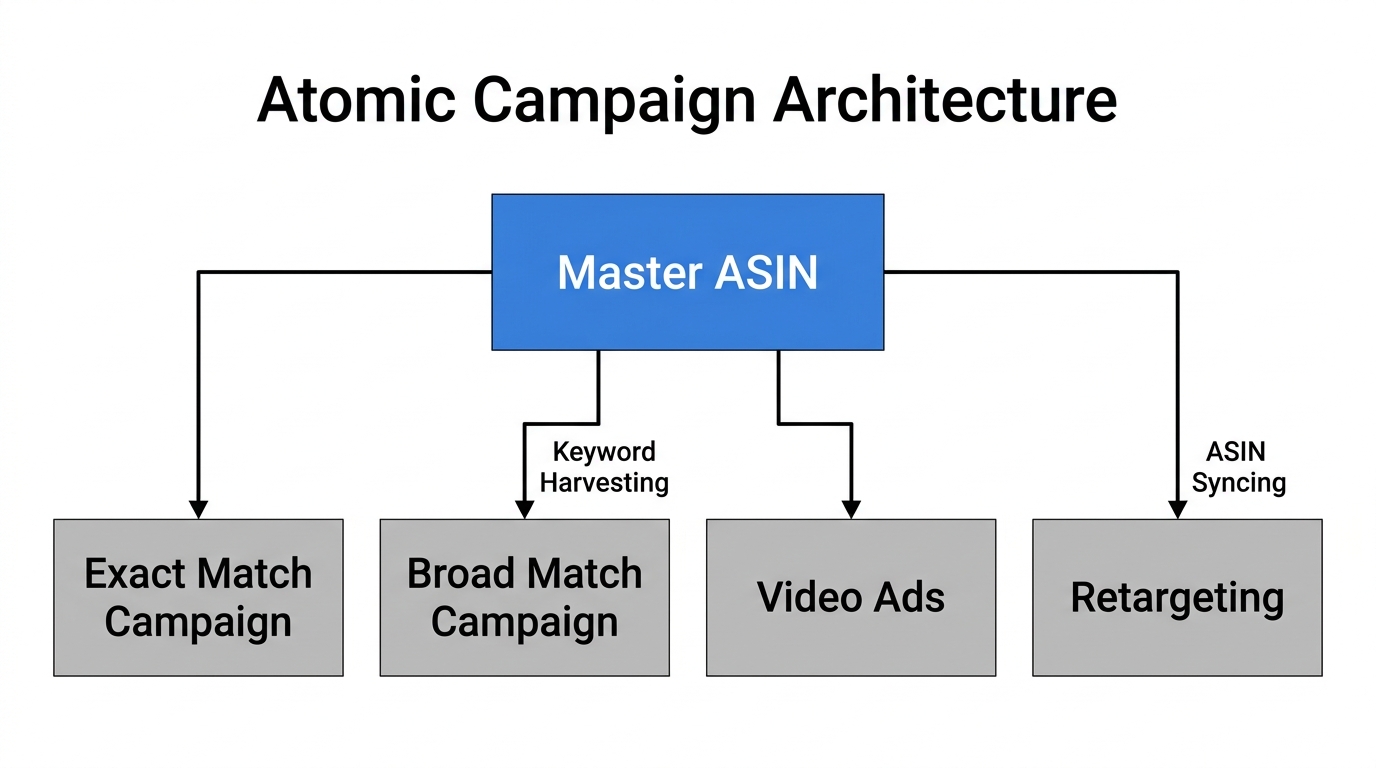
The most common mistake in 2026 is over-complicating campaign architecture. To scale efficiently, you need an Atomic Campaign Structure. This model separates campaigns by intent, ensuring that your data gathering (Discovery) never interferes with your high-margin winners (Performance).
| Campaign Tier | Function | Bidding Strategy | Target Type |
|---|---|---|---|
| Discovery | Keyword Mining | Low Fixed Bid | Auto (All Groups) |
| Performance | Profit Harvesting | Dynamic Bids (Up/Down) | Manual Exact |
| Research | Finding Variations | Suggested Bid | Manual Broad |
| Conquest | Stealing Market Share | Aggressive Bid | ASIN Targeting |
When running this structure, the goal is to move keywords through a conveyor belt of optimization. A winning term found in your Discovery (Auto) campaign should be moved to Research to find variations, and then finally locked into Performance as a Manual Exact match. During this process, you must integrate an AI employee like Stormy AI. While your ad tools optimize bids, Stormy AI monitors your inventory levels and supplier lead times in the background. If a SKU hits a stockout risk, Stormy AI can flag the issue or even pause campaigns to protect your organic ranking and Buy Box eligibility.
Conquesting: The 2026 ASIN Strategy
In 2026, ASIN targeting (Product Targeting) is more effective than ever. By targeting competitors with higher prices, lower star ratings, or missing features, you can capture high-intent shoppers at the very bottom of the funnel. Use tools like Helium 10 Adtomic to identify these weak competitors and build a dedicated "Conquest" campaign for them.
The 'Rule of 7' for Campaign Stabilization
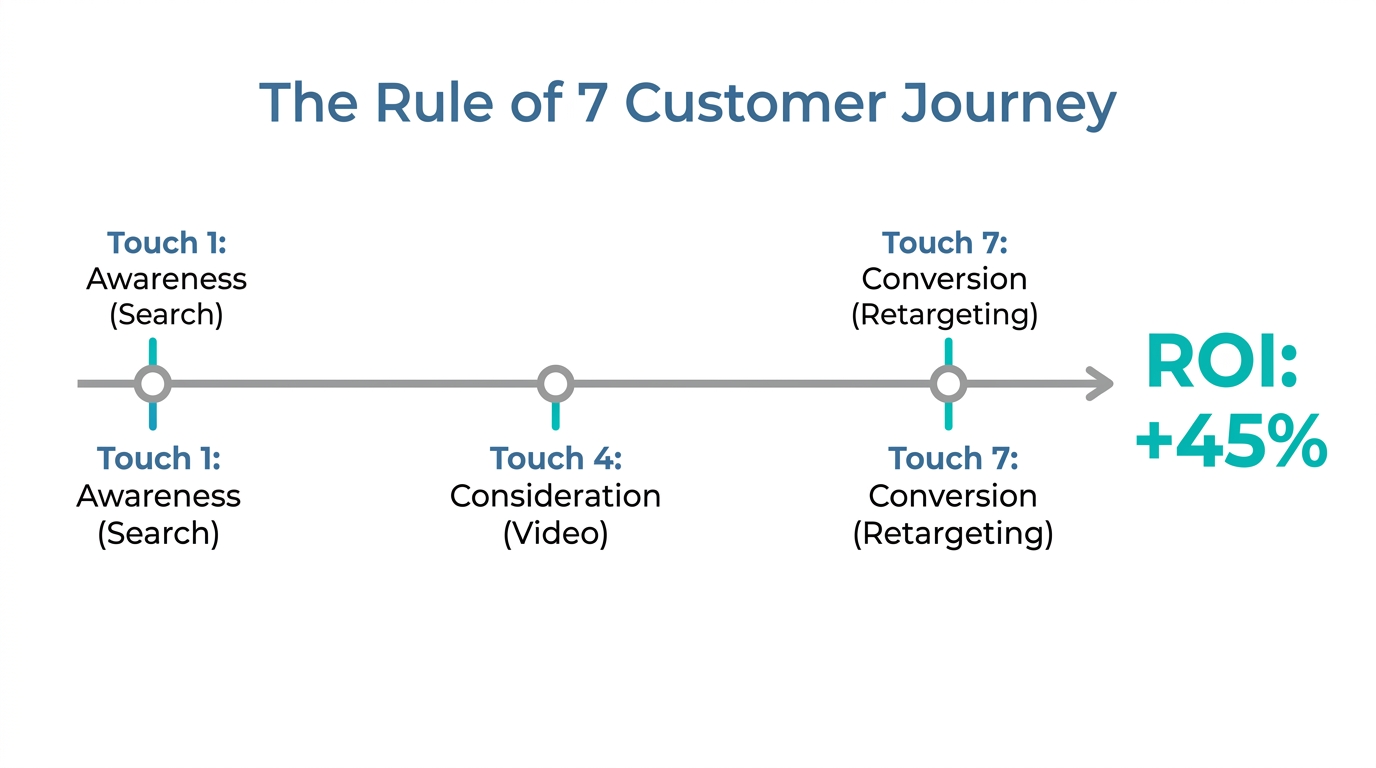
New campaigns are often killed too early or scaled too fast. In 2026, the Amazon algorithm requires a stabilization period to map your product's performance against the COSMO semantic model. We call this the Rule of 7.
Step 1: The Baseline (Days 1–3)
Set your bids at the Amazon suggested amount in an Auto campaign. Do not apply heavy negatives yet. You are paying for data, not just sales. The goal here is to let Amazon’s AI understand which "neighborhood" of products yours belongs in. Your PPC ads are now training data for Rufus, so precision in these early days is vital.
Step 2: The Stabilization Phase (Days 4–7)
Do not touch the campaigns. This is the hardest part for most sellers. Every time you change a bid or add a keyword in the first week, you reset the algorithm's learning phase. Let the impressions accumulate so the AI can determine your expected Click-Through Rate (CTR).
Step 3: The Harvest (Day 8+)
Review your search term report. Identify terms with at least 2 sales and a sub-30% ACoS. Move these into your Manual Exact Performance campaign. Simultaneously, use Stormy AI to cross-reference these winners with your current inventory. If you find a high-performing keyword for a product that has low stock, Stormy will notify you to adjust your supplier orders immediately, preventing a "successful failure" where you run out of stock during a peak sales period.
"AI didn’t kill search; it exposed the waste in how we measured it." — Elizabeth Marston, VP, Tinuiti
Optimizing for Rufus: The 'Noun-Phrase' Strategy
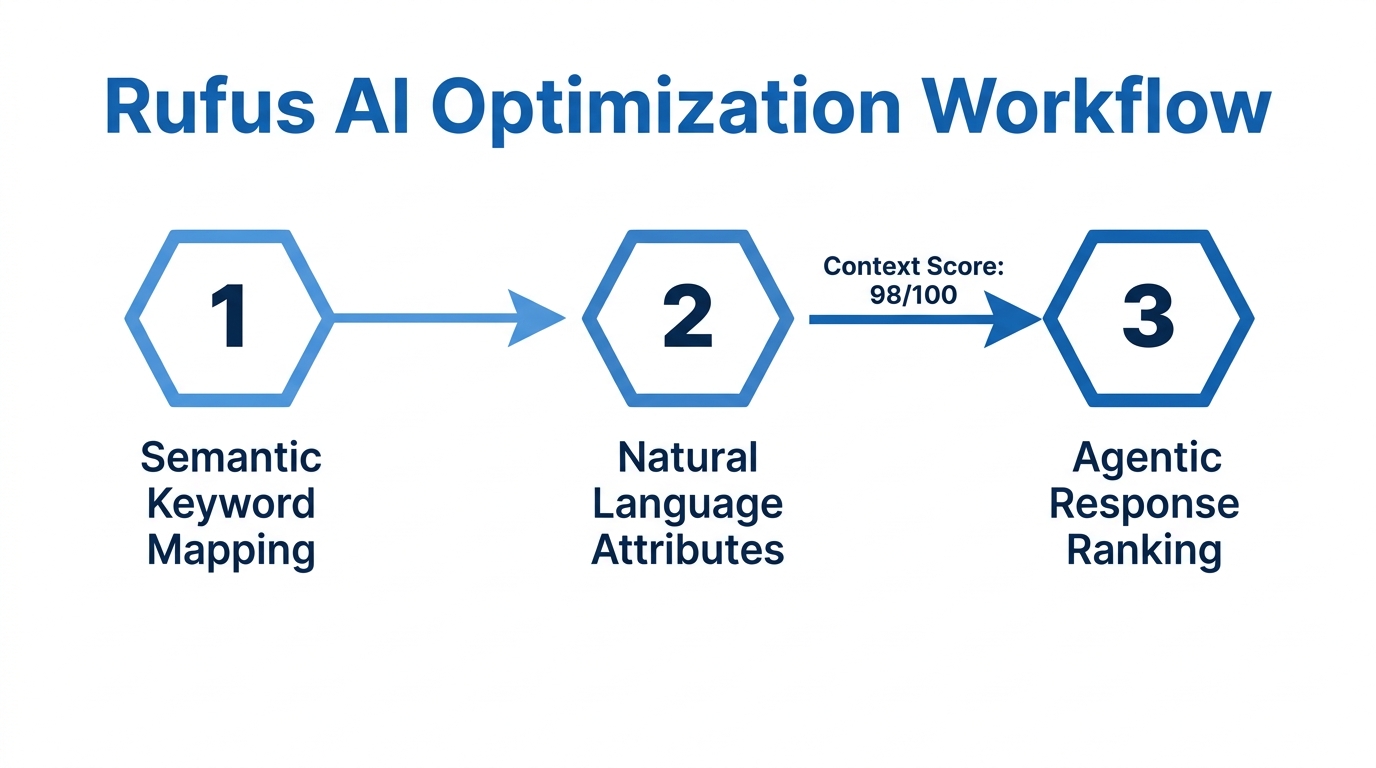
Traditional SEO was about keyword stuffing. In 2026, it's about Listing Engineering. Because Rufus mediates such a large percentage of traffic, your product detail page (PDP) must be readable by a Large Language Model (LLM). This requires a shift to 'Noun-Phrase' optimization.
- The Noun-Phrase Title: Instead of "Running Shoes, Men, Black, Size 10," use "Black Men's Running Shoes with Arch Support for Flat Feet, Size 10." This provides the context Rufus needs to answer conversational queries like "Which shoes are best for flat-footed runners?"
- A+ Content as Data: Rufus reads your A+ text modules. Brands that move from visual-only A+ content to text-rich modules see a 12% boost in organic impression share because the AI can actually "read" the product benefits [See: Amazon A+ Content Guide].
- Review Sentiment: Rufus summarizes your last 30 days of reviews. A cluster of negative reviews can shadow-penalize your ads, even if your overall rating is high.
Integrating Stormy AI into Your PPC Workflow
The biggest pain point in 2026 isn't bidding—it's operational lag. Traditional PPC tools like Perpetua or Quartile are excellent at bid math, but they often operate in a vacuum, ignoring your back-office reality. This is where Stormy AI acts as your AI ecommerce employee.
While you focus on the creative and strategic side of Amazon Ads, Stormy AI manages the messy back office. For example, Stormy can:
- Connect to Shopify and Amazon: Monitoring inventory across all channels to ensure ad spend is only directed toward healthy SKUs via Shopify's API.
- Automate Supplier Follow-ups: If a shipment is late, Stormy AI drafts and sends the email to your supplier, then updates your PPC lead-time projections in a shared workbook.
- Audit Performance: Stormy can pull weekly reports from Amazon Ads and Google Ads, compare your ROAS across platforms, and flag underperforming campaigns that need human intervention.
By using Stormy AI to handle these recurring tasks, you transform from a manual keyboard operator into a strategic brand director. Ad spend is a liability if your back office isn't automated; Stormy ensures that liability becomes a scalable asset.
2026 Platform Comparison: Where to Spend?
While Amazon Sponsored Products remains the king of high-intent traffic, 2026 has introduced viable alternatives. Diversifying your spend is no longer optional; it is a requirement for long-term brand health.
| Metric | Amazon Sponsored Products | Walmart Connect | TikTok Shop Ads |
|---|---|---|---|
| Avg. CPC | $1.34 (High) | $0.56 (Low) | $0.45 (Variable) |
| Intent | High (Ready to Buy) | High (Omnichannel) | Discovery-based |
| Best Feature | Scale & Rufus AI | Store Tie-ins | Viral Potential |
| Attribution | AMC (Mature) | Luminate | In-app only |
"The competitive advantage in 2026 won't come from just having AI. It will come from how effectively you integrate it into your creative and strategic processes." — Alan Moss, VP, Global Ad Sales, Amazon Ads
Conclusion: The Future is Agentic
Scaling Amazon Sponsored Products in 2026 is no longer a game of numbers; it's a game of coordination. By implementing the Atomic Campaign Structure and the Rule of 7, you provide the Amazon algorithm with the structure it needs to succeed. By optimizing for Rufus with noun-phrase listings, you ensure your brand is the one the AI recommends during conversational searches. And most importantly, by hiring an AI employee like Stormy AI, you ensure that your back office—from inventory to supplier follow-ups—runs autonomously while you focus on growth. The tools are ready; the question is whether you will be the one to orchestrate them.