In 2026, the "Amazon SEO" we once knew—a game of high-density keyword stuffing and backend search terms—is officially dead. The new king of the marketplace is semantic relevance. As Amazon surpasses $716.9 billion in annual revenue, according to Statista projections and reports from AMZ Monitor, the way customers find products has fundamentally shifted from traditional search bars to AI-driven conversations.
Today, search isn't just about matching a word; it's about satisfying an intent. With Amazon’s Rufus AI assistant now handling 25% of all product-related queries, sellers who fail to adapt to "intent clusters" are finding their rankings in a rapid death spiral. This guide breaks down the exact playbook for updating your listings to thrive in the 2026 AI-driven search landscape.
The Rise of Rufus AI: Why Traditional Keywords Are Failing
For years, sellers optimized for the A9 and A10 algorithms by finding high-volume search terms and repeating them across titles and bullet points. In 2026, Rufus AI has changed the rules. Rufus doesn't just look for words; it understands the context of a shopper's life. Instead of searching for "noise-canceling headphones," users are asking Rufus, "What are the best headphones for a digital nomad who works in loud coffee shops?"
If your listing only focuses on technical specs and fails to use the natural semantic language that describes that specific use case, you won't be recommended. According to Estore Factory, Rufus is already driving an estimated $12 billion in incremental sales by answering these complex on-page queries. To stay relevant, you must move from keyword research to intent cluster research using tools like Ahrefs or Semrush.
"The key to 2026 SEO isn't ranking for a word; it's being the most relevant answer to a customer's specific problem in the eyes of an AI assistant."
Step-by-Step: Using Rufus Prompts for Semantic Research
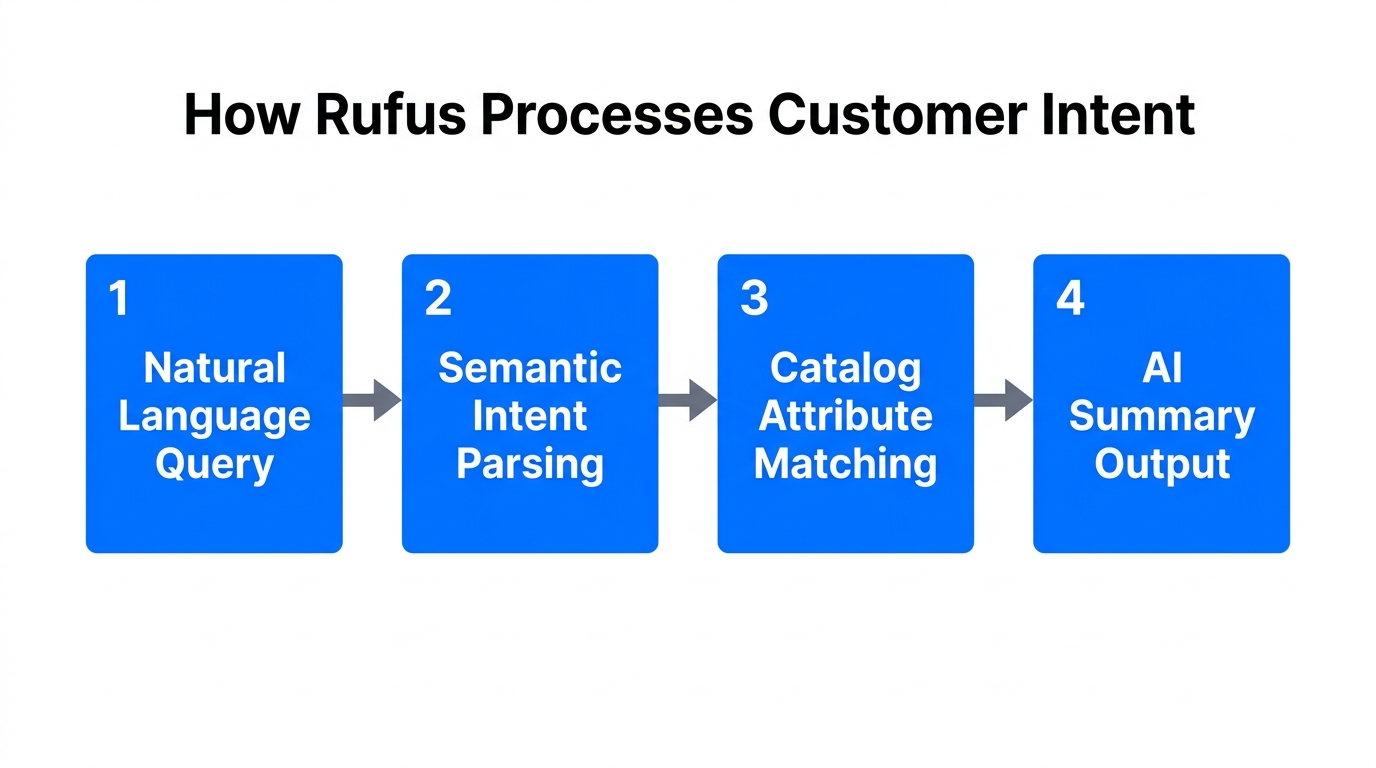
To optimize for 2026, you need to know exactly how customers are describing your products to Rufus. You can actually reverse-engineer this by using the tool itself. While you're at it, an AI ecommerce employee like Stormy AI can monitor your competitors' Rufus responses and highlight which "context clusters" you are missing.
Step 1: Identify Your Competitors' Semantic DNA
Navigate to the top three best-selling listings in your niche. Open the Rufus chat interface on those pages and ask: "What do people typically ask about this product?" or "What are the main reasons people buy this versus [Your Brand Name]?" Rufus will pull from thousands of reviews and Q&As to give you the exact semantic phrases shoppers use.
Step 2: Map Your Intent Clusters
Once you have those phrases, group them into clusters. For example, if you sell organic dog treats, your clusters might be:
- Lifestyle: "Active dogs," "hiking with pets," "training rewards."
- Health/Specific: "Sensitive stomachs," "grain-free for allergies," "low calorie."
- Convenience: "Resealable pouch," "doesn't crumble in pockets."
Step 3: Integrate into A+ Content
Take these clusters and weave them into your A+ Content and Product Description. Don't just list them; answer the questions Rufus is being asked. If Rufus sees that you have the most thorough answer for "Is this treat good for dogs with grain allergies?" you will become the preferred recommendation for that intent cluster.
Mastering the A10 'Relevance Loop' in 2026
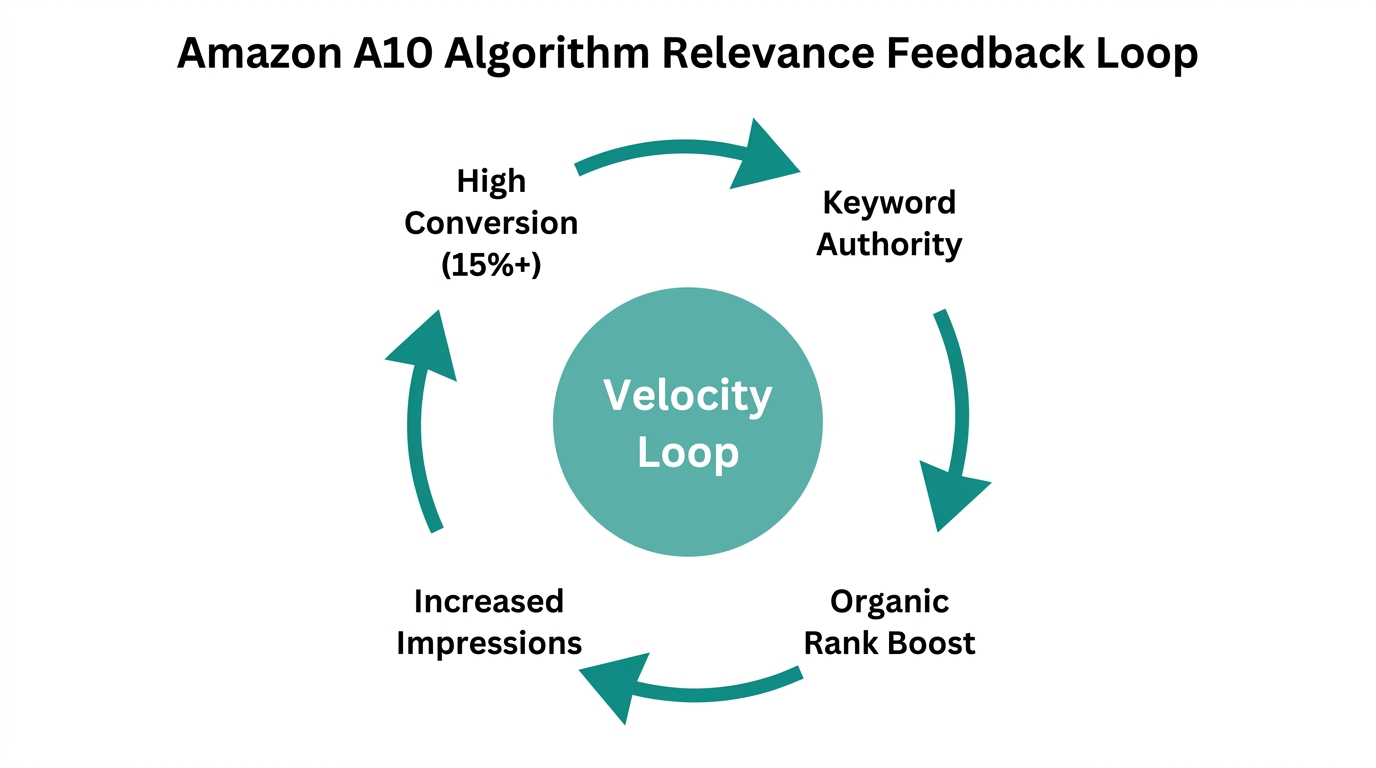
In 2026, the A10 algorithm has evolved into what experts call the "Relevance Loop." Raw search volume is no longer the primary driver of ranking. Instead, Seller Sprite notes that conversion velocity—how fast you convert once a user clicks—now outweighs everything else.
If you rank for a high-volume term like "Gift for Dad" but your conversion rate (CVR) is only 2%, the A10 algorithm will view your listing as irrelevant for that term and trigger a "death spiral" in your rankings. Conversely, if you target a niche intent cluster like "Sustainable wooden desk organizer for minimalists" and convert at 25%, Amazon will boost your visibility across the entire category. You can track these shifts via Helium 10 insights.
| Metric | 2024 Importance | 2026 Importance | Reason for Shift |
|---|---|---|---|
| Search Volume | High | Moderate | AI filters for specific intent over broad terms. |
| Conversion Velocity | Moderate | Critical | The A10 'Relevance Loop' rewards efficient sellers. |
| Keyword Density | High | Low | NLP (Natural Language Processing) understands context. |
| Review Sentiment | Moderate | High | Rufus uses review text to answer customer queries. |
To avoid the death spiral, Stormy AI can be tasked to monitor your keyword rankings daily. If Stormy detects a drop in conversion velocity on a specific term, it can automatically alert you to adjust your ad spend or update your main image before the algorithm suppresses your visibility.
Optimizing A+ Content for Natural Language Processing
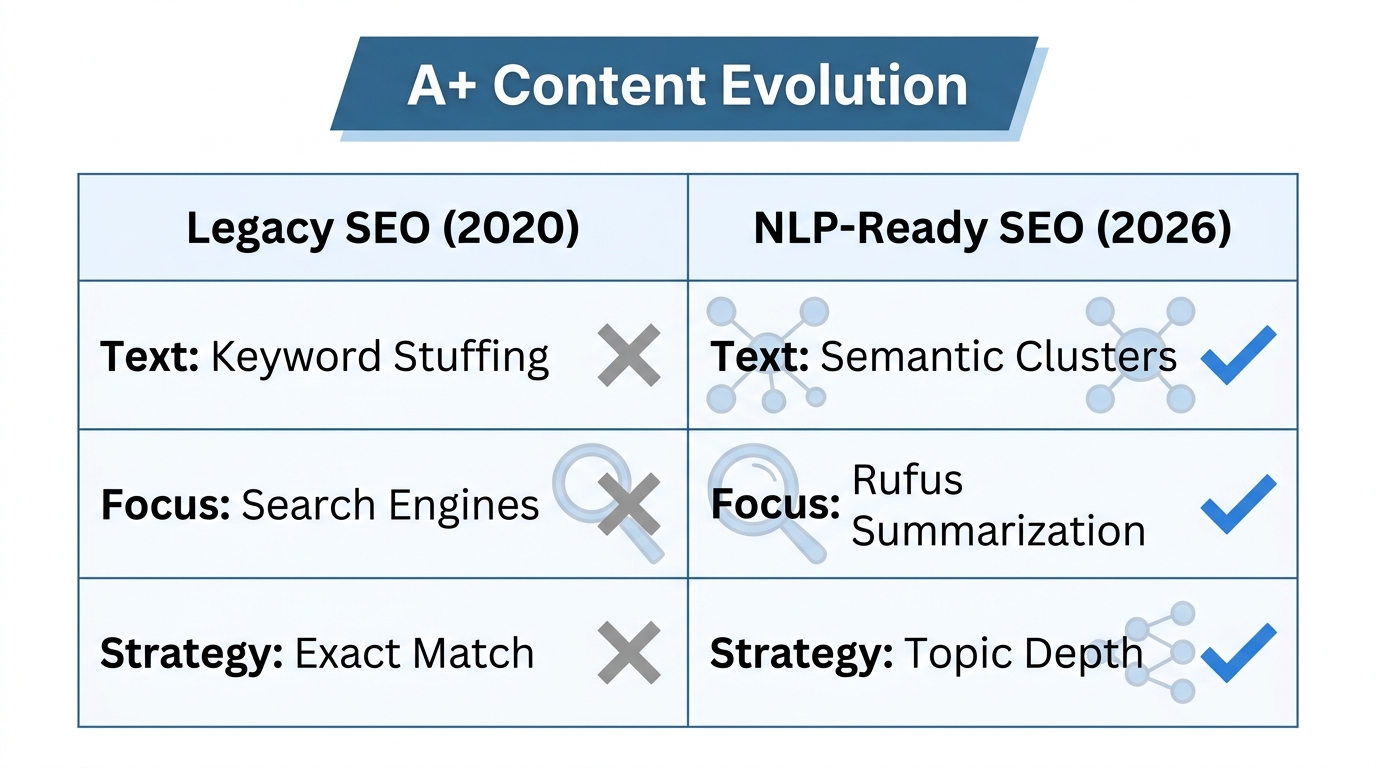
A+ Content is no longer just a visual luxury; it is a data source for Amazon’s AI. Large-scale brands like Sony have already shifted to "Premium A+ Content" to educate customers, seeing significantly higher conversion rates, according to Amazon Case Studies. But in 2026, the way you write that content must change.
Instead of bullet points like "High Quality Material," use descriptive, NLP-friendly phrases like "Durable aircraft-grade aluminum that withstands outdoor elements." This provides the semantic depth the AI needs to match your product to complex user queries. As explained in Google's NLP documentation, machines look for relational context between nouns and adjectives.
"If your A+ Content doesn't provide enough semantic depth for Rufus to feel 'confident' in your product, you are effectively invisible to 25% of shoppers."
Targeting 'Sustainable' and 'AI-Enhanced' Category Tags
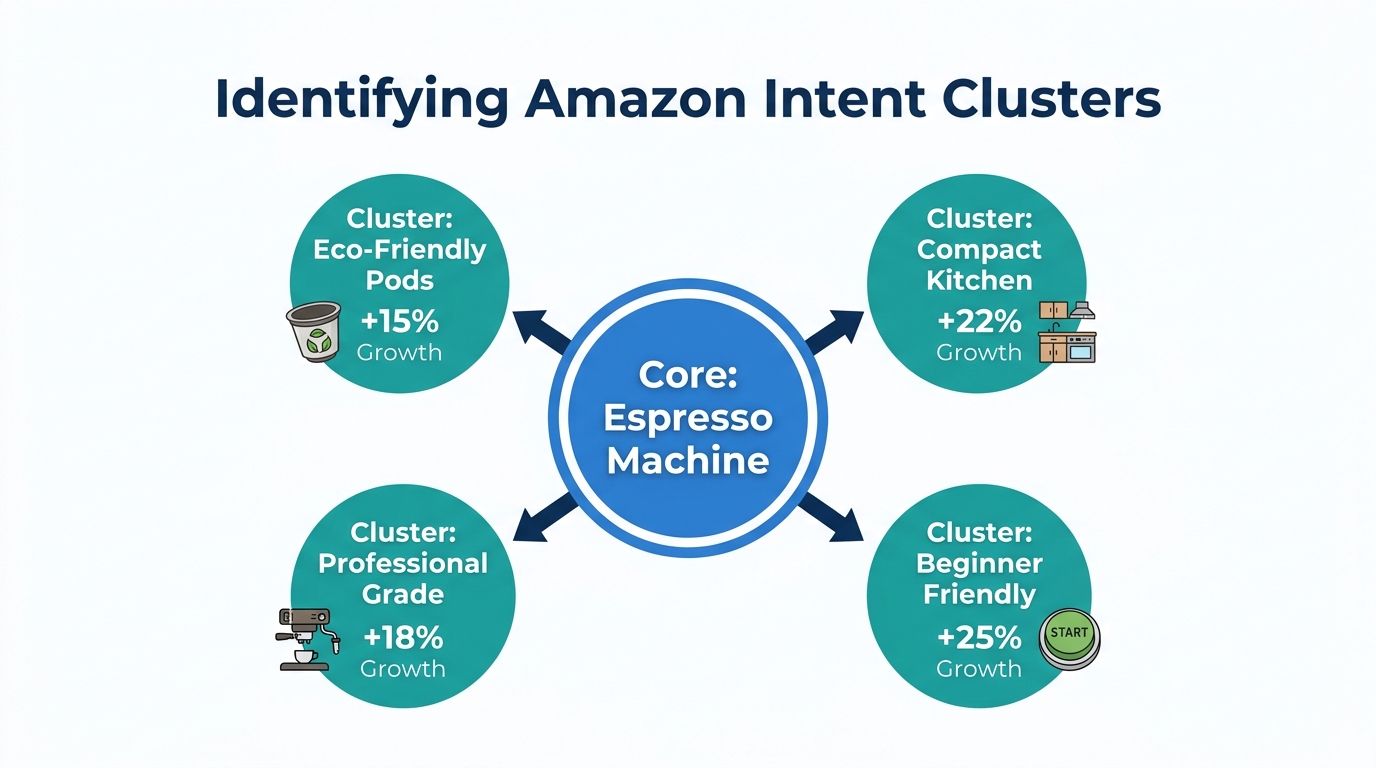
Amazon has introduced new "High-Growth Intent Clusters" in the form of category tags. Two of the most powerful in 2026 are "Sustainable" and "AI-Enhanced." According to Automateed, these patterns are currently outperforming generic broad keywords across almost every department.
- Sustainable Tags: Requires third-party certification or verified "Climate Pledge Friendly" status. Listings with these tags see a 15% lift in CVR on average.
- AI-Enhanced Tags: Emerging for electronics and software-integrated goods. This tag signals to Rufus that your product is "future-proof," giving you a boost in the AI assistant's rankings.
By aligning your product with these intent clusters, you capture "high-intent" traffic that is less price-sensitive and more focused on values and functionality.
Monitoring the 'Canvas' UI: Your AI Command Center
The final piece of the 2026 SEO puzzle is the Seller Central Canvas. This new agentic UI allows sellers to "chat with their data." Instead of digging through CSV files, you can ask the Canvas AI: "Which of my listings are at risk of losing their Buy Box due to price compression?" or "Show me a dashboard of keywords where my ROAS is below 3.0."
However, simply having the data isn't enough. You need someone to act on it. While the Canvas UI provides the visuals, Stormy AI acts as your autonomous teammate. Stormy can wake up every morning, check the Canvas dashboards, and if it sees a keyword "death spiral" beginning, it can proactively adjust your bids in Amazon Ads or draft an email to your supplier about potential stockout risks that are hurting your relevance score.
Financial Benchmarks to Watch in 2026:
- Average CPC: Now ranges between $1.18 – $1.25, according to SellerMetrics.
- Breakeven ROAS: Most sellers now require a 2.8:1 to 3.5:1 ROAS to remain profitable after recent fee increases (Titan Network). Learn more about calculating ROAS here.
- FBA Surcharges: A new 3.5% fuel and logistics surcharge was applied on April 17, 2026 (Amazon Seller Central).
Conclusion: The 2026 Amazon SEO Blueprint
Amazon SEO in 2026 is no longer a manual task you do once and forget. It is a living, breathing process of maintaining semantic relevance and conversion velocity. To win this year, you must:
- Use Rufus AI to discover the real-world language your customers use.
- Optimize A+ Content for NLP to ensure you are the preferred recommendation.
- Monitor the Relevance Loop to protect your listings from the ranking death spiral.
- Leverage Category Tags like "Sustainable" to capture high-value intent clusters.
The marketplace is becoming "hyper-professional," as Marketplace Pulse analysts point out. To compete, you can't rely on old-school tactics. You need modern tools. An AI ecommerce employee like Stormy AI handles the messy back office, monitors your intent clusters, and keeps your listings optimized while you focus on building a brand that customers—and AI assistants—actually love.