In 2026, the era of the manual Amazon operator is officially over. With Amazon’s total revenue projected to exceed $700 billion, the marketplace has transitioned from a simple transactional portal into an AI-driven ‘Command Center.’ Success today isn't defined by finding a niche product; it’s defined by how well you optimize your agentic operating system. As third-party sellers now account for over 61% of all units sold, the competition is no longer amateur sellers in their garages, but hyper-professional brands running automated back offices.
To survive in this environment, you need more than just a dashboard; you need an AI ecommerce employee like Stormy AI. This playbook outlines the technical migration from manual polling to an autonomous agentic workflow that handles inventory, ads, and support while you sleep.
The SP-API Migration: Moving to Event-Driven Automation
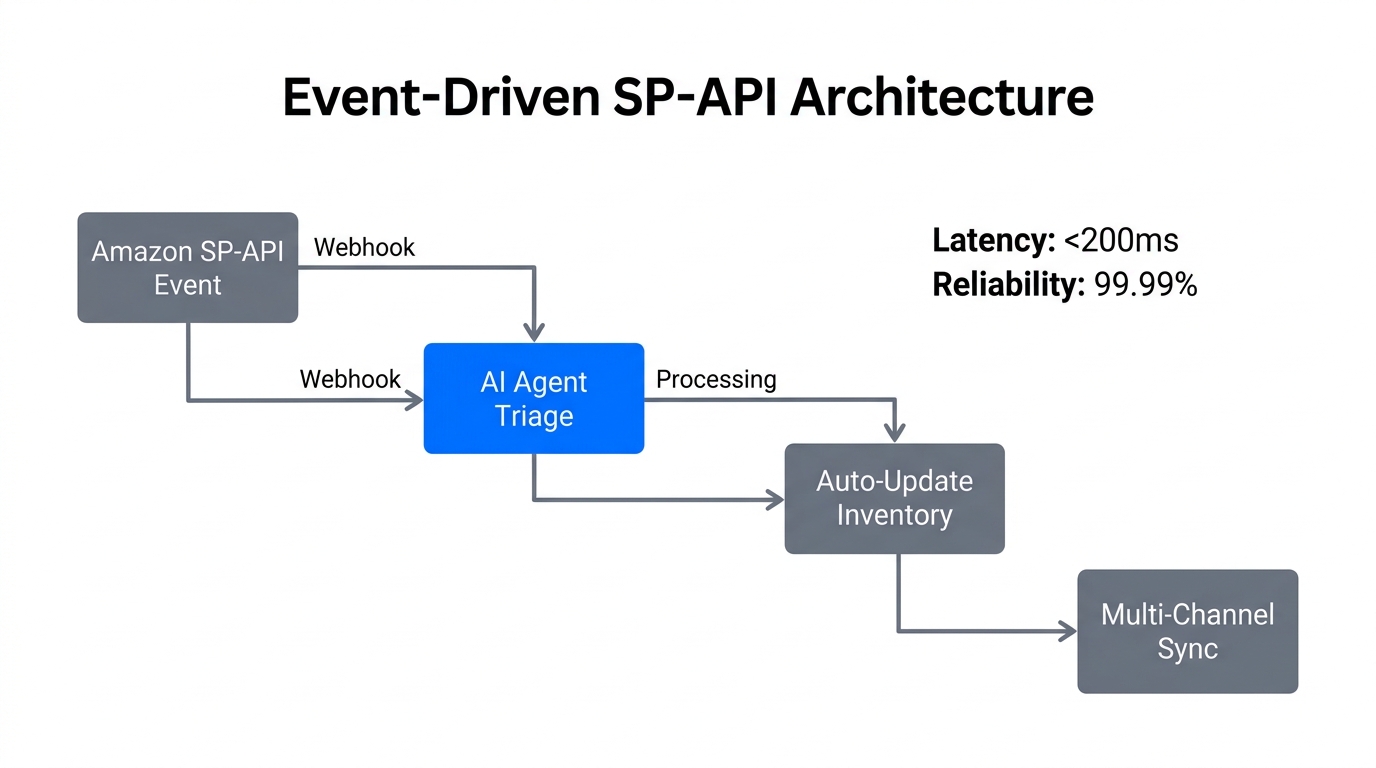
The most significant technical hurdle in 2026 is the new Amazon SP-API monetization model. As of early 2026, Amazon has implemented a $1,400 annual subscription for API access, coupled with usage-based fees for standard ‘GET’ calls. For sellers still using old-school ‘polling’ methods—constantly pinging the API to check for new orders or inventory updates—these costs can quickly spiral into the thousands per month.
Instead of asking Amazon ‘Do I have an order?’ every 60 seconds, an AI agent like Stormy uses webhooks to wait for Amazon to push a notification. This event-driven architecture ensures that your spreadsheet and CRM update the millisecond a transaction occurs, without incurring unnecessary API usage fees. This is critical because technical optimization is now a direct lever for profit margins.
"The Competition Paradox of 2026: Fewer new sellers are joining, but the ones who remain are capturing more market share through hyper-automation."
Combating the ‘Silent Killer’: Inventory Fee Compression
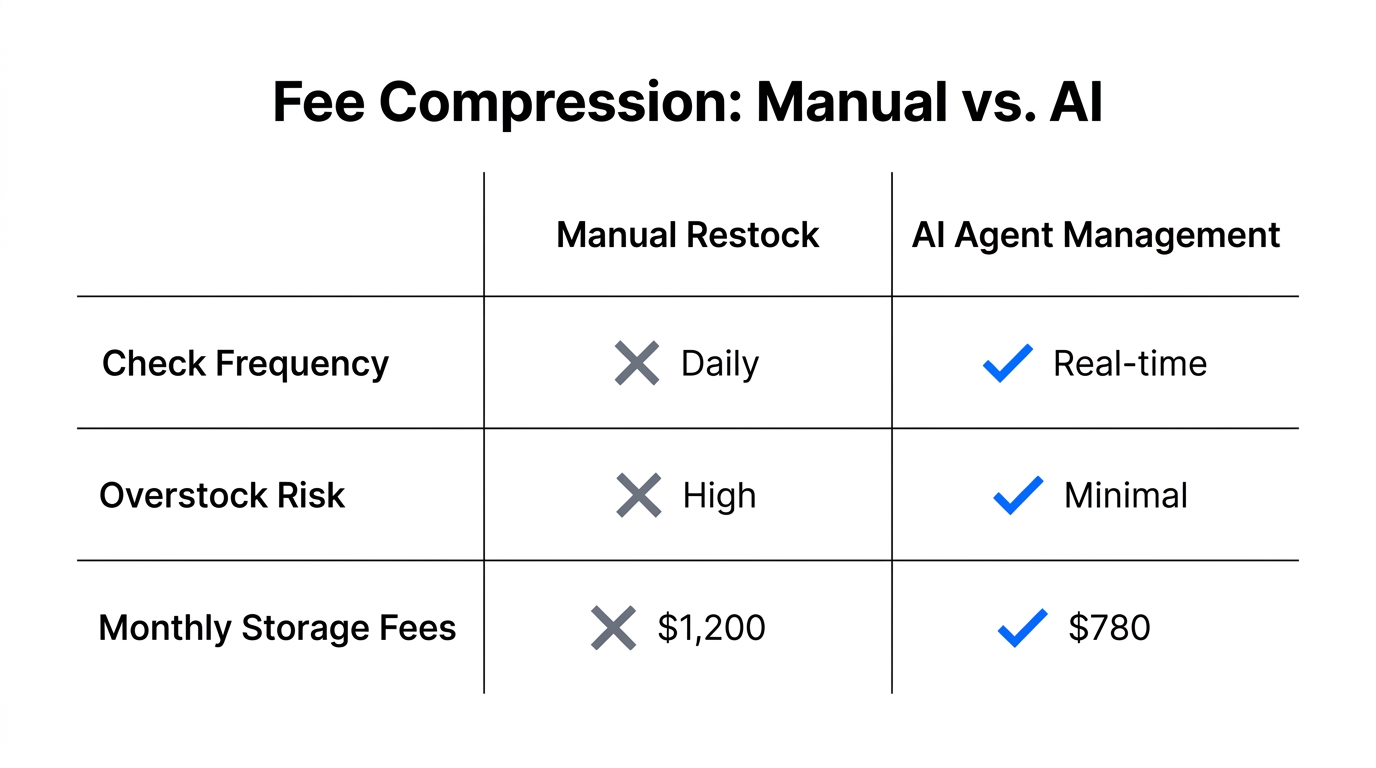
Inventory carrying costs are the ‘silent killer’ of Amazon brands in 2026. With the introduction of a 3.5% fuel and logistics surcharge and unit-level fee increases of up to $0.25 per item, carrying slow-moving stock is no longer an option. Experts warn that even a seller doing $1 million in annual revenue can be insolvent if their inventory turnover ratio is mismanaged.
This is where automated inventory management becomes mandatory. Stormy AI monitors your inventory levels across FBA and 3PL warehouses in real-time. It doesn't just show you a chart; it takes action:
- Predictive Restocking: Using historical data and current CPC ad trends, the agent forecasts exactly when you will hit a stockout.
- Automated POs: When stock hits a pre-defined threshold, Stormy can draft a Purchase Order in a spreadsheet and email your supplier for a quote.
- Late shipment follow-ups: If a supplier hasn't confirmed a shipment within 48 hours, the agent automatically sends a polite follow-up thread, ensuring your lead times stay consistent.
| Metric | 2025 Benchmark | 2026 Target |
|---|---|---|
| Median ROAS | 4.2x | 4.5x – 5.5x |
| Avg CPC | $1.05 | $1.18 – $1.25 |
| FBA Fee % of Rev | 30% | 35% |
Winning the ‘Canvas’ Era: AI Customer Support & Support Triage
Amazon has replaced the old Seller Central UI with the ‘Canvas’ experience, an agentic AI interface where you chat with your data. While Amazon provides a ‘Seller Assistant’ (formerly Project Amelia) to help with basic tasks, it often lacks the brand-specific nuance required to handle complex customer support without human intervention.
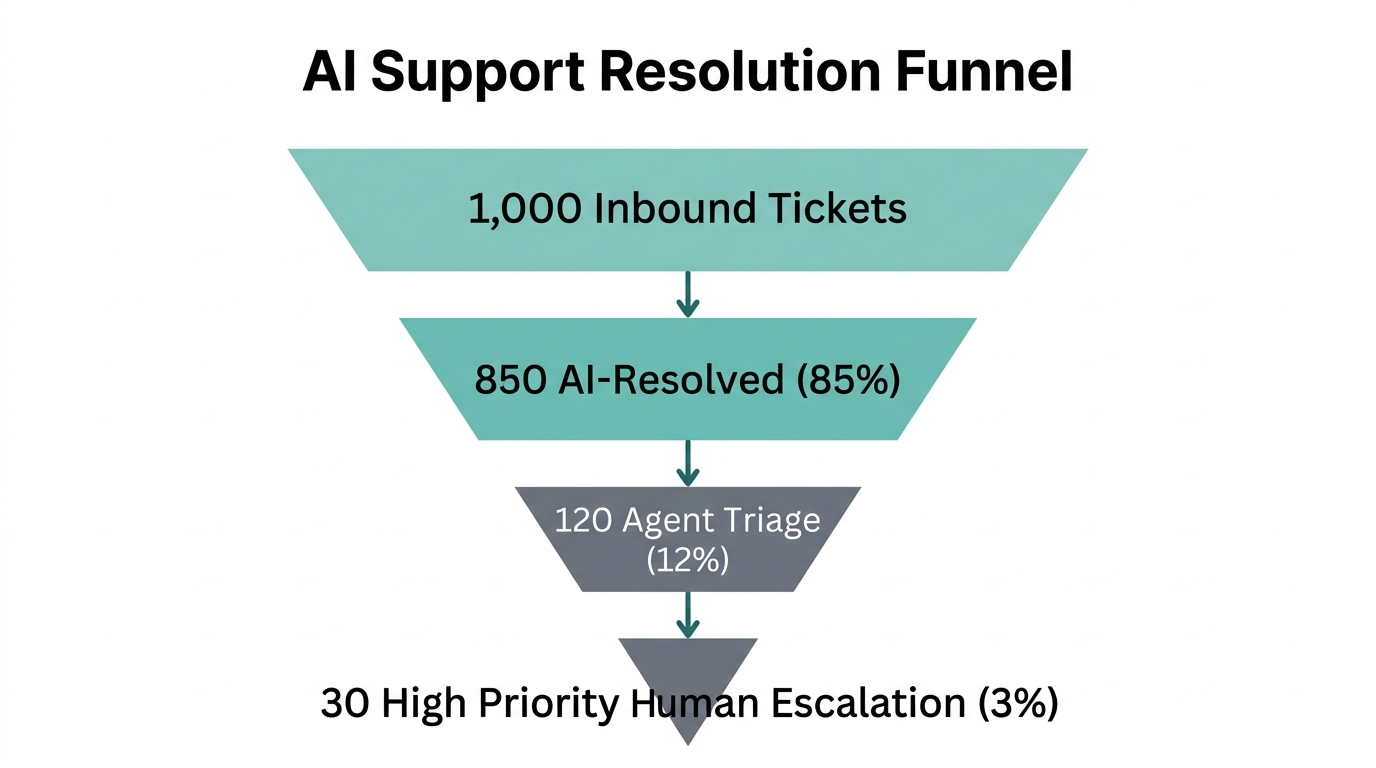
By integrating Stormy AI with tools like Gorgias or Zendesk, you can automate 90% of your Amazon back office automation. When a customer requests a refund or asks about a shipping delay, the AI agent:
- Triages the intent: Detects if it's a simple tracking request or a complex warranty issue.
- Drafts a response: Uses your specific brand voice to apologize for delays or offer a replacement.
- Routes for approval: For high-value refunds, it drops a summary into a shared workbook or Slack channel for a quick human thumbs-up.
This prevents the ‘death spiral’ of negative reviews caused by slow response times, which is critical now that Amazon's search algorithm prioritizes account health and conversion velocity over raw search volume.
"Revenue screenshots are the biggest lie of 2026. Without automated margin tracking and fee management, high revenue is often just a high-speed chase toward insolvency."
AI-Driven Repricing: Winning the Buy Box with Game Theory
In 2026, the Buy Box is a battlefield of algorithms. Traditional rule-based repricers (e.g., ‘be $0.01 cheaper than the lowest competitor’) lead to a ‘race to the bottom’ that destroys margins. Professional sellers now use AI-driven repricers like Seller Snap that utilize game theory to find the optimal price point to win the Buy Box without sacrificing profit.
An AI agent can sit on top of these repricers, monitoring your COGS (Cost of Goods Sold) and ad spend in real-time. If your CPCs on Amazon Ads spike, the agent can automatically adjust your minimum price floor to ensure you aren't selling at a loss. This level of dynamic margin protection is the difference between a profitable year and a tax-loss carryforward.
Bridging the Gap: Amazon, TikTok, and Meta Attribution
One in three internet users now shops directly via social feeds. In 2026, your Amazon Seller Central automation must extend beyond the Amazon ecosystem. Brands like Tabs Chocolate have shown that viral social content is the most potent driver of Amazon sales.
However, the attribution gap is a nightmare for operators. An AI agent can solve this by:
- Syncing Multi-Channel Spend: Pulling ad spend from TikTok Ads Manager and Meta Ads Manager into a single workbook.
- Automated Performance Reporting: Comparing social spend against Amazon ‘New-to-Brand’ sales to calculate a true TACOS (Total Advertising Cost of Sales).
- Fulfillment Syncing: Ensuring that if you sell out on TikTok Shop (which has a lower 6% commission), your Shopify and Amazon inventory levels are updated instantly to prevent overselling.
The 2026 Amazon Setup Playbook: Step-by-Step
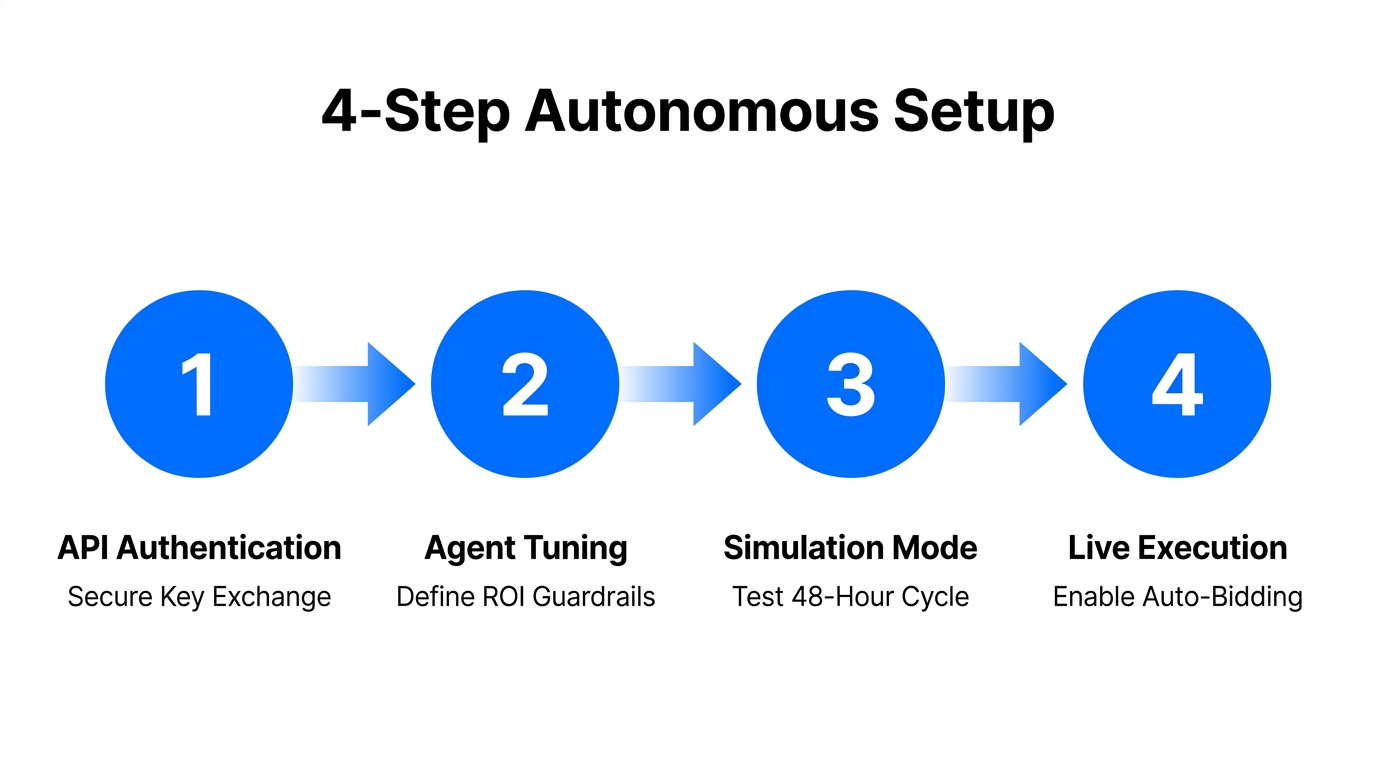
If you are launching or scaling a brand this year, follow this AI agent for ecommerce setup sequence to ensure your back office is automated from day one.
Step 1: Register and Claim Incentives
Register at sell.amazon.com. Ensure you apply for the 2026 New Seller Incentives. This provides 5%–10% back on your first $1,000,000 in branded sales, which is essential to offset the initial Amazon SP-API integration 2026 costs.
Step 2: Brand Registry 2.0
Obtain a fully registered trademark. Amazon now requires high-resolution photos of your logo permanently affixed to the product. Stickers are no longer accepted. Expect a Brand Registry Video Verification call where you may need to show samples of your inventory live to an agent.
Step 3: Connect Your Agentic Stack
Instead of hiring a virtual assistant to monitor your inbox, connect Stormy AI to your Seller Central account. Give it access to a shared Google Sheet and your Gmail. Instruct it to: ‘Every morning, pull my sales and ad spend from the last 24 hours, calculate my ROAS, and highlight any SKU that has dropped below a 4.0x return.’
Step 4: Implement Rufus-Optimized SEO
Avoid old-school keyword stuffing. Use Helium 10 or Jungle Scout to find semantic phrases, then ask the Rufus AI shopping assistant to describe your product. If Rufus doesn't understand your value proposition, neither will your customers. Natural language processing (NLP) is the new SEO.
Conclusion: The Autonomous Future of Amazon
The Amazon marketplace in 2026 is too complex and fast-moving for manual management. Between shifting API fees, social commerce integration, and aggressive AI-driven competition, the only way to maintain a healthy margin is through Amazon Seller Central automation. By deploying an AI ecommerce employee like Stormy AI, you transition from a stressed operator to a strategic brand owner. Let the agents handle the spreadsheets, the supplier follow-ups, and the customer triage, so you can focus on building the next billion-dollar brand.