In 2026, the Amazon landscape has fundamentally fractured into two eras: Before Rufus and After Rufus. With Amazon’s global GMV projected to exceed $700 billion this year, the competition for the 62% of units sold by third-party sellers has never been more intense. Traditional keyword stuffing is no longer enough. To win today, you must optimize for Amazon’s AI shopping assistant, Rufus, which now dictates product discovery through conversational, intent-based queries. This guide breaks down the precise Jungle Scout keyword strategy required to dominate AI search and secure your place in the 2026 marketplace.
The Death of Short-Tail: Why Use-Case Keywords Rule 2026
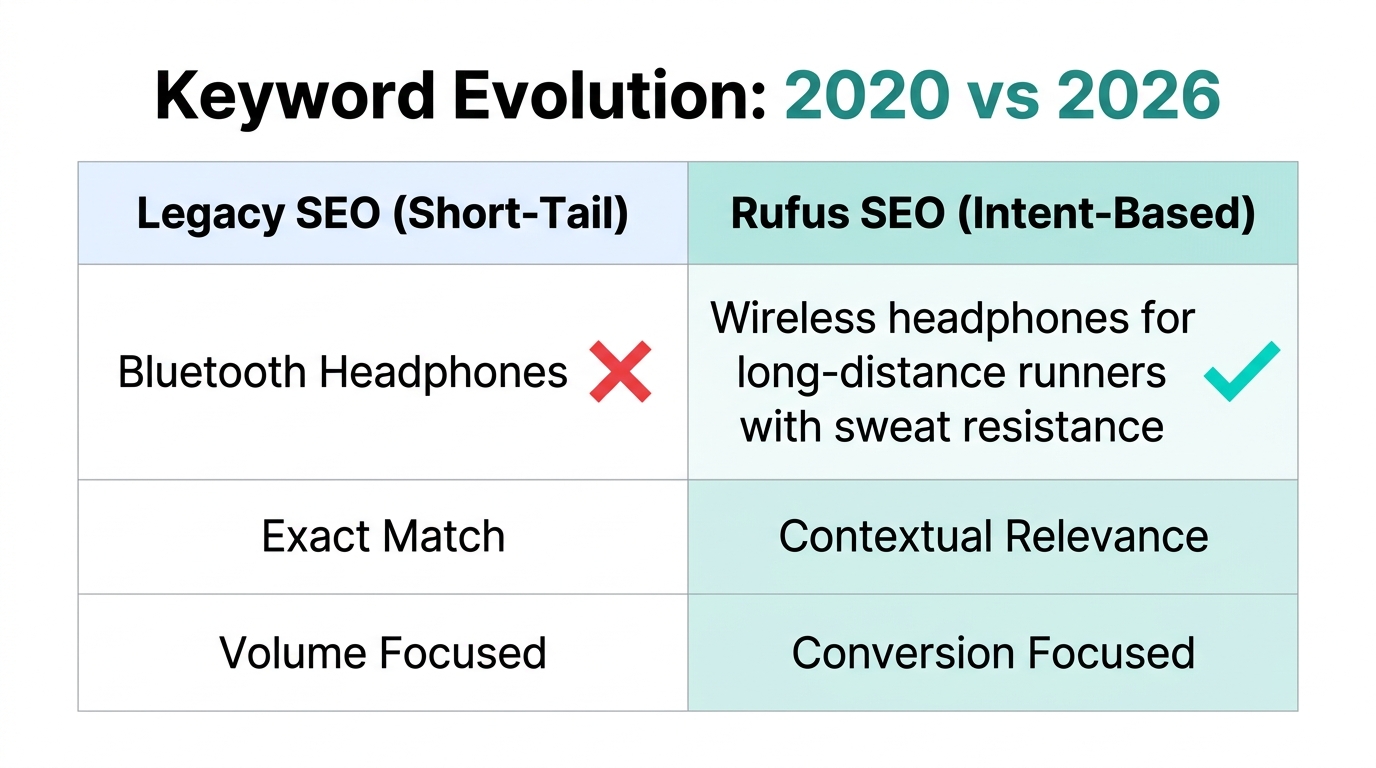
For a decade, Amazon SEO was about volume. If "garlic press" had 100,000 searches, you optimized for "garlic press." In 2026, Rufus has shifted the search paradigm from nouns to scenarios. Customers no longer just type keywords; they ask Rufus questions like, "Show me a coffee maker that fits under low cabinets and doesn't leak."
This shift toward functional intent means your listing needs what experts call "relevance density." According to industry leaders like Bradley Sutton, keyword research is no longer about raw volume—it’s about ranking for the questions Rufus is asking. If your product doesn't explicitly answer the specific problem a user describes to the AI, you simply won't appear in the conversational interface.
"The Amazon search bar is becoming a dialogue, not a directory. If your keywords don't solve a scenario, they don't exist to Rufus."
Mining "Zero-Search" Clusters with Jungle Scout Keyword Scout
One of the biggest mistakes sellers make in 2026 is ignoring keywords with "0" traditional search volume. In the Rufus era, these are often Intent Clusters—long-tail, highly specific phrases that people speak into their apps rather than type into a search bar. Using Jungle Scout's Keyword Scout, you can identify these clusters by looking for semantic groupings rather than individual high-volume terms.
To execute this strategy, an AI ecommerce employee like Stormy AI handles the heavy lifting by pulling keyword data into a dynamic spreadsheet and flagging clusters where competitors have low "relevance density." While you sleep, Stormy can monitor these emerging clusters and alert you when a new conversational trend starts gaining traction.
Step-by-Step Cluster Identification
- Run a Reverse ASIN Lookup: Input the top 3 competitors in Jungle Scout.
- Filter for Conversational Phrases: Use filters to find phrases containing 4+ words.
- Identify Ingredient/Feature Gaps: Look for specific descriptors (e.g., "not made in China," "sustainable," "for heavy chewers"). These are your value-based intent targets.
- Analyze Sentiment: Use the Jungle Scout Review Analysis AI to find common user complaints (e.g., "leaks when tilted") and turn those into positive keyword clusters for your own listing.
The Holy Grail: Optimizing for the "Rufus Badge"
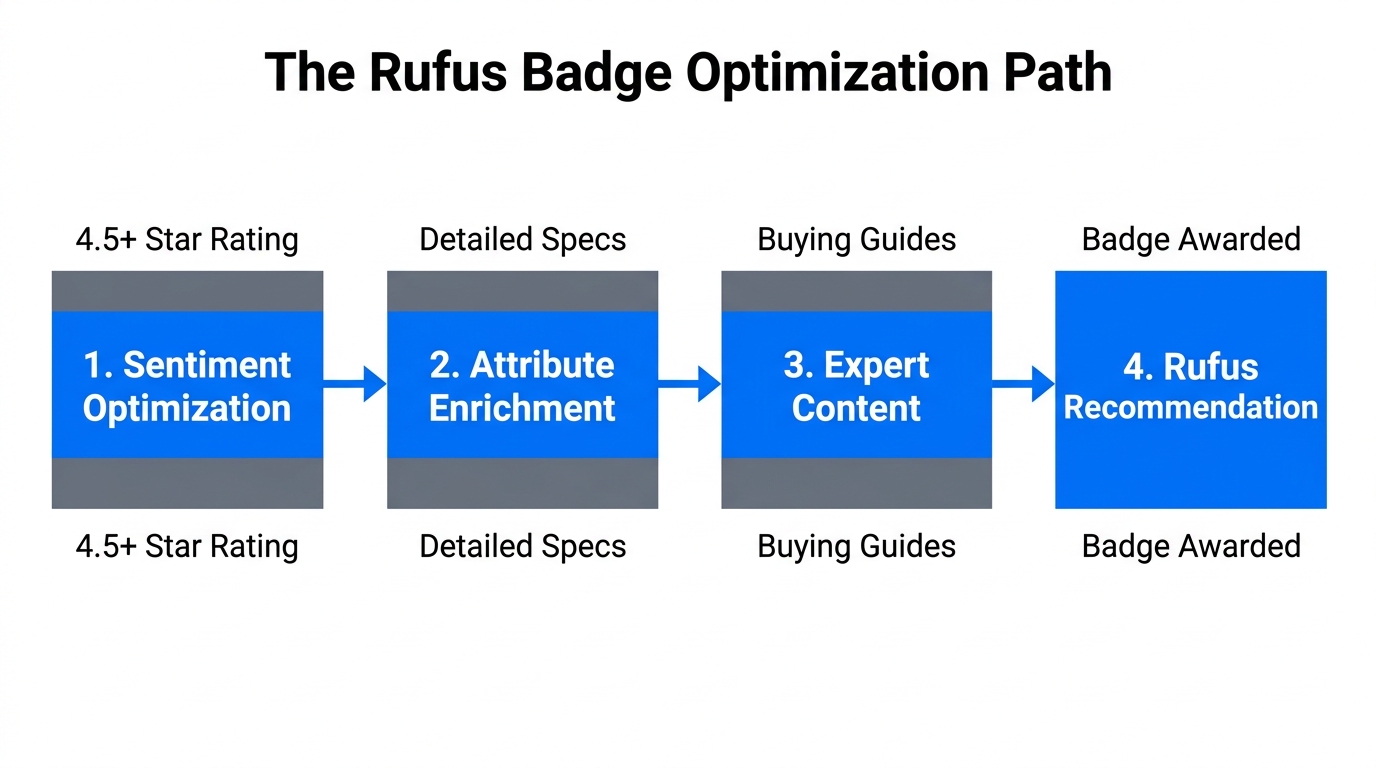
In early 2026, Amazon introduced the "Rufus Recommended" badge. This visual indicator appears when the AI assistant explicitly suggests a product during a chat. Data from retail intelligence platforms like Stackline shows that products earning this badge see a 35% lift in Click-Through Rate (CTR).
| Metric | Standard Listing | Rufus-Optimized Listing |
|---|---|---|
| Avg. CTR | 1.2% - 1.8% | 2.5% - 4.1% |
| Conversion Rate | 9.8% | 14.2% |
| Organic Rank Stability | Low (volatile) | High (AI-moat) |
To secure the Rufus Badge, your product must satisfy three AI-driven criteria: high sentiment scores in review summaries, comprehensive A+ content that answers functional questions, and consistent inventory levels. Amazon’s AI will not recommend a product with a high stockout risk. This is where Stormy AI becomes essential—it monitors your inventory across Amazon Seller Central and triggers reorder tasks to ensure you never lose your "Rufus-ready" status due to the 2026 Low-Inventory Surcharges.
The "TikTok Test": Validating Social Signals for Amazon
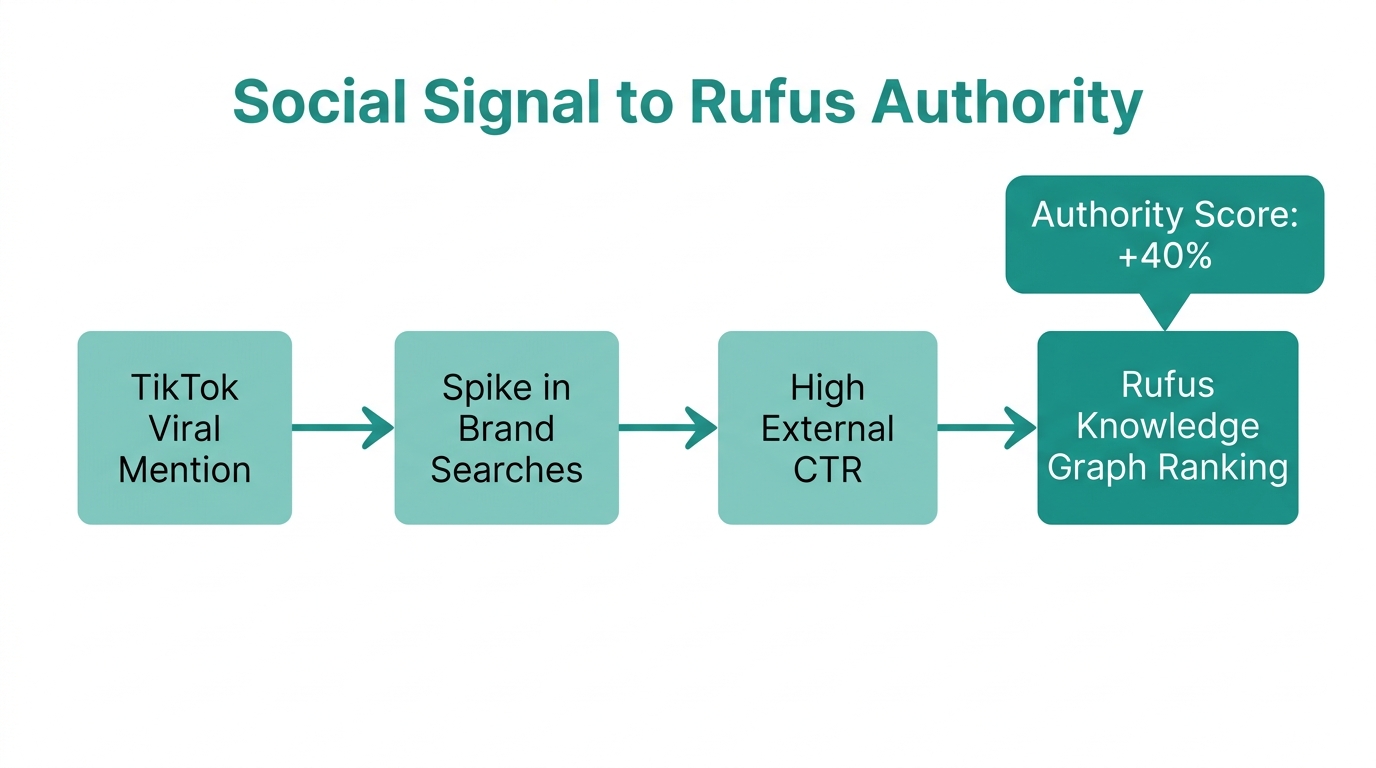
In 2026, Amazon's A10 algorithm and Rufus pull data from beyond the marketplace. If a product is trending on TikTok but has no "social proof" on the wider web, Rufus may deprioritize it as a "low-trust" item. The "TikTok Test" involves validating your Jungle Scout research against social signals.
How to run the TikTok Test:
- Check the search volume for your niche on the TikTok Creative Center.
- If a term is trending on social but has a low "Review Count" on Amazon, you’ve found a market gap.
- Ask Stormy AI to search for creators in that niche who can provide external traffic, which boosts your organic rank and AI authority.
"Rufus doesn't just read your listing; it reads the internet. If Reddit and TikTok aren't talking about your brand, Rufus probably won't either."
Automating the Strategy with Stormy AI
Running a high-level Amazon brand in 2026 is no longer a one-person manual job. The sheer volume of data—from PPC CPC rates of $1.15 to fluctuating Rufus rankings—requires an autonomous teammate. Stormy AI acts as your ecommerce back office employee, executing the following tasks on a schedule:
- Keyword Pulse: Every morning, Stormy pulls campaign performance from Amazon Ads and flags any high-spend, low-CVR keywords that need negative matching.
- Rank Monitoring: Stormy tracks your position for "Intent Clusters" and alerts you if a competitor starts winning the Rufus dialogue for your top-performing search terms.
- Ad Budget Pivot: If Rufus starts trending toward a new use-case (e.g., shifting from "summer camping" to "rainy climate camping"), Stormy AI can suggest budget moves to capture the shifting demand.
- Competitor Listing Alerts: Stormy catches listing problems like missing images or suppressed variants on your competitors' pages, giving you a window to aggressive target their keywords while they are down.
Conclusion: Your 2026 Amazon Roadmap
The path to million-dollar seller status in 2026 is paved with AI-optimized data. By moving away from generic short-tail keywords and embracing the intent-based clusters favored by Rufus, you can achieve higher conversion rates and lower acquisition costs. Use Jungle Scout to find the gaps, fix the UX complaints found in AI sentiment analysis, and let Stormy AI run the day-to-day operations of monitoring and scaling your brand.
The professionalization of Amazon means the winners are those who use the best tools to do the boring parts. Stop manual tracking and start dominating the Rufus era by delegating your back office to an AI ecommerce employee.