As we navigate the competitive landscape of 2026, the Amazon marketplace has evolved from a simple product directory into a massive $60 billion retail media powerhouse. For brand owners and growth marketers, the days of manual bid adjustments and spreadsheet-heavy keyword tracking are officially over. According to research from eMarketer, the current Amazon advertising strategy 2026 requires a fundamental shift: transitioning from a manual operator to an AI architect. Data from Skai highlights that approximately 89% of global digital ad spend is now concentrated within the "Big Three"—Google, Meta, and Amazon—making TikTok Ads Manager and Amazon PPC the dual engines of modern e-commerce growth.
"The 2026 Amazon ecosystem isn't just about who has the best product, but who has the fastest algorithm. Brands failing to adopt AI are essentially bringing a knife to a laser-grid fight."The $60B Retail Media Landscape: Why AI is No Longer Optional
In 2026, Amazon's retail media revenue has officially surpassed the $60 billion mark. This surge in capital has led to an increasingly crowded ad auction, where AI-driven ROAS improvement is the only way to maintain profitability. According to recent performance benchmarks on Statista, AI-managed accounts are seeing a 34.1% improvement in ROAS compared to those relying on manual optimization. Furthermore, early adopters of Amazon's Performance+ campaigns have reported a staggering 51% improvement in Customer Acquisition Cost (CAC) by leveraging deep-learning models that predict shopper behavior across the entire Google Ads and Amazon ecosystem.
The Hybrid Approach: Balancing AI Power with Human Intuition
While the allure of total automation is strong, 2026 industry leaders from Helium 10 Adtomic suggest that a 100% "set-and-forget" model often leads to budget waste. The most successful Amazon PPC optimization with AI involves a hybrid model. In this framework, AI handles the high-frequency data crunching, such as adjusting bids every hour based on real-time conversion probability, while humans oversee brand voice, creative differentiation, and emotional messaging.
By using Canva or Figma to design core brand assets, marketers can then feed these into Amazon's Generative AI Creative Studio to produce 30-second audio ads and high-performing video content. Research shows that AI-generated ad creatives deliver a 22% higher click-through rate (CTR) because they can be instantly adapted to match the visual preferences of specific audience segments. For brands sourcing User-Generated Content (UGC) to fuel these AI tools, platforms like Stormy AI provide a streamlined way to find and manage creators who can provide the raw video footage needed for these high-converting AI transformations.
The Playbook for Automated Keyword Harvesting
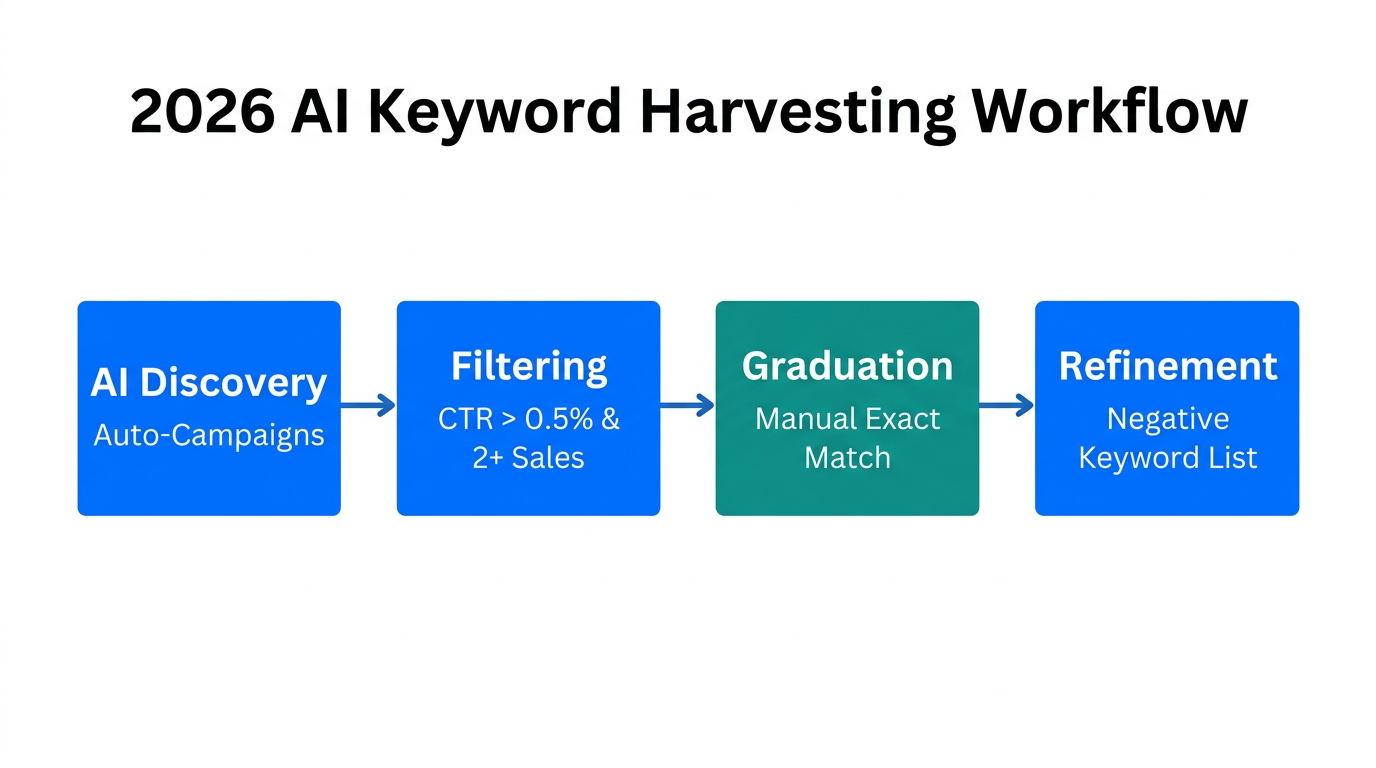
The most effective way to scale sales without manual intervention is a multi-tiered keyword harvesting workflow. This Amazon automated bid management strategy ensures that you are constantly discovering new search terms while protecting your margins.
Step 1: The Discovery Phase (Auto & Broad)
Start by running "Auto" and "Broad" match discovery campaigns with a lower budget. These serve as your "data mines." Instead of trying to pick winners, you are paying the algorithm to find what customers are actually typing in 2026. Use tools like AiHello to set up these bulk campaigns in a single click.
Step 2: Define Conversion Thresholds
Set automated rules to monitor these discovery campaigns. A common 2026 benchmark is the "3-in-7 Rule": if a specific search term generates 3 sales within 7 days at a target ACOS, the AI should automatically flag it for promotion.
Step 3: Automated Promotion to Exact Match
Once a term hits your threshold, use an AI tool like Perpetua or Sellozo to automatically move that keyword into a Manual Exact Match campaign. Simultaneously, the tool should add it as a Negative Keyword in the original Auto campaign to prevent keyword cannibalization and internal bidding wars.
| Strategy Level | Primary Tool | AI Focus | Expected Outcome |
|---|---|---|---|
| Discovery | AiHello | Bulk Creation | Data Mining |
| Optimization | Perpetua | Goal-based Bidding | 34% ROAS Boost |
| Scaling | Scale Insights | High-level Automation | Market Dominance |
Tactical Implementation of AI Dayparting
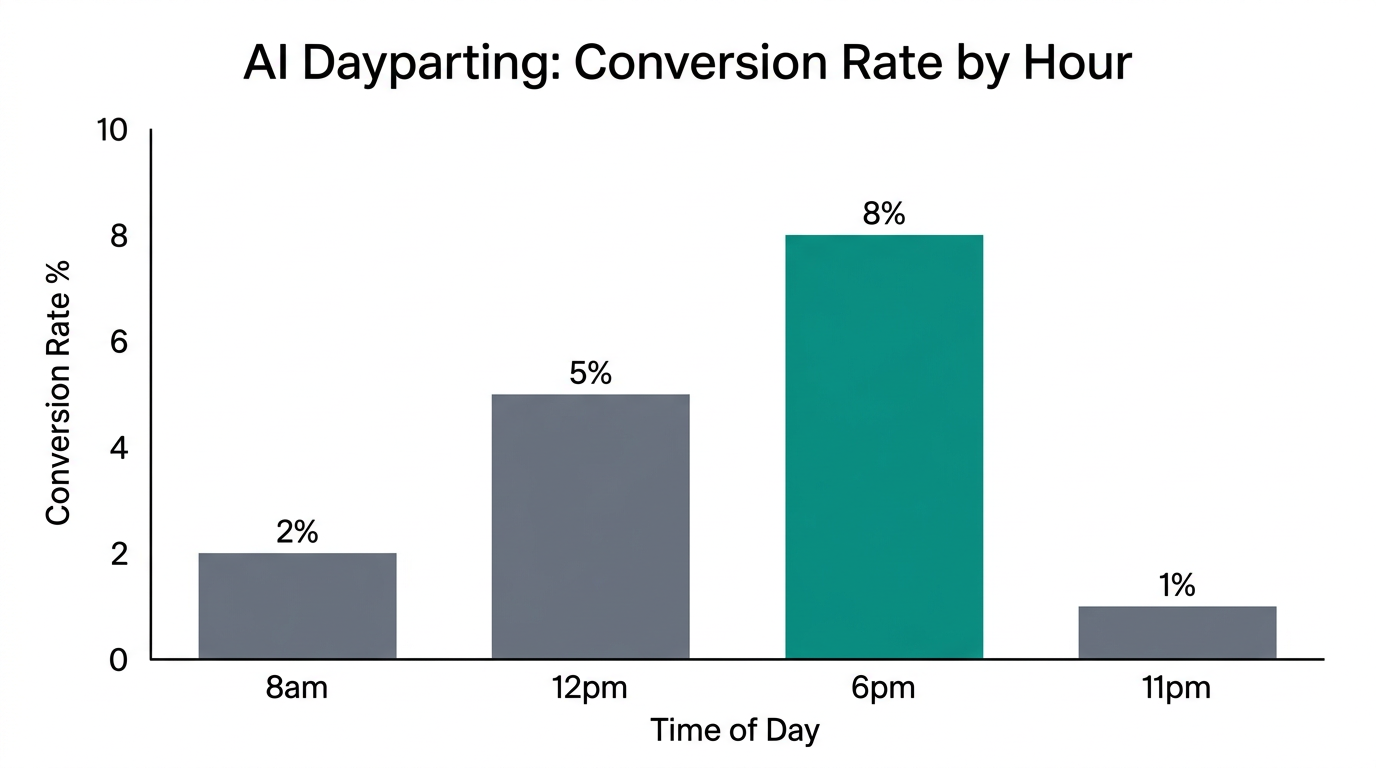
A massive failure point for many sellers is "going dark" at 2:00 PM because they have exhausted their daily budget during low-conversion morning hours. AI Dayparting solves this by adjusting bids hourly based on historical purchase data. In 2026, systems like Quartile analyze precisely when your specific product category sees a spike in intent.
For example, if your data shows that users browse for supplements at 8:00 AM but don't purchase until 7:00 PM, the AI will lower bids during the browsing phase and aggressively outbid competitors during the conversion window. This ensures your budget lasts throughout the day, preventing the "budget capped" notification that kills momentum.
"Precision bidding isn't just about spending less; it's about spending exactly when the shopper's wallet is already open."Shifting KPIs: From Single-Sale ACOS to Lifetime Value (LTV)
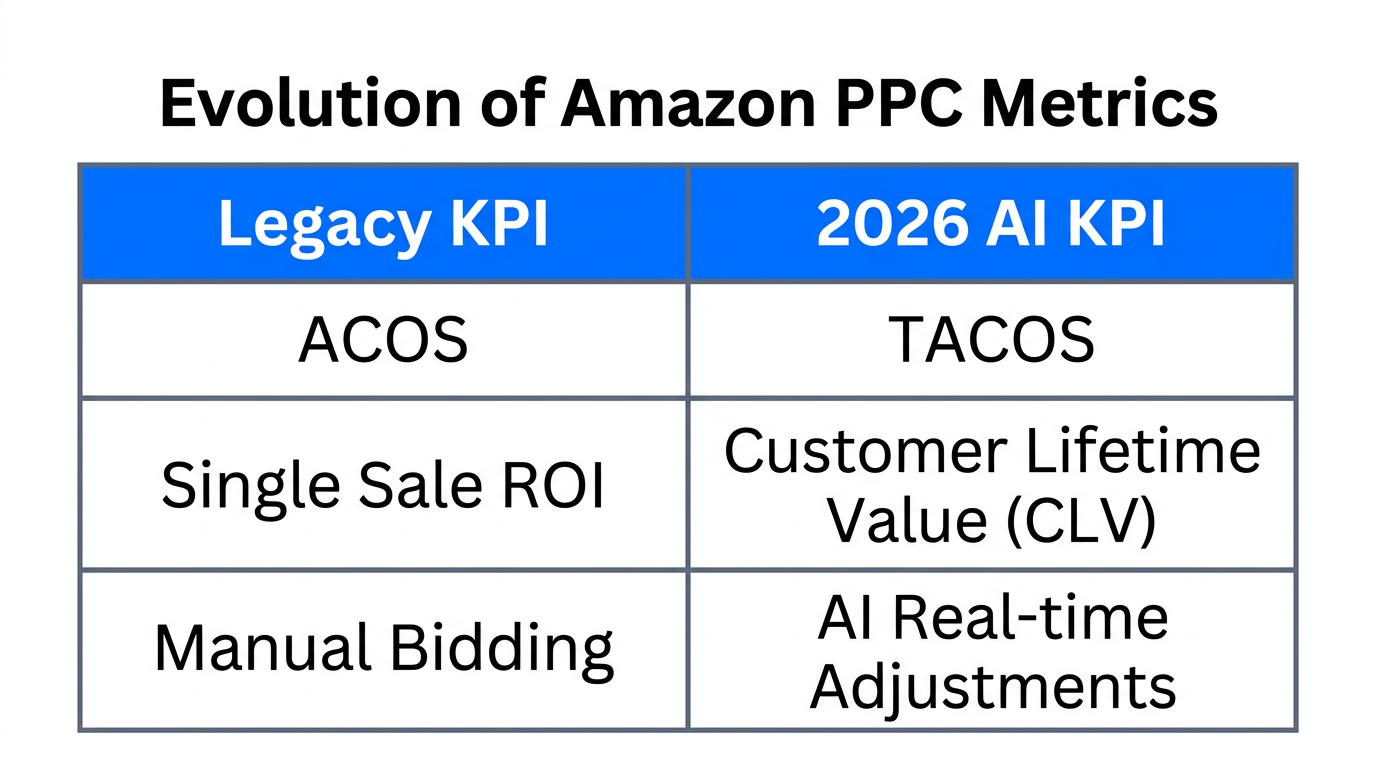
In the 2026 ecosystem, looking at a single sale is a recipe for stagnation. Modern Amazon advertising strategy 2026 utilizes the Amazon Marketing Cloud (AMC) to calculate "Lifetime ACOS." This allows brands to bid more aggressively on initial customer acquisition for products with high Subscribe & Save rates.
By identifying repeat purchase patterns, AI platforms can justify an initial ACOS that might look "unprofitable" on paper but results in a highly profitable 12-month customer relationship. Tools like Teikametrics Flywheel 2.0 integrate this "Artificial Retail Intelligence" to balance inventory levels with ad spend, ensuring you never advertise a product that is out of stock.
Real-World Success: AI Scaling in Action
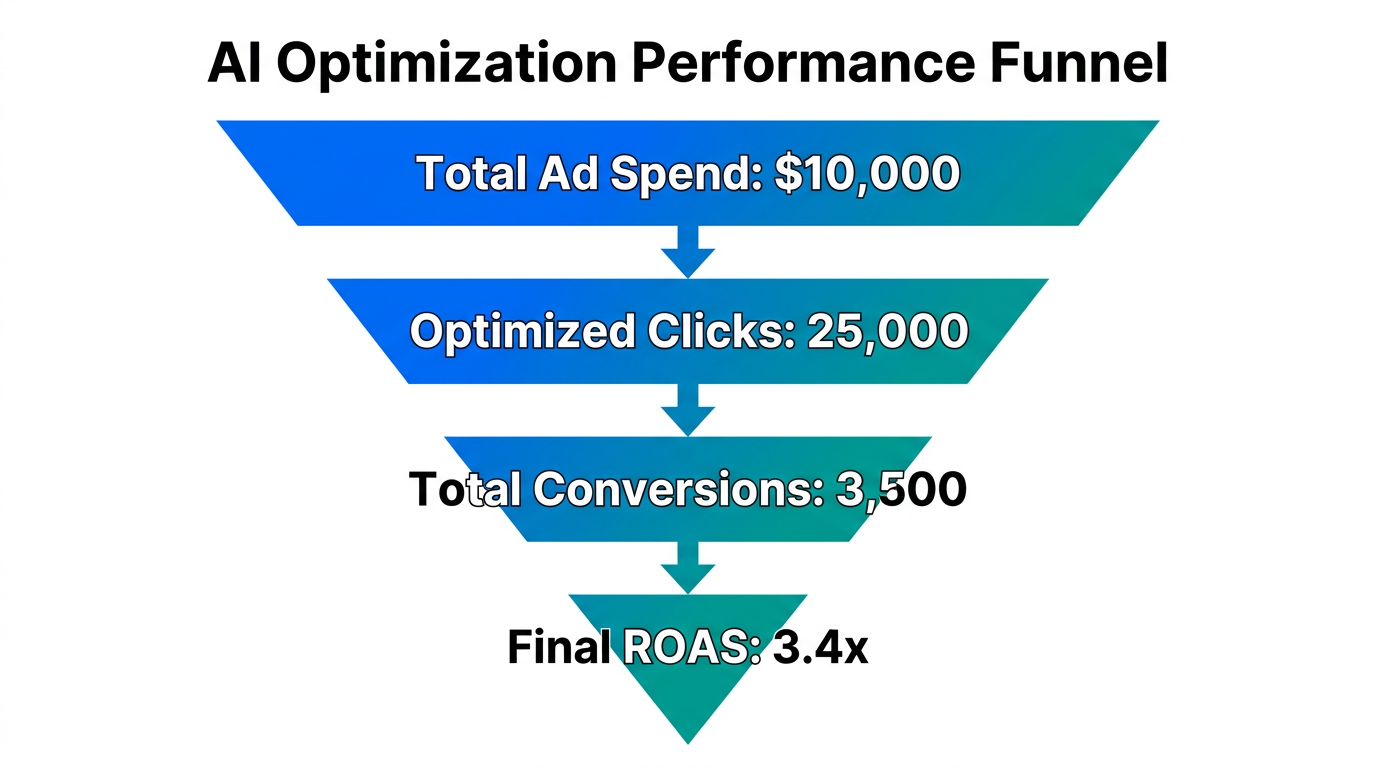
The transition to AI-first PPC is already yielding massive results for global brands. Greenworks achieved 20% growth by reallocating resources from stagnant segments to high-growth prospecting campaigns using full-funnel AI automation. Similarly, LN Digital reported a staggering 127% increase in sales within just 30 days by replacing manual management with automated rule sets and BidX real-time optimization.
Conclusion: The Path to PPC Dominance
As we scale through 2026, the integration of AI into your Amazon PPC workflow is the single most important factor for growth. By moving away from manual keyword mining and embracing a hybrid AI-human model, you can capture the 34% ROAS gains currently enjoyed by early adopters. Start by automating your keyword harvesting, implementing AI dayparting with tools like Quartile, and ensuring your creative assets are fueled by high-quality UGC sourced from Stormy AI. The $60 billion ecosystem is waiting—it's time to let the machines do the heavy lifting so you can focus on building your brand.