The era of "set it and forget it" Amazon advertising is officially over. As we navigate 2026, the marketplace has evolved into a hyper-competitive, AI-driven ecosystem where single-sale metrics like traditional ACOS (Advertising Cost of Sales) no longer tell the full story. Today, top-tier sellers are winning by looking past the immediate transaction and focusing on the long-term profitability of every click. Central to this shift is the Amazon Marketing Cloud (AMC), a powerful data clean room that allows brands to connect the dots across the entire customer journey.
By leveraging an advanced Amazon Marketing Cloud strategy, brands are transitioning from reactive bidding to predictive growth models. In this guide, we will explore how to implement AMC multi-touch attribution, calculate Amazon Customer Lifetime ACOS, and utilize Amazon predictive targeting in 2026 to secure a dominant market position.
"In 2026, the most successful brands aren't the ones with the lowest ACOS on day one; they are the ones who understand exactly how much a customer is worth over the next twelve months."
The Shift to 'Customer Lifetime ACOS': Rethinking Profitability
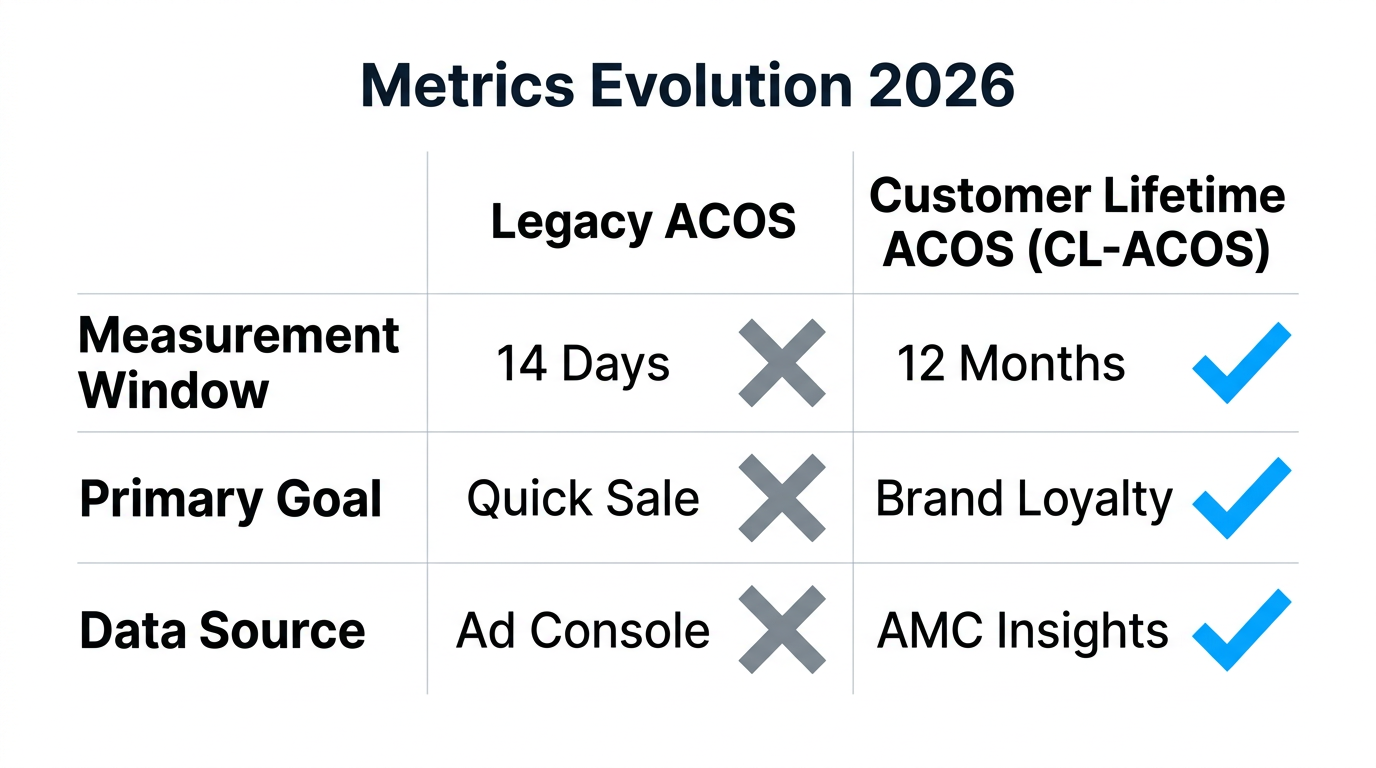
For years, the gold standard for Amazon PPC was maintaining a low ACOS. However, in 2026, this metric is often misleading. A high-quality customer who signs up for Subscribe & Save might cost more to acquire initially, but their long-term value far exceeds a one-time bargain hunter. This has led to the rise of Customer Lifetime ACOS (LTV-ACOS).
AI-driven management platforms now show an average 34.1% improvement in ROAS when shifting focus toward repeat buyers. By using the AMC, sellers can identify which specific campaigns are "seed campaigns"—those that bring in loyalists who purchase three or more times a year. If a campaign has a 50% ACOS but a 40% Subscribe & Save adoption rate, it is likely more profitable than a 15% ACOS campaign that only drives one-off sales.
Navigating the AMC Hub: Implementing No-Code Multi-Touch Attribution (MTA)
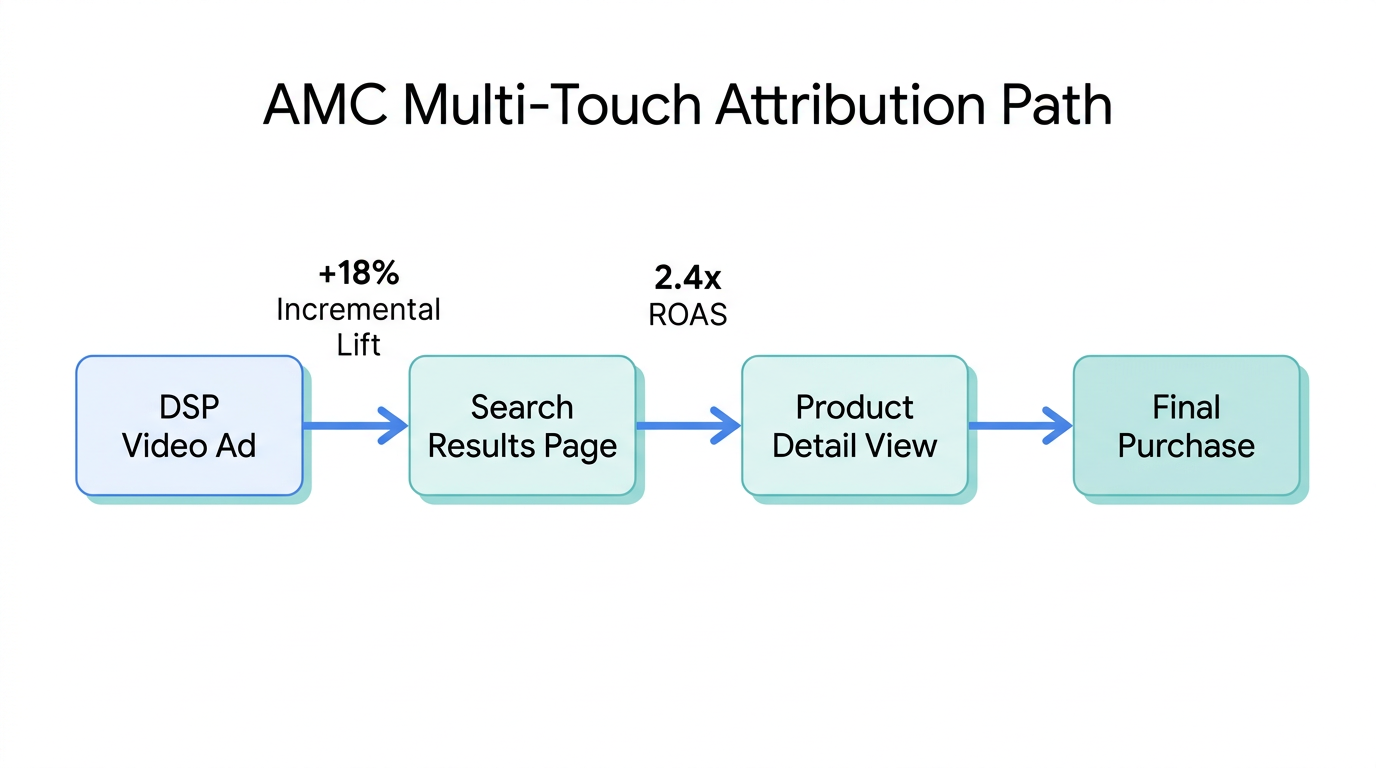
One of the biggest breakthroughs in 2026 is the accessibility of the AMC Hub. Previously an enterprise-only tool requiring SQL knowledge, it has evolved into a no-code solution for sellers of all sizes. This accessibility is critical for understanding AMC multi-touch attribution.
MTA allows you to see the "invisible" touchpoints. For example, a customer might see a Top-of-Search Sponsored Brand ad, later click a Sponsored Display ad on a competitor's page, and finally convert via a Sponsored Product ad. Under old attribution models, only the last click got the credit. With AMC, you can see the full path to purchase.
| Attribution Model | Focus Area | Strategic Benefit |
|---|---|---|
| Last-Touch | Conversion | Easy to track, but ignores brand-building efforts. |
| First-Touch | Awareness | Identifies the "top of funnel" entry points. |
| AMC Multi-Touch | Full Journey | Reveals the combined impact of all ad types on final sales. |
Expert users are now saving between 5.2 to 14 hours per week by using automated AiHello workflows that interpret these MTA insights and adjust bids across the entire funnel automatically. This ensures that awareness-driving ads aren't cut simply because they didn't get the final "conversion" credit.
Behavioral and Predictive Targeting: Moving Beyond Keywords
In 2026, Amazon predictive targeting has moved beyond simple keyword matching. Amazon’s AI now analyzes granular shopper behaviors, including dwell time on images, hover patterns over specific features, and historical purchase frequency. This allows brands to reach customers *before* they even type a query into the search bar. Using platforms like Stormy AI, marketers can now find the right creators to target these high-intent audience segments with authentic content.
New Performance+ Campaigns use this first-party data to automate audience creation and placement. Early adopters of these AI-powered campaigns have reported a staggering 51% improvement in Customer Acquisition Cost (CAC). Instead of bidding on the keyword "organic protein powder," the AI might target a shopper who spent three minutes reading reviews for a competitor's organic product but hasn't purchased yet.
"The future of Amazon advertising isn't about bidding on what people say; it's about bidding on what they do."
To capitalize on this, brands are using tools like Perpetua for always-on optimization. These platforms leverage Amazon's AI Creative Studio to generate AI-generated ad creatives—such as 30-second video ads—which deliver a 22% higher click-through rate on average by matching the visual style to the shopper's predicted preferences.
How Goal Zero Leveraged AMC for 30% Growth
A prime example of Amazon Marketing Cloud strategy in action is the brand Goal Zero. They faced a common challenge: their high-ticket solar products often had a long consideration cycle that traditional PPC metrics couldn't capture. By implementing the AMC Hub, they were able to identify "invisible" touchpoints where customers engaged with the brand weeks before buying.
By reallocating budget to these early-stage touchpoints that were previously undervalued, Goal Zero achieved 30% sales growth, a metric documented in Amazon's official case studies. They moved away from a siloed approach and began treating Amazon as a full-funnel platform. This mirrors the success of other brands like Greenworks, which saw 20% growth by reallocating resources from stagnant segments to high-growth prospecting campaigns using similar AI-derived insights.
The 12-Month Impact: Calculating Brand-Building Value
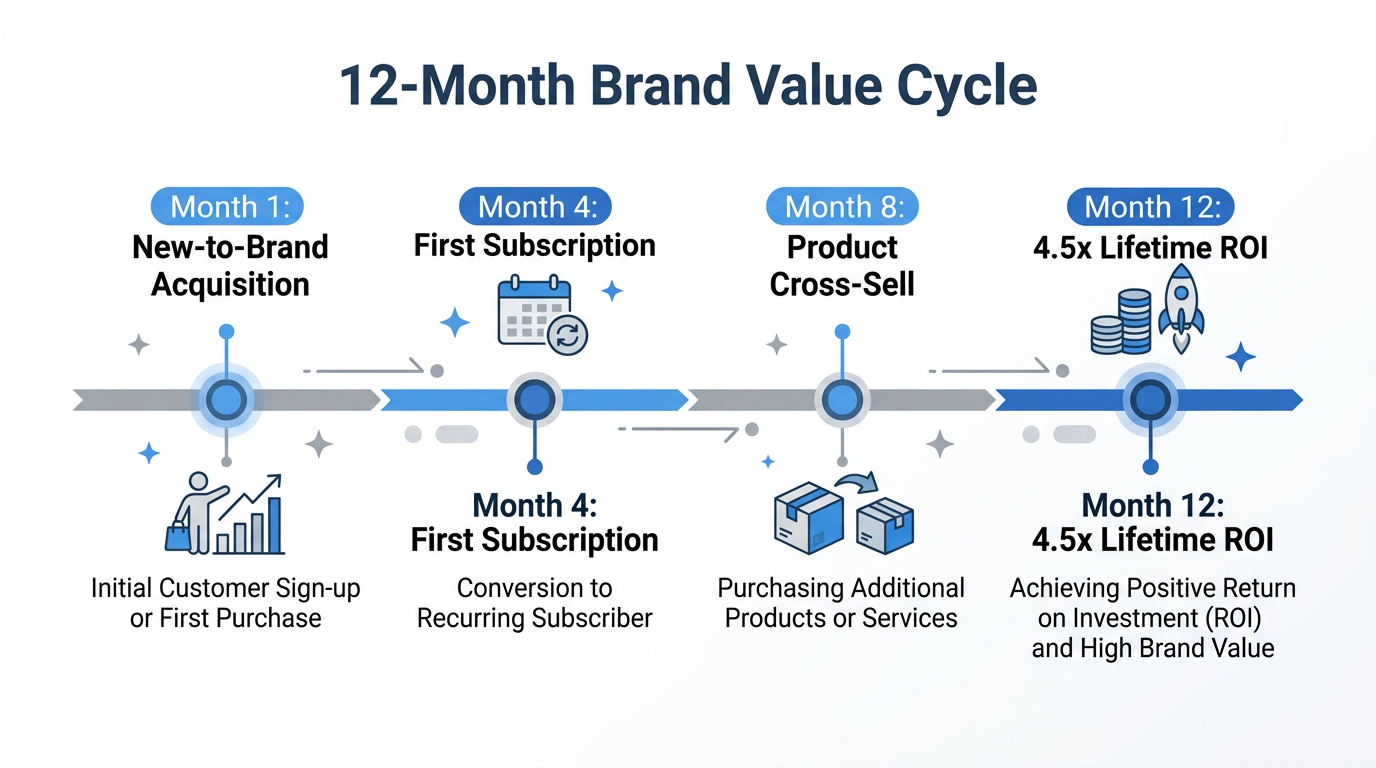
One of the hardest things for Amazon sellers has historically been justifying spend on "Top of Funnel" brand ads. In 2026, AMC provides the high-level data transparency needed to calculate the 12-month impact of these ads. By tagging users who interacted with a Brand Video ad and tracking them over a year, sellers can see the true ROI.
Data from Teikametrics and their "Artificial Retail Intelligence" suggests that for every $1 spent on brand awareness, there is a halo effect that increases organic search volume by up to 15% over the following quarter. Furthermore, modeled audiences reach across the open web, maintaining delivery while decreasing CPC by up to 12% compared to standard retargeting.
When calculating your 2026 budget, use this simple playbook:
- Identify Seed Campaigns: Use AMC to find campaigns with the highest New-to-Brand (NTB) rates.
- Track 12-Month LTV: Calculate the average revenue generated by an NTB customer over 12 months.
- Set 'Target LTV-ACOS': Adjust your bidding software (like Helium 10 Adtomic) to bid aggressively based on the 12-month value rather than the immediate sale.
- Integrate Creator Content: Since video is the highest-converting medium in 2026, use platforms like Stormy AI to discover UGC creators who can produce the authentic content needed for these brand-building campaigns.
Avoiding Common Pitfalls in the AI Era
While the potential of Amazon Marketing Cloud strategy is immense, there are several traps that can derail your progress. Even with the best AI, human oversight remains vital for brand voice and emotional messaging.
- Disrupting the Learning Phase: Making manual bid changes every few hours interferes with the AI’s data collection. Experts recommend a 48-to-72 hour evaluation period between adjustments.
- Neglecting Retail Readiness: No amount of AMC data can fix a poor listing. Running ads on products with fewer than 15 reviews or low-quality images leads to a skyrocketing ACOS.
- Over-reliance on Auto-Campaigns: While great for discovery, Auto-campaigns should be treated as "data mines." Winners must be harvested into manual campaigns for granular control using tools like Quartile.
"AI is your engine, but human strategy is your steering wheel. Without both, you're just driving fast into a wall."
The Bottom Line for 2026
Winning the long game on Amazon requires a fundamental shift in mindset. By embracing AMC multi-touch attribution and predictive targeting, you can move away from the stress of daily ACOS fluctuations and toward a sustainable, 12-month profitability model. The tools are more accessible than ever—whether you are using Sellozo for campaign orchestration or BidX for cross-platform management.
Start by identifying your Customer Lifetime ACOS and let the AI do the heavy lifting of behavioral analysis. The brands that master these high-level data transparency tools today are the ones that will dominate the search results of tomorrow.