In 2026, the margin for error in Amazon FBA logistics has effectively vanished. As of January 15, 2026, Amazon implemented one of its most aggressive policy shifts to date: the Low-Inventory-Level fee is now calculated at the individual FNSKU level rather than the parent ASIN. For DTC brands, this means that even if your overall product listing is well-stocked, a single under-stocked variant—like a specific size or color—can trigger heavy surcharges across your entire fulfillment operation. Running a lean back office is no longer just about efficiency; it is about survival against a backdrop of a 3.5% increase in base FBA fulfillment fees implemented earlier this year.
Understanding the 2026 FNSKU-Level Update
The core of the 2026 update is granularity. Previously, sellers could average out their inventory levels across a parent ASIN, allowing high-performing variants to "mask" low stock in others. Today, that strategy is dead. According to the Amazon Seller Central Fee Updates, the fee triggers whenever an FNSKU’s inventory falls below 28 days of supply relative to its trailing demand.
This shift has hit the apparel and beauty categories hardest. If your "Medium Blue" t-shirt is in stock but your "Small Blue" t-shirt drops to 20 days of supply, you are penalized. To manage this complexity, many brands are hiring an AI ecommerce employee like Stormy AI, which monitors inventory at the FNSKU level across Shopify and Amazon 24/7, flagging specific SKU-level stockout risks before the 28-day threshold is breached.
"The 2026 FNSKU-level penalty is a tax on bad data. If you aren't monitoring individual variants with real-time automation, you're effectively donating your margin back to Amazon."
The 'Safe Zone': Maintaining 30 to 60 Days of Stock
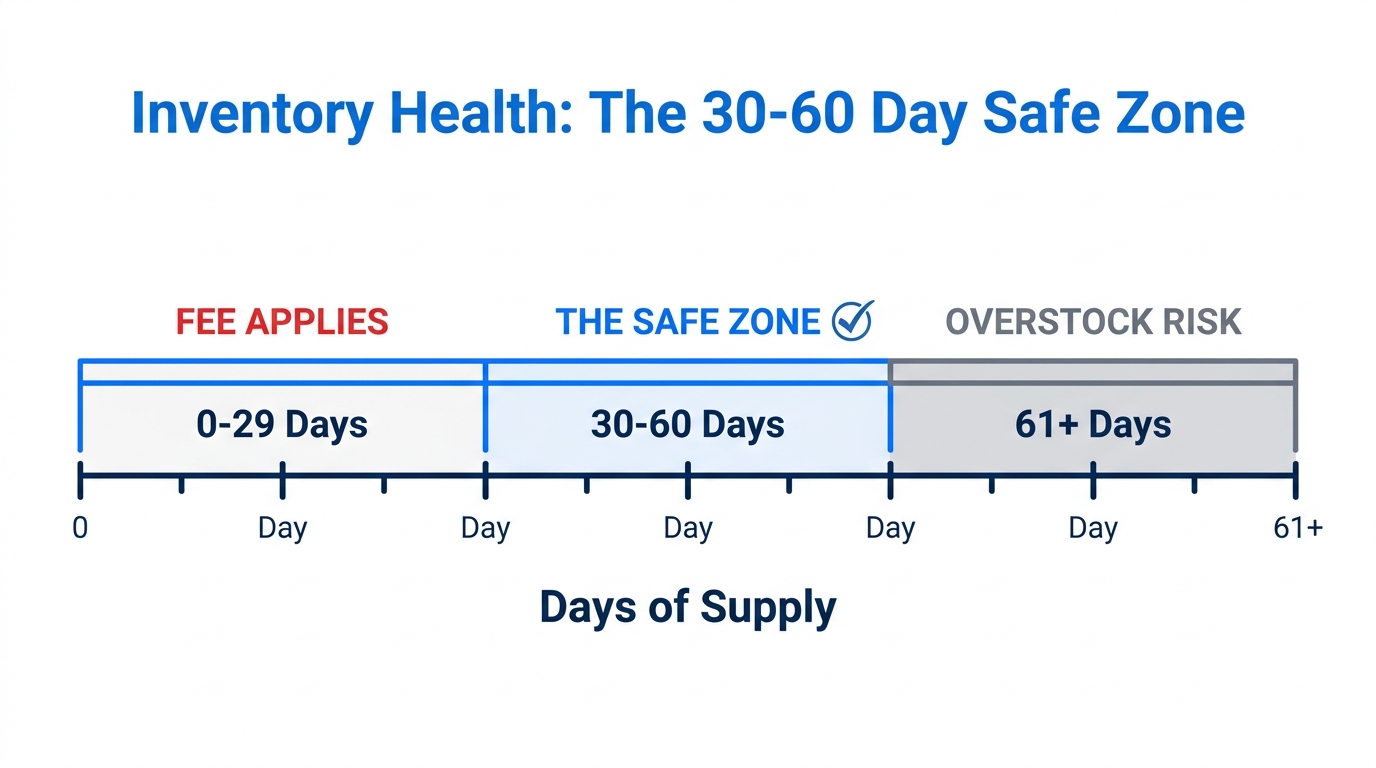
The goal for every 2026 Amazon operator is to live within the Safe Zone: a narrow window of 30 to 60 days of inventory. Staying within this range allows you to avoid the Low-Inventory-Level fee while also dodging the Aged Inventory Surcharges, which now kick in at the 180-day mark—90 days earlier than in previous years. Data from Marketplace Pulse suggests that top-tier sellers who maintain this window see a 12% higher buy-box win rate compared to those frequently hitting low-stock thresholds.
| Inventory Status | Days of Supply | Impact / Fee |
|---|---|---|
| Danger Zone (Low) | < 28 Days | Up to $2.09/unit fee |
| Safe Zone | 30 – 60 Days | $0 Fees (Optimal) |
| Warning Zone | 61 – 179 Days | Standard Storage Fees |
| Danger Zone (High) | > 180 Days | Aged Inventory Surcharge |
Maintaining this balance manually is a recipe for burnout. This is where Stormy AI handles the heavy lifting. Stormy acts as an autonomous teammate that connects to your Shopify and Amazon accounts, pulls daily sales velocity, and updates a master spreadsheet. If an FNSKU is trending toward the 28-day danger zone, Stormy doesn't just send an alert—it can draft a reorder email to your supplier and wait for your approval to send it.
Calculating the Impact of the 2026 FBA Fee Hike
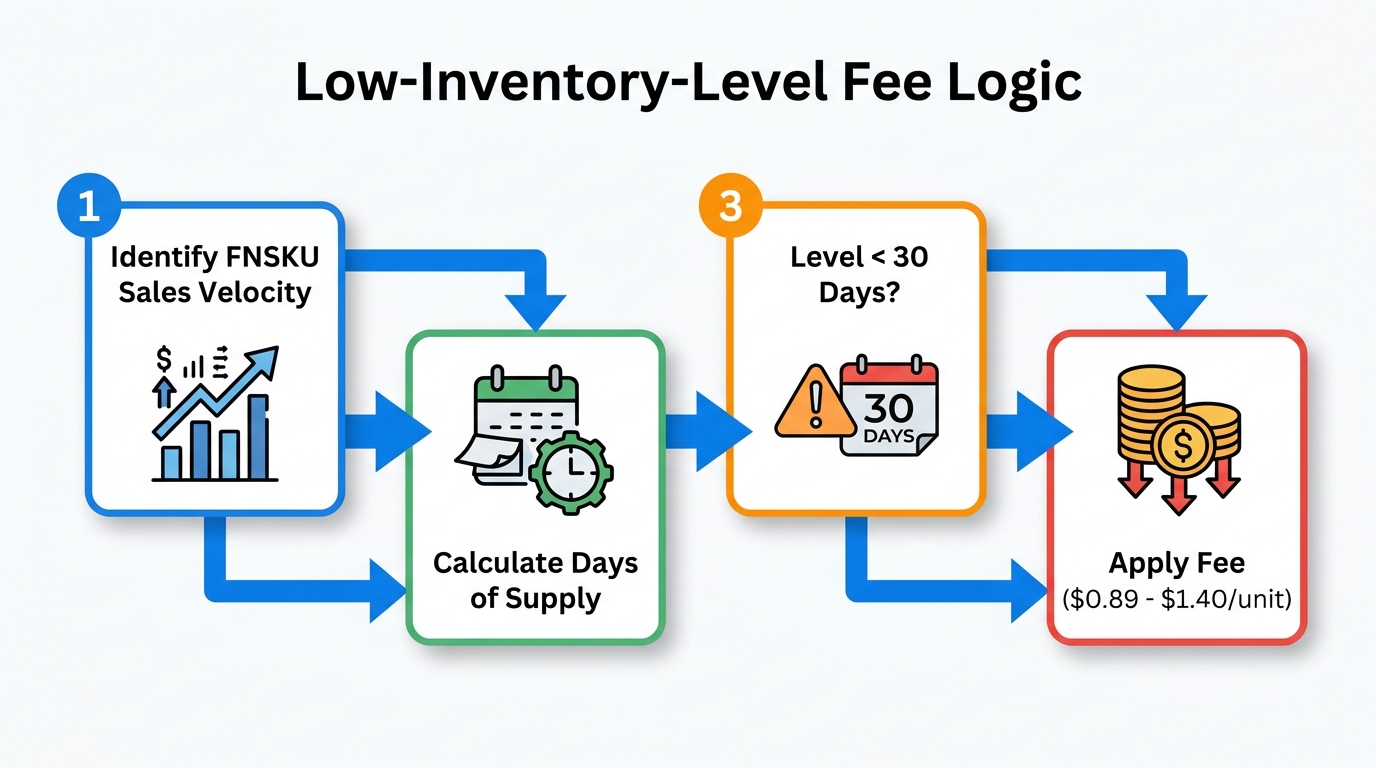
In addition to inventory-specific penalties, the 3.5% base FBA fulfillment fee hike has squeezed the net margins of even the most efficient brands. While Amazon justifies these costs through expanded same-day delivery capabilities, the reality for a $25 retail unit is often a loss of nearly $1.00 in profit per sale when fees are compounded. Profitability analysis from Jungle Scout indicates that selling a standard unit on TikTok Shop or Walmart Marketplace currently yields approximately $3.97 more per unit in net margin compared to FBA, largely due to Amazon's complex fee structure.
"The 3.5% hike isn't just an inflation adjustment; it's a signal that Amazon is prioritizing high-turnover, high-efficiency brands over slow-moving niche products."
Storage Predictability: Amazon AWD vs. Walmart WFS
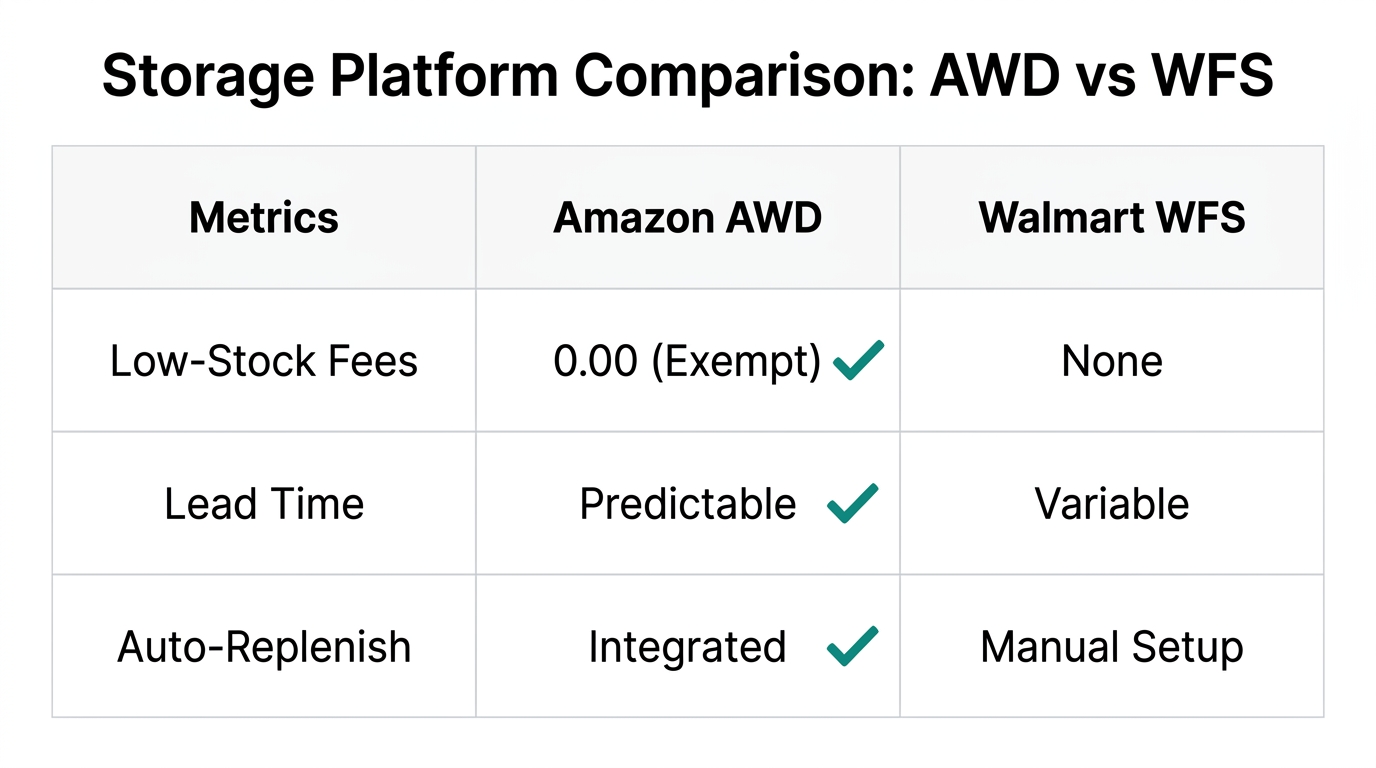
To avoid the volatility of FBA inbound fees, many brands are turning to Amazon Warehousing and Distribution (AWD). AWD provides a buffer, automatically replenishing FBA inventory to keep you in the Safe Zone. However, 2026 has also seen the rise of Walmart Fulfillment Services (WFS) as a more "predictable" alternative. Unlike Amazon's "Inbound Placement Fees," which force sellers to split shipments into 5+ locations, Walmart WFS remains streamlined and often more cost-effective for long-term storage.
Walmart's recent "Store-as-Warehouse" initiative, reported by PYMNTS, allows marketplace items to be staged in physical store backrooms. This provides a level of omnichannel resilience that Amazon's purely digital warehouse network struggles to match. If your FBA stock is flagging, having a healthy WFS buffer ensures your brand remains "Available In-Store" for local pickup, preserving revenue while you resolve FBA stockouts.
The 2026 Inventory Monitoring Playbook
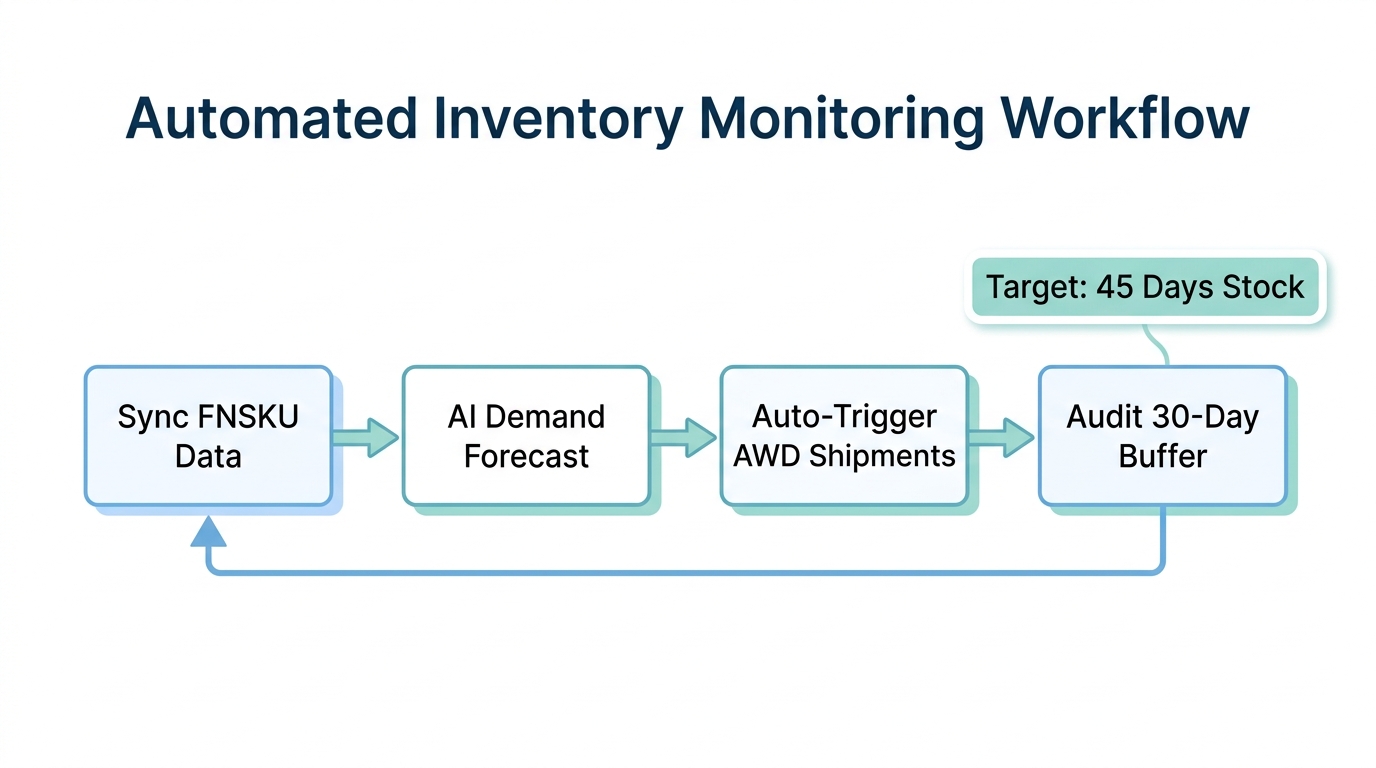
To navigate these fees, you need a repeatable system. Here is the playbook for maintaining the 30-60 day Safe Zone using automation and smart logistics.
Step 1: Audit Your FNSKUs
Open Amazon Seller Central and navigate to the Inventory Health dashboard. Identify every FNSKU with a "Days of Supply" lower than 35. These are your immediate risk factors. You can ask Stormy AI to pull this CSV and highlight every row that has fallen below 35 days in the last 48 hours.
Step 2: Set Row-Level Reminders
Inside your Stormy AI workbook, set row-level reminders for your high-velocity SKUs. Tell Stormy: "Check this row every Monday. If the 30-day trailing sales suggest we will hit 28 days of supply within 14 days, alert me and draft a PO to my supplier." This creates a proactive shield against the Low-Inventory-Level fee.
Step 3: Leverage Multi-Channel Sync
Ensure your inventory is synced across Shopify, Amazon, and Walmart. Using tools like LitCommerce or Zentail helps, but an AI employee like Stormy goes further by actually taking action—emailing 3PLs or suppliers to move stock from long-term storage (AWD) to active fulfillment (FBA) when levels dip.
"The most successful 2026 brands don't just 'track' inventory; they have an AI agent that 'manages' the flow between channels to optimize for the lowest possible fee profile."
Conclusion: Future-Proofing Your Logistics
The 2026 ecommerce landscape is defined by efficiency. With the Amazon Low-Inventory-Level fee operating at the FNSKU level and base fulfillment costs rising, manual inventory management is a liability. By maintaining a 30-60 day Safe Zone and utilizing an AI ecommerce employee like Stormy AI to handle the messy back-office monitoring, you can protect your margins and focus on growth.
1. Audit individual FNSKUs for <28 days of supply.
2. Transition slow-moving stock to AWD or WFS to avoid FBA aged surcharges.
3. Automate your reorder alerts with Stormy AI to ensure you never pay a low-stock penalty again.
Ready to automate your Amazon back office? Let Stormy AI watch your inventory levels so you can stop paying unnecessary fees and start scaling your brand.