In 2026, the Amazon marketplace has evolved from a simple storefront into a hyper-active battlefield where algorithms, not humans, make the majority of purchasing and pricing decisions. For modern sellers, the stakes couldn't be higher: over 80% of Amazon sales are funneled through the single "Add to Cart" button known as the Buy Box. If you aren't winning that placement, you are essentially invisible. But winning isn't just about being the cheapest; it’s about being the smartest. With Amazon changing prices every 10 minutes on average, manual adjustments are a relic of the past. To survive this year, brands must leverage AI dynamic pricing to maintain dominance while protecting their margins.
The Science of Ten-Minute Pricing: Why Real-Time Response is Mandatory
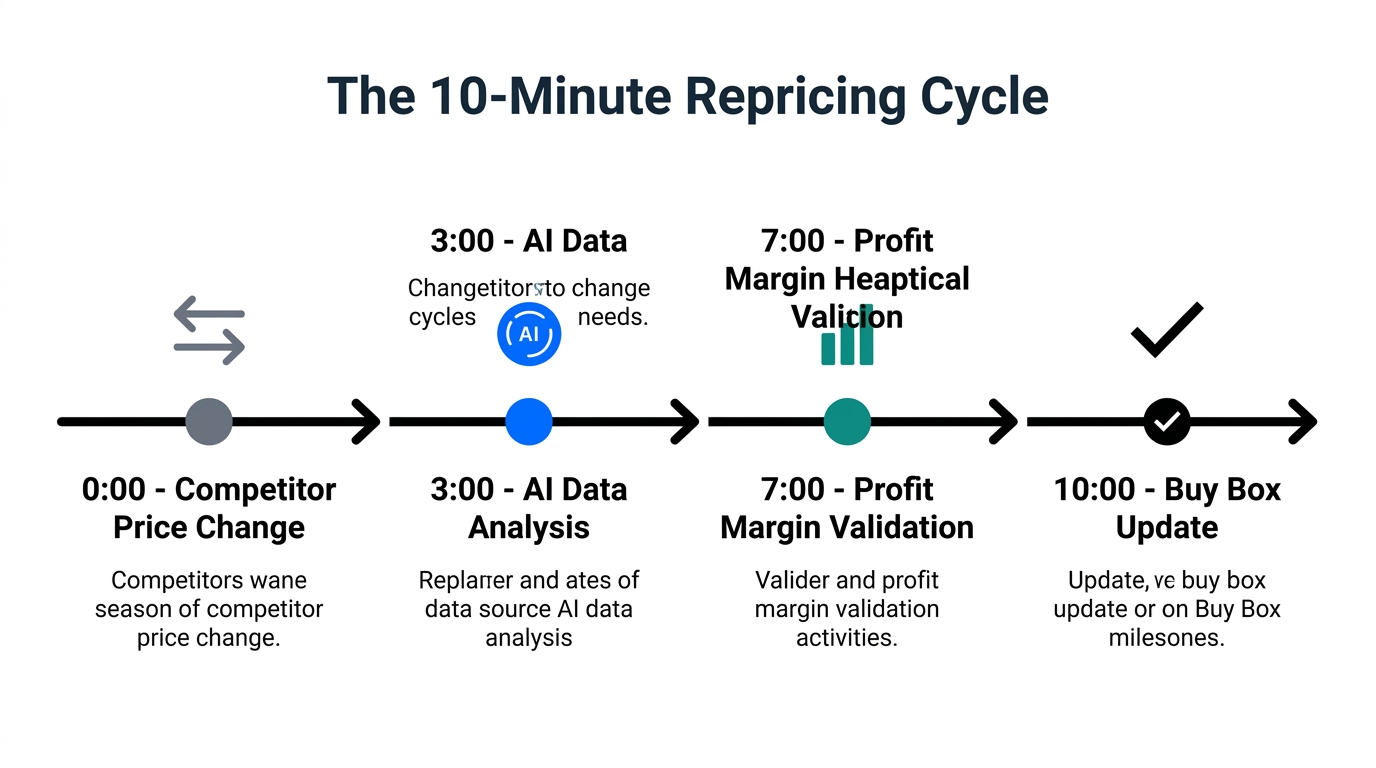
Amazon's internal pricing engine is one of the most sophisticated AI systems on the planet. It doesn't just look at your competitors on Amazon; it scans the entire web, including Walmart, Target, and niche DTC sites, to ensure its "Earth's most customer-centric" promise. Research shows that AI in retail is projected to reach $85.3 billion by 2032, driven largely by these automated systems.
If a competitor drops their price by five cents at 2:00 PM, and you don't respond until 5:00 PM, you have already lost three hours of peak traffic. This volatility is why approximately 55% of leading retailers have now fully integrated AI-driven pricing solutions, according to Gartner research. These tools allow you to stay within the Buy Box winning range without human intervention, reacting to market shifts in milliseconds.
"The companies with these pricing strategies in place will be the ones who navigate inflationary environments most effectively in 2026."
Informed.co Playbook: Setting Up for Buy Box Dominance
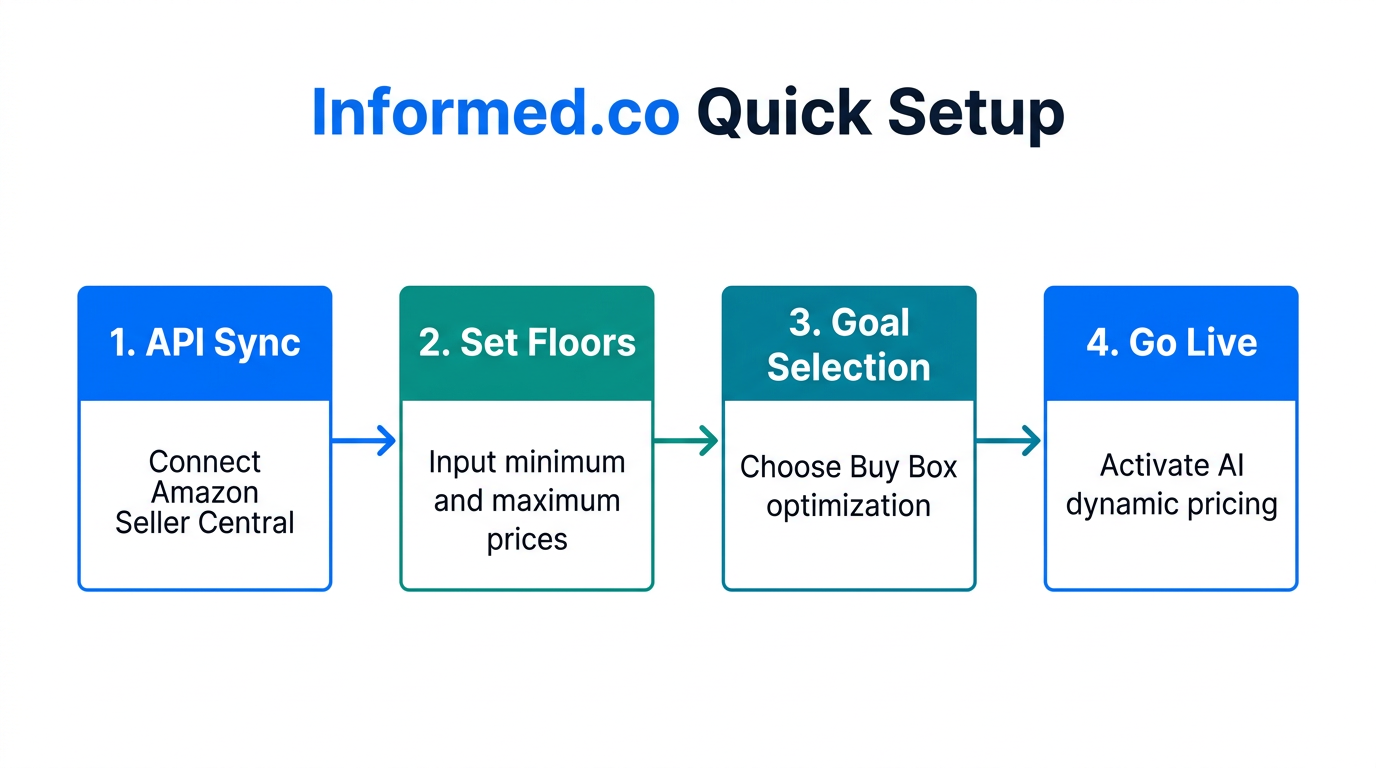
For marketplace sellers, Informed.co remains a top-tier choice for balancing automation with control. However, a "set it and forget it" approach is a recipe for disaster. To win the Amazon Buy Box strategy in 2026, you must configure your AI repricer with strict guardrails.
Step 1: Establishing Price Guardrails
The biggest risk with AI repricing is the "race to the bottom," where two bots continuously undercut each other until profit disappears. You must set hard floors (your minimum acceptable profit margin) and ceilings (to avoid price gouging triggers). According to experts at Couture AI, these guardrails are essential for maintaining brand trust and long-term sustainability.
Step 2: Choosing Your Repricing Strategy
Informed.co offers several algorithms. In 2026, the most effective is the "Get the Buy Box" AI strategy, which doesn't just match the lowest price but analyzes seller rating, shipping speed (FBA vs FBM), and historical performance to find the highest possible price that still secures the pole position.
Step 3: Multi-Channel Synchronization
Amazon will penalize your Buy Box eligibility if they find your product cheaper elsewhere. Use tools like Emplicit or Omnia Retail to ensure your prices on Shopify and Walmart are perfectly synced with your Amazon listings. Discrepancies lead to "Buy Box suppressed" warnings that can tank your sales overnight.
| Repricing Tool | Best For | Key AI Feature |
|---|---|---|
| Informed.co | Amazon Sellers | Buy Box targeted AI |
| Competera | Enterprise Retail | Demand forecasting |
| Prisync | SMB Growth | Competitor tracking |
| Quicklizard | DTC Brands | Omnichannel sync |
Case Study: How an Appliance Brand Reclaimed 15% Market Share
In late 2025, a leading Indian home appliance brand faced aggressive undercutting from third-party resellers. These resellers were using basic bots to drop prices by $1 every time the brand lowered its own price. The result was a destroyed margin and a lost Buy Box.
By implementing a competitor monitoring engine and an advanced AI repricer (similar to The Agentics logic), the brand stopped chasing the lowest price. Instead, the AI identified periods where competitors were low on stock and raised prices to maximize profit. Within 90 days, the brand saw a 15% uplift in sales volume and a significant recovery in Buy Box ownership. They didn't win by being cheaper; they won by being more responsive to competitor inventory levels.
"Real-time personalization and dynamic pricing can deliver 20% higher conversion rates compared to traditional batch pricing."
Beyond Competitors: Setting Contextual Triggers
In 2026, marketplace competitor monitoring is only half the battle. Leading brands now program their pricing AI to respond to contextual external signals. This is where pricing meets hyper-personalization.
- Weather-Based Pricing: If you sell apparel or seasonal goods, your AI should be linked to regional weather data. As suggested by Impact Analytics, raising prices for umbrellas during a rainstorm or cooling fans during a heatwave is a standard 2026 optimization.
- Social Trend Analysis: When a product goes viral on TikTok, demand spikes instantly. By using demand signals from social platforms, brands can raise prices to manage inventory depletion. For example, brands often pair their pricing strategy with Stormy AI to track influencer-driven demand spikes and adjust their Amazon ceilings accordingly.
- Inventory-Linked Pricing: Never run out of stock. If your inventory levels drop below a certain threshold, your AI should automatically raise the price. This slows down sales velocity just enough to prevent an "out of stock" penalty while increasing the profit on your remaining units.
Avoiding the 'Race to the Bottom': Finding the Profit Sweet Spot
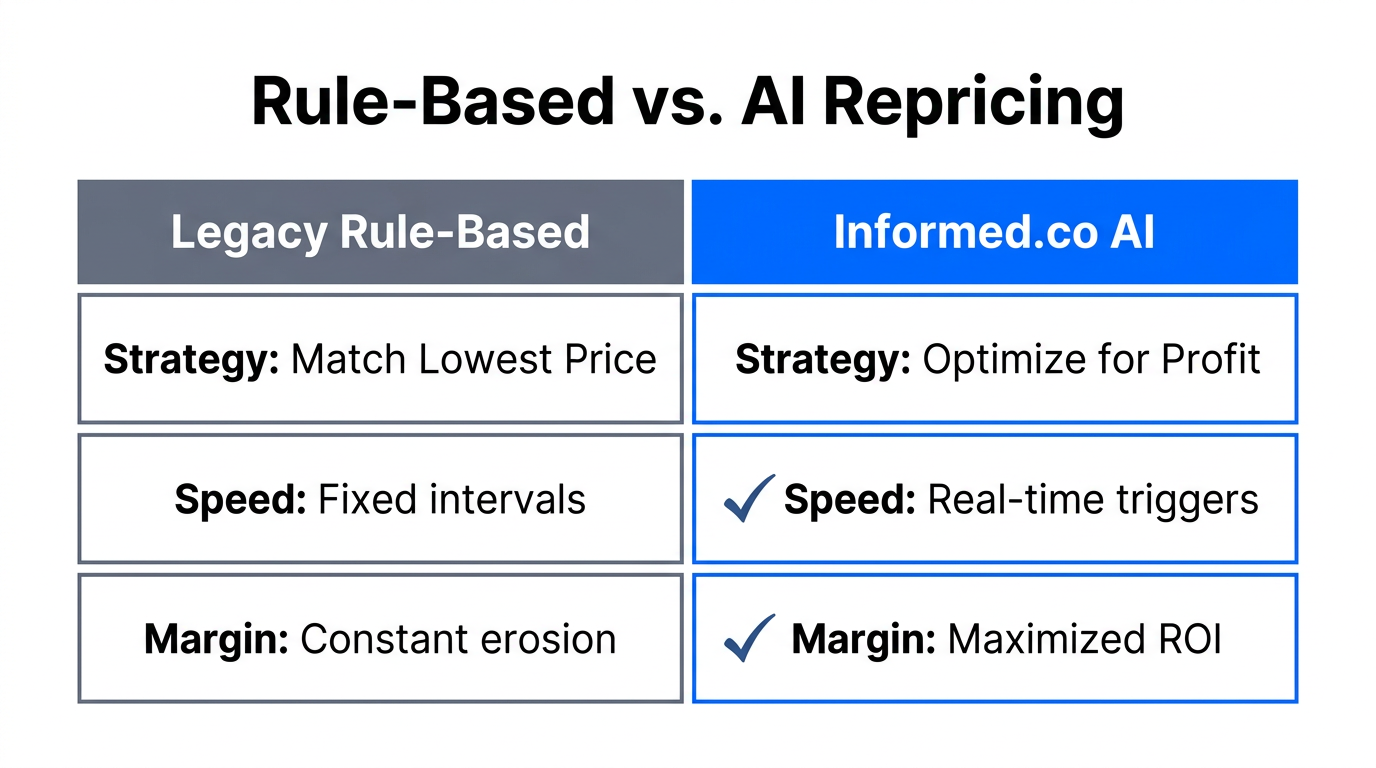
The most common mistake in Amazon repricing is discount addiction. Relying solely on underpricing erodes your brand value and triggers destructive price wars. Instead, shift toward Value-Based Pricing. Expert Per Sjöfors warns that AI can be a "disaster" if used to alienate buyers through perceived price gouging, as noted in recent Competera insights.
To avoid this, segment your products by Price Elasticity. Use your AI tool to identify which SKUs are "price sensitive" (where a small drop drives huge volume) versus those that are "inelastic" (where customers will buy regardless of a 10% price increase). For inelastic products, keep your prices high and let your competitors fight for the low-margin scraps.
"Winning the Buy Box at a loss isn't winning; it's just paying Amazon for the privilege of moving boxes."
The 2026 Growth Stack: Pricing and Demand
To dominate Amazon this year, your pricing cannot live in a vacuum. It must be part of a broader ecosystem. While Informed.co handles the final conversion point, you need demand-side data to inform those decisions.
Many high-growth brands now use Stormy AI to discover and manage influencers who drive traffic to their Amazon listings. When you know a massive influencer post is going live, you can pre-emptively adjust your pricing guardrails in your repricer to maximize the Return on Ad Spend (ROAS). Pair this with TikTok Ads Manager for a full-funnel approach that keeps your Buy Box position secure and profitable.
Conclusion: The Path to Marketplace Mastery
Winning the Amazon Buy Box in 2026 is a game of data-driven agility. By moving away from manual pricing and embracing AI-powered tools like Informed.co, you can ensure your brand stays competitive every 10 minutes of every day. Remember to set strict guardrails, sync your prices across all channels with Emplicit, and use contextual triggers to find the highest winning price point. The goal isn't just to sell—it's to scale profitably in the most competitive retail environment in history.