In 2026, the Amazon marketplace has evolved from a simple product search engine into a high-octane, AI-driven media powerhouse. With Amazon’s advertising revenue reaching a staggering $88.6 billion this year, the competition for consumer attention has never been more intense. As average CPCs have inflated to roughly $1.18–$1.25, brands can no longer afford to rely on static, uninspired creative. Efficiency is the new currency, and the Amazon Ads Generative Creative Studio has emerged as the essential toolkit for brands looking to maintain a competitive edge without exploding their production budgets.
We have officially moved into the era of the "Ads Agent." According to recent industry data, approximately 61% of all active Amazon ad campaigns are now optimized using AI-automated management tools. However, while bidding and keyword harvesting are largely solved problems, the "content bottleneck" remains the biggest hurdle for growing brands. This guide explores how to leverage Amazon Ads creative AI to generate broadcast-quality video scripts, scale A+ content across thousands of SKUs, and use automated A/B testing to ensure your creative performs as hard as your bidding algorithms do.
The Rise of Creative Agents: From Prompt to Production
The standout feature of the 2026 Amazon Ads Console is the deployment of "Creative Agents." These are not simple filters or basic templates; they are autonomous AI entities capable of planning, scripting, and producing high-fidelity assets based on natural language prompts. Mark Eamer, VP of Amazon Ads, frames 2026 as the year advertising moves "from the art of approximation to the science of precision." This precision is most visible in how AI eliminates the operational friction of content creation.
"The Generative Creative Studio has reduced advertiser onboarding time from 14 days to just 3.2 days, primarily by automating the asset generation phase that used to take weeks of coordination with agencies."When you provide a Creative Agent with a product URL, it analyzes your listing, identifies key selling points (USPs), and cross-references them with successful category benchmarks. Within hours, it generates broadcast-quality video scripts and image assets tailored for Sponsored Brands and Streaming TV ads. This is a game-changer for SMBs who previously lacked the five-figure budgets required for professional video shoots. By using AiHello or similar integrated AI pilots, sellers can now synchronize their creative output with their intraday bidding strategies, ensuring that the right visual message hits the right shopper at the right hour.
Strategies for Scaling A+ Content Across Massive Catalogs
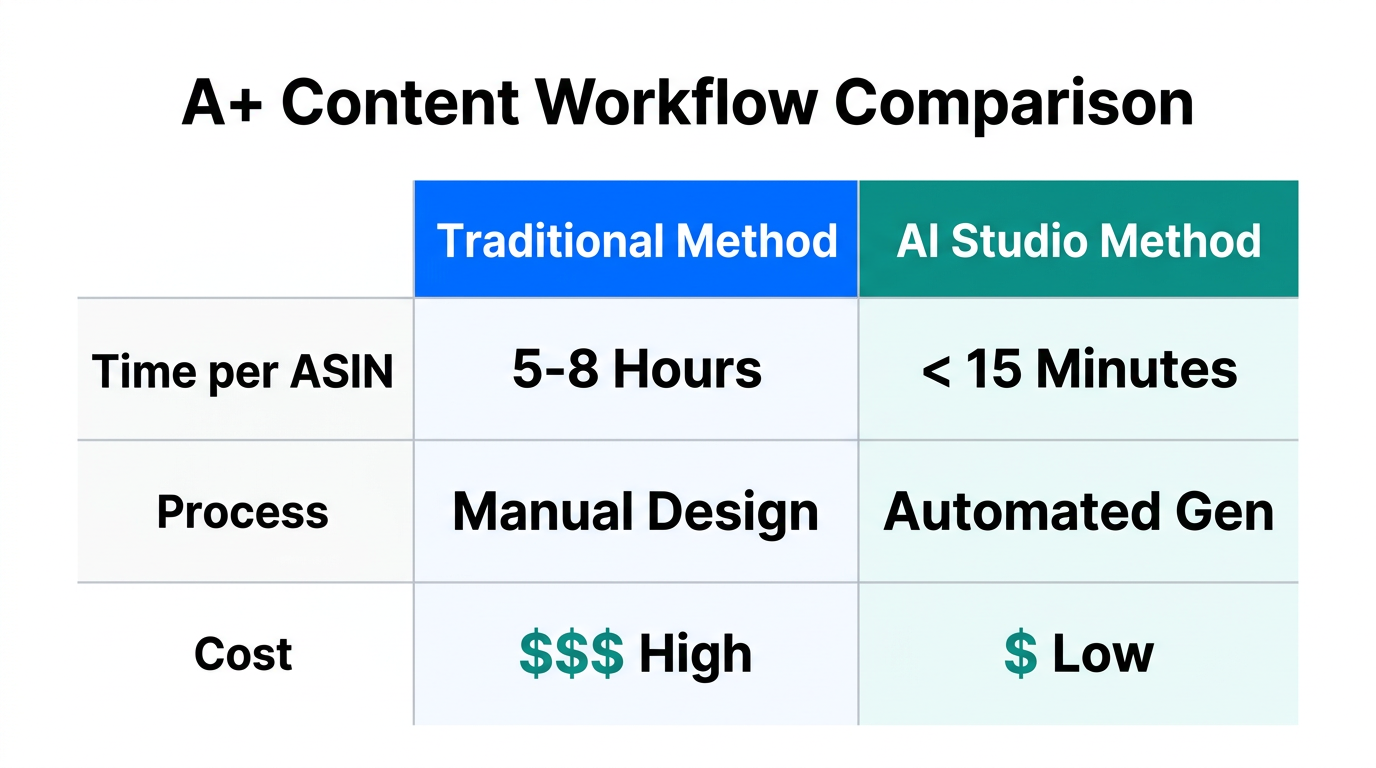
Managing A+ content for a handful of products is manageable; managing it for a catalog of 500+ ASINs is a logistical nightmare. In 2026, generative AI prompts have solved this scalability issue. Brands are now using generative models to maintain brand voice consistency while tailoring descriptions for diverse audience segments. For example, the same yoga mat can have its A+ content dynamically adjusted to appeal to "home gym beginners" versus "professional instructors" using AI-generated imagery and copy.
The secret to scaling lies in providing the AI with a "Brand DNA" file—a set of guidelines that dictate tone, color palettes, and prohibited terminology. Once the AI understands the brand's guardrails, it can generate hundreds of high-converting modules in minutes. This is particularly effective when paired with Pacvue or enterprise retail media tools that allow for bulk uploading and global synchronization. For brands also working with external creators, platforms like Stormy AI can help source the raw UGC (user-generated content) that feeds into these AI creative engines, ensuring the final output feels authentic rather than sterile.
| Feature | Manual Workflow (2024) | AI-Driven Workflow (2026) |
|---|---|---|
| Production Time | 14–21 Days | 2–4 Hours |
| Cost per Asset | $500 - $2,500 | $5 - $50 |
| A/B Testing | Manual & Slow | Automated & Continuous |
| Consistency | Varies by Designer | Strict Brand Guardrails |
Automated A/B Testing: Letting AI Favor High-CTR Variations
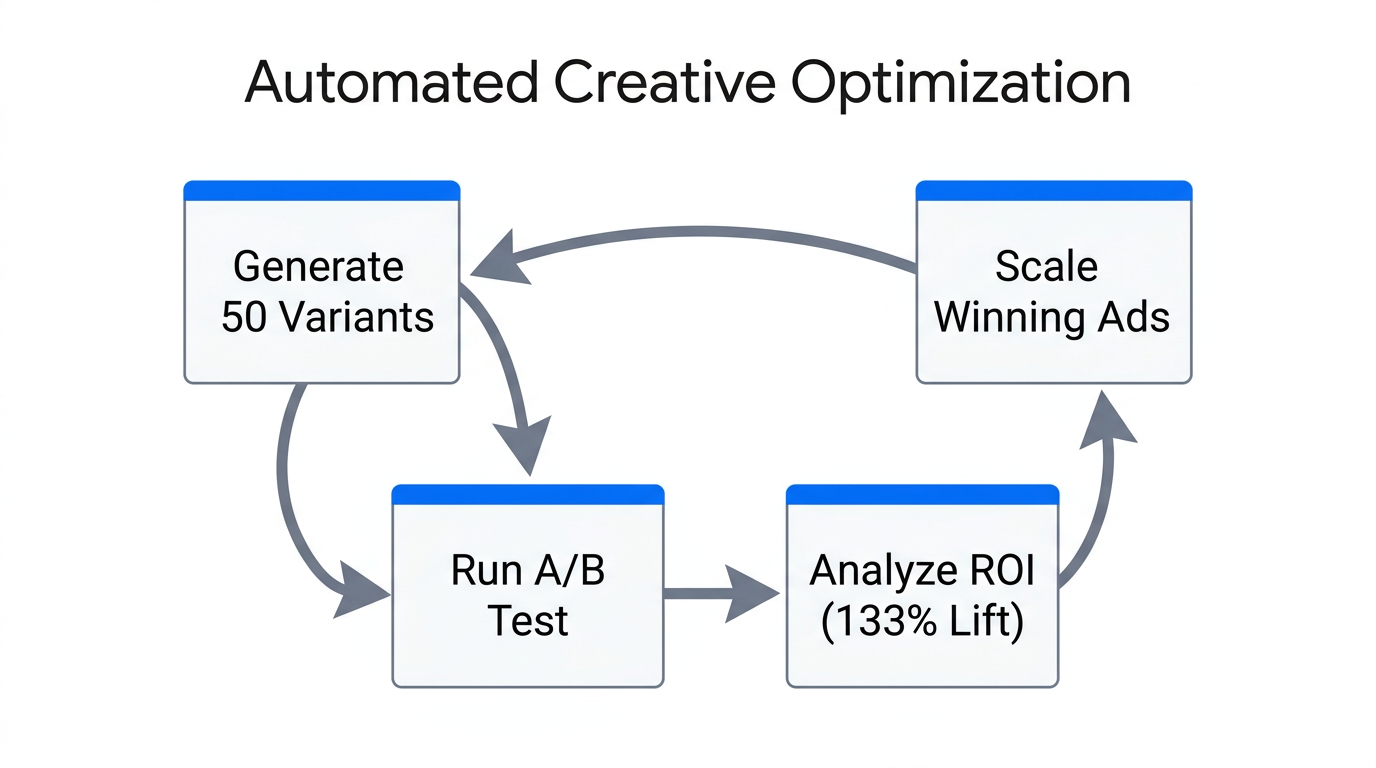
In the past, A/B testing was a "set it and forget it" process that required manual check-ins every few weeks. In 2026, Amazon Generative Creative Studio guide practices emphasize continuous, automated experimentation. Brands now generate 5–10 image variations for a single Sponsored Brand campaign and let the Amazon algorithm automatically favor the version with the highest Click-Through Rate (CTR).
This "winner-takes-all" approach to creative distribution ensures that ad spend is never wasted on underperforming assets. Case studies from global giants like Lay's demonstrate the power of this at scale. By leveraging Amazon DSP and AMC (Amazon Marketing Cloud) automation to optimize creative in real-time, Lay's achieved a 133% higher purchase rate and a 79% higher incremental reach. The AI didn't just find the best audience; it found the specific visual hook that resonated with that audience's intent.
"AI turns complexity into clarity, enabling brands to adapt to performance in real-time across the full funnel." — Melissa Burdick, President of Pacvue.When running AI video ads for Amazon, the system can even swap out the first three seconds of a video—the "hook"—to see which version stops the scroll most effectively. This level of granular optimization has pushed average Amazon ad conversion rates (CVR) to 12.3% in 2026, with high-intent categories reaching as high as 15.8%.
Maintaining Brand Alignment and Human Oversight
Despite the speed of AI, the "Set and Forget" mentality is the most dangerous trap a modern marketer can fall into. While automation is fast, strategy still wins. As Ben Debono of Bobo Digital warns, brands must map out audience intent before letting the AI take the wheel. The machine is excellent at execution but requires human direction to maintain brand soul.
To ensure brand voice consistency, marketers should implement a "Human-in-the-Loop" workflow:
- Prompt Verification: Review the AI's interpretation of your brand DNA before bulk-generating assets.
- Emotional Auditing: AI can generate perfect lighting and professional scripts, but it often misses the nuance of human emotion. A human editor should give the final "okay" on video content to ensure it doesn't feel uncanny.
- Compliance Checks: Even in 2026, AI can occasionally hallucinate product claims. Always verify that AI-generated A+ content adheres to Amazon’s strict TOS and category-specific regulations.
The 2026 Creative Automation Playbook
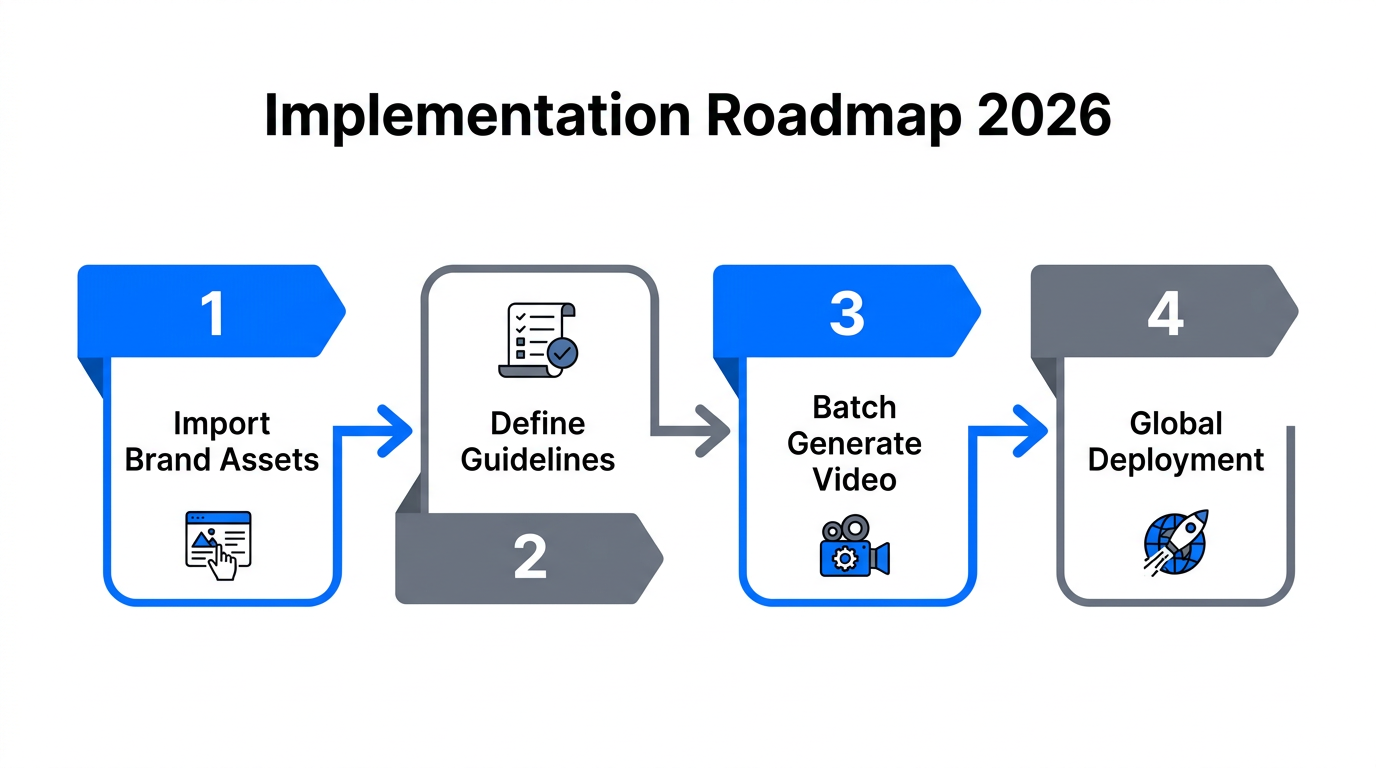
If you are looking to scale your Amazon presence this year, follow this structured playbook to integrate generative AI into your creative workflow.
Step 1: Define Your Brand DNA
Upload your brand guidelines, logos, and high-performing historical assets into the Amazon Creative Studio. This creates the sandbox in which the AI Agents will operate.
Step 2: Generate Multi-Variant Assets
Use the "Creative Agent" to produce at least five variations of your main hero image and three variations of a 15-second Sponsored Brands video. Focus on different hooks: one benefit-driven, one lifestyle-focused, and one price-driven.
Step 3: Integrate UGC for Authenticity
AI is great for polish, but users still crave social proof. Use Stormy AI to find creators who can provide raw footage of your product in use. Feed these clips into the Amazon Generative Creative Studio to create "AI-Enhanced UGC"—the hybrid format that currently dominates 2026 conversion charts.
Step 4: Set Dynamic Budget Rules
Use tools like Adbrew to set rules that reallocate budget toward the campaigns where the AI has identified a "winning" creative variation. This ensures your best content gets the most eyes during peak shopping hours.
Step 5: Monitor Through AMC
Use the Amazon Marketing Cloud to analyze the "Path to Conversion." See which AI-generated video ads are driving the most New-to-Brand (NTB) customers. Brands like Clovia have used this full-funnel AI approach to increase NTB orders by 80%.
"The future of Amazon growth isn't about working harder; it's about building an AI system that works while you sleep."Conclusion: The Future of Creative is Automated
The transition to Amazon Ads creative AI is no longer optional for brands that want to survive the 2026 retail landscape. By leveraging the Generative Creative Studio, you can solve the content bottleneck, reduce production costs by over 90%, and deliver hyper-personalized experiences to every shopper. However, remember that AI is a multiplier, not a replacement. A 10x multiplier on a zero-strategy plan still equals zero.
Combine the precision of Amazon's native AI tools with the authentic power of creator-led content from platforms like Stormy AI. By staying human at the strategy level and AI-first at the execution level, you will not only survive the $88 billion Amazon ad economy—you will lead it.