In 2026, the traditional marketing funnel is dead. For over a decade, we played by the rules of "Inbound Marketing," a term coined by HubSpot founder Dharmesh Shah. But as we move deeper into this year, a seismic shift has occurred. Organic traffic from traditional search engines has plummeted by 20% to 40% across major industries, according to recent Gartner research. The culprit? AI Answer Engines like ChatGPT, which now boasts over 800 million weekly active users.
Marketers who continue to push "product-first" content—announcing feature updates, corporate milestones, and self-serving blogs—are shouting into a void. To win in 2026, you must adopt Algovacking: the art of moving from product-first marketing to algorithm-first distribution. This playbook reveals how to leverage high-reach platforms, AI search optimization, and automated distribution loops to drive explosive brand growth.
Understanding Algovacking: The Shift to Algorithm-First Distribution
Understand how to leverage algovacking by working backwards from the platform algorithms for distribution.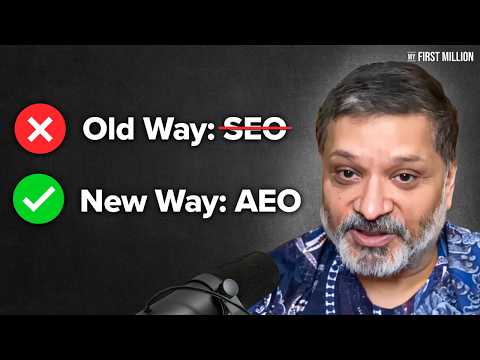
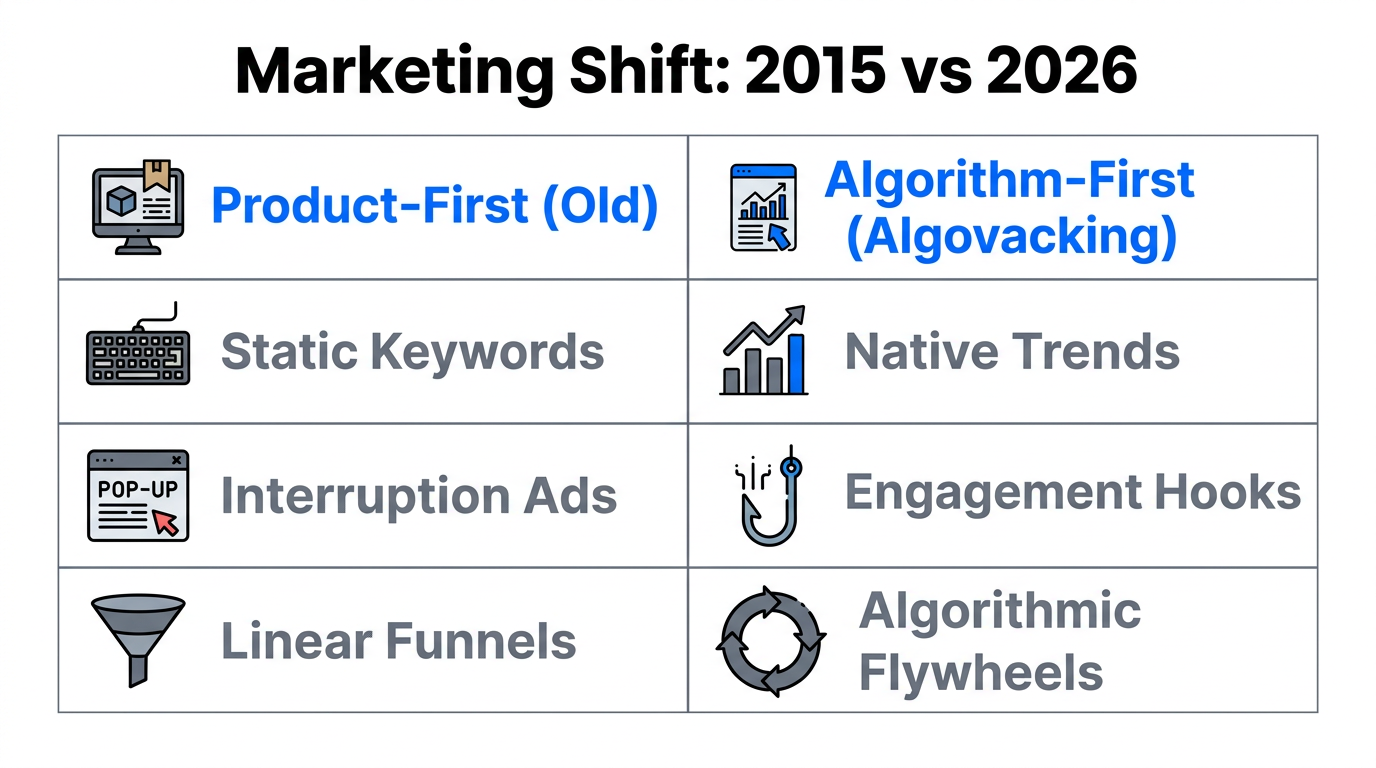
Algovacking (or algojacking) is the strategic process of creating content specifically designed to feed a social or search algorithm what it wants, rather than what your product team wants to say. In the old world, you built a product and then tried to find an audience. In 2026, you identify what the algorithm is already promoting and then find a way to slip your product into that existing flow of attention.
As Dharmesh Shah notes, search engine optimization has evolved into AEO (Answer Engine Optimization). When users ask Perplexity or ChatGPT for a recommendation, they aren't looking for 10 blue links; they want a definitive answer. If your brand isn't part of that answer, you don't exist in the consumer's journey. Modern tools like Stormy AI help brands discover creators who are already masters of these algorithms, allowing you to bypass the "corporate filter" that often kills viral potential.
Lessons from Steve Bartlett and MrBeast: Working Backwards
The masters of Algovacking don't start with a product brief. They start with the Distribution Hook. Steve Bartlett, founder of Social Chain and host of The Diary of a CEO, built a multi-million dollar empire by creating themed social media accounts like "Freshman Problems." These accounts didn't talk about a product; they talked about the shared experiences of the audience.
"The algorithm doesn't care about your product launch. It cares that Jenny, scrolling in her bedroom at 2:00 AM because she's bored, finds something to click on."Similarly, MrBeast treats YouTube like a science. He works backwards from the thumbnail and the hook. If the algorithm wants high-retention, high-click-through content, he gives it exactly that. In 2026, brands must adopt this "MrBeast mindset":
- Stop: "We just launched version 2.0 of our CRM!"
- Start: "7 reasons your sales team is failing (and how the top 1% fixed it)."
By using the latter, you provide value that the TikTok Ads Manager or the Instagram algorithm can easily categorize and promote to a massive, bored audience. Only once you have their attention do you subtly introduce your solution as the natural next step.
The 'Jenny in her Bedroom' Persona: Crafting Mainstream Hooks
One of the biggest mistakes in B2B marketing is assuming your audience is a "Corporate Executive" 24/7. In reality, your target customer is just a person—let's call her "Jenny"—scrolling through her feed in bed. She is looking for entertainment, controversy, or a quick hit of dopamine.
To algovack successfully, your content must "vibe" with the platform. This means moving away from polished, high-production corporate videos and moving toward UGC (User-Generated Content) and Vibe Coding. Platforms like Stormy AI enable brands to source these creators at scale, ensuring your message is delivered through a persona that feels like a friend, not a salesperson.
| Traditional Content | Algovacking Content | Primary Goal |
|---|---|---|
| Whitepapers/E-books | Question & Answer Threads | AI Answer Citations |
| Corporate Webinars | Short-form Viral Hooks | Top-of-Feed Reach |
| Product Walkthroughs | "They've been lying to you" Narratives | Algorithmic Trust |
When you create content for the AI search bot, structure is key. Use Q&A formats. If someone asks "What is the best CRM for small businesses?", your site should have a clear, structured page answering exactly that. This makes it easy for the GPTbot to scrape your site and cite you as the definitive source.
Using ChatGPT and HubSpot to Track 'AI Referrals'
Learn about the emerging discipline of AI Engine Optimization to attract traffic from ChatGPT.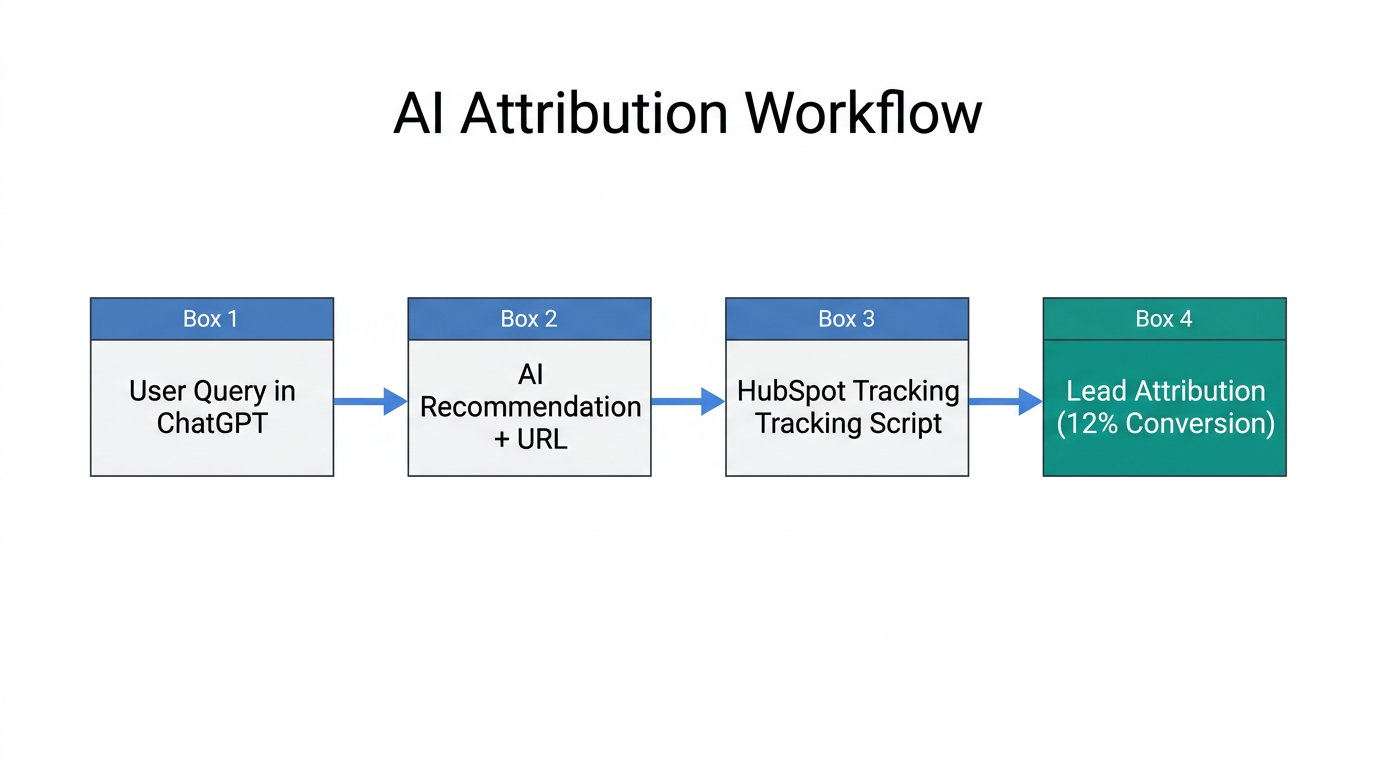
You cannot improve what you do not measure. In 2026, "Organic Search" is no longer a single bucket. You must separate traditional Google traffic from AI Referrals. This is traffic coming directly from citations within AI chats.
Dharmesh Shah highlights that HubSpot's CRM now automatically tracks AI referral sources via UTM parameters. By analyzing this data, you can see which specific questions users are asking that lead them to your brand. If you see a surge in users coming from ChatGPT after asking about "growth hacking for startups," you know you need to double down on that content cluster.
"If you aren't in the top three citations of an AI answer, you might as well not have played the game. In AEO, it’s a binary outcome: you’re either the answer or you’re invisible."To ensure you're indexed, verify that your site isn't blocking oai-searchbot or gptbot. These are the crawlers that feed the brain of the AI. Without them, your brand is effectively dead to the hundreds of millions of people using AI as their primary research tool this year.
Building a Social Distribution Loop: From Viral to Nurtured
Explore the formative loop strategies that drive content distribution across various social media platforms.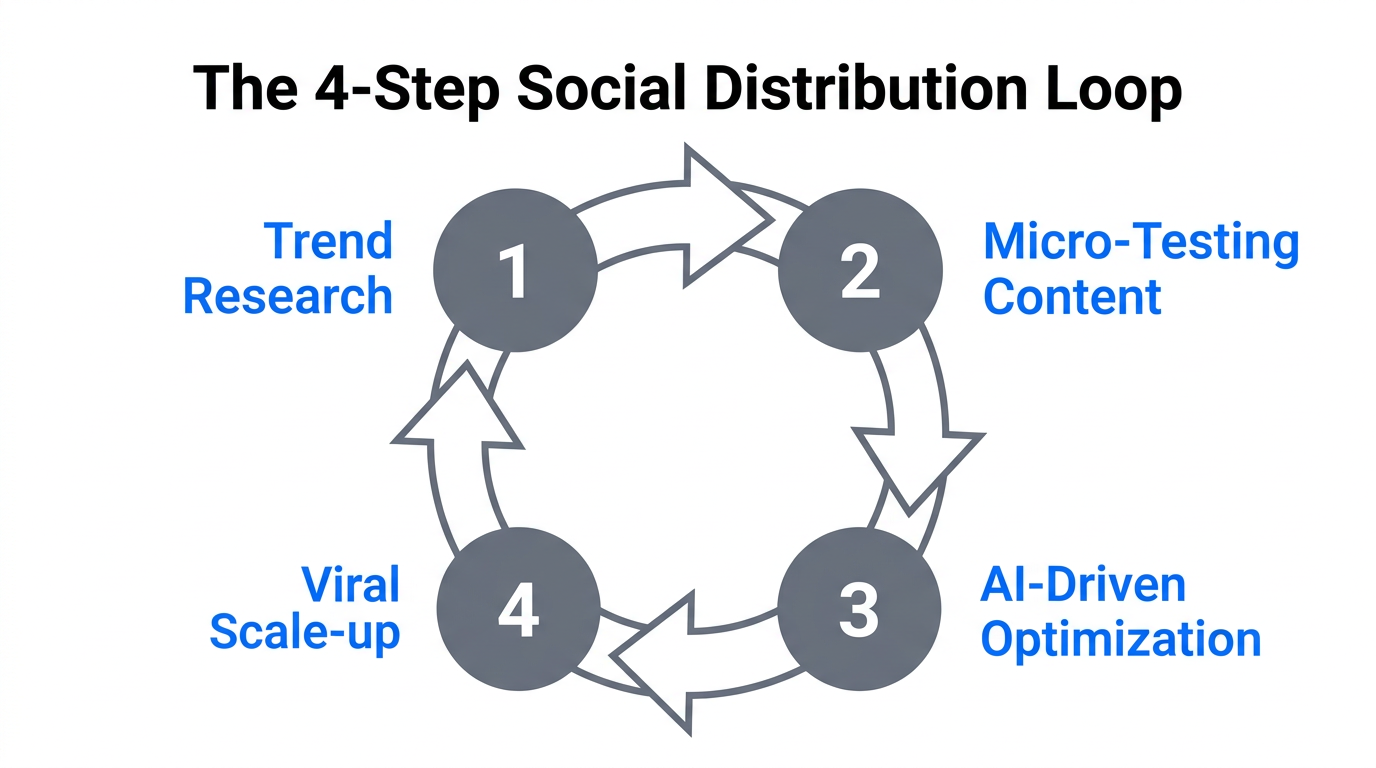
The ultimate goal of Algovacking is to create a Distribution Loop. This is where viral social engagement feeds into your long-term HubSpot lead nurturing system. It works like this:
- Step 1: Viral Algovack. Use a creator sourced through Stormy AI to post a high-reach video on TikTok or YouTube that addresses a mainstream "pain point" related to your niche.
- Step 2: The Soft Landing. Direct that traffic to a community-led landing page or a Reddit thread where your product is mentioned as a solution by real users.
- Step 3: Capture and Nurture. Once the user lands on your site, use an AI agent to offer a personalized "scraping" of their problem, capturing their email into HubSpot.
- Step 4: AI Retargeting. Use tools like Meta Ads Manager to retarget those who interacted with the viral hook, moving them down the funnel with more specific product benefits.
This loop ensures that you aren't just "renting" attention from the algorithm, but converting it into owned data that compounds over time. Unlike paid ads, which stop the moment you stop paying, an algovacked content piece on Reddit or a highly-cited blog post can drive leads for years.
Conclusion: The Future is Generative and Agentic
As we navigate 2026, the brands that win will be those that act as Market Makers for information. By removing the inefficiency between what a user wants to know and the answer they receive, you earn the right to participate in the economic value of that transaction.
Whether you are using Canva to design viral infographics or Stormy AI to automate your influencer outreach and discovery, the mandate is clear: Build like everyone is waiting, but dance like no one is watching. Focus on the reps, optimize for the answer engine, and let the distribution loop handle the rest. The era of product-first marketing is over—it's time to start algovacking.