When Alex Lieberman stepped down as CEO of Morning Brew, a 200-person media giant generating over $75 million in annual revenue, he found himself in a position many entrepreneurs envy: he was wealthy, successful, and completely lost. For twelve months, he followed the standard post-exit playbook—reading stoicism, taking long walks, and searching for a singular purpose. However, the path back to fulfillment didn't come from a flash of inspiration on a yoga mat. It came from returning to the "Town and Village" stages of company building—the scrappy, early-day mechanics of business idea validation. By shifting his mindset from finding the next "billion-dollar unicorn" to becoming a "multipreneur," Lieberman developed a framework for testing demand that resulted in a million-dollar business with zero initial capital: Story ARB.
The 'Magnet for Problems' vs. Traditional Brainstorming
Most aspiring founders approach a new go-to-market strategy by sitting on a couch with a notebook, trying to force a brilliant idea into existence. Lieberman argues that this is fundamentally the wrong approach. Instead, he advocates for being a "magnet for problems." This involves immersing oneself in industries and listening for the friction points that people complain about repeatedly. When you hoard problems rather than ideas, you stop trying to predict what the market wants and start reacting to what the market is literally asking for. This shift is a cornerstone of the lean startup methodology, where the goal is to eliminate waste by solving existing pain points rather than creating solutions in search of a problem.
In the case of Story ARB, the problem was obvious but underserved: high-level executives recognized the power of personal branding on Twitter and LinkedIn, but they lacked either the time to write or the skill to format their thoughts for social algorithms. Lieberman noticed a surge in short-form video agencies but realized that text-based platforms were being ignored. This observation wasn't a result of a brainstorming session; it was a result of being active in the ecosystem and seeing a gap in the supply of high-quality ghostwriting services for the modern executive.
"The best way to think of business ideas is to never just sit on a couch thinking of them. Be a magnet for problems—be incredible at finding and hoarding people's problems."
The 'Pebble to Pebble' GTM Strategy
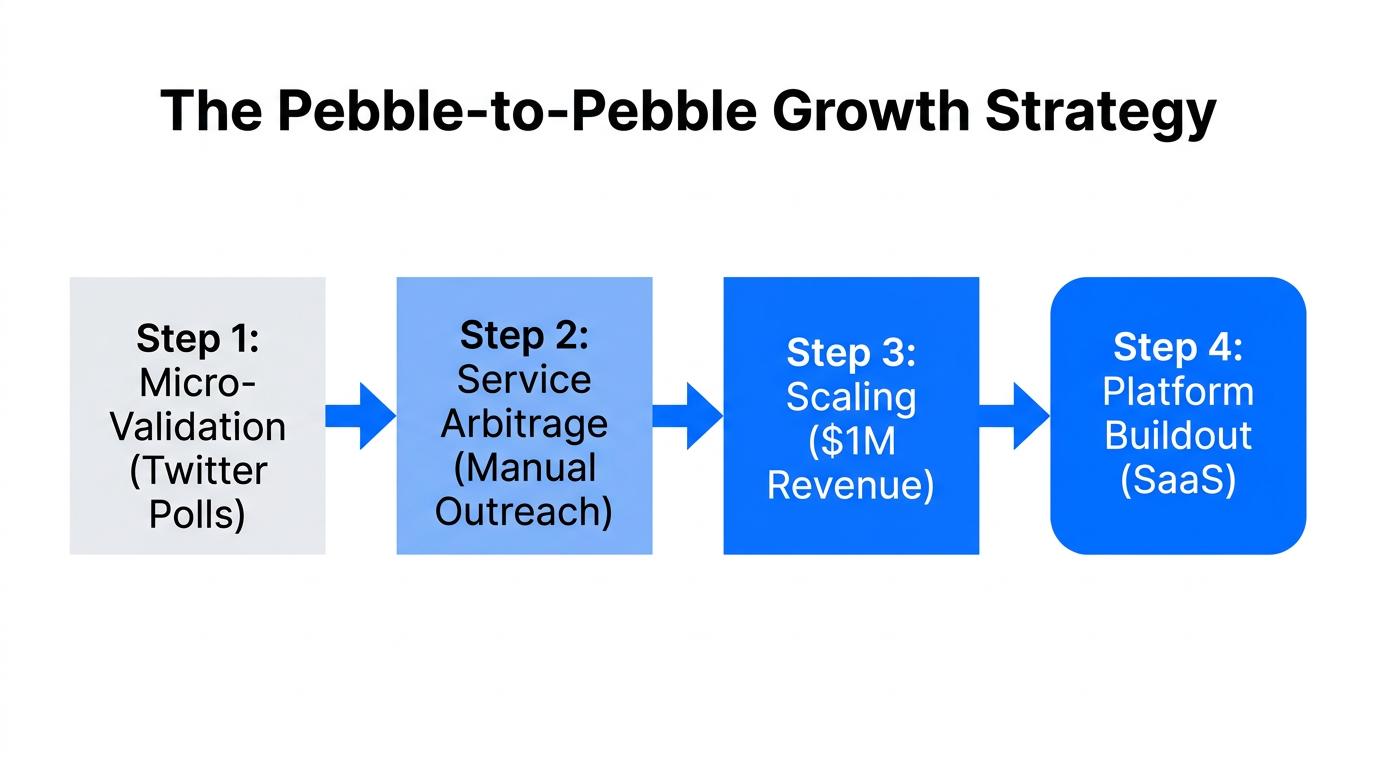
The core of Lieberman's validation philosophy is what he calls the "Pebble to Pebble" strategy. In entrepreneurship, the common metaphor is the "leap of faith." Lieberman rejects this, suggesting it is a misnomer that invites unnecessary risk. Instead, he views a new venture as crossing a river by stepping carefully from one small stone to the next. In the digital age, these stones are social media platforms and low-cost tools that allow you to test demand incrementally before ever committing significant capital or building a product.
The Validation Ladder
To implement this go-to-market strategy, Lieberman follows a specific hierarchy of escalation. If an idea fails at any of these steps, it is discarded or pivoted before any real money is spent. This allows a founder to fail fast and cheap, which is essential for a "multipreneur" managing a personal holding company. The progression typically looks like this:
- The Single Tweet: Put a raw idea or a call to action out into the world. If it gets zero engagement, the market isn't interested.
- The Thread: If the tweet lands, expand it into a detailed thread to see if the audience wants more depth.
- The Newsletter: If the thread resonates, move the audience to a platform like Beehiiv to see if they are willing to give you their email address—a higher form of currency than a like.
- The Video/MVP: Use video or a simple service offering to test if the audience will actually pay for the solution.
By the time Lieberman launched Story ARB, he hadn't built a website or hired a team. He simply posted a tweet: "If you're an executive who believes in the power of building an audience but you don't have enough time... DM me." That single post generated 25 high-intent leads. He didn't need a Shopify store or a complex backend; he just needed a direct line to potential customers to prove that the demand was real.
Building the Plane While Flying It
Once demand is proven, the next hurdle is supply. For a service-based business like a ghostwriting agency, Lieberman followed a classic "concierge MVP" model. He didn't hire a full-time staff immediately. Instead, he manually connected his first clients with freelance ghostwriters sourced from platforms like Upwork and managed the communication in a simple Slack channel. This allowed him to vet the quality of the service and understand the operational friction points without the overhead of a permanent payroll.
| Phase | Activity | Risk Level | Cost |
|---|---|---|---|
| Validation | Single Tweet/DM Callout | Zero | $0 |
| MVP | Manual Slack/Freelancer Match | Low | Variable (Profit First) |
| Scaling | Hiring a CEO and Strategists | Medium | $100k - $200k Salary |
This approach highlights a key lesson in business idea validation: profit should precede infrastructure. Story ARB was generating revenue before it even had a formal name. By operating in this "scrappy" mode, Lieberman ensured that every dollar spent was backed by a dollar already earned. For founders who are sourcing talent or looking for specific niche influencers to represent their brand, platforms like Stormy AI streamline creator sourcing and outreach by identifying the right partners who already have the audience you're trying to reach, further reducing the guesswork in those early "Village" stages.
Defining Product-Market Fit (PMF) Through Metrics
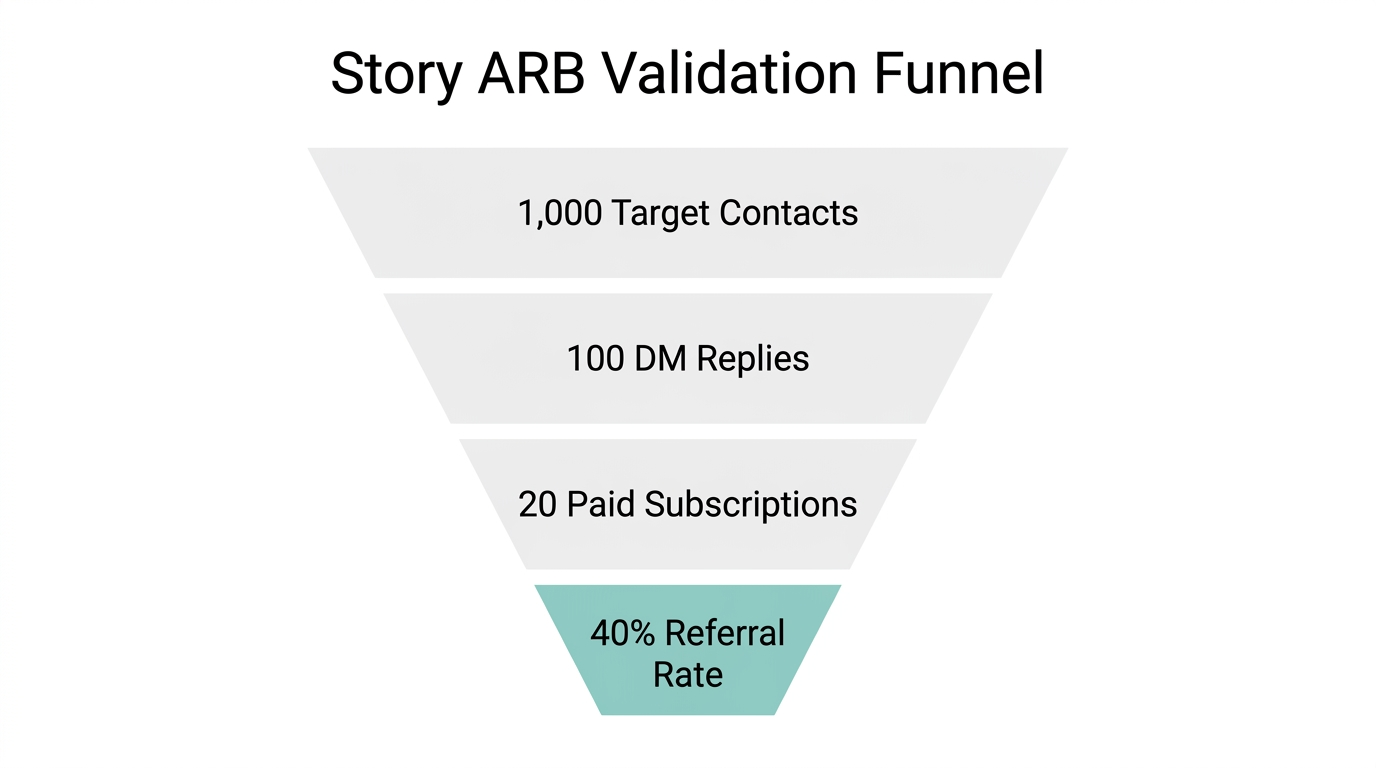
Lieberman is famously clinical about how he defines product market fit metrics. He doesn't rely on "gut feeling" or top-line revenue alone. For Story ARB, he focuses on two specific un-gameable metrics that prove the service is essential rather than just a novelty. These metrics are designed to combat the high churn rates typical of the agency world, where most clients drop off after just 90 days.
"The easiest part of this business is getting customers. The hardest part is keeping them. True PMF is when your retention doubles the industry average."
1. The 50% Referral Threshold
Lieberman tracks what percentage of current clients would recommend Story ARB to their professional network where their own reputation is on the line. He sets the bar at 50%. If half of your customers aren't willing to put their name behind your product, you don't have a product that the market truly loves yet. This is a much higher standard than the typical Net Promoter Score (NPS), as it requires a tangible social risk from the customer.
2. The 10-Month Retention Goal
In the ghostwriting industry, the average client stays for three to five months. Lieberman defines PMF for Story ARB as reaching an average retention of 10 months. By doubling the industry average, the business proves it has moved from a "nice-to-have" marketing experiment to a core pillar of the executive's professional strategy. This long-term retention is what allows a business to scale to $10 million in revenue with a lean team, as the cost of customer acquisition (CAC) is amortized over a much longer period.
The Modern Growth Stack and the CEO Model
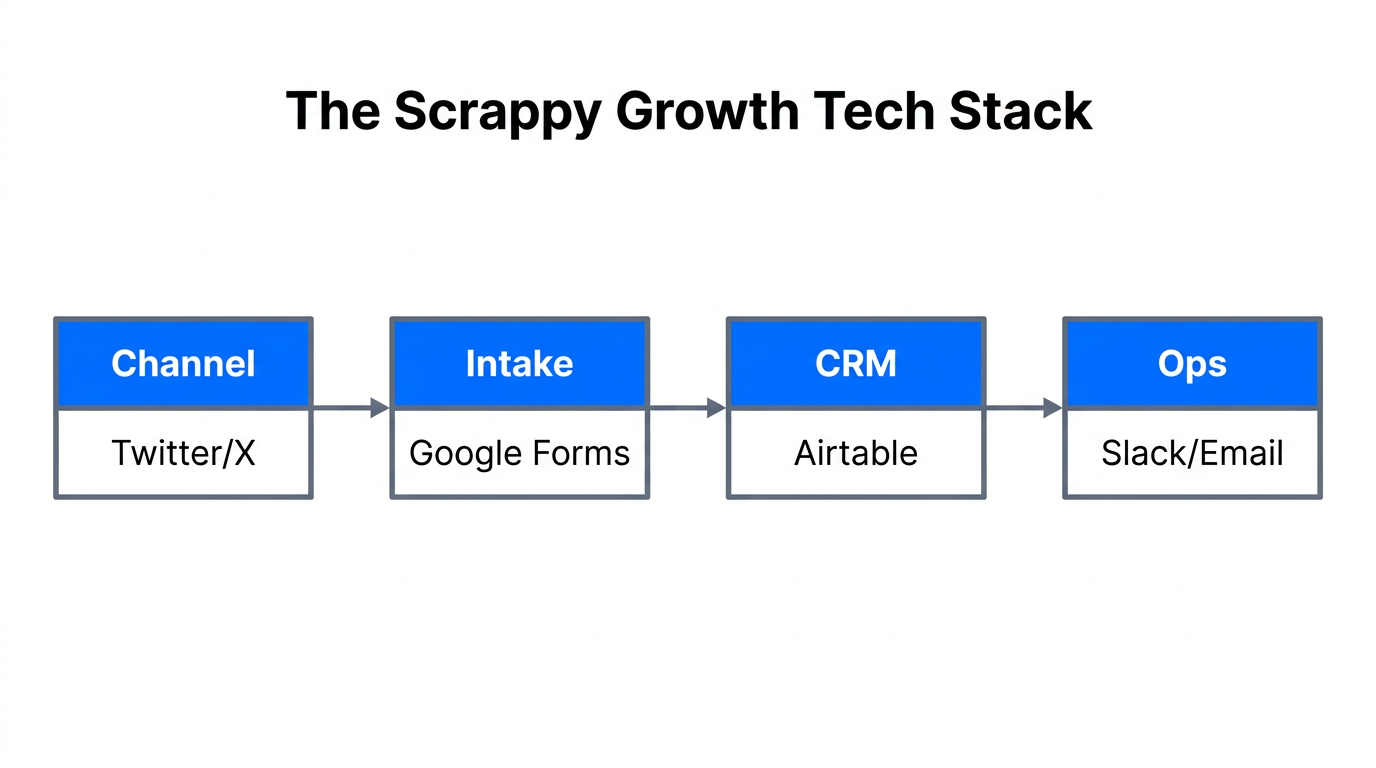
To manage his growing portfolio of businesses, Lieberman functions as a Chairman rather than a CEO. This requires finding "unteachable" talent—leaders who possess an obsessive brain and high integrity. He compensates these CEOs with a competitive salary (between $100,000 and $200,000) and significant equity (10% to 50%). This ensures that the person running the day-to-day operations is as incentivized as the founder to hit those product market fit metrics and drive quarterly profit distributions.
The operational side of these businesses relies on a modern tech stack designed for automation. Lieberman points to the rise of "workflow automation agencies" as a massive upcoming opportunity. By pairing tools like Zapier and Make with offshore talent and AI, companies can eliminate the manual tasks that traditionally bloated agency payrolls. For instance, an agency might use Stormy AI to discover and vet influencers for their clients and manage the entire outreach and CRM stage in one centralized place. This combination of AI-powered sourcing and automated management is what allows a "personal holding company" to scale multiple businesses simultaneously without the founder burning out.
Conclusion: From Pebble to Empire
Alex Lieberman's journey with Story ARB proves that the most successful businesses aren't always born from a grand, risky leap. They are built through a series of intentional, low-cost steps that validate demand before a single line of code is written or a full-time employee is hired. By being a "magnet for problems," utilizing the "Pebble to Pebble" go-to-market strategy, and obsessing over retention-based product market fit metrics, any entrepreneur can build a million-dollar asset with minimal risk.
Whether you are building a ghostwriting agency, a newsletter on Beehiiv, or a SaaS tool, the principles of scrappy validation remain the same. The goal is to move from the town to the village, and eventually to the city, only after you've proven that the people in the town are willing to pay for what you're building. Success in modern entrepreneurship belongs to those who can iterate the fastest while spending the least.