In the hyper-competitive landscape of 2026, the cost of customer acquisition (CAC) has reached an all-time high for creators and brands alike. Simply making a sale is no longer enough to sustain a profitable business; you must master the art of the revenue expansion tactic. According to business mogul Alex Hormozi, the secret to his $100M+ success isn't just a great front-end offer, but a deliberate sequence of offers he calls "Money Models." This strategy focuses on maximizing customer lifetime value (LTV) within the first 30 days to ensure your business remains cash-flow positive and self-financing.
The Economics of Money Models: 2x (CAC + COGS)
 1:34
1:34Hormozi’s fundamental rule for 2026 is achieving "client-financed acquisition." This means your gross profit in the first 30 days should be greater than two times your CAC plus COGS (Cost of Goods Sold). If it costs you $100 to acquire a customer and $50 to deliver the service, you need to generate $300 in gross profit almost immediately. By hitting this benchmark, one user effectively pays for the next two, creating a viral loop of capital that allows you to outspend every competitor on platforms like TikTok Ads Manager.
| Metric | Traditional Model | Hormozi Money Model |
|---|---|---|
| First 30-Day Revenue | $99 (Subscription) | $660+ (Challenge + Upsells) |
| Payback Period | 60-90 Days | Day 0 (Instant Profit) |
| Ad Spend Capacity | Limited by Burn | Infinite (Self-Financing) |
The 'X Without Y' Rule: Scripting the Second Yes
17:44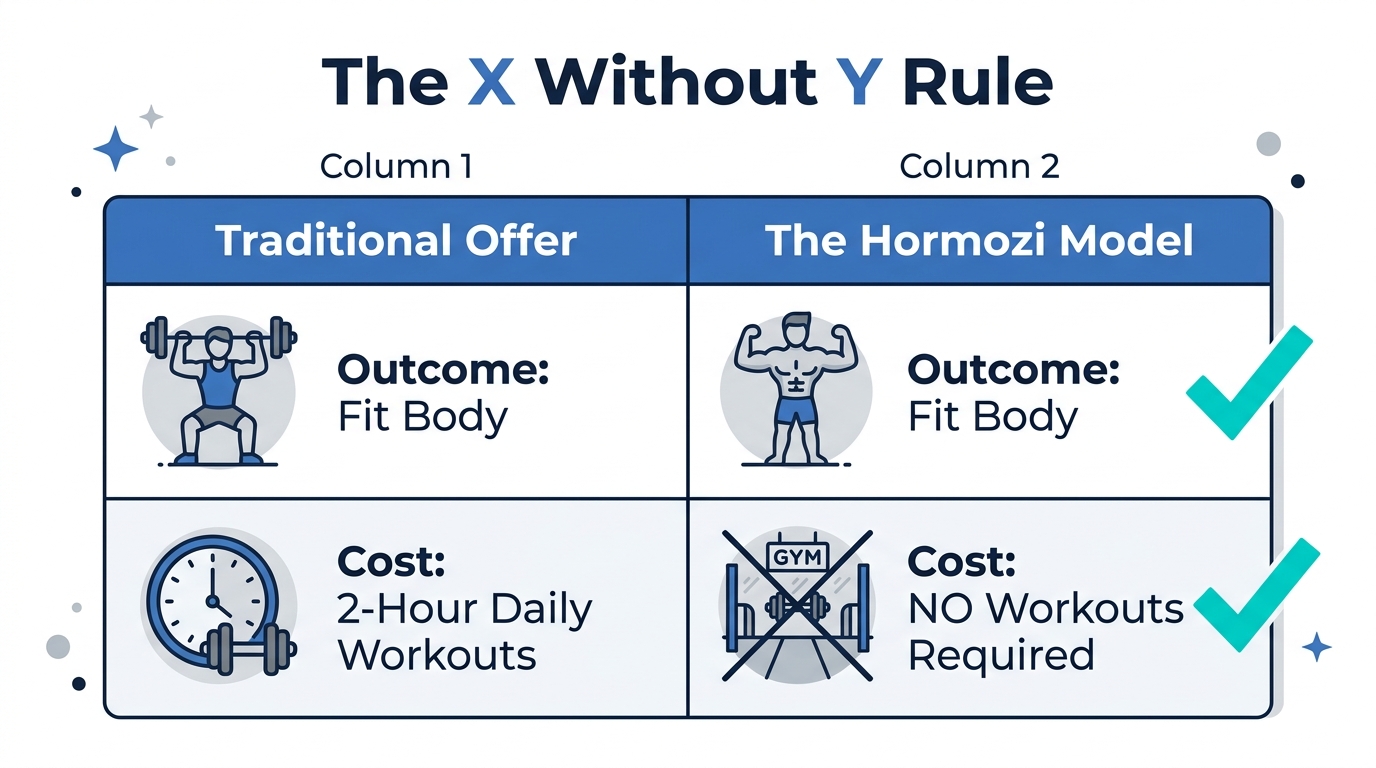
The core of the Alex Hormozi upsell strategy is the "X without Y" rule. The idea is that the first purchase (X) often creates a new, secondary problem (Y) that the customer didn't have before. For example, if you help a business hire an overseas developer via Somewhere.com, you’ve solved their talent problem, but you’ve created a payroll and compliance problem. Selling them a payroll management service is the natural "Y."
"You can't have the burger without the fries. The first yes should naturally lead to a second yes that makes the first decision even more sound."
In the creator economy, this applies heavily to UGC creator sourcing. If you use a platform like Stormy AI to find 100 micro-influencers for a campaign, you’ve solved your discovery issue. However, you now face a massive administrative hurdle: managing 100 different conversations and shipping 100 products. An AI-powered outreach and CRM tool becomes the essential "Y" that makes your "X" (the influencers) actually effective.
Identifying the Point of 'Greatest Deprivation'
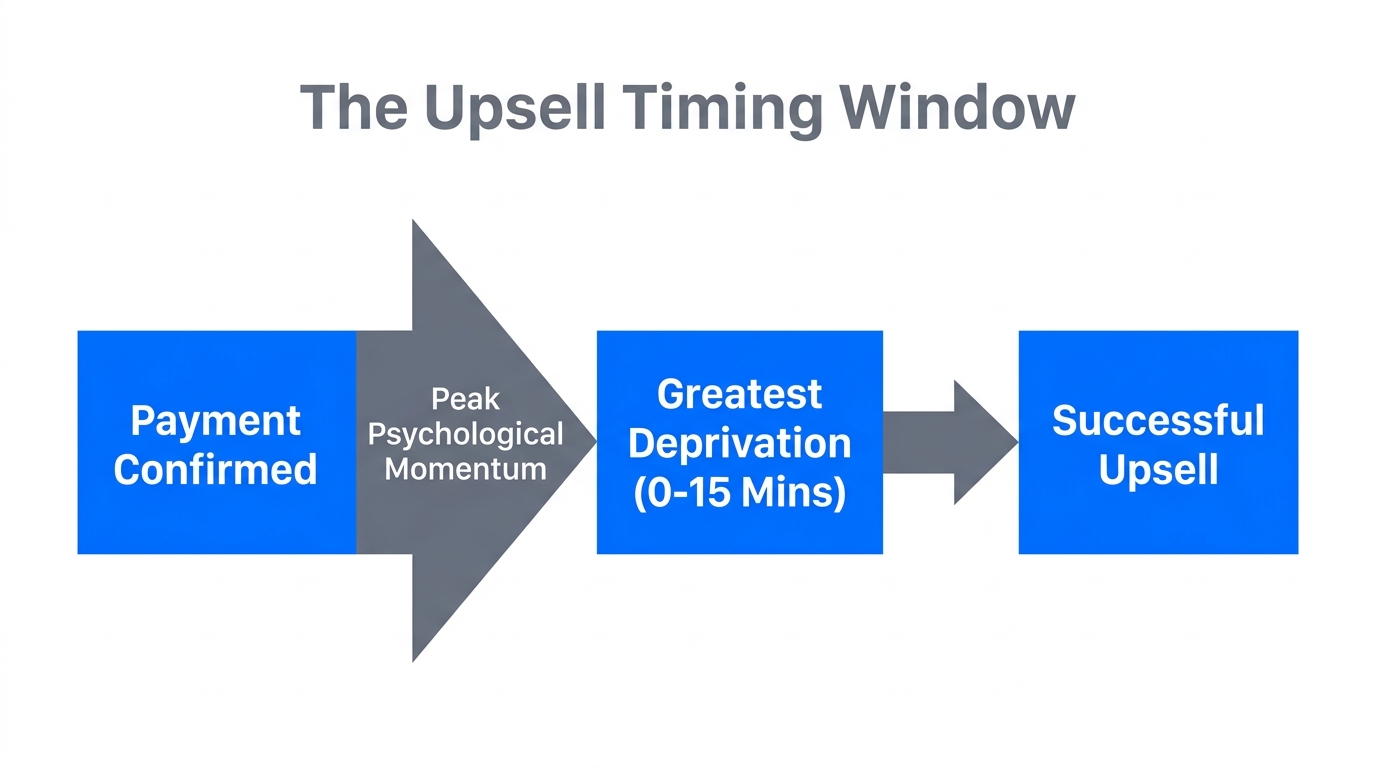
Most marketers try to sell when the customer is at the point of "greatest value," but Hormozi argues you should sell at the point of greatest deprivation. Using the steakhouse analogy, you don't offer a customer a second steak when they've just finished the first—they are full. You offer them dessert because they are deprived of something sweet and light. In 2026, timing your high ticket sales scripts around this psychological void is crucial for conversion.
For service providers using tools like Instantly for cold email, the deprivation point isn't when the emails are sent—it's when the leads start flooding in and the founder is too busy to handle the replies. That is the moment to upsell an AI appointment setter or a dedicated sales closer. You are solving the overwhelming pain of success.
The Anchor Upsell: Using the 'Whale' to Sell the Core
16:09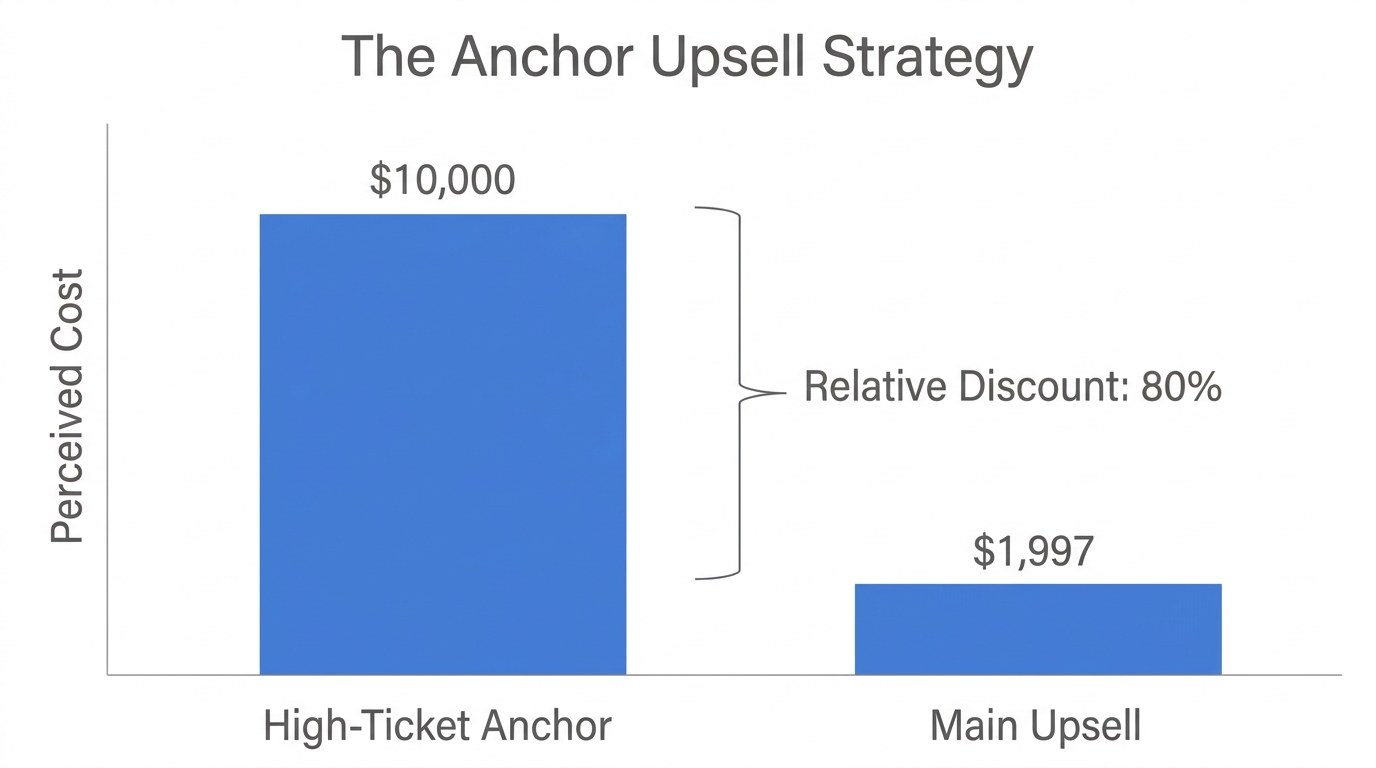
One of the most powerful revenue expansion tactics is the Anchor Upsell. This involves presenting a "Whale" offer—an incredibly expensive, high-touch version of your service—first. Hormozi shares a story of a $16,000 suit vs. a $2,000 suit. By leading with the $16,000 anchor, the $2,000 core offer feels like a massive relief and a logical discount. Even if only 10% of people buy the anchor, you double your total revenue due to the massive price discrepancy.
Creators can implement this by offering a high-priced mastermind or a 1-on-1 intensive before pitching their standard digital course or community. By anchoring the value high, the lower-tier products seem like an absolute steal on Shopify or Gumroad.
Ethical Downselling: Changing Terms, Not Price
When a prospect says "no" to your core offer, most people make the mistake of discounting. Hormozi suggests ethical downselling: lowering the price by changing the terms or stripping features, rather than devaluing the product. If someone can't afford a $6,000 contingency fee, you don't give it to them for $3,000. Instead, you offer a lower-tier version without a guarantee or with fewer support calls. This maintains the integrity of your pricing while still capturing the lead.
"Never discount your work. Change the terms so that the person paying less gets less. It protects your brand and your margins."
For agencies managing influencers, a downsell could be moving from a full-service management package to a self-serve dashboard where the client uses Stormy AI themselves to track posts. You’ve lowered the barrier to entry without signaling that your time is cheap.
Continuity Mechanisms: The 'Waived Fee' Play
To combat the rising churn rates of 2026, Hormozi utilizes a "waived fee" mechanism to secure annual commitments. Instead of asking for a year-long contract upfront, which creates friction, you offer to waive a heavy setup fee in exchange for a 12-month commitment. This reduces the immediate cost to the customer while significantly increasing their customer lifetime value.
If the customer decides to cancel early, the contract stipulates they must pay the original setup fee on their way out. This creates an elegant "stickiness" that protects your recurring revenue on platforms like Stripe. It turns a potential loss into a guaranteed gain, whether the customer stays or leaves.
Conclusion: Building Your 2026 Money Model
Maximizing LTV in 2026 requires moving beyond the "one-and-done" sale. By implementing the Alex Hormozi upsell strategy, you create a business that gets more valuable with every customer acquired. Start by identifying your "X without Y" secondary problem, set your high-ticket anchor, and use ethical downsells to capture every segment of your market.
The transition from a struggling creator to a $100M business owner happens when you stop looking for more leads and start looking for more value within the leads you already have. Tools like Stormy AI can help you source the creators needed to fuel these models, but the strategy—the sequence of the offers—is what determines your ultimate success. It's time to stop selling products and start building money models.