In the world of direct response marketing, there is a distinct difference between copy that sounds good and copy that converts. Most marketers fall into the trap of selling the "dream"—the vibrant, sun-drenched future where every problem has vanished. But if you look at the Alex Hormozi marketing strategy, you’ll find a much grittier, more effective approach. Hormozi argues that the secret to high converting sales copy isn't found in a list of benefits or a flashy UI; it's found in the agonizing, specific details of a customer's current suffering. To Hormozi, the pain isn't just a part of the pitch—the pain is the pitch.
The Philosophy of "Pain is the Pitch": Why Deprivation Drives Action
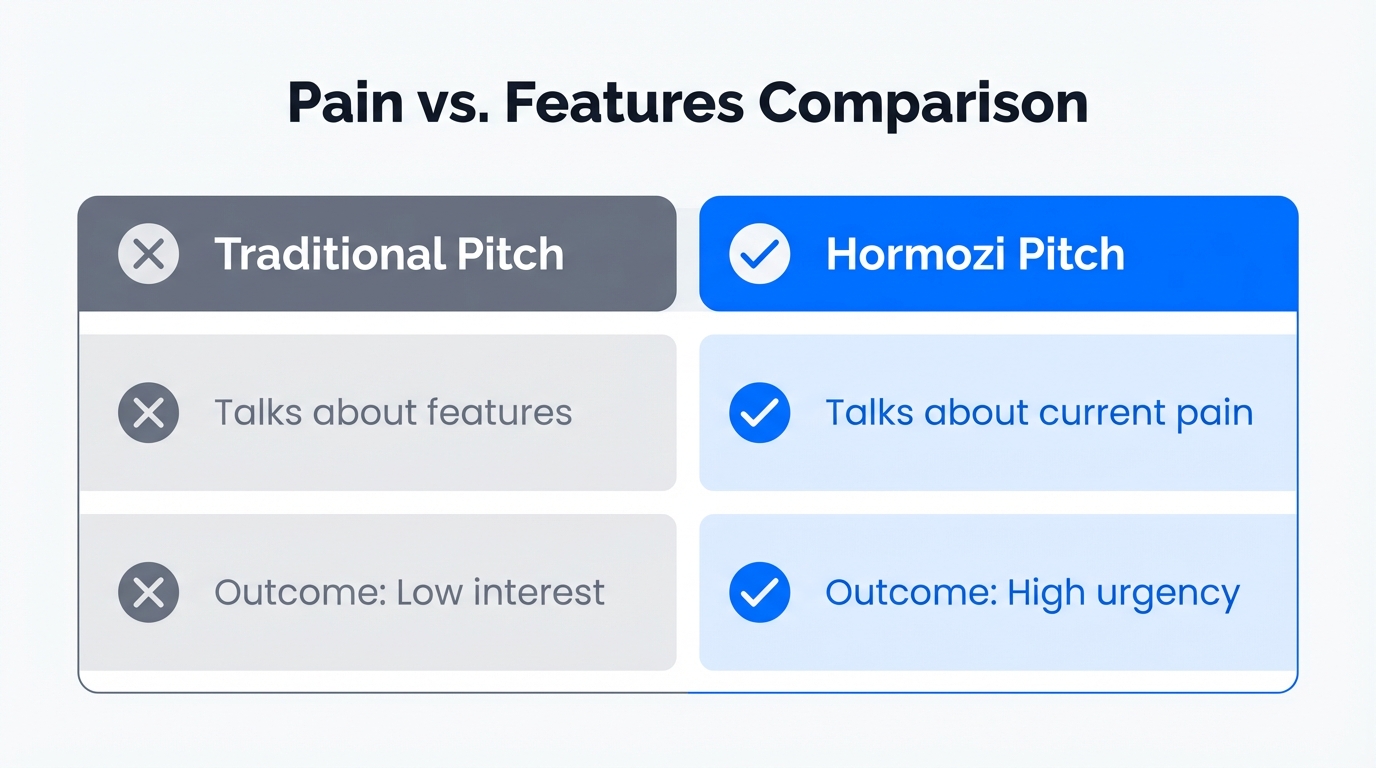
Most copywriting frameworks focus on the promise of a better life. While a "Grand Slam Offer" requires a strong outcome, the motivation to pursue that outcome comes from a single source: deprivation. Hormozi views motivation through a behaviorist lens. If you aren't deprived of something, you have no reason to move. A lion doesn't hunt when it’s full; it hunts when it is starving. In marketing, your prospect only takes action when the perception of their current deprivation becomes unbearable.
When you use tools like Meta Ads Manager or Google Ads, the goal is to stop the scroll. You don't do that with generic promises like "get rich fast." You do it by describing the current state of lack in excruciating detail. Hormozi believes that pain is not only more motivating than promise, but it is also more compliant. When people are in pain, they are more willing to follow a prescribed path to relief. This is why the best copy focuses 80% on the problem and only 20% on the solution.
"Pain is more motivating than promise. If this guy knows this much about my pain, he has to know how to solve it."
The "Observable Reality" Rule: Removing Sentiment and Jargon
One of the most profound direct response copywriting tips Hormozi shares is the need for precision. Most marketers use "hollow blue" words—vague, sentimental terms like "trust," "energy," or "manifestation." Hormozi’s rule for writing high-quality copy is to remove all sentiment and focus exclusively on observable reality. If a court witness or an alien wouldn't be able to see it, don't write it.
For example, instead of saying, "Our team is very trustworthy," which is a sentiment that cannot be observed, a precise marketer would say, "We have answered every support ticket within 12 minutes for the last 400 days." That is an observable behavior. This level of precision is what separates amateurs from those who build companies like Acquisition.com. When you define your terms with the precision of a legal document, your communication becomes undeniable. You aren't asking the prospect to believe you; you are presenting them with a reality they cannot refute.
| Vague/Sentimental Term | Observable Reality Alternative |
|---|---|
| "We care about your success." | "We host 3-hour weekly strategy calls to review your data." |
| "Our software is fast." | "Our dashboard loads in under 400 milliseconds on mobile." |
| "We are a reliable partner." | "We have maintained 99.9% uptime since 2018." |
Specificity is the Antidote to Vague Copy
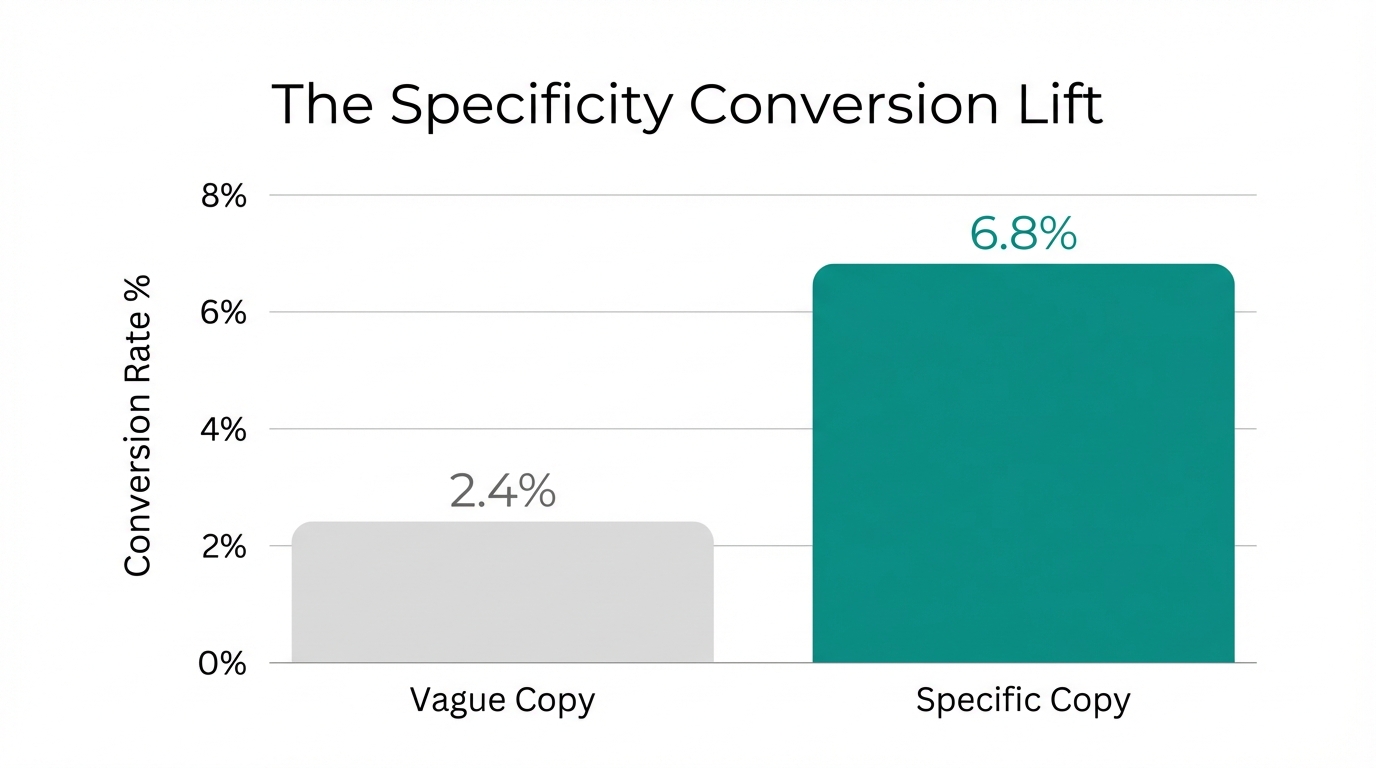
Hormozi famously says that "no persuasion occurs in the vague." To write high converting sales copy, you must go deeper than surface-level problems. You need to hit the "thighs chafing" level of detail. If you are selling a weight loss program, saying "lose 10 pounds" is the baseline. It’s boring. It’s what everyone else says.
Instead, look for the specific, physical manifestations of the problem:
- Have you ever walked and felt your thighs chafe together?
- Have you ever had to hold your breath for 30 seconds just to button your favorite pair of jeans?
- Have you ever ducked out of a photo because you’d rather be the one taking it than the one in it?
- Do you find yourself always wearing a cover-up at the beach while your friends are in bikinis?
These are not just problems; they are vivid memories. When a prospect reads these, they don't just think about the product; they feel the physical and emotional weight of their situation. This level of specificity creates emotional resonance without needing "fancy" words. It relies on the simple truth of the human experience. When managing high-growth campaigns, tools like AppsFlyer or Sensor Tower can show you the data, but only deep customer empathy can write the copy that converts that data into revenue.
"Persuasion occurs in the specific. The more you break down a word into what it really means in reality, the more power it has."
Hormozi’s Rhetoric Toolbox: Opposites, Threes, and Alliteration
Beyond the psychology of pain, there is a technical side to how Hormozi structures his ads and tweets. He uses classical rhetorical devices to make his ideas "sticky." Even if you are using an AI writing tool or documenting your thoughts in Notion, applying these structural rules will instantly elevate your prose.
- The Power of Opposites: Contrast is one of the fastest ways to create a compelling headline. Examples: "You must first become misunderstood before you can become great," or "You have to risk looking broke to get rich."
- Sets of Threes: The human brain loves triplets. "Do the work tired. Do the work nervous. Do the work imperfectly." This rhythm creates a sense of completion and authority.
- Alliteration and Rhyme: While he avoids being "punny," he uses alliteration to make frameworks memorable. Think of the "Mosey 6": Metrics, Market, Model, Money, Manpower.
- Short Words, Short Sentences: High-converting copy should require zero brain power to process. If a prospect has to think to understand your sentence, you’ve already lost them.
As you scale your outreach, platforms like Stormy AI simplify the process of identifying and managing creators who can deliver these high-impact scripts. By sourcing creators who actually fit your niche's specific pain points, you can automate the "Pain is the Pitch" framework at scale. Whether you are using TikTok Ads Manager for a UGC campaign or sending cold emails through Instantly, the structure of your rhetoric dictates the retention of your message.
The "Google Doc" Test: Why Words Outperform High-Production Design
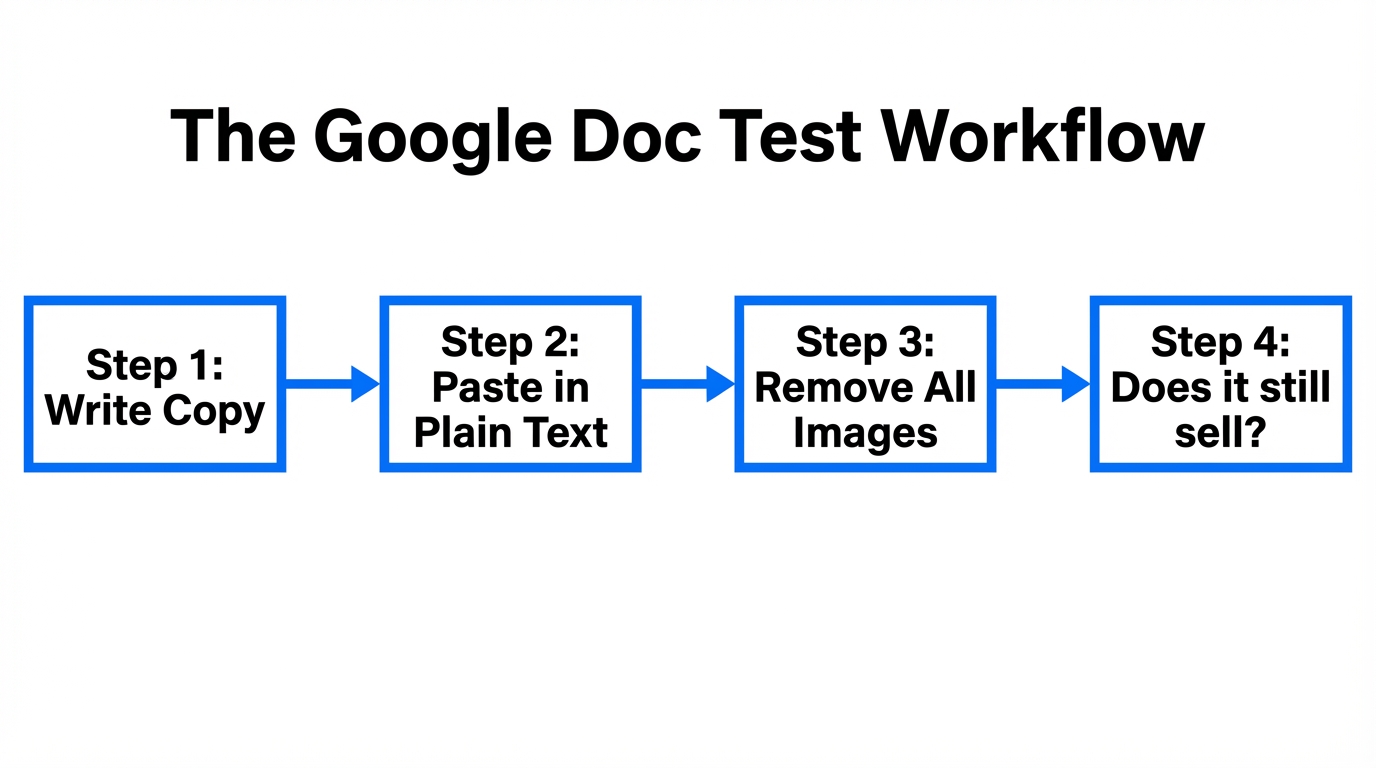
A common mistake in modern marketing is over-investing in production and under-investing in copy. Hormozi shares an experiment where his team built a beautiful, high-design landing page for a $300 product. Simultaneously, he wrote a simple Google Doc with a janky Eventbrite link at the bottom to accept payments.
The result? The beautiful page drove almost zero sales. The Google Doc made $50,000 from only $5,000 in ad spend. This proves that words are the heaviest hitters in your marketing stack. Design should support the copy, not distract from it. If your words aren't strong enough to sell on a plain white background, no amount of Figma magic or CapCut editing will save your conversion rate.
In the age of AI, it’s easy to generate millions of words. But the "hard part" that most people avoid is the thinking. High-quality words require you to sit in the discomfort of your customer's reality. You have to think through the variables that increase the likelihood of a purchasing decision. This is why tools like Zapier and Make are great for automating the delivery, but the strategy remains a human (or highly-trained AI) endeavor.
"The words are the hard part. The words you have to think, and that's what most people avoid. Copy matters more than anything else in the business."
Conclusion: Implementing the Framework
The Alex Hormozi marketing strategy isn't about being the loudest person in the room; it’s about being the most precise. By shifting your focus from vague promises to observable pain, you build a bridge of trust that is anchored in reality. To start implementing this today, follow these steps:
- Identify the 3 most visceral, physical pains your customer feels (the "thighs chafing" details).
- Rewrite your headlines using opposites or sets of three to improve their rhythm.
- Audit your website and remove all sentimental jargon. Replace it with observable facts.
- Test your copy on a simple format. If it doesn't sell as a text-only post, it won't sell as a $10,000 video.
For brands looking to scale this approach through UGC and influencer marketing, Stormy AI offers a powerful way to discover creators who can articulate these pain points authentically. By combining high-converting sales copy with the right faces and voices, you create a marketing engine that doesn't just reach people—it moves them to act. Start with the pain, and the pitch will take care of itself.