In the high-stakes marketing landscape of 2026, the traditional model of burning venture capital to acquire users is effectively dead. Today, the most successful entrepreneurs aren't just looking for a positive return on ad spend (ROAS); they are engineering client financed acquisition (CFA). This strategy, popularized by Alex Hormozi, flips the traditional funnel on its head. Instead of waiting months to recoup the cost of a lead, you structure your offers so that one customer's upfront payment immediately finances the acquisition of the next two.
By treating your marketing as a profit center rather than a cost, you can scale indefinitely on platforms like TikTok Ads Manager and Meta Ads Manager without ever needing outside investors. This article provides the definitive 2026 playbook for implementing CFA and building a business system that prints cash as it grows.
The Golden Equation: 2x CAC + COGS
 1:34
1:34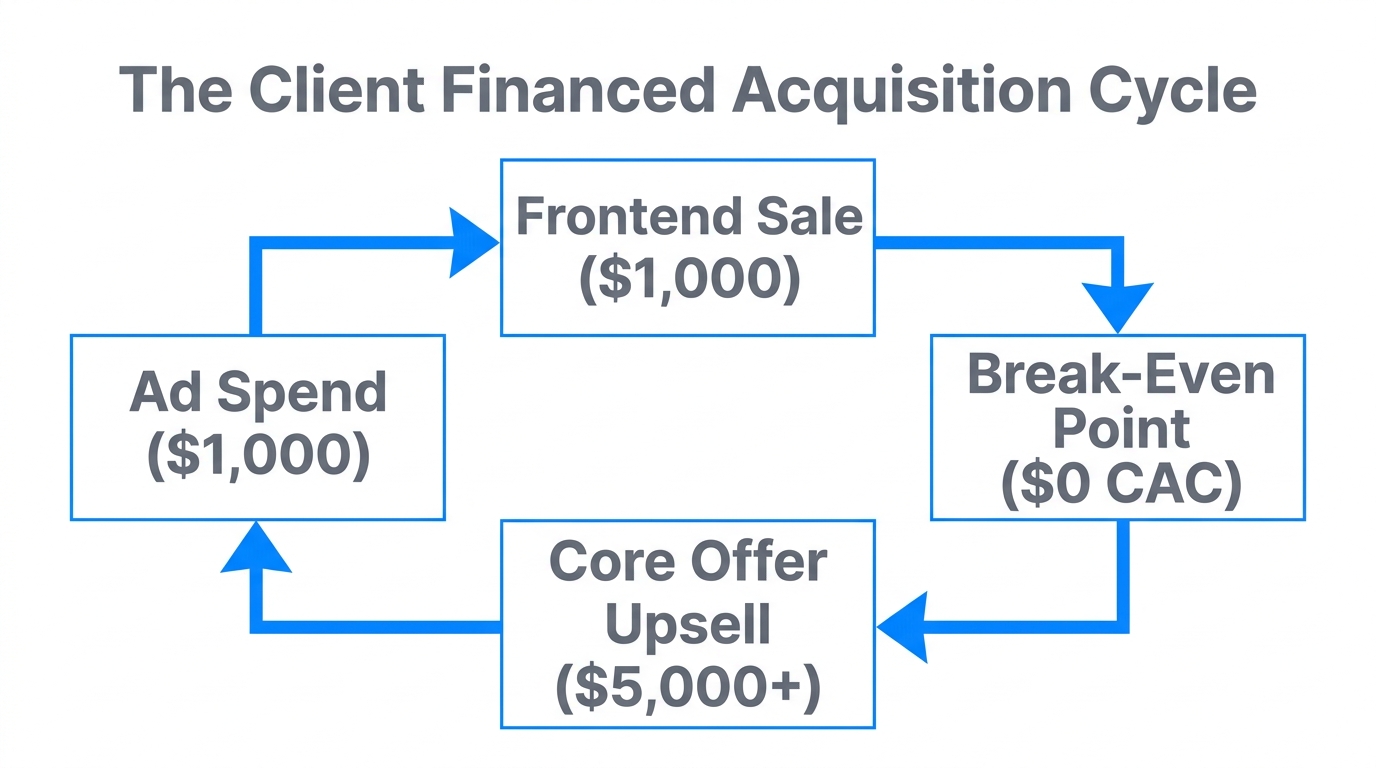
The core of the Alex Hormozi growth strategy 2026 is a specific financial benchmark. Hormozi argues that for a business to be truly scalable and self-financing, its gross profit within the first 30 days must be greater than two times the Cost of Customer Acquisition (CAC) plus the Cost of Goods Sold (COGS).
Most businesses struggle because they are "upside down" for the first 60 to 90 days. For example, a gym charging $99/month might spend $150 to acquire a member. Even with 100% margins, they don't break even until month two. In a world where customer churn is high, this model is fragile. In contrast, by selling a $500 transformation challenge upfront, the gym becomes cash-flow positive on day one. This allows them to outspend every competitor in the local Google Ads auction because their "wallet" for acquiring leads is effectively bottomless.
"One customer brings you the next customer. They come loaded with the budget for your next acquisition, creating a perpetual motion machine for growth."
The K-Factor for Non-Tech Businesses
In Silicon Valley, growth hackers obsess over the "K-factor"—a metric of virality where one user brings in more than one additional user through features like contact scraping or referrals. However, most service-based businesses aren't inherently viral. The CFA model creates a financial K-factor.
When you achieve the 2x CAC + COGS benchmark, you aren't relying on a viral loop; you are relying on a capital loop. If you spend $5,000 on ads and make $100,000 back in 30 days—as Hormozi did in his early gym businesses—you can immediately reinvest that $100,000 into more ads, equipment, and staff. This is how Gym Launch scaled to millions in monthly revenue without external funding.
| Metric | Traditional Model | Client Financed Model |
|---|---|---|
| Upfront Offer | $99/month (Trial) | $500 - $3,000 (Transformation) |
| Breakeven Time | 60-90 Days | Day 1 (Immediate) |
| Ad Spend Scaling | Slow (Limited by Cash Flow) | Aggressive (Self-Financing) |
| Risk Profile | High (Dependence on LTV) | Low (Profit on Acquisition) |
Designing Attraction Offers that Qualify Leads
2:37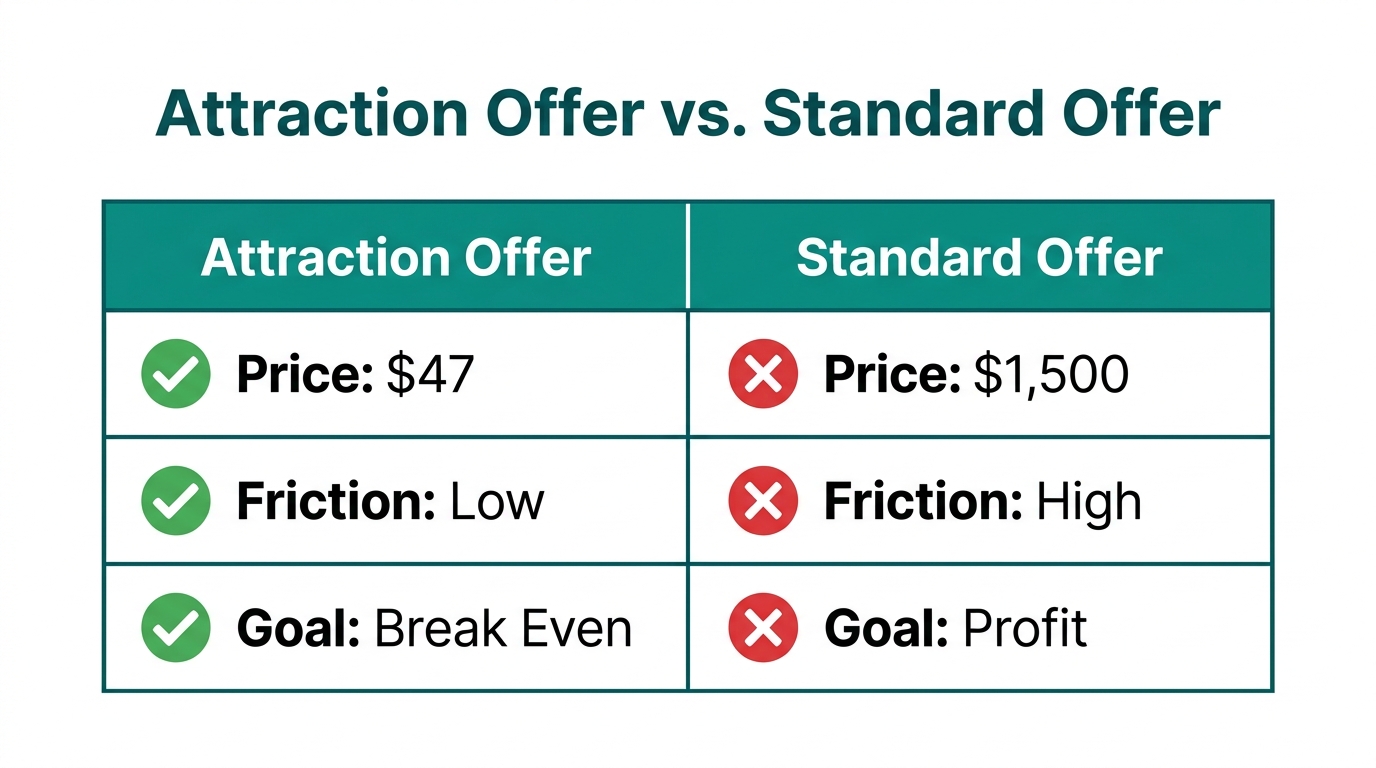
To feed this money model, you need a high-volume influx of qualified leads. Hormozi suggests using "Attraction Offers"—specifically raffles or giveaways—to generate demand. However, the secret isn't just giving away something free; it's giving away something that only your ideal customer would want.
For instance, an agency like Somewhere.com, which helps businesses find overseas talent, might raffle off a top-tier developer's salary for a year. Every person who enters that raffle is explicitly identifying themselves as a business owner who needs to hire talent. This creates a massive pool of qualified leads. While only one person wins the raffle, the agency can offer everyone else a "partial scholarship" or a discount on their contingency fee to convert them into the CFA funnel.
Platforms like Stormy AI are essential here for 2026 marketing funnel optimization. By using AI to discover the right UGC creators and influencers to promote these attraction offers, brands can maintain a high "trust score" (or Z-score) while reaching millions of potential leads at a fraction of the cost of traditional PR.
"Don't give away a generic prize like an iPad. Raffle your most expensive service to ensure every lead is a qualified buyer."
The Psychology of Upsells: Selling at the Point of Deprivation
5:13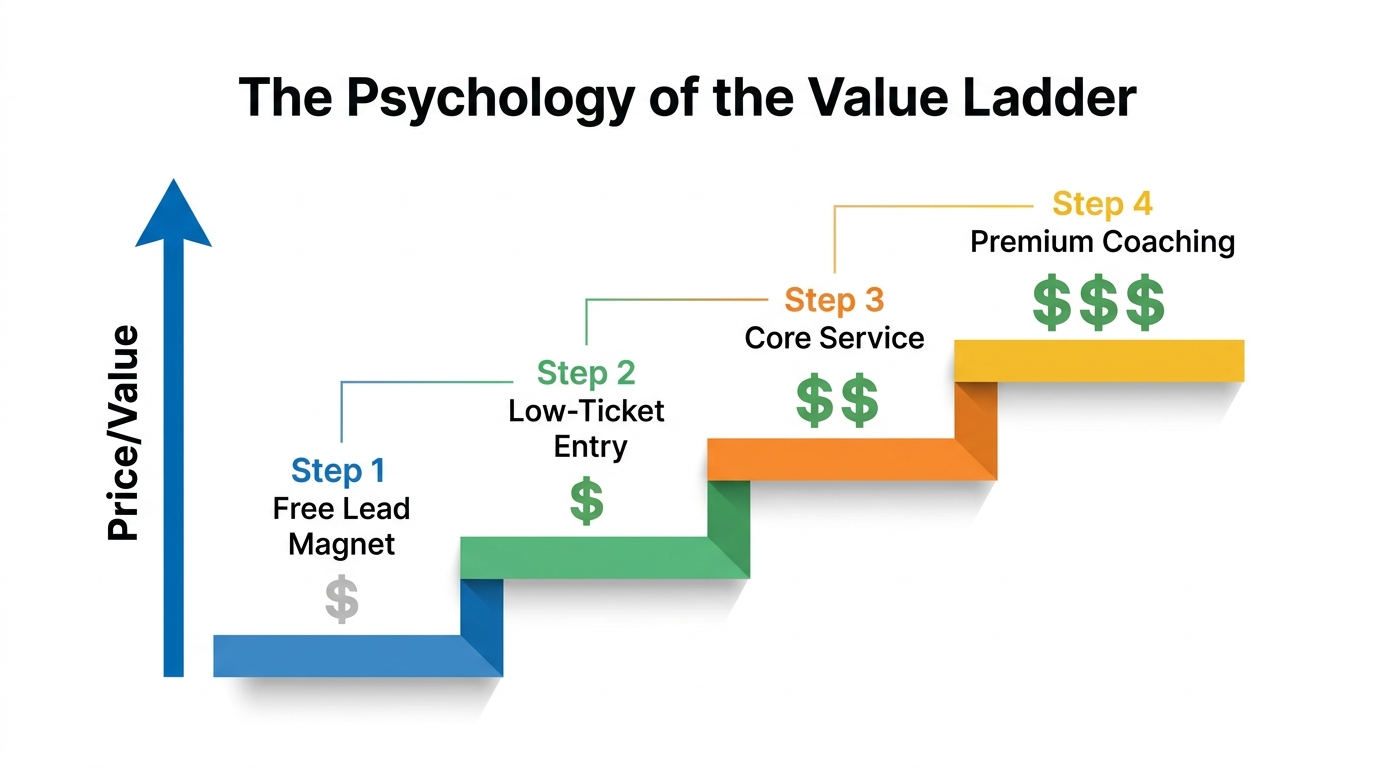
A critical mistake many entrepreneurs make is trying to sell when the customer is most satisfied. Hormozi teaches that you must sell at the point of greatest deprivation. If you just finished a massive steak, you don't want another steak—but you might want something sweet and light, like dessert.
In business systems, this means identifying the new problem your first solution created. If you help a client get 1,000 leads, their new problem is that they are overwhelmed and can't call them all. That is the point of deprivation where you upsell lead management or CRM services.
There are five key times to sell an upsell or cross-sell:
- Immediately: During the same initial conversation (the "fries with that" model).
- Activation: Once the customer achieves their first small win.
- Halfway Point: Re-engaging humans when they reach the 50% mark of a program.
- Milestone: When a specific achievement is unlocked (e.g., hitting $10k in revenue).
- Last Chance: Just before a contract or trial expires.
By using a no-based yes ("Would you be against me waving the $10,000 setup fee if you commit to a year today?"), you can achieve 80-90% take rates on these upsells, drastically increasing the Day 30 gross profit.
Brand as a Lever: Reducing Supply to Increase Price
71:58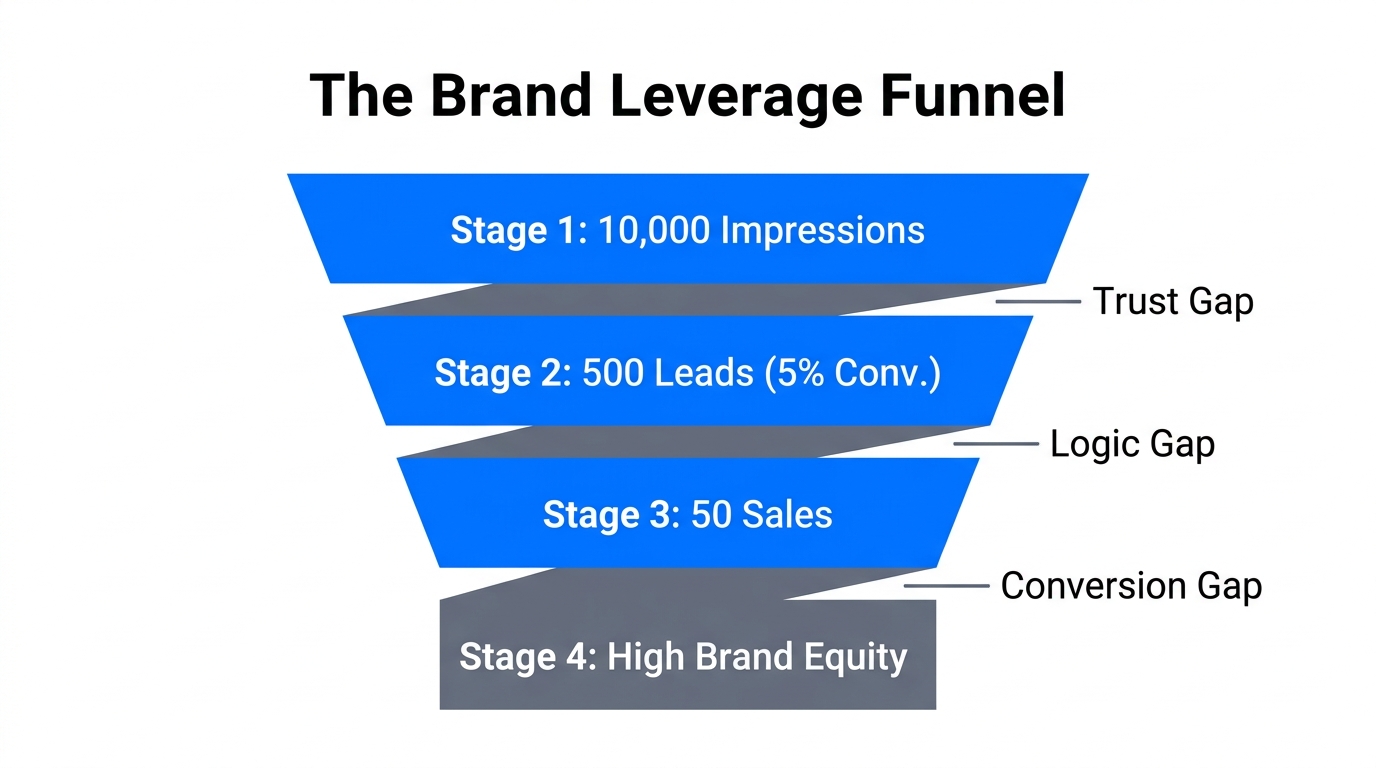
In 2026, brand is the ultimate lever for paid media scaling. When you have a massive brand, you create an ocean of demand and a puddle of supply. This allows you to set stricter terms and higher prices that your competitors could never demand.
Hormozi points out that with a strong brand, you can move toward "warding away" models. You don't need attraction offers or grand slam guarantees because the brand itself is the guarantee. You can demand upfront quarterly payments and refuse to offer refunds. When a customer asks why you require payment before the service is even delivered, the best response is the "authority frame": "That's just how we've always done it."
Conclusion: Building Your 2026 Money Model
Scaling a business in 2026 requires more than just good ads; it requires a superior money model. By implementing client financed acquisition, you remove the capital constraints that hold most businesses back. Start by auditing your current funnel: Are you hitting the 2x CAC + COGS benchmark in the first 30 days? If not, it's time to re-engineer your attraction offers and upsell sequences.
Whether you are using Canva to design your challenge assets or Stormy AI to automate your creator outreach, the goal remains the same: make it impossible for your competitors to outspend you. When you stop viewing marketing as an expense and start seeing it as a way to get paid to grow, your potential for 2026 becomes limitless.