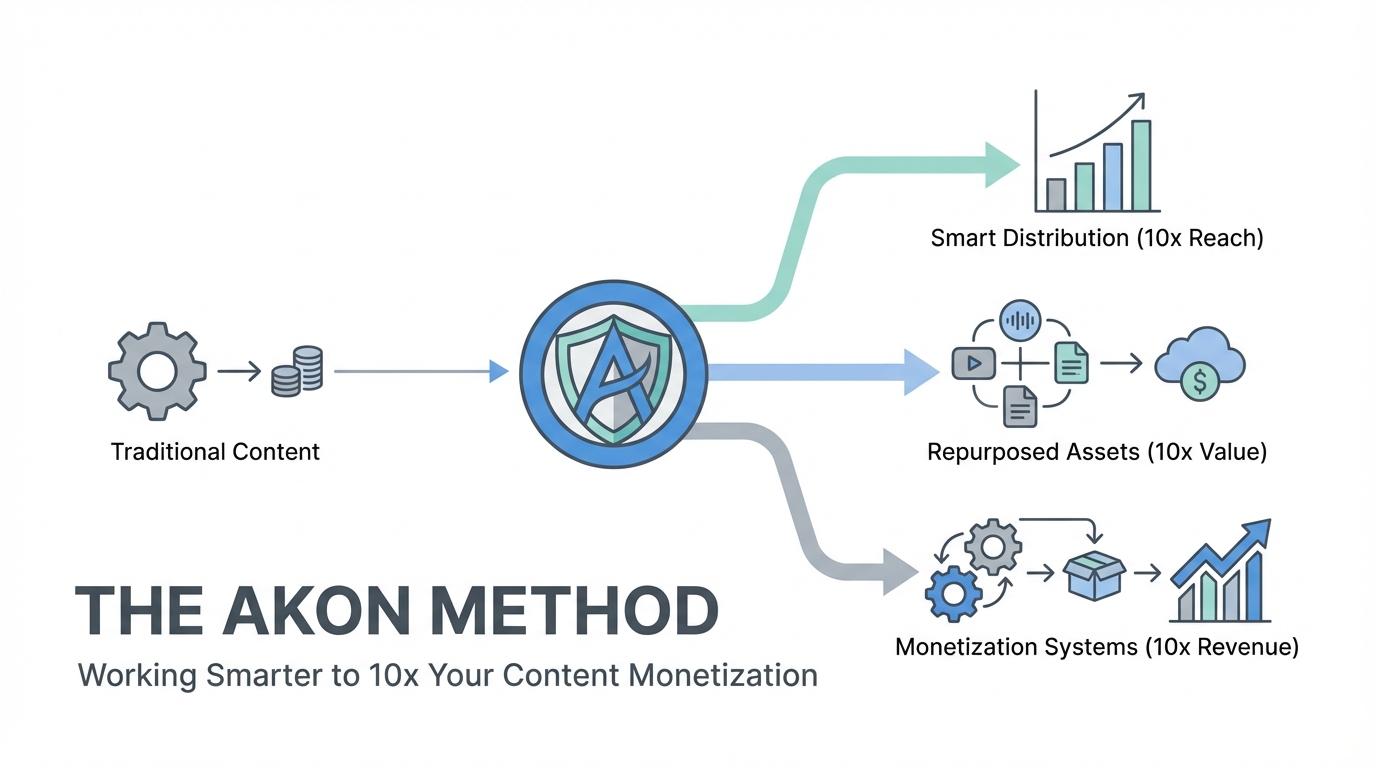
Most people live their lives building a well and pumping water. At the end of their lives, after a lifetime of exertion, they realize they are still thirsty. They spent their entire existence pumping rather than drinking, which was the reason they started pumping in the first place. In the world of the creator economy, this manifests as a relentless treadmill of production—more videos, more posts, more hours—without a corresponding increase in true wealth or freedom. To break this cycle, you need a content monetization strategy that prioritizes leverage over labor. You don't need to pump harder; you need a smarter way to capture the value of the water you've already found.
The Akon Ringtone Pivot: Selling Less for More
One of the most profound examples of working smarter in the music industry comes from the rapper Akon. During the peak of his career, the standard digital product business models revolved around selling singles. A four-minute song on Apple iTunes would retail for $1.99. Akon noticed a massive distribution gap: everyone had a mobile phone, and everyone wanted a personalized ringtone. He discovered that while a full song cost two dollars, a 10-second snippet of that same song sold as a ringtone for $4.99.
Akon didn't just stumble into this; he engineered his music for it. He began recording and "chopping up" his tracks specifically to fit the 10-second window that maximized mobile engagement. By focusing on how a song could be a ringtone from the moment of creation, he broke the Guinness Book of World Records, selling 11 million ringtones. This pivot resulted in $55 million in gross sales from 10-second clips, effectively selling a fraction of the content for more than double the price of the full product. This is the essence of identifying high-margin, low-effort opportunities within your existing content ecosystem.
The Almanac Model: Content Curation for Profit

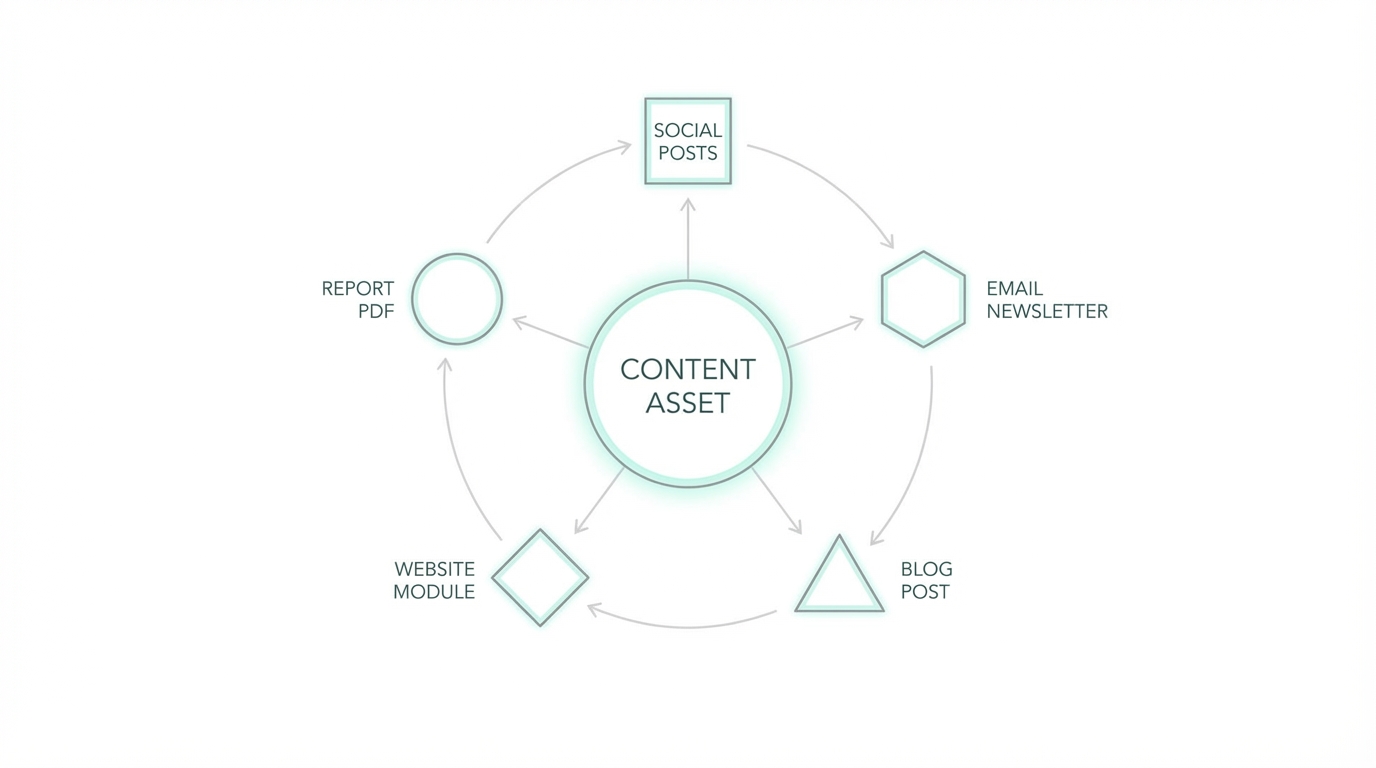
For many creators, the bottleneck is original production. However, some of the most successful creator economy revenue streams today are built on the "Almanac" model—curating and organizing existing wisdom rather than generating it from scratch. A prime example is Eric Jorgensson, who compiled the Navalmanac, a book consisting entirely of the investor Naval Ravikant’s tweets and podcast transcripts. Jorgensson didn't write original chapters; he curated, categorized, and edited existing material into a cohesive asset.
This content curation for profit strategy is incredibly high-leverage. The book has sold over a million copies, creating a massive revenue stream and authority for the curator without requiring the "blank page" struggle of traditional authorship. Platforms like Stormy AI—an AI-powered search engine across TikTok, YouTube, Instagram, and LinkedIn—make this even easier for modern marketers by allowing them to Stormy AI to discover creators who already have high-performing content that can be licensed, remixed, or curated into new formats. By acting as a curator or an "editor-in-chief" of a niche, you can build best-selling assets using the collective intelligence of your industry.
Identifying 'Contract Gaps' and Untapped Revenue

The biggest financial wins often happen in the spaces lawyers haven't thought of yet. When Akon moved into the ringtone market, he checked his contract with the record label and found a glaring omission: there was no clause for digital ringtones. Because the technology was new, the legal framework was lagging. He was able to keep a significantly higher portion of those 55 million dollars because he identified a contract gap.
Modern creators can find similar gaps by looking at emerging platforms and formats. Before signing new deals, you can use Stormy AI to vet creators and get an AI-powered quality report that detects fake followers and engagement fraud automatically. If you are an influencer, are you charging for the AI rights to your likeness? Are you licensing your content for UGC (user-generated content) for mobile app marketing? Often, a brand will pay a standard rate for a post on Meta Ads Manager, but you can negotiate separate, higher-margin deals for the usage rights of that content in their global app install campaigns. Always look for what isn't in the standard agreement—that’s where the passive income for influencers is hidden.
The Power of Physical 'Niche' Products in a Digital World
While we live in a digital-first era, there is an massive, often overlooked opportunity in physical products that solve modern problems—specifically digital overload. The success of the Tony’s Box and Yoto players demonstrates this. These are physical "boom boxes" for children that play stories and music through physical cards or figures, avoiding the need for screens or YouTube ads.
The numbers are staggering: Tony’s generated 510 million euros in revenue over the last 12 months, while Yoto pulled in 127 million. These companies aren't just selling toys; they are selling a "resistance" to the digital world. For creators and app developers, the takeaway is clear: physicality creates retention. Integrating a physical component into your digital brand—whether it's high-end merchandise, physical workbooks, or a niche hardware companion—can drive 90% annual retention rates, far outpacing the 40-60% typically seen in purely digital subscriptions.
The 'Feeler' Advantage: Observing the Vibe

Tactical advice is cheap, but observing the "vibe" of successful winners is priceless. When studying great leaders like Winston Churchill or even high-energy bands like Oasis, the focus shouldn't just be on the words they spoke, but on how they exerted a small amount of energy to impact millions. Churchill’s ability to change the morale of a nation through a single speech in the House of Parliament is a masterclass in leveraging leadership energy.
As a creator or entrepreneur, you must become a "feeler." This means observing the unspoken qualities of those who win—their confidence, their delivery, and how they handle pressure. This is particularly useful when using Stormy AI to find UGC creators. Beyond simple discovery, you can set up an autonomous AI agent to handle personalized outreach and follow-ups with these creators daily on a schedule. Sometimes, the "resistance" energy—the feeling that you are fighting for a shared cause—is what turns a customer into a lifelong fan.
The 10x Content Monetization Playbook
To move from the "water pumping" phase to the "wealth building" phase, follow this actionable playbook for smarter monetization.
Step 1: Identify Your 'Ringtone' Asset
Audit your existing content and look for the highest-value fragments. If you have a 30-minute podcast, which 60-second clip provides the most utility? Could that clip be sold as a standalone digital product or licensed for Apple Search Ads? Focus on the pieces that have a higher value-to-length ratio.
Step 2: Bridge the Contract Gap
Review your current brand deals and platform agreements. Look for emerging rights that aren't currently covered—AI training data, whitelisting rights for Google Ads, or long-term archival usage. Explicitly exclude these from standard contracts so you can sell them as premium add-ons.
Step 3: Build a Curation Asset
Stop trying to be original every single day. Start a "Decision Register" or a content diet channel where you curate the best of what you consume. Turn these insights into an Almanac-style product. Use Stormy AI to find trending topics and curate the most impactful voices in your niche into a single, high-value guide.
Step 4: Introduce Physical 'Anchors'
If you have a digital community or app, find a way to enter the user's physical space. Whether it's a vetted in-person mastermind or a physical companion product like the Yoto box, physical touchpoints drastically reduce churn. When people meet "belly-to-belly," retention can jump from 60% to over 90%.
The Judgment Lever: Your Most Important Muscle

Ultimately, your success in content monetization is a result of your judgment, not just your effort. As legendary investor Howard Marks suggests, you shouldn't sell an asset just because it's up or down; you should sell based on its future potential. Improving your judgment involves moving from "blended reasons" to single, decisive reasons for every business move. If the one primary reason to do something isn't strong enough, don't do it at all.
Stop pumping the well and start drinking the water. By applying the Akon Method—finding the high-margin gaps, curating existing value, and leveraging physical connection—you can 10x your revenue without 10xing your workload. The creator economy is no longer about who works the hardest; it's about who has the best judgment and the smartest digital product business models. Start building your own Almanac today and turn your content into a lasting, passive asset.