Imagine you’ve just paid thousands of dollars for a luxury vacation. You’ve seen the glossy ads in high-end magazines, you’ve dreamed of the white sand beaches, and you’re ready for paradise. But to get there, you have to endure an eight-hour flight on a crumbling airline with surly service, lukewarm drinks, and a cabin that feels more like a transit bus than a premium vessel. By the time you land, you aren’t thinking about the beach; you’re thinking about your sore back and the lost luggage. This is the “Heaven and Hell” dilemma—a gap in the customer journey that has destroyed countless premium brands. Yet, one man from Jamaica, Gordon “Butch” Stewart, saw this gap not as a problem, but as a multi-billion dollar opportunity to master customer experience management through radical vertical integration.
The Butch Stewart Story: From AC Units to Resorts
Before he was a hospitality mogul, Butch Stewart was a hustler. Growing up in Jamaica, he worked odd jobs for fishermen before eventually saving $3,000 to start Appliance Traders Limited. His goal was simple: sell air conditioning units door-to-door in the Caribbean. But Butch wasn't just a salesman; he was an operations genius. He knew he couldn't out-compete giants like General Electric on scale, so he out-competed them on speed and service. He promised eight-hour installations and free, fast repairs—concepts the big guys wouldn't dare touch. This obsession with the customer’s immediate needs became the foundation for his entry into the resort world.
In 1981, Stewart bought a rundown hotel in Montego Bay called Bayrock. At the time, Jamaica was struggling with high crime and low tourism, and many thought he was crazy. But Butch saw untapped real estate in the consumer's mind. He rebranded the hotel to Sandals, focusing on a radical new positioning: couples only. By removing families and children, he created a specific, standardized luxury identity that allowed him to charge premium prices. He wasn't just selling a room; he was selling romance and exclusivity.
"The most valuable real estate and the hardest real estate to build is the one in the consumer’s mind. That’s always where I start."
The “Heaven and Hell” Gap: Why Butch Bought an Airline
As Sandals grew, Stewart noticed a glaring flaw in his customer journey mapping. No matter how perfect the resort was, the travel experience to get to Jamaica was often miserable. Air Jamaica, the national carrier, was failing. It was a "hell" experience that guests had to endure before reaching the "heaven" of Sandals. Stewart realized that the first and last impression are the most critical points in any brand relationship. If a guest arrives angry, the resort has to work twice as hard just to get them back to a neutral state.
To solve this, Stewart executed a classic vertical integration strategy: he bought the airline. On paper, the airline was a low-margin, high-risk business. However, Stewart viewed Air Jamaica as a giant flying billboard for his high-margin resorts. By controlling the flights, he could bundle travel and stay, ensure the champagne was chilled the moment the passenger sat down, and begin the vacation at the airport gate.
The Economics of Vertical Integration in Distribution
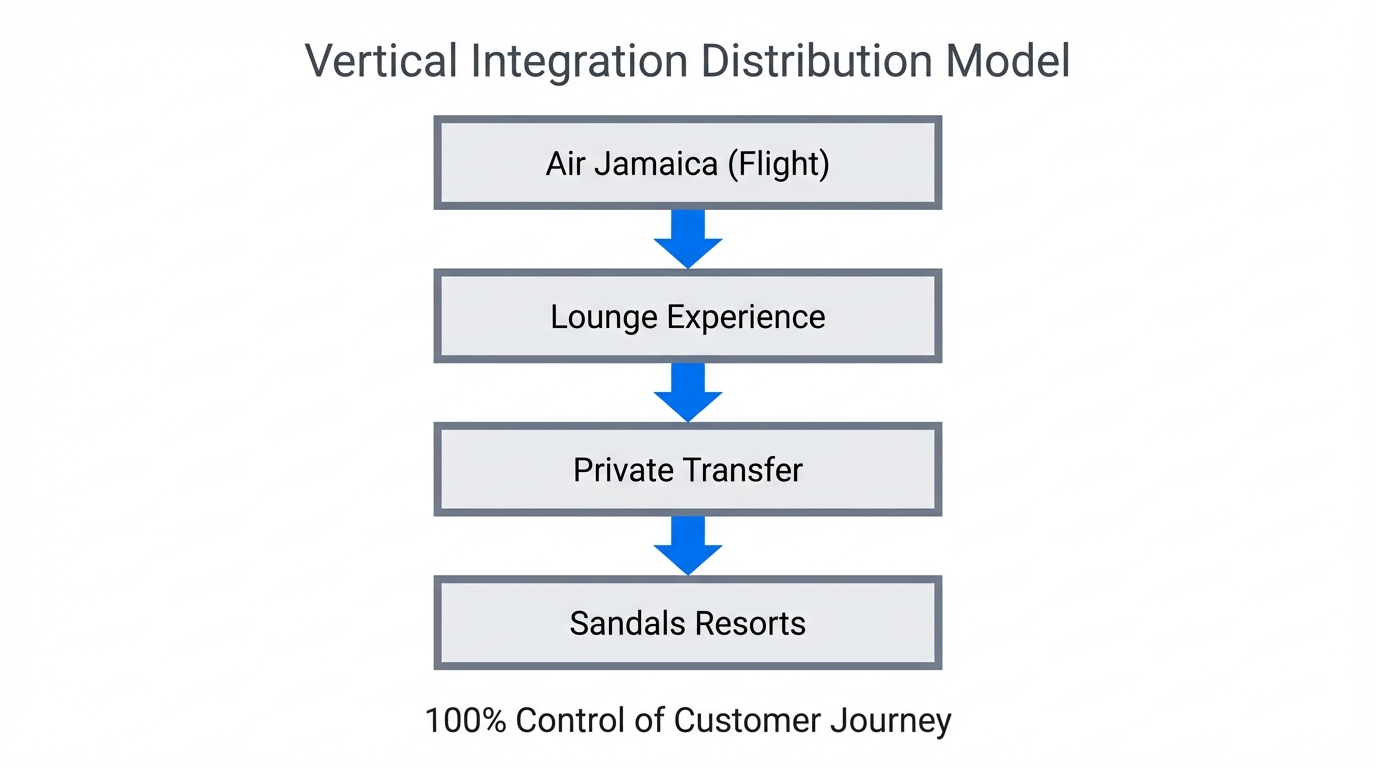
Many brands fail to understand that vertical integration isn't just about owning the factory; it's about owning the distribution and the narrative. Stewart used a low-margin business (the airline) to fuel a high-margin business (the resorts). This is a masterclass in using brand distribution channels to capture more of the customer's wallet while simultaneously protecting the brand's reputation.
| Touchpoint | Traditional Model | Stewart’s Vertically Integrated Model |
|---|---|---|
| Booking | Third-party travel agents | Direct-to-consumer (DTC) ownership |
| Travel | Generic commercial airlines | Air Jamaica (Flying Billboard) |
| Arrival | Standard airport shuttle | Branded luxury transfer |
| Stay | Standard resort amenities | Standardized luxury (10-star framework) |
By controlling the airline, Stewart could effectively "market" his resorts for free to every passenger. He ran ads in publications like Meta Ads Manager or traditional media like Playboy and Cosmo, creating a cultural association between "Love" and "Sandals." This level of control meant that by the time a customer landed, they were already indoctrinated into the Sandals lifestyle.
The 10-Star Experience Framework
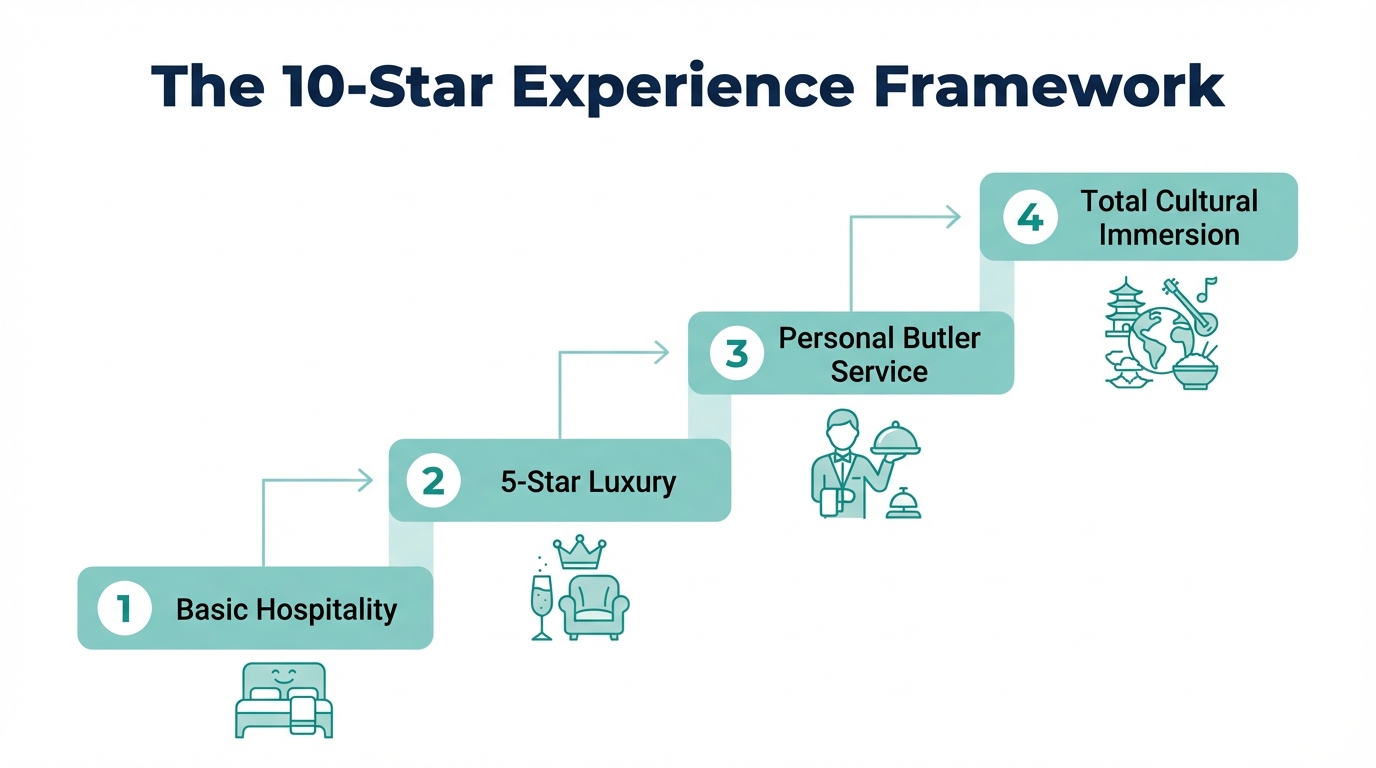
Modern founders like Brian Chesky of Airbnb often talk about the "11-star experience." A five-star experience is what's expected; a ten-star experience is when you get off the plane and there’s a parade waiting for you. Butch Stewart was practicing this decades ago. He was famously hands-on, staying in his own hotels, checking the fluffiness of the pillows, and recalibrating refrigerators to ensure the champagne was exactly the right temperature.
This obsession with extreme hospitality led to a 50% repeat guest rate—a figure virtually unheard of in the travel industry. He wasn't just managing a hotel; he was managing a customer journey mapping process that accounted for every possible friction point. He even used helicopters to scout undiscovered beaches, ensuring he owned the best physical real estate before competitors even knew it existed.
"If they get off the plane angry, I’ve already lost the game before they step foot on the beach."
Applying the Butch Stewart Model to Modern Marketing
In today’s digital landscape, vertical integration looks different, but the principles remain the same. Instead of buying airlines, brands are buying media properties and creator relationships. To own the customer experience from start to finish, you must control where the customer discovers you and how they are nurtured until they buy.
Modern growth teams often use tools like TikTok Ads Manager to drive initial awareness, but the real winners are the ones who integrate their UGC (User-Generated Content) and influencer strategies directly into their CRM. Just as Butch Stewart used Air Jamaica to funnel travelers to Sandals, modern brands use creators to funnel trust into their ecosystem. Platforms like Stormy AI allow brands to discover and manage these creator relationships at scale, essentially building an "in-house" media agency that owns the narrative before the customer ever visits the website.
The Talent Farm Concept: Upstream Vertical Integration
Interestingly, Stewart’s approach to owning the environment extends to how nations and large organizations manage "human capital." We see this in China’s "Genius Program," where they identify 100,000 potential geniuses early to build a talent pipeline for the future of AI and technology. Or the Soviet Olympic program, which identified athletic potential at age six to build a dominant "machine."
For a business, this "upstream" integration means building your own farm league. Whether it's HubSpot creating a massive educational academy to train the next generation of marketers on their tools, or a brand like Sandals employing 10,000 locals and revitalizing the Jamaican economy, owning the talent and the culture is the ultimate form of brand protection. This is often referred to as the Michelangelo Effect: by affirming the greatness in your team or your customers, you chip away at the "stone" until the masterpiece (your brand vision) is revealed.
How to Vertically Integrate Your Marketing: A Playbook
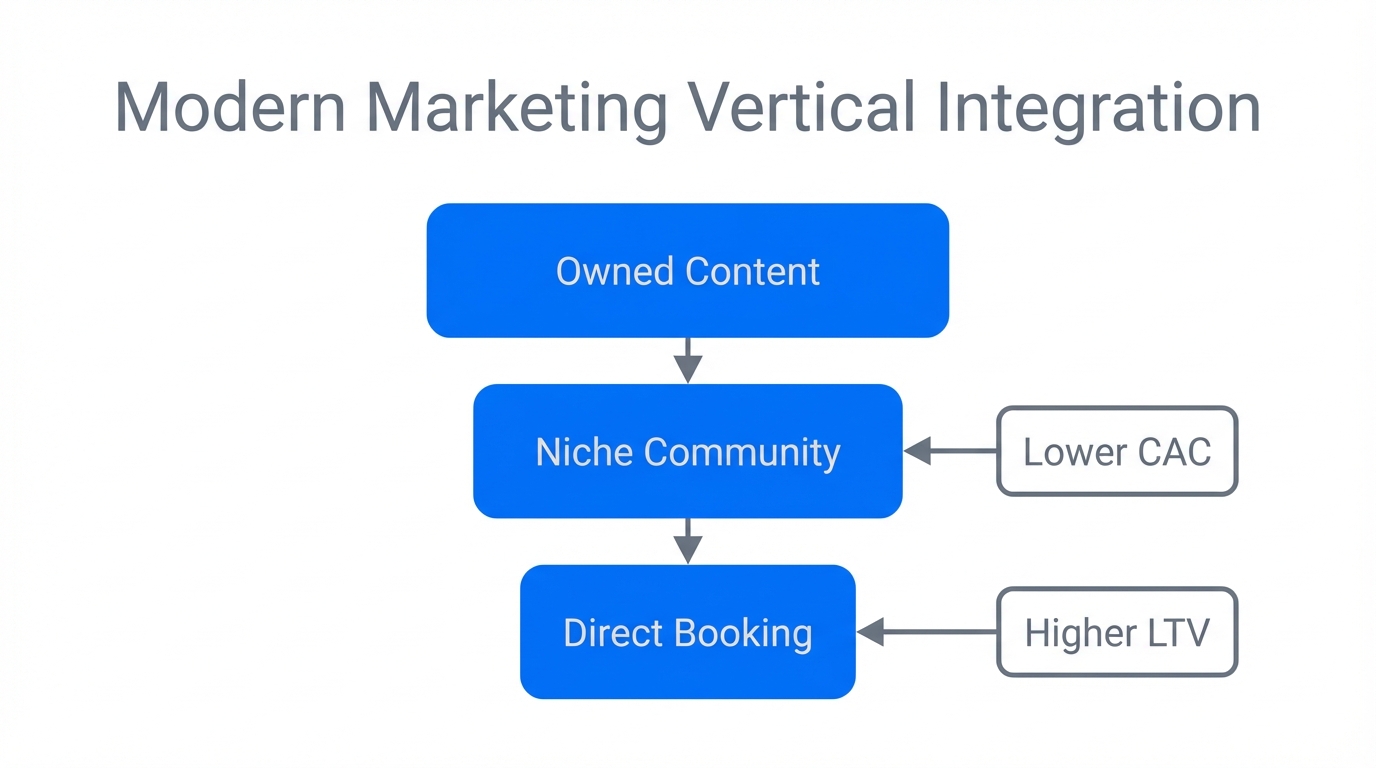
If you want to own your customer experience like Butch Stewart, follow these steps to integrate your brand distribution channels and marketing workflows:
- Identify the “Hell” in your customer journey: Where is the friction? Is it the shipping speed? The onboarding? The initial discovery on social media?
- Own the “First Impression” channel: Don't just run ads; build a community or partner with creators who embody your brand. Tools like Stormy AI can help you source and vet the right UGC creators to ensure your first impression is "Heaven-level."
- Standardize the “Luxury”: Use data to optimize every touchpoint. Just as Gary Loveman used math to optimize the customer experience management at Caesars, use Google Analytics and CRM data to personalize the journey.
- Build a “Flying Billboard”: Create a piece of your business that might be lower margin (like a newsletter or a free tool) but acts as a massive distribution engine for your core product.
- Nurture the repeat rate: Focus on extreme hospitality. It is 10x cheaper to keep a customer than to find a new one. Ensure your post-purchase experience via Klaviyo is as premium as your sales page.
"The vacation should start at the airport, and the brand relationship should start at the first click."
The Bottom Line on Vertical Integration
Butch Stewart’s legacy isn't just a collection of hotels; it’s a lesson in fearless ownership. By refusing to let outside forces—like failing airlines or poor service standards—dictate his guests' happiness, he built a vertical integration strategy that stood the test of time. For modern brands, the lesson is clear: if you don’t own the entire journey, someone else will define it for you. Whether you’re leveraging Google Ads to capture intent or using AI to discover the next generation of brand ambassadors, your goal should be the same: own the mind of the consumer from the very first moment they encounter your brand.
Ready to start building your own distribution powerhouse? Start by mastering your creator discovery and outreach. When you own the narrative through customer journey mapping and high-quality UGC, you're not just selling a product—you're building an empire that, much like Sandals, becomes a symbol of the very thing your customers desire most.