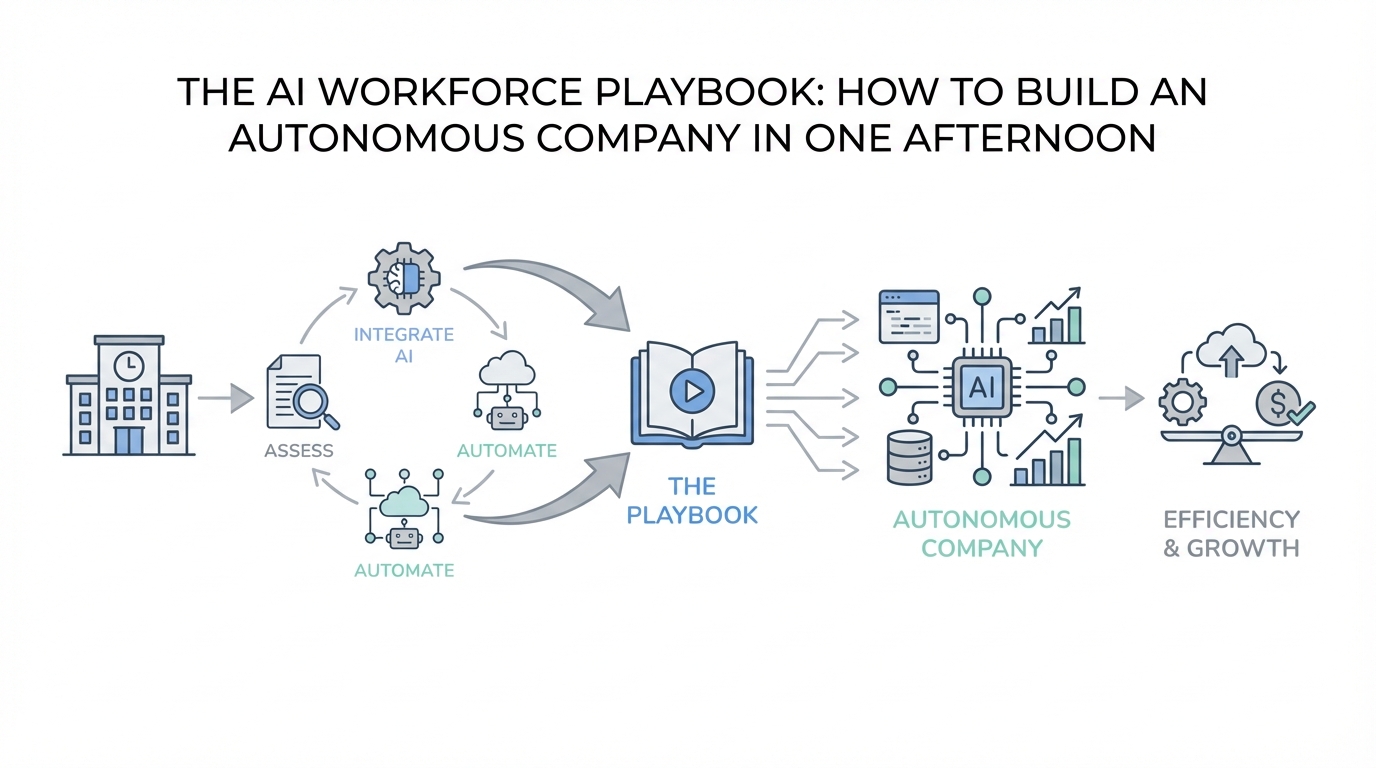
The era of the solopreneur is evolving into the era of the autonomous company. Not long ago, the idea of a business running entirely on its own was reserved for the pages of science fiction. Today, we are standing at the threshold of a massive technological shift where an entire AI workforce can be deployed in a single afternoon. This isn't just about simple automation or basic chatbots; it is about autonomous agents that can reason, interact with websites, and manage complex business pipelines with minimal human oversight. By leveraging a modern AI agent builder, founders are no longer limited by their personal bandwidth or the cost of high-overhead teams. Instead, they are building scalable systems that work while they sleep.
The Factorio Model: Visualizing Your Business as a Pipeline
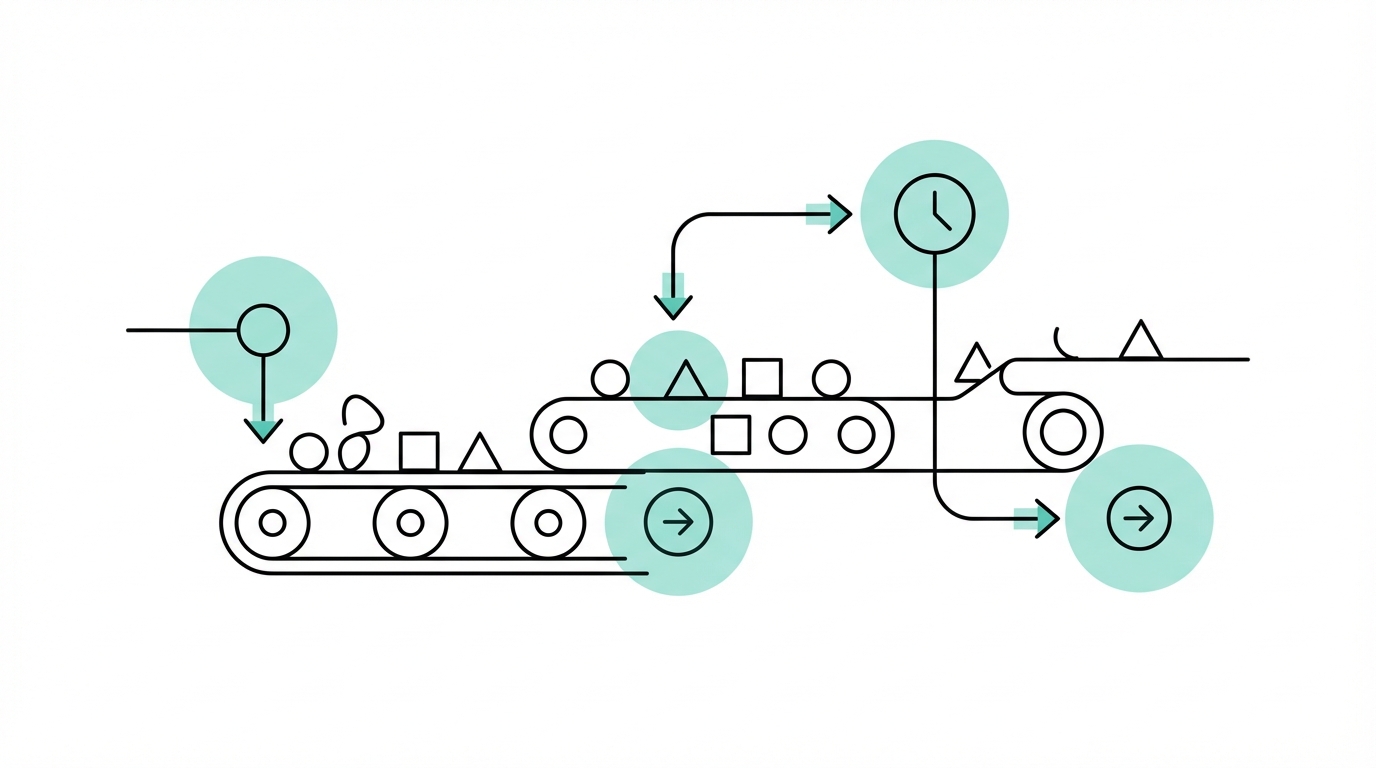
To understand how to build an autonomous company, you must first change how you visualize your business. The most successful founders in the age of AI business automation are adopting the 'Factorio' model. In the popular game Factorio, players build and manage automated factories, connecting various machines into a seamless, self-sustaining pipeline. Your business is no different. Every company, at its core, is a series of interconnected pipelines: lead generation flows into sales, sales flows into fulfillment, and fulfillment flows into customer support.
When you view your company through this lens, your role shifts from being the 'operator' to being the 'architect.' Instead of manually responding to every inquiry on LinkedIn, you identify where the current bottleneck exists. If your pipeline is stalled because you can't reach enough prospects, you don't hire more people—you overwhelm the bottleneck with a swarm of specialized agents. By mapping out your business in a tool like Notion or a digital whiteboard, you can see exactly where an agent needs to be inserted to keep the 'factory' running at peak efficiency.
From Terminal-Era to Macintosh-Era: The Rise of the AI Agent Builder
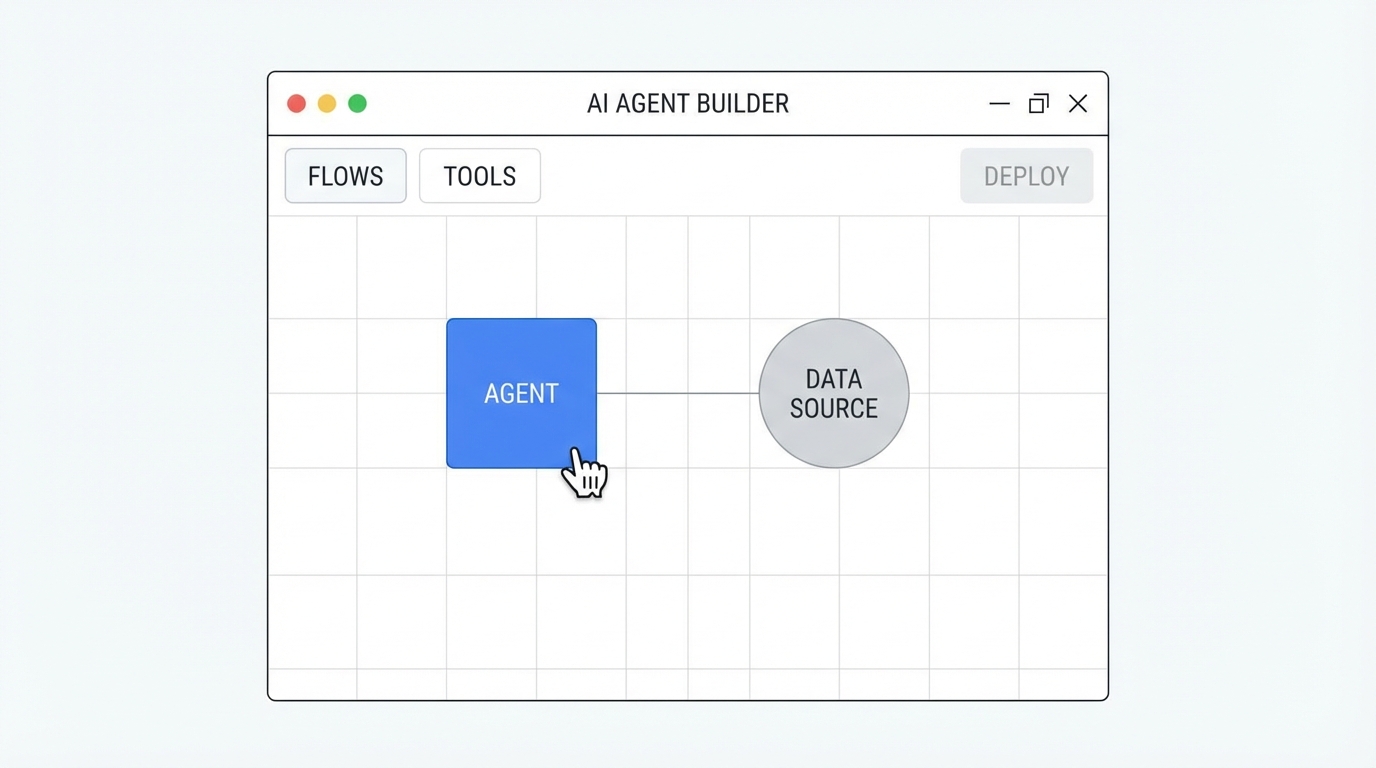

For the past year, we have been stuck in the 'Terminal-era' of AI. Using agentic workflows required significant technical knowledge, custom coding, and complex API integrations. It was powerful, but it was inaccessible to the average founder. We are now entering the 'Macintosh-era' of AI. Just as the original Macintosh brought personal computing to the masses with a user-friendly interface, the new generation of AI agent builders allows anyone to create complex agents using plain English.
You no longer need to be an engineer to build a fully autonomous operational pipeline. You simply describe the task: 'I want an agent that monitors my incoming leads, researches their company on the web, and drafts a personalized outreach message.' The agent builder handles the underlying logic, connects to your tools, and even executes the tasks. This transition from code to conversation is what makes building an AI workforce possible in a single afternoon. The complexity is hidden, but the power is greater than ever before.
Strategy: Overwhelming Bottlenecks with Agent Swarms
A single agent is a tool, but an agent swarm is a workforce. When you encounter a major business hurdle—like a massive backlog of support tickets or an empty sales funnel—the strategy is to deploy multiple agents to work in parallel. For instance, in customer support, an agent can be configured to monitor Shopify for order statuses and Stripe for refund requests. When a ticket arrives, the agent doesn't just suggest a reply; it actually goes into the software, verifies the data, and prepares the transaction for your approval.
This 'computer use' capability is a game-changer. Instead of relying on brittle APIs that often break or cost thousands to access, autonomous agents can now navigate the web just like a human would. They can log into legacy systems, click buttons, and move data between platforms that don't normally talk to each other. This allows you to automate repetitive tasks at a scale that was previously impossible. If one agent can handle 50 tickets an hour, a swarm of ten agents can handle 500, effectively eliminating the support bottleneck overnight.
The Sales Playbook: Automating Outreach and LinkedIn DMs
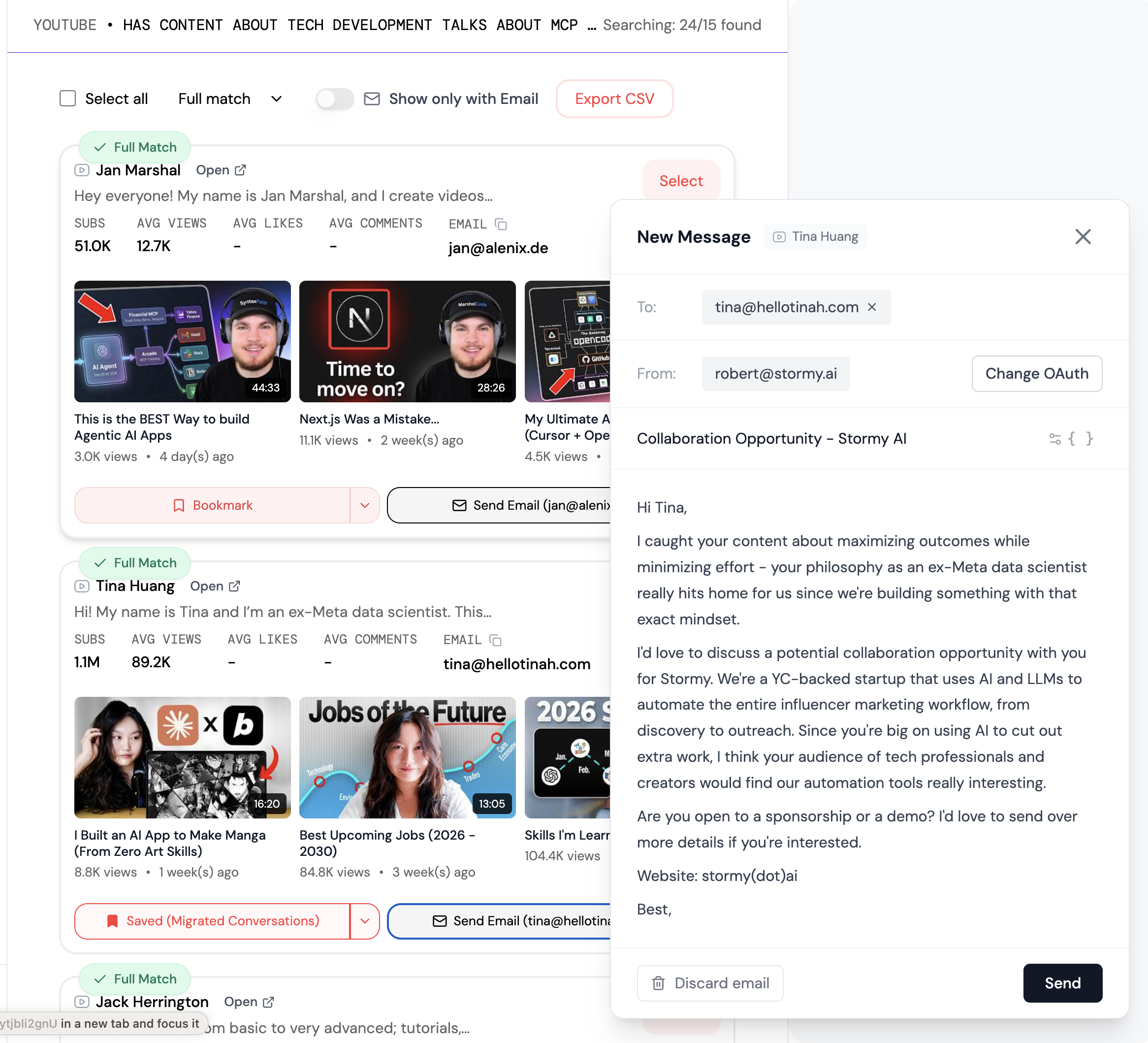
One of the most immediate use cases for an AI workforce is outbound sales. Most founders know they should be doing more outreach, but the process of finding prospects and sending personalized messages is exhausting. With an AI agent builder, you can create a high-performance sales agent in minutes. Step 1: Define the trigger, such as a new lead being added to a spreadsheet. Step 2: Instruct the agent to visit the prospect's LinkedIn profile to understand their recent activity. Step 3: Have the agent draft and send a hyper-personalized DM or email.
What makes this truly powerful is the ability to handle 'subjective' logic. Modern agents can analyze a podcast transcript or a blog post written by the prospect and reference specific points in their outreach. This removes the 'cringe' factor of automated spam. Furthermore, modern AI-native platforms like Stormy AI can help source and manage UGC creators or influencers at scale, providing a steady stream of data for your agents to act upon. Unlike legacy influencer databases, Stormy uses live AI search to find relevant creators instantly. By combining creator discovery with automated agentic workflows, you can build a marketing engine that handles everything from discovery to the final contract signature without manual intervention.
Step-by-Step: Building a LinkedIn Outreach Agent
- Define the Trigger: Use a tool like Lindy AI to start a workflow whenever a LinkedIn URL is provided.
- Initialize Computer Use: The agent logs into LinkedIn (securely) to navigate to the profile.
- Research & Context: The agent reads the 'About' section and recent posts to find a unique hook.
- Drafting the Message: Using a prompt like 'Tailor the pitch to their background in SaaS scaling,' the agent writes the DM.
- Execution: The agent clicks the 'Message' button and sends the text, or flags it for a human-in-the-loop review if the prospect is high-value.
Building a Chief of Staff: Automating CRM and Data Retrieval
Beyond sales and support, the AI workforce can handle internal operations. A 'Chief of Staff' agent can act as the glue between your various business tools. Imagine an agent that lives in your Slack and manages your CRM. Instead of manually logging every meeting note or searching through Google Analytics for a specific metric, you simply ask the agent. 'Hey, what was the last interaction we had with the CEO of Acme Corp?' The agent retrieves the data from your CRM, summarizes the last three emails, and presents it to you instantly.
This level of AI business automation extends to 'nurturing' lost deals. Many sales teams lose 70% of their leads because they forget to follow up months later. An autonomous agent can monitor your product's TikTok or Instagram updates, see when a new feature is released, and automatically reach out to everyone who previously requested that feature. For marketing teams, using an AI-powered CRM like Stormy AI ensures that creator relationships and collaboration histories are tracked automatically, turning 'lost' leads into a recurring source of revenue with zero additional effort from your human team.
The 12-Month Roadmap to Full Autonomy
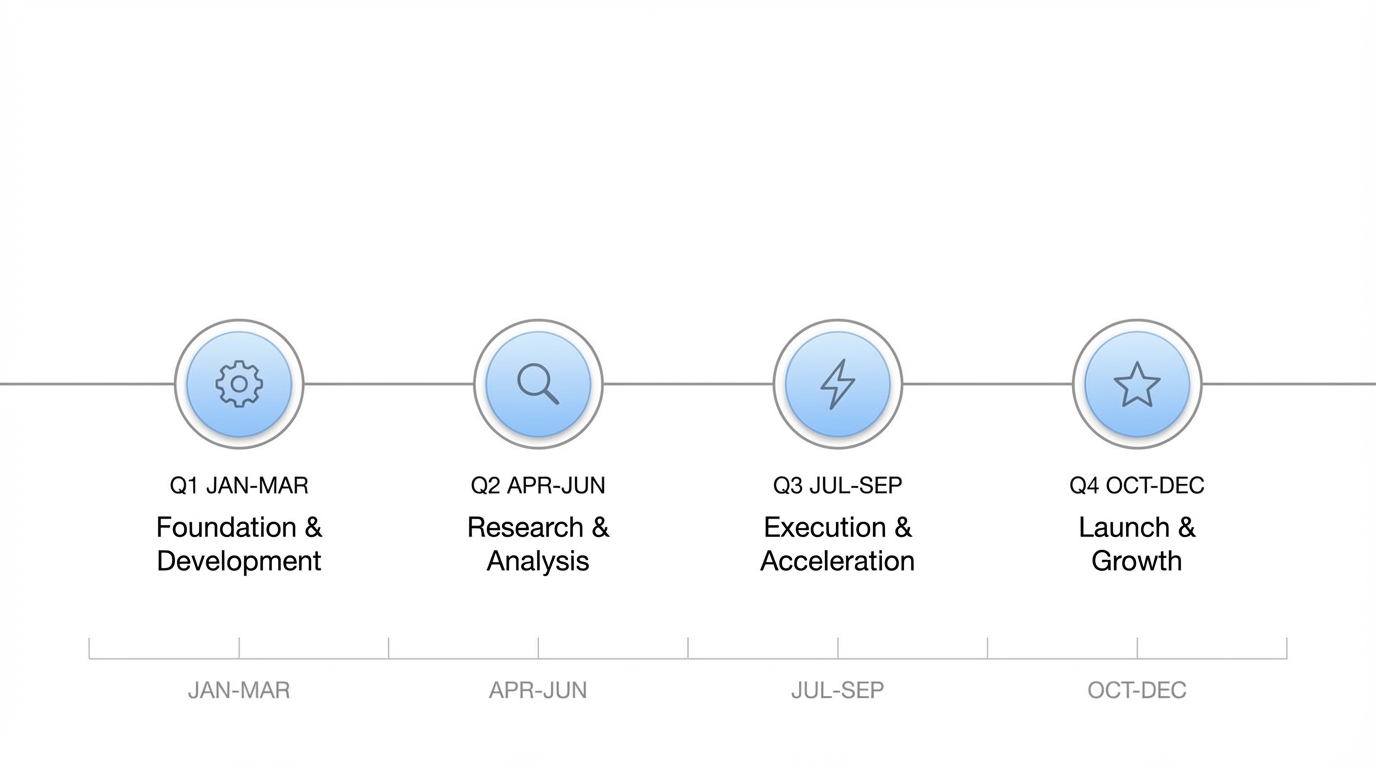
Transitioning to an autonomous company doesn't happen in a single leap, but the foundation can be laid today. In the next 12 months, the distinction between 'software' and 'employees' will continue to blur. Your goal should be to move from manual processes to agentic workflows one department at a time. Start with your biggest bottleneck—whether that's customer acquisition via Meta Ads Manager or repetitive data entry—and deploy your first agent swarm.
As you iterate, you will find that these agents don't just save money; they provide consistency. Unlike humans, agents don't get tired, don't slack off, and don't quit. Once you get a workflow to work once, it will work a thousand times. By the end of the year, you could have a business where the fulfillment is handled by Stripe and Lindy AI, the marketing is driven by automated content agents on YouTube, and the strategy is guided by your own oversight. The building blocks are here—it's time to start building your AI workforce.
Key Takeaways for Founders
- Adopt the Factorio Mindset: Map your business as a pipeline and identify the single biggest bottleneck.
- Start Small, Then Scale: Build one agent to solve one specific task (like LinkedIn DMs) before trying to automate the entire company.
- Maintain a Human-in-the-Loop: Use your agents to do the heavy lifting, but keep a human in the loop for subjective decisions and final approvals.
- Leverage Computer Use: Don't wait for APIs. Use agents that can interact with the web directly to bridge the gap between your tools.
- Iterate Daily: An autonomous company is built through constant refinement. Update your agent prompts as your business needs change.