In the high-stakes world of SaaS and tech startups, the landscape of customer acquisition is shifting beneath our feet. Just as the early adopters of YouTube in 2006 and Instagram in 2012 built massive empires by mastering new mediums, the emergence of AI video for SaaS marketing represents the next great distribution frontier. Today, a digital distribution moat isn't just about having a great product; it is about owning attention. With the release of Sora 2, the barrier between a creative concept and a Hollywood-level video asset has effectively vanished. For startups, this is an unfair advantage that can radically lower customer acquisition costs (CAC) and create high-converting ads that were previously cost-prohibitive. In this guide, we will break down the exact workflow to use Sora 2 and AI-powered research agents to build a content engine that drives growth.
The 2025 Shift: Why AI Video is the New Distribution Moat

History repeats itself in digital marketing. Those who understood how to leverage YouTube in its infancy or Instagram from 2012 to 2019 captured attention at a fraction of today's costs. We are currently in a similar window for Sora 2 for business. Distribution is the new moat because, in a world of infinite software, the person who can surgically capture and hold attention wins. Utilizing AI video allows a founder to produce 10 to 15 incredible concepts in the time it previously took to draft a single storyboard. This speed of iteration is what allows a startup to find the "winning" creative before their runway evaporates.
The shift to AI-generated video is not just about efficiency; it is about psychological resonance. Platforms like TikTok and Reels reward content that triggers high arousal emotions like curiosity, FOMO, and validation. By using low cost video ads for startups generated through AI, you can test dozens of psychological hooks to see which one actually drives clicks on Meta Ads Manager or Google Ads without spending thousands on production for each test.
Case Study Analysis: How Idea Browser Uses AI Video to Drive CTR
Take the example of Idea Browser, a platform designed to help entrepreneurs find validated startup trends. The challenge for a SaaS like this is cutting through the noise of "get rich quick" schemes. By using Sora 2, the team was able to create an ad that visualized a high-concept idea: a user scrolling through a Notion dashboard that looks like it was cloned from a hundred-million-dollar company. The video generates immediate curiosity by showing the exact tools used to build a SaaS, such as Bubble.io or Stripe metrics, in a fast-paced, 10-second loop.
This visual storytelling drives a much higher click-through rate (CTR) because it leverages "pattern interrupts." When a potential customer sees a hyper-realistic AI video of a dashboard they recognize, but with a unique twist, they stop scrolling. The platform algorithms, seeing this high engagement, then reward the ad with a lower cost-per-click (CPC). This synergy between AI video for SaaS marketing and platform algorithms is the secret to scaling a startup's reach in 2025.
The AI Video Playbook: From Research to Viral Concept
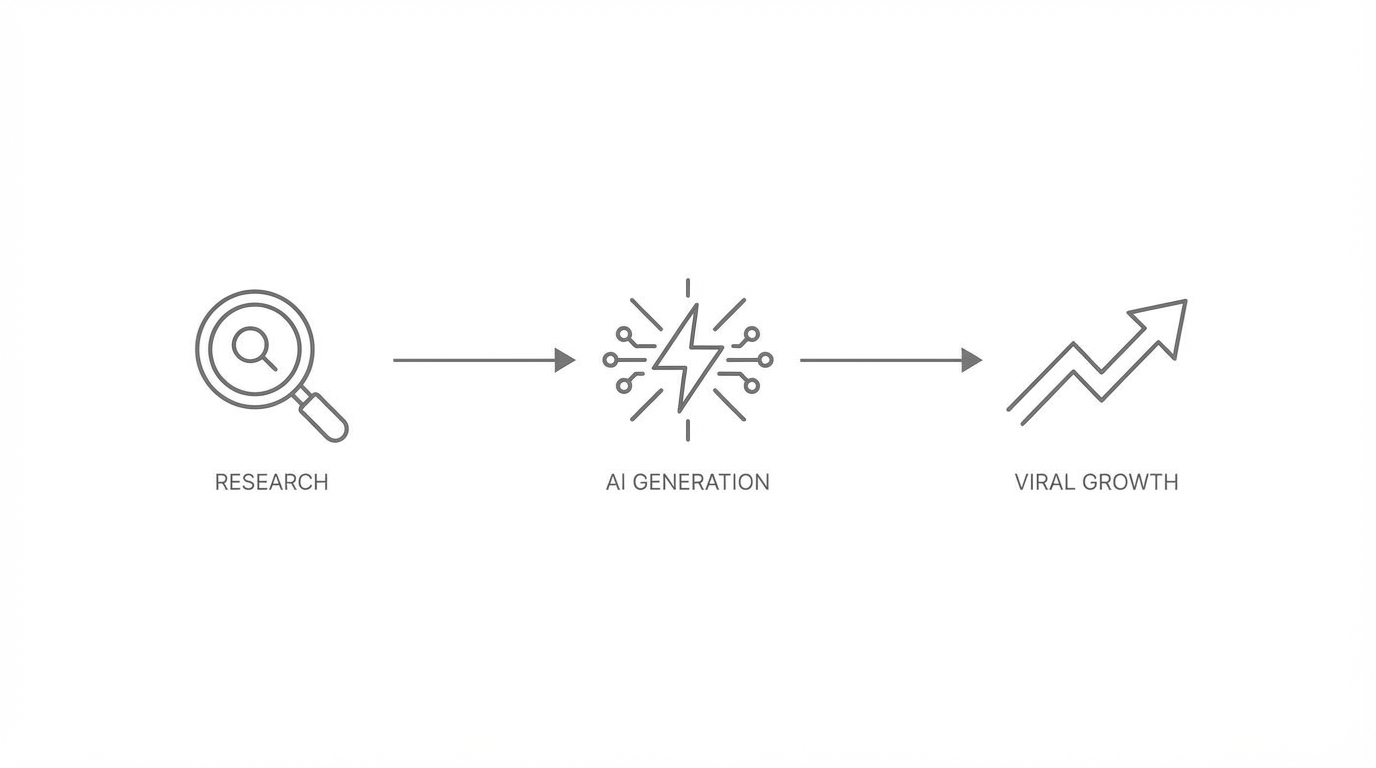
Building a distribution moat requires a systematic workflow. You cannot simply guess what will go viral; you must use AI as a research and evaluation agent. Here is the step-by-step playbook for generating high-converting video concepts.
Step 1: Research with Perplexity Deep Research
Start by using Perplexity as your primary research agent. Instead of general brainstorming, give it a specific persona and goal. For example, if you are building an AI influencer marketing strategy, ask Perplexity to identify the "scroll-stopping concepts" for your target audience. You want to understand the core psychology: What are they afraid of? What do they long for? In the case of SaaS, it is often the dream of owning a product that "spits out cash" or the fear of wasting months on a product that no one wants. Perplexity will provide frameworks like the "Contradiction Hook" (e.g., "I have zero coding skills but built a $100k SaaS in six months") which are proven to drive engagement.
Step 2: Generate Concepts with Claude
Once you have your deep research, ingest it into Claude. Act as a social media strategist and ask Claude to brainstorm 10 creative short-form video concepts based on the psychological triggers identified in Step 1. Focus on formats like "Micro Tutorials" (setting up analytics in 60 seconds) or "Real Numbers Reveals" (showing a Stripe MRR growth chart). These concepts should be designed for high completion rates and shares.
Step 3: Evaluate and Score Hooks
This is where most founders fail: they skip the evaluation. Ask Claude to rate each of the 10 concepts on a scale of 1 to 10 based on hook strength, emotional curiosity, and algorithm fit. You want to identify the concepts with the highest "viral ceiling." For instance, a concept that leverages controversy or social proof will often score higher because it drives massive comment debates, which is algorithm gold on LinkedIn and X.

Step 4: Optimize for Sora 2
Finally, ask Claude to write the actual prompts for Sora 2. Sora 2 is capable of complex speech synchronization and rendering text within a scene. Your prompts should be specific: describe the visual elements, the person at the desk, the on-screen timer, and the exact lines of spoken dialogue. Keep in mind that for low cost video ads for startups, 10 to 15 seconds is the sweet spot. Remind yourself that Vine was only 6 seconds, and early TikTok was 15—you have plenty of time to deliver a high-impact hook.
Reducing Production Costs: The Economic Impact of AI Video
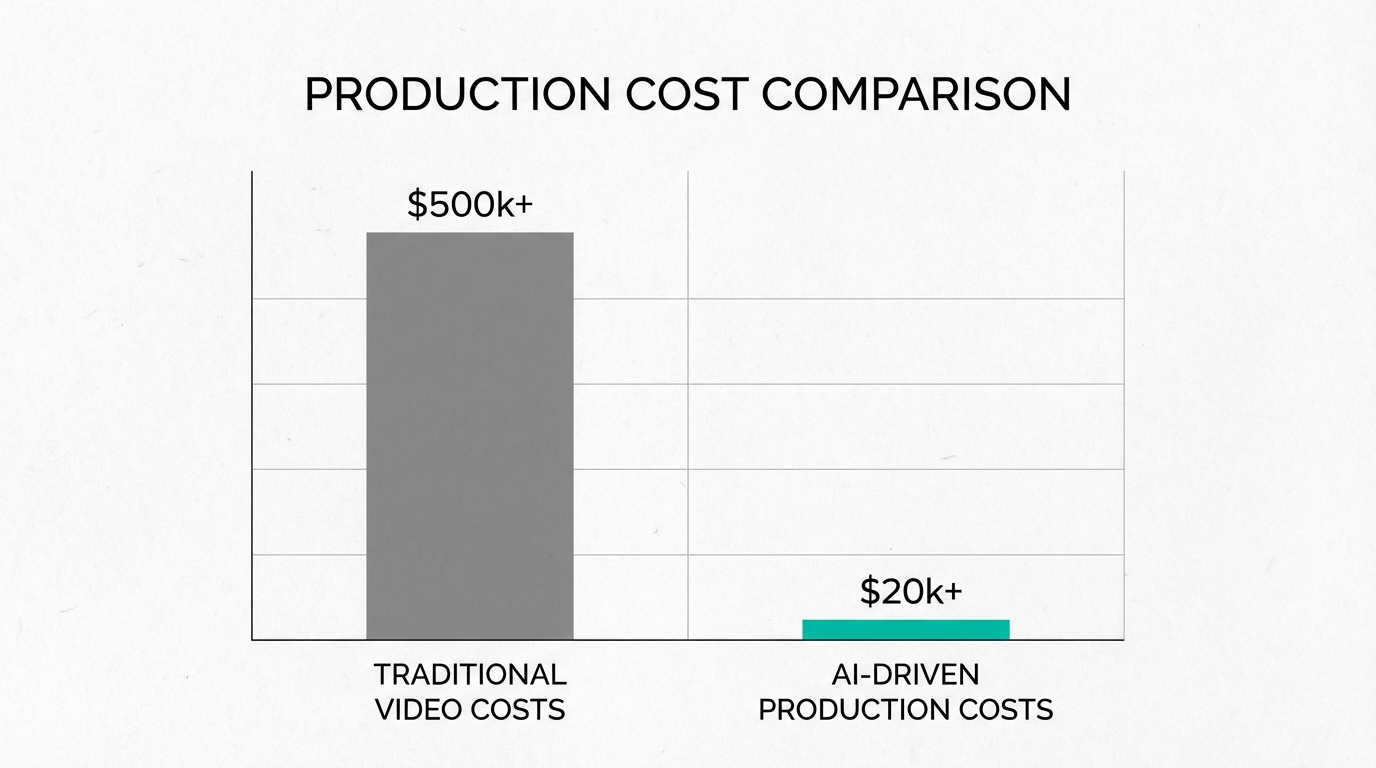
Traditionally, producing a high-quality video ad meant hiring a creative director, a videographer, and an editor. For a SaaS startup, this could easily cost thousands of dollars per asset. With Sora 2, those costs are effectively neutralized. You can now produce cinematic, 15-second spots for the price of a monthly AI subscription. This democratization of high-end production value allows bootstrapped startups to compete with venture-backed giants in the ad auction.
However, production is only half the battle. Once you have your AI-generated assets, you need to manage their distribution. While AI creates the content, platforms like Stormy AI can help source and manage UGC creators at scale, allowing you to combine your AI video assets with real human faces to build trust. Using a modern creator CRM ensures that your AI influencer marketing strategy is organized and measurable, preventing the chaos of spreadsheets and lost email threads.
Organic vs. Paid Strategy: Building a Founder-Led Brand
Should you use AI video for organic content or paid ads? The answer is both. On platforms like X and LinkedIn, using Sora 2 for business to visualize abstract concepts can help build a founder-led brand. Sharing "behind the scenes" AI-generated visualizations of your product vision can generate significant organic traction. It shows that you are at the cutting edge of technology, which is a powerful signal for tech-focused audiences.
For paid distribution, such as Apple Search Ads or Reels, AI video allows for rapid A/B testing. You can test a cinematic visual style against a lo-fi, "phone-recorded" aesthetic generated by AI to see which resonates better with your specific CAC goals. This iterative process, guided by data, is how you build a sustainable distribution moat. Using tools like Stormy AI to track post performance and analytics across these campaigns is essential to understanding which AI concepts are actually converting into users.

Conclusion: Your Action Plan for AI Distribution
The era of spending months on a single brand video is over. For SaaS startups in 2025, the competitive advantage lies in speed, volume, and psychological precision. By integrating AI video for SaaS marketing into your growth strategy, you are not just making videos; you are building an automated attention-capture machine. Start today by using Perplexity for research, Claude for concept evaluation, and Sora 2 for production. Use these tools to test your assumptions, lower your CAC, and build a digital distribution moat that competitors cannot easily cross. The tools are here—the only thing left is to start prompting.