In 2025, the barrier between an idea and a profitable software product has effectively vanished. We are entering the era of the "One-Person Unicorn," a term popularized by tech visionaries describing where a single developer can leverage an AI-assisted development workflow to build, launch, and scale multiple applications simultaneously without ever hiring a full-time employee. Take the example of Ramshri Sridhar, a solo founder who manages two AI-powered apps, Supermeme.ai and Questgen.ai, generating over $100,000 in annual recurring revenue (ARR) while spending just two hours a week on maintenance. This efficiency isn't accidental; it is the result of a highly optimized best tech stack for SaaS 2025 that prioritizes speed, automation, and minimal operational overhead.
The Foundation: Why Next.js and Supabase are the Industry Standard

For any solo founder, the goal is to spend as little time as possible on "plumbing"—the repetitive tasks of setting up servers, authentication, and database schemas. This is why Next.js has become the non-negotiable frontend framework for modern AI apps. It allows for a unified full-stack environment where the UI and the backend API routes live in the same repository. When paired with Supabase, an open-source Firebase alternative, you get a production-ready database, user authentication, and file storage out of the box. This combination allows you to port legacy applications to modern stacks in a fraction of the time, much like how Questgen was rebuilt in just six months to handle its 150,000+ users.
Using Supabase particularly shines when dealing with AI-heavy workloads. Its vector database capabilities mean you can store and query embeddings (the mathematical representations of text or images) directly alongside your user data. This eliminates the need for a separate vector database provider, further reducing the operational complexity of your SaaS. When your backend is this streamlined, your focus shifts from managing infrastructure to refining the user experience and scaling your distribution channels.
Mastering AI-Assisted Coding: A Cursor AI Tutorial
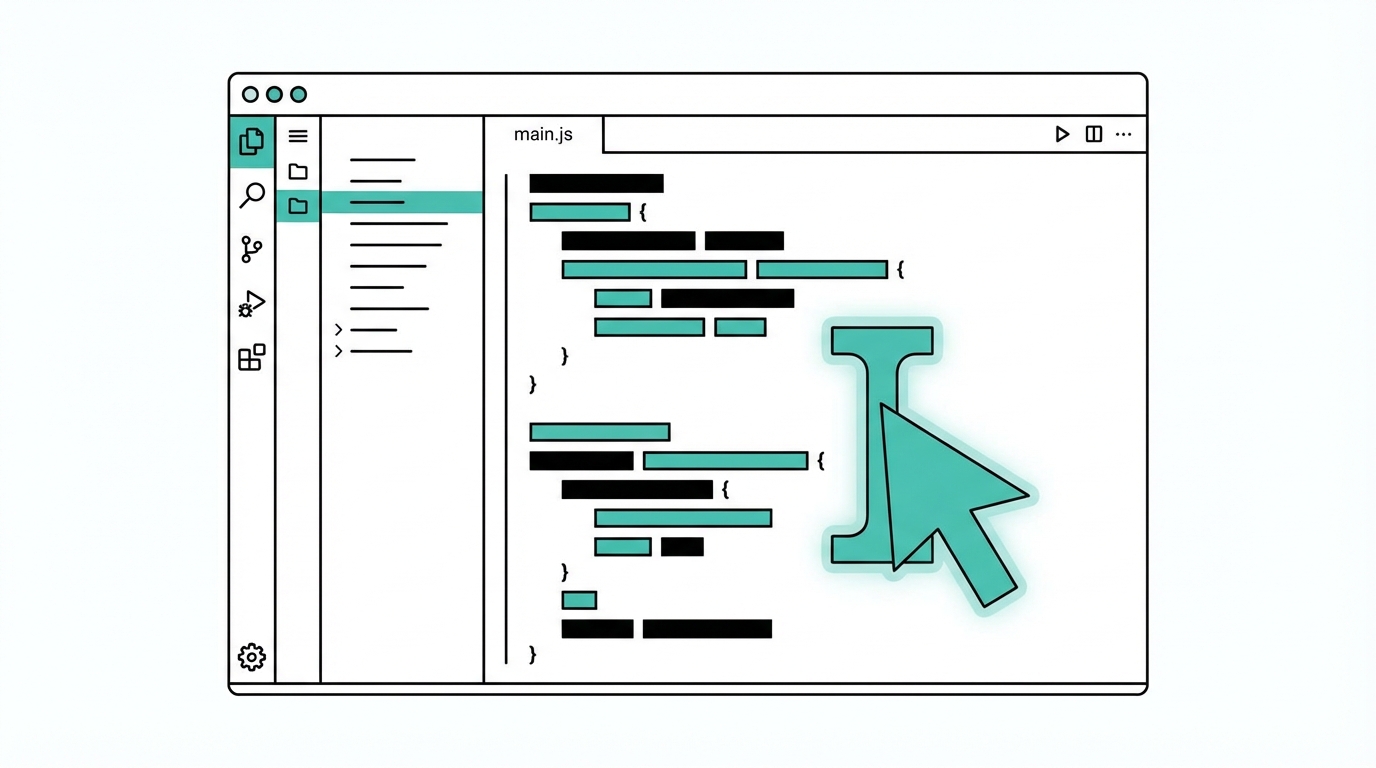
If you are still writing every line of code manually, you are working at a significant disadvantage. The rise of AI coding tools like Cursor and Windsurf has transformed programming into "vibe coding"—a process where you describe the logic and the AI generates the implementation. To build at the speed of a $100K founder, you must master these steps in your Cursor AI tutorial workflow:
- Index Your Codebase: Ensure Cursor has indexed your entire project so it understands the context of your existing components and utility functions.
- Use Composer for Feature Scaffolding: Instead of writing one file at a time, use the Composer feature to generate an entire multi-file feature (e.g., a new Stripe checkout flow) in one prompt.
- Prompt for Refactoring: Use Windsurf's agentic capabilities to find and fix bugs across your entire repository by simply describing the error message.
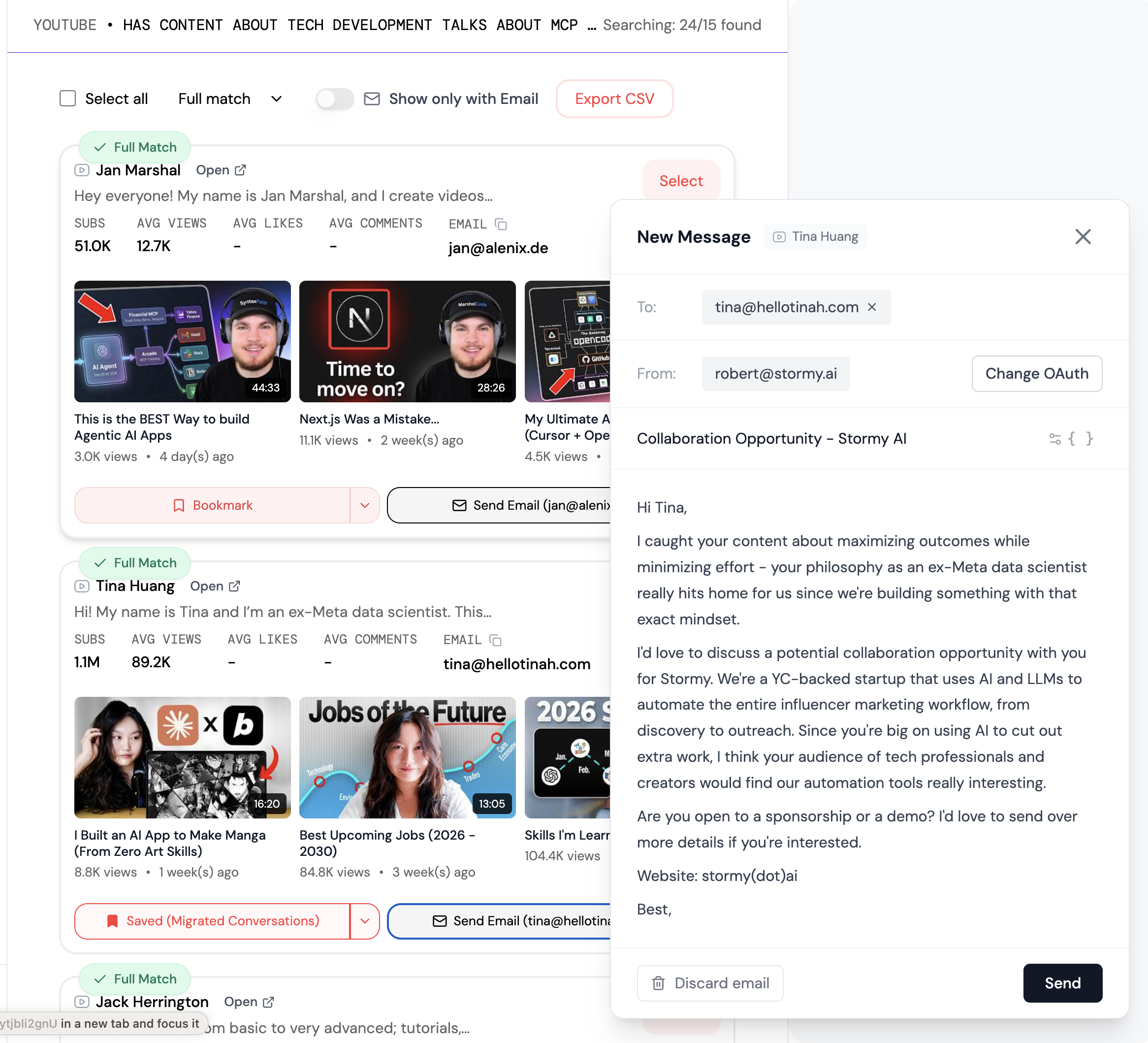
This approach allows a single developer to maintain millions of users across different platforms. However, coding speed is only half the battle. Once your product is built, you need a way to reach your audience without a marketing team. This is where Stormy's AI search for discovery across TikTok, YouTube, Instagram, LinkedIn, TikTok Shop, and newsletters becomes an essential part of the stack. By using natural language prompts to find the exact creators or influencers who resonate with your app's niche, you can automate the discovery phase that used to take weeks of manual scrolling on LinkedIn or Twitter.
Reducing Operational Complexity with No-Code Layers
A common mistake solo founders make is building everything—including the landing page and the blog—inside their main application code. This creates technical debt and slows down SEO iterations. Successful founders use tools like Typedream to build high-converting, no-code landing pages. This separation allows you to update marketing copy and SEO tags in seconds without touching your production code or triggering a new deployment. For apps like Supermeme, which relies on viral traffic, being able to pivot marketing messaging instantly is a critical competitive advantage.
Beyond the landing page, managing the actual growth of the app requires distribution before product. By consistently sharing your build-in-public journey on social media, you create a feedback loop that informs your development. If you're looking for creators to help spread the word, Stormy AI for influencer vetting and fake follower detection can vet potential partners by detecting spam accounts and engagement fraud, ensuring that your limited marketing efforts are spent on authentic audiences. This data-driven approach to growth is how solo founders achieve millions of users with zero dollars spent on traditional advertising.
Managing API Costs: Maintaining 75% Profit Margins
The biggest expense for any AI-native SaaS is the cost of LLM tokens. To maintain 70% to 75% profit margins, you must optimize how you use models like OpenAI and Anthropic. Chaining existing tools is often cheaper and more effective than building proprietary models. For instance, rather than running a large model for every task, use smaller, specialized models for basic classifications and only call the "frontier" models for complex logic. This "Minimalist Architect" mindset prevents your API bill from eating your entire revenue stream.
Operational efficiency also extends to how you handle customer acquisition. Instead of manually emailing potential partners or users, you can leverage Stormy AI's AI-personalized outreach to send hyper-personalized emails generated for each influencer at scale. By connecting multiple Gmail accounts and using an autonomous AI agent to follow up on a schedule, you can keep your growth engine running on autopilot while you focus on Saturday afternoon housekeeping tasks for your core product.
The 'Minimalist Architect' Mindset: Chaining Over Building
The most successful founders in 2025 aren't necessarily the best coders; they are the best system integrators. Instead of spending months on R&D, they look at manual tasks that people already pay for and determine if they can be substituted by chaining existing generative AI workflows. This might involve using Zapier or n8n to link different services together, creating a seamless experience for the user without writing a single custom backend service.
This mindset is perfectly complemented by a robust CRM strategy. As your app grows, managing relationships with early adopters, power users, and affiliates becomes complex. Using Stormy's creator CRM, you can track every interaction, deal stage, and collaboration history in one place. This allows you to treat your SaaS like a professional business from day one, even if you are still working a full-time job and only dedicating a few hours a week to your side projects.
Conclusion: Building at Speed in 2025
The 2025 AI tech stack for solo founders is defined by its lack of friction. By combining the power of Next.js and Supabase with AI coding tools like Cursor, you can build production-quality apps in days rather than months. Success in this new landscape requires a shift in focus: away from the minutiae of code and toward distribution, SEO, and strategic automation. Whether you are using Semrush to find untapped keywords or Stormy's post tracking and analytics dashboard to monitor your campaign's performance, the goal remains the same: build something people want, and use AI to make sure they find it.
If you're ready to stop dreaming and start building, now is the time to adopt the Minimalist Architect mindset. Focus on solving real problems by chaining together the world-class tools already at your fingertips, and let AI handle the heavy lifting. The path to a $100K solo business has never been more accessible—it's time to take the first step.