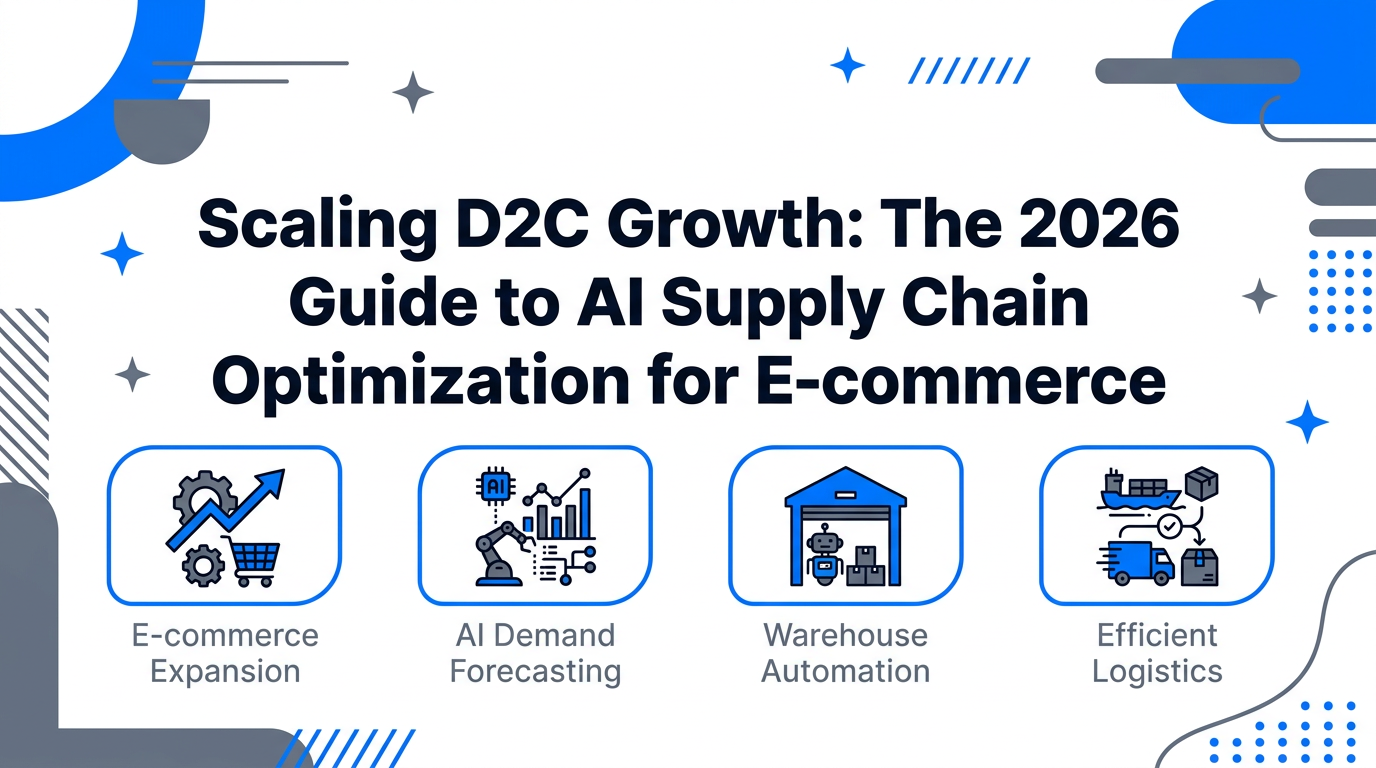
In 2026, the divide between D2C brands that scale and those that stagnate is no longer just about the quality of their creative or the size of their ad budget. It is about operational efficiency. As customer acquisition costs (CAC) continue to fluctuate, the most successful founders have stopped looking for quick hacks and have instead turned toward intelligent supply chain infrastructure to protect their margins.
The Shift to Predictive Demand Forecasting
In the past, inventory management was often a game of educated guesswork. By 2026, the leading e-commerce players are utilizing advanced demand forecasting models that synthesize data from social media trends, weather patterns, and global economic shifts. By integrating these insights directly into their ERPs, brands can reduce overstock by up to 30%, freeing up vital cash flow for marketing and product development.
Automating the Last-Mile Experience
Customer expectations for delivery speed have hit an all-time high. To stay competitive, brands are leveraging AI-driven logistics and distributed warehousing. This allows for hyper-local fulfillment, significantly cutting down on shipping times and costs. Integrating these logistics systems with Stripe for seamless multi-currency payments and Klaviyo for automated post-purchase communication ensures the customer journey remains frictionless from checkout to delivery.
Sustainable Scaling and Influencer Growth
While supply chain optimization provides the foundation, growth still requires a steady influx of new customers. In 2026, smart brands are moving away from high-burn paid ads and toward high-efficiency creator partnerships. Platforms like Stormy AI streamline this process by using AI to discover high-intent influencers across TikTok Shop and Instagram, ensuring that every marketing dollar spent is backed by real creator data and automated outreach.
Data-Driven Decision Making
Finally, the most successful D2C brands in 2026 are those that treat their data as their most valuable asset. According to recent Gartner research, companies that implement AI-driven data visualization see a 15% increase in annual profitability. By connecting Google Analytics 4 with your supply chain metrics, you can get a holistic view of your business, identifying exactly which products are driving the highest ROI and which logistics routes are eating into your bottom line.
Scaling in the current landscape isn't about working harder; it’s about deploying smarter systems. By combining Stormy AI for creator-led growth with a robust AI supply chain, D2C brands can build a resilient, profitable business that thrives regardless of market volatility.