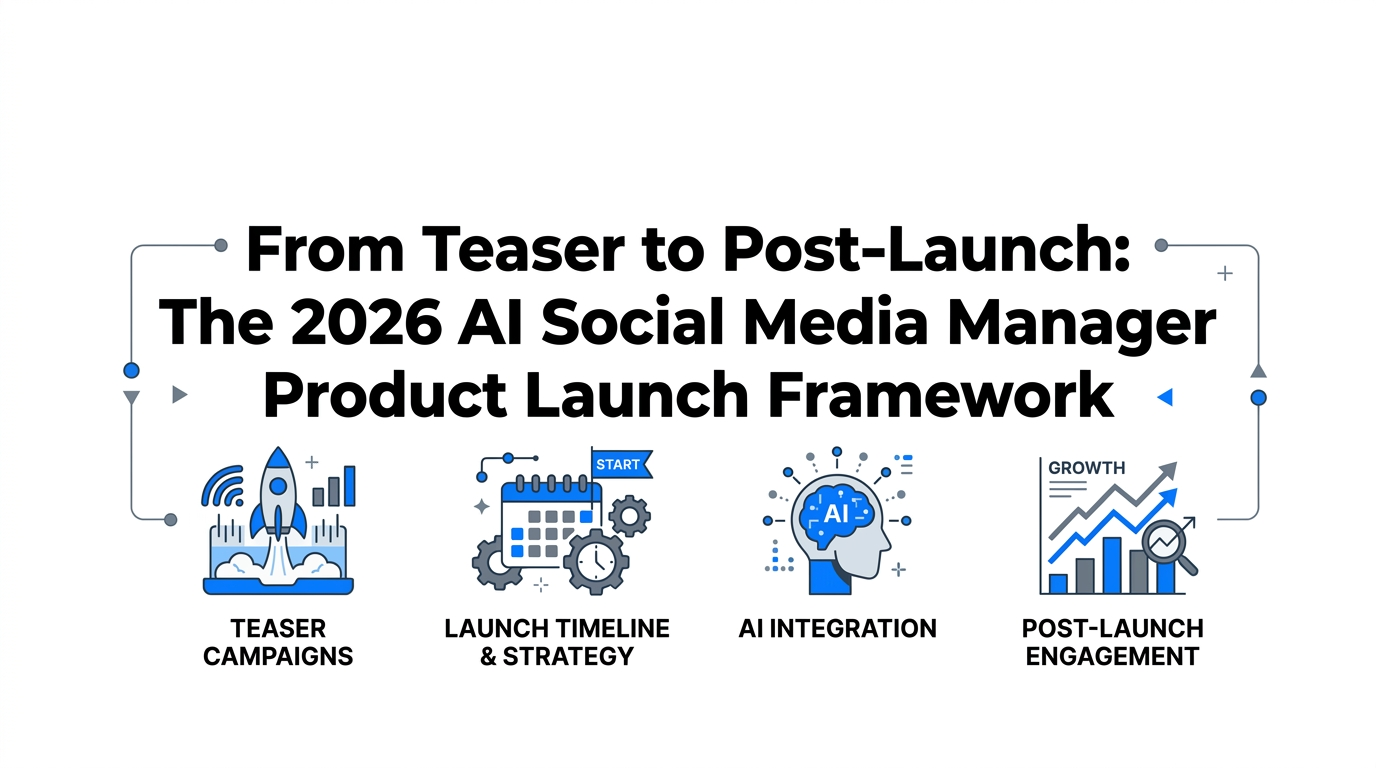
In 2026, launching an e-commerce product without an AI-driven framework is like trying to win a Formula 1 race on a bicycle. The market for AI in social media has skyrocketed to over $12 billion, representing a staggering 471% growth over the last decade. Today, 88% of marketers have integrated AI into their daily workflows, not just as a tool for writing captions, but as the central nervous system of their go-to-market strategy. This guide breaks down the definitive 2026 product launch framework, taking you from initial teaser concepts to post-launch optimization using agentic AI.
Phase 1: Pre-Launch — Building the AI Research Lab
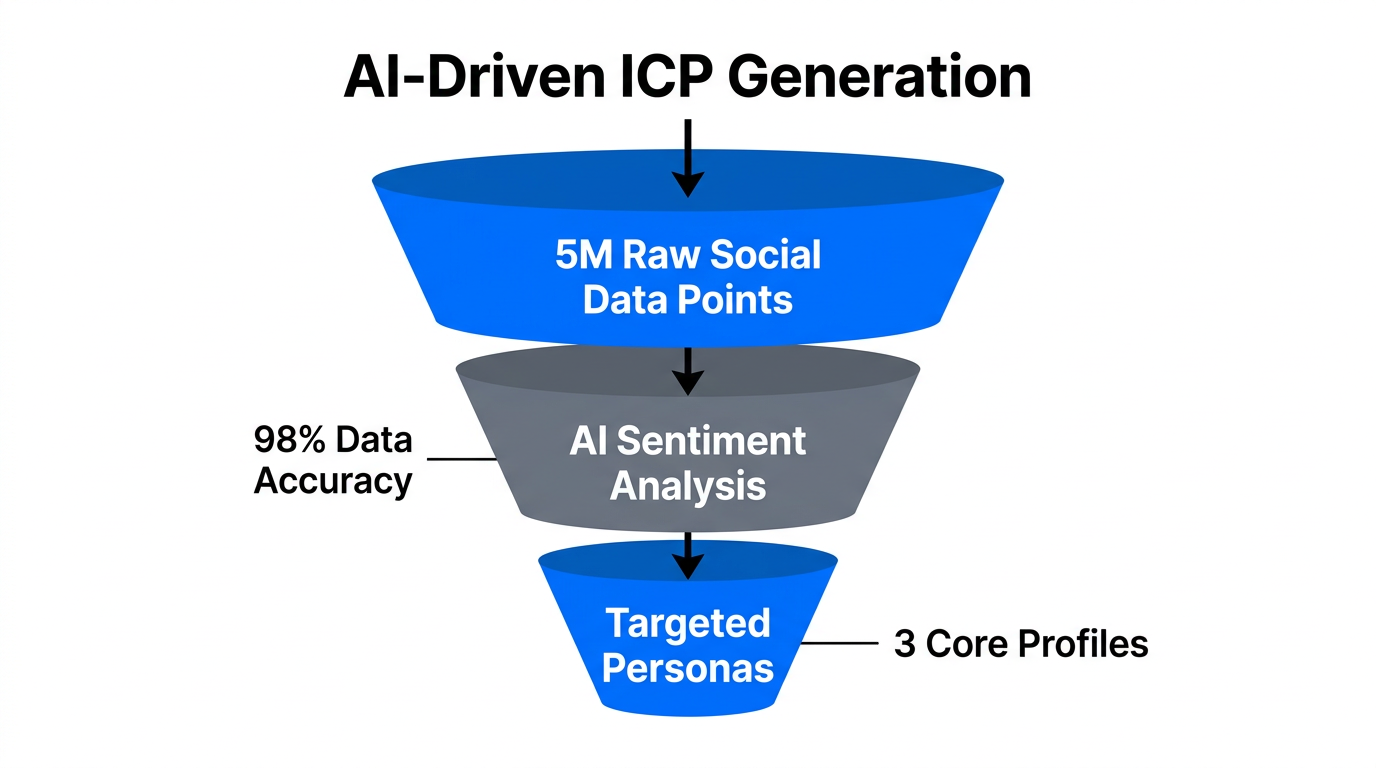
The success of a product launch is determined weeks before the first post goes live. In the legacy era, defining an Ideal Customer Profile (ICP) took weeks of manual data mining. In 2026, McKinsey & Company research highlights that 90% of professionals use AI to shrink this timeline from weeks to minutes. By feeding your product specifications into an AI agent, you can generate hyper-granular ICPs that go beyond basic demographics into psychographics, real-time interests, and "pain point" triggers.
Once your ICPs are locked, the next step is Teaser Tagline Brainstorming. Rather than settling for one or two hooks, savvy marketers now use AI to generate 20+ teaser taglines tailored to specific audience segments. This allows for a "shotgun approach" during the awareness phase, where you can test which messaging resonates most with your target demographics on platforms like TikTok and Instagram.
"The 2026 era of marketing is defined by proactiveness—tools that suggest content ideas and budget shifts before the human manager even identifies the need."During this phase, it is also critical to identify the right voices to carry your message. Modern platforms like Stormy AI allow brands to use natural-language prompts to discover creators who perfectly align with these AI-generated ICPs, ensuring your pre-launch hype is built on a foundation of authentic influence.
Phase 2: Launch Phase — Implementing Dynamic Creative Optimization (DCO)
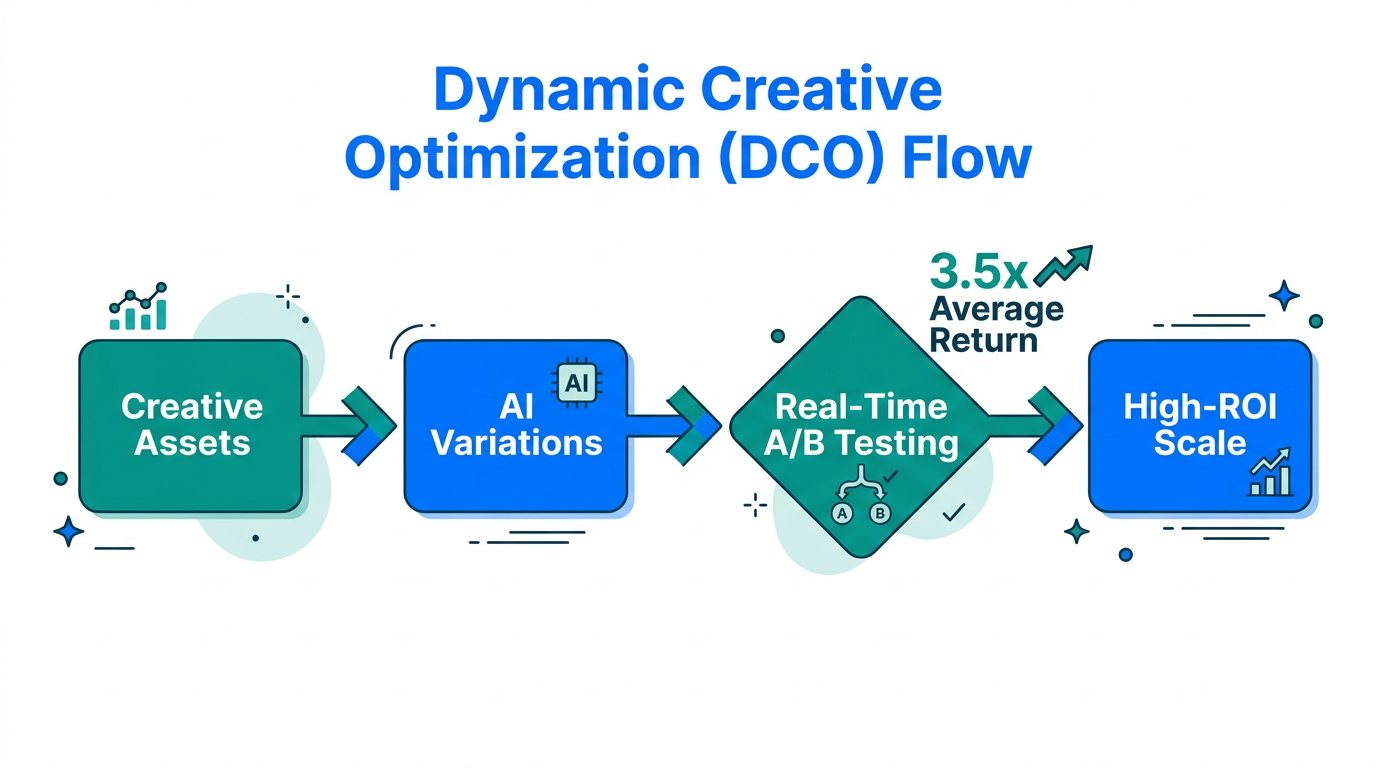
The launch day is no longer a static event; it is a live experiment. Dynamic Creative Optimization (DCO) is the gold standard for e-commerce customer acquisition in 2026. Instead of running a single ad set, AI-driven DCO allows you to swap headlines, background music, and visual elements in real-time based on live conversion data. If a specific "Problem/Solution" Reel is driving a 3.7x ROI, the AI automatically shifts your budget and iterates on that specific creative format.
Short-form video remains the dominant force, with 78% of consumers preferring to learn about new products via Reels or TikTok. AI tools now automate the "script-to-video" pipeline, allowing brands to maintain a 24/7 presence without a full-scale production studio. This high-frequency posting schedule is essential for staying relevant in social commerce, which now accounts for over 10% of all e-commerce transactions.
| Feature | Manual Launch (Legacy) | AI-Driven Launch (2026) |
|---|---|---|
| Creative Variety | 2-3 static assets | 50+ dynamic variations |
| Budget Allocation | Daily manual check | Real-time AI reallocation |
| Messaging | One-size-fits-all | Segmented by ICP triggers |
| Conversion Tracking | Post-campaign report | Live data-stream optimization |
As Digital Silk has noted, brands using AI for content generation see a massive uplift in engagement because the content is continuously optimized for the platform's specific algorithm, whether that is the TikTok FYP or the Instagram Explore page.
Phase 3: Community Management — Turning DMs into Revenue
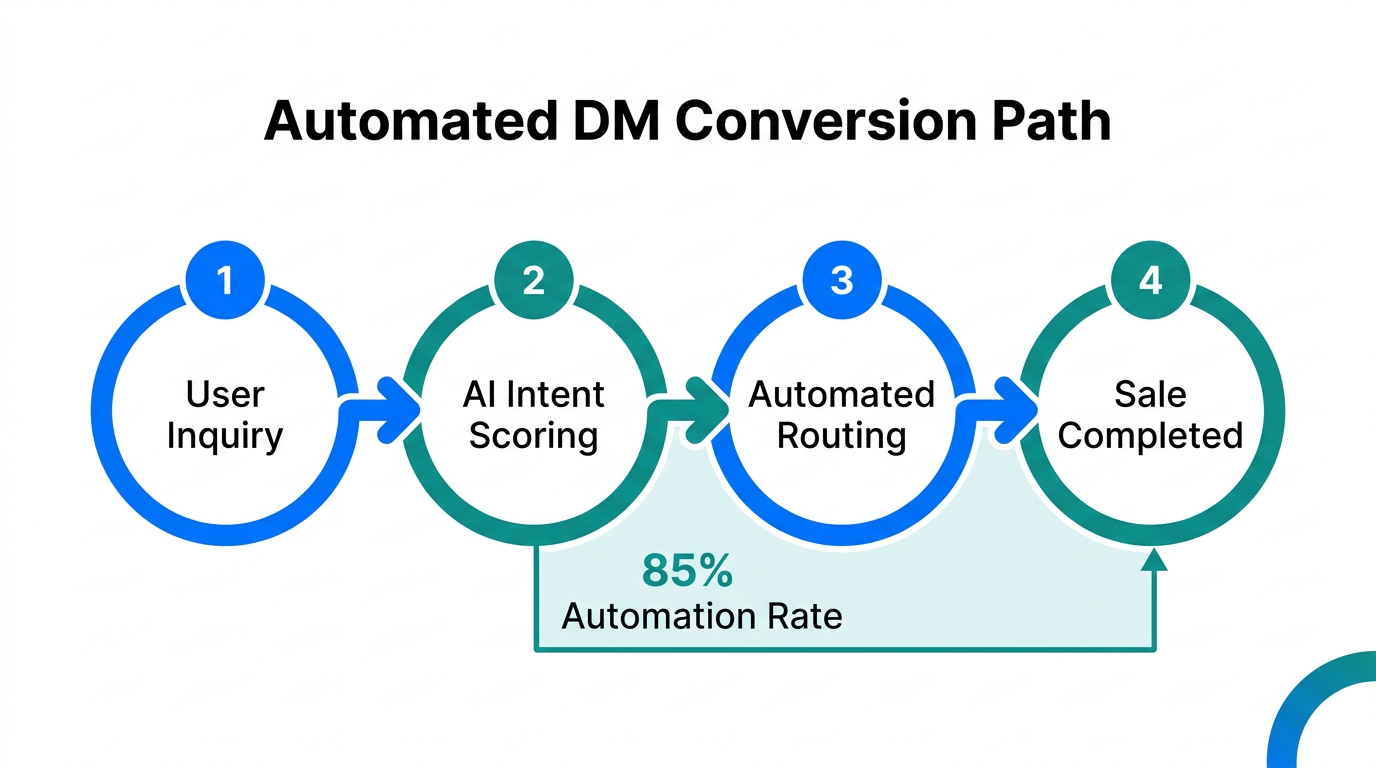
A product launch often triggers a flood of direct messages. In 2026, manual community management is a bottleneck that kills conversion rates. The modern product launch framework utilizes AI routing for "Buying Intent." AI agents scan incoming DMs, distinguish between a support request ("Where is my order?") and a sales lead ("Does this come in blue?"), and route the latter directly to your sales team in a CRM like Salesforce.
By automating these interactions, brands like Sephora have significantly increased their conversion rates. Their AI virtual assistants provide personalized recommendations 24/7, ensuring that no lead goes cold because a human manager was offline. This is the hallmark of agentic AI: it doesn't just talk; it takes action that impacts the bottom line.
"Social platforms are no longer just for awareness; with AI-driven native checkout, they are the new storefronts where the entire journey happens in the DM."Phase 4: Post-Launch — Sentiment Analysis & The Next Drop
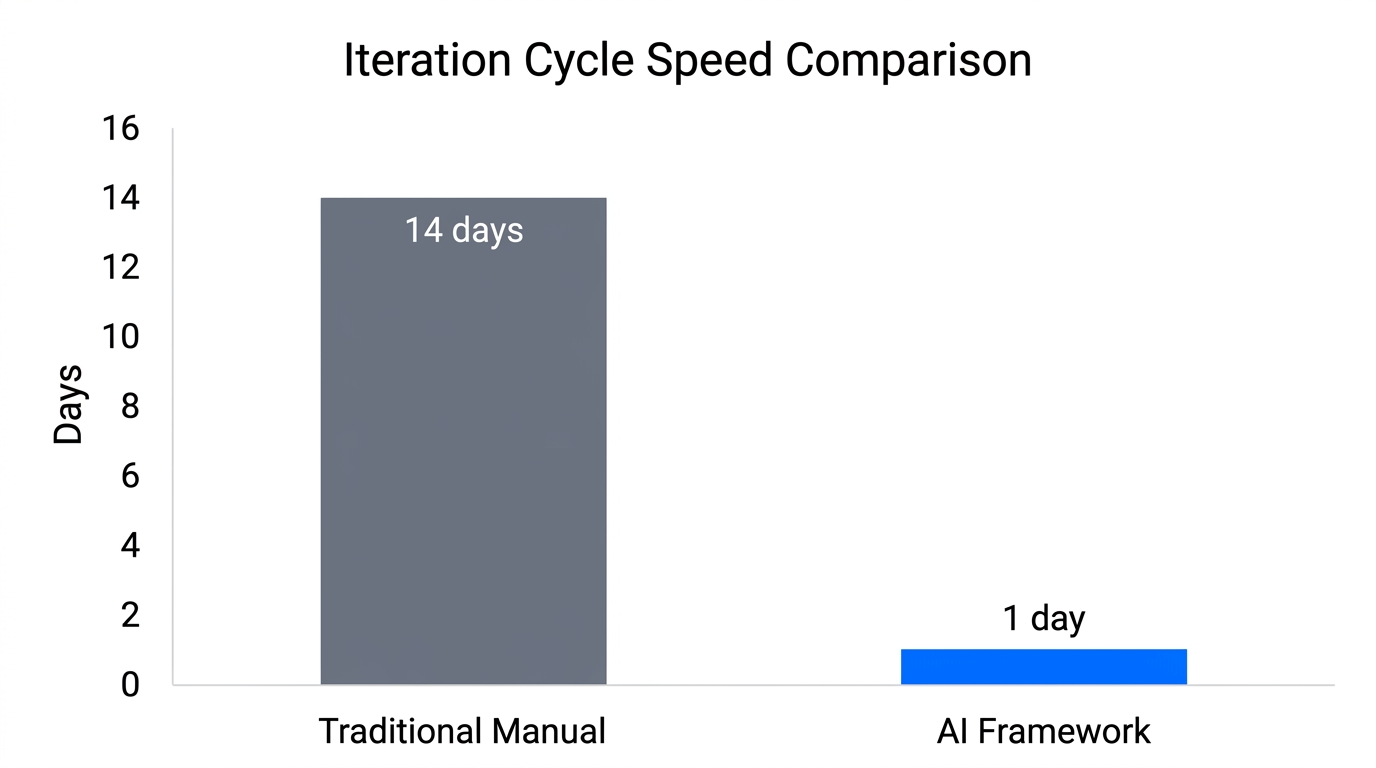
Once the initial launch dust settles, the Post-Launch phase begins. This is where AI performs automated sentiment analysis on thousands of customer comments and reviews. Instead of reading every post, the AI categorizes feedback into "Actionable Improvements," "Positive Brand Sentiments," and "Feature Requests." This data is then fed directly back into the R&D pipeline for the next product drop.
For example, Zalando uses machine learning to predict fashion trends based on post-launch social data, tailoring their next set of social ads to match the emerging demand. This creates a virtuous cycle of data-driven product development and marketing.
Case Study: Cadbury’s Hyper-Localized AI Campaign
One of the most impressive examples of this framework in action is Cadbury. They utilized generative AI to create over 2,500 localized video ads. These ads didn't just promote a product; they mentioned specific small local stores where the product could be purchased. This level of personalization—at that scale—would have been impossible with a manual workflow. The result was a 32% spike in engagement, proving that when AI is used to enhance localization, the results are explosive.
"The key to scaling is not doing more work; it's using AI to multiply your best ideas across thousands of unique customer touchpoints."Conclusion: Scaling Your 2026 Product Launch
The 2026 product launch framework is built on three pillars: Precision, Scale, and Agility. By using AI to generate ICPs, employing Dynamic Creative Optimization to manage ads, and automating DM routing for sales, e-commerce brands can achieve a level of efficiency that was unimaginable just two years ago. Remember that tools like TikTok Ads Manager and Meta Ads now prioritize creators and content that feel native and authentic—making the human-in-the-loop model more important than ever.
To start implementing this framework, begin by identifying your next launch's ICP through AI and finding the right creators to lead the charge. The brands that win in 2026 won't be those with the biggest teams, but those with the smartest AI marketing workflows.