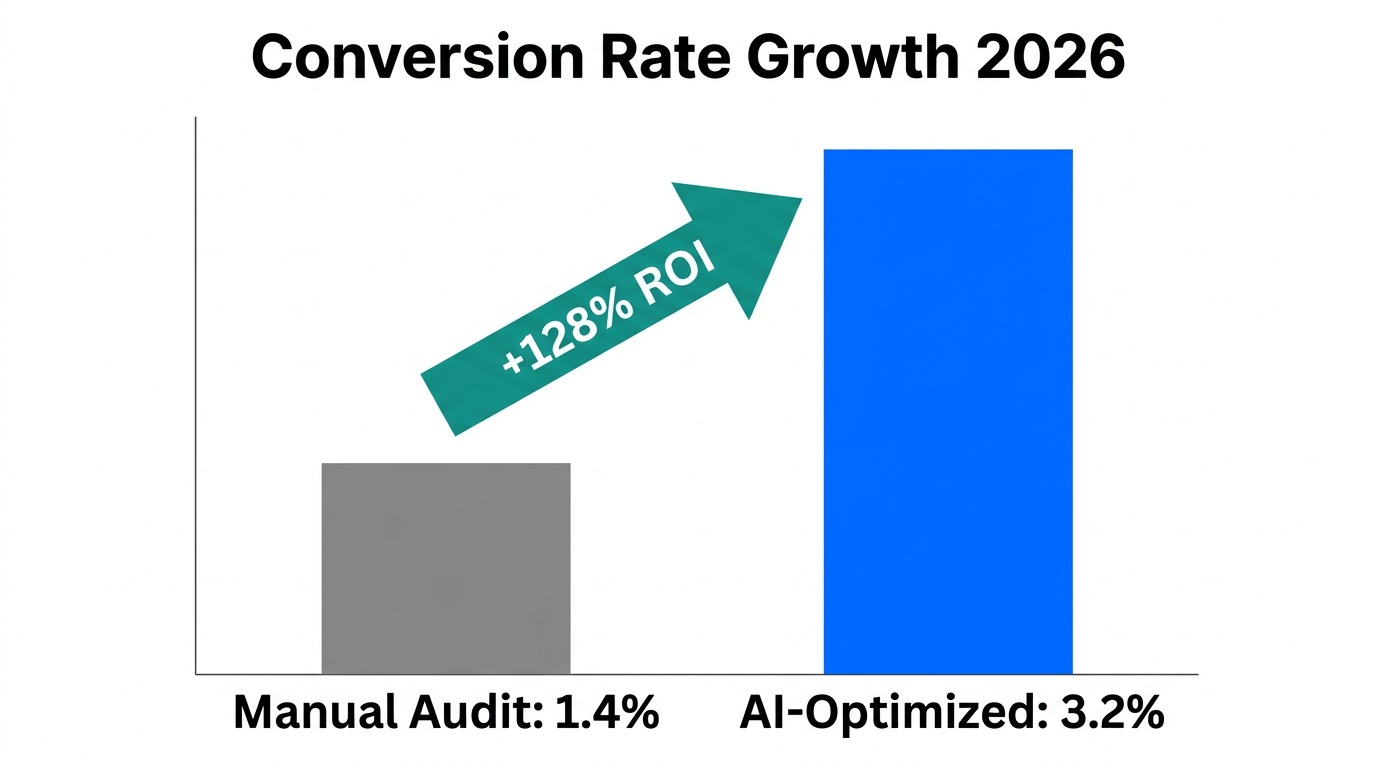
The digital shelf of 2026 is no longer a place for passive observation. For direct-to-consumer (DTC) brands, the line between profitability and obsolescence is drawn at the conversion rate. While the average Shopify store still lingers at a 1.4% conversion rate, according to Shopify’s 2026 benchmark data, the elite top 20% have surged ahead, consistently hitting 3.2% or higher by leveraging advanced AI-driven optimization strategies. This isn't just about changing the color of a "Buy Now" button; it's about a fundamental shift in how stores are audited and refined.
In 2026, manual audits are a relic of the past. Successful merchants are now deploying an AI Shopify store audit tool ecosystem to identify invisible barriers to purchase, align content with complex buyer intent, and satisfy the demanding algorithms of both traditional search engines and new generative AI researchers. If your store hasn't been audited by an autonomous agent in the last thirty days, you are likely leaving 50% of your potential revenue on the table, a gap often filled by AI-first marketing stacks.
The 2026 Audit Landscape: From Checklists to Autonomous Agents
The integration of artificial intelligence into e-commerce has moved from experimental plugins to foundational infrastructure. Research shows that over 70% of e-commerce marketers now utilize AI-driven SEO and audit tools to maintain their competitive edge. The reason is simple: the volume of data generated by modern consumers is too vast for human teams to process in real-time.
Search has also evolved. AI now drives over 65% of all search engine tasks, including crawling, intent mapping, and content scoring, according to data from BrightEdge. Consequently, a Shopify sales audit in 2026 must account for how "Generative Engines" like ChatGPT, Perplexity, and Gemini perceive your brand. This shift has birthed the era of "Generative Engine Optimization" (GEO), where tools like SE Ranking’s AI Visibility audit how often your products are recommended by large language models (LLMs).
"In 2026, your most important customer isn't just a human—it's the AI agent shopping on their behalf. If your store isn't AI-readable, you're invisible."
Auditing Buyer Intent: Flagging Misalignment at Scale
One of the most common reasons for a stagnant 1.4% conversion rate is a misalignment between search intent and landing page content. A customer searching for "best waterproof running shoes for marathons" has informational intent, while someone searching for "Nike Pegasus 40 size 10 black" has transactional intent. If your AI e-commerce marketing strategy dumps both users onto the same generic product page, your bounce rate will skyrocket.
Using an AI Shopify store audit tool like Surfer SEO allows merchants to perform an automated "Intent Mapping Audit." These tools scan your product descriptions and blog posts to ensure the semantic keywords match the current buyer journey stage. If the AI flags a page as "Intent Mismatched," it means you are targeting the wrong keyword type for that specific URL. By resolving these misalignments, brands can ensure that high-intent traffic isn't wasted on low-conversion content, often managed through platforms like Klaviyo for post-click nurturing.
The Peter Sheppard Footwear Blueprint: Resolving Pre-Sale Objections
High-performing brands like Peter Sheppard Footwear have set the gold standard for using AI to drive DTC growth strategy. Their secret? Personalized navigation audits and AI-driven objection handling. By auditing their customer journey, they realized that many shoppers abandoned their carts due to unresolved questions about fit, material, or shipping—what we call "pre-sale objections."
By integrating AI chatbots that were informed by real-time store audits, they were able to resolve these objections automatically, resulting in a 30% increase in revenue. This blueprint involves more than just a chat window; it involves an AI that knows exactly which products are in stock, which sizes run small, and which shipping zones are currently experiencing delays. This level of Shopify conversion rate optimization 2026 requires a unified data layer where the audit tool talks directly to the customer service interface.
Using Marvyn AI to Fix 'Barrier-to-Purchase' Questions
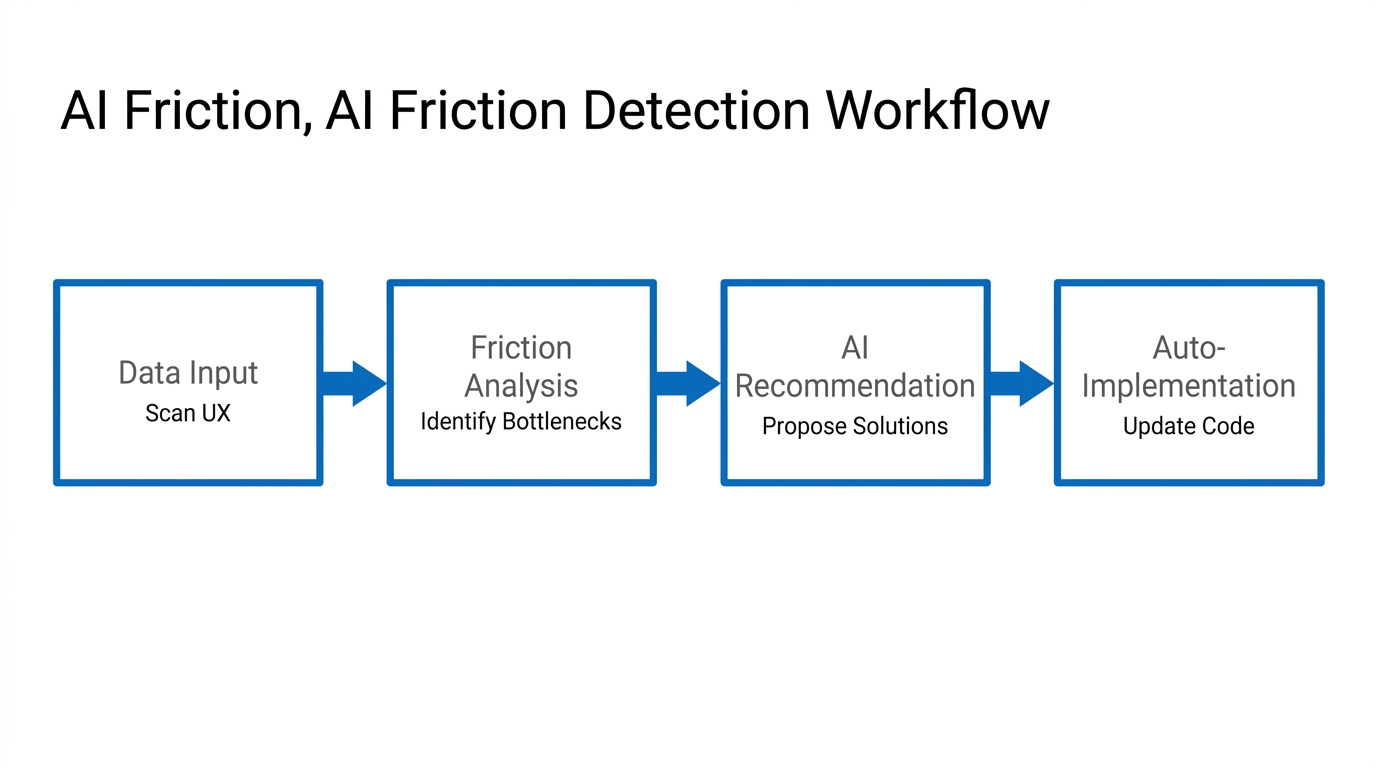
For high-ticket DTC brands, the stakes are even higher. A single unanswered question can result in a lost $500 sale. This is where specialized tools like Marvyn AI come into play. Marvyn acts as a real-time auditor on the product page, identifying "barrier-to-purchase" questions that customers are typing into search bars or chat widgets.
Instead of waiting for a weekly report, these AI tools audit the live session. If multiple users ask about a product's battery life, and that information is missing from the description, the AI flags it for immediate update or generates an automated FAQ response on the fly. Brands using this proactive approach have reported a 20-30% conversion lift by simply removing the friction of uncertainty during the final 10 feet of the sales funnel, a tactic supported by conversion optimization experts.
"A conversion rate of 3.2% isn't achieved by one big change; it's the result of fixing 100 small 'barriers to purchase' that you didn't even know existed."
Unified Business Intelligence: The Single Lens Audit
The biggest mistake Shopify merchants make is "tool sprawl." Installing five different apps for SEO, three for finance, and two for marketing leads to "code bloat" and conflicting data. In 2026, the trend has shifted toward Unified Business Intelligence platforms.
Tools like Luca AI audit the entire store across marketing, finance, and SEO through a single lens. This allows a merchant to see how a technical SEO change (like improving schema markup) impacts the actual bottom-line profitability of a specific SKU. This holistic view is essential for a sustainable DTC growth strategy, ensuring that you aren't just chasing traffic, but chasing profitable traffic.
| Audit Category | Traditional Method (2024) | AI-Autonomous Method (2026) | Conversion Impact |
|---|---|---|---|
| Technical SEO | Manual Checklist | Autonomous SEO Agents (e.g., Mega’s SEO Agent) | High |
| Content Audit | Human Review | AI Search Visibility Scoring | Medium-High |
| Schema Markup | Basic Plugin | 9-Point Schema Validation (JSON-LD for SEO) | 30% Click Increase |
| Buyer Intent | Keyword Density | Semantic Intent Mapping | Very High |
The '9-Point Schema' Scan: Why it Matters for 2026
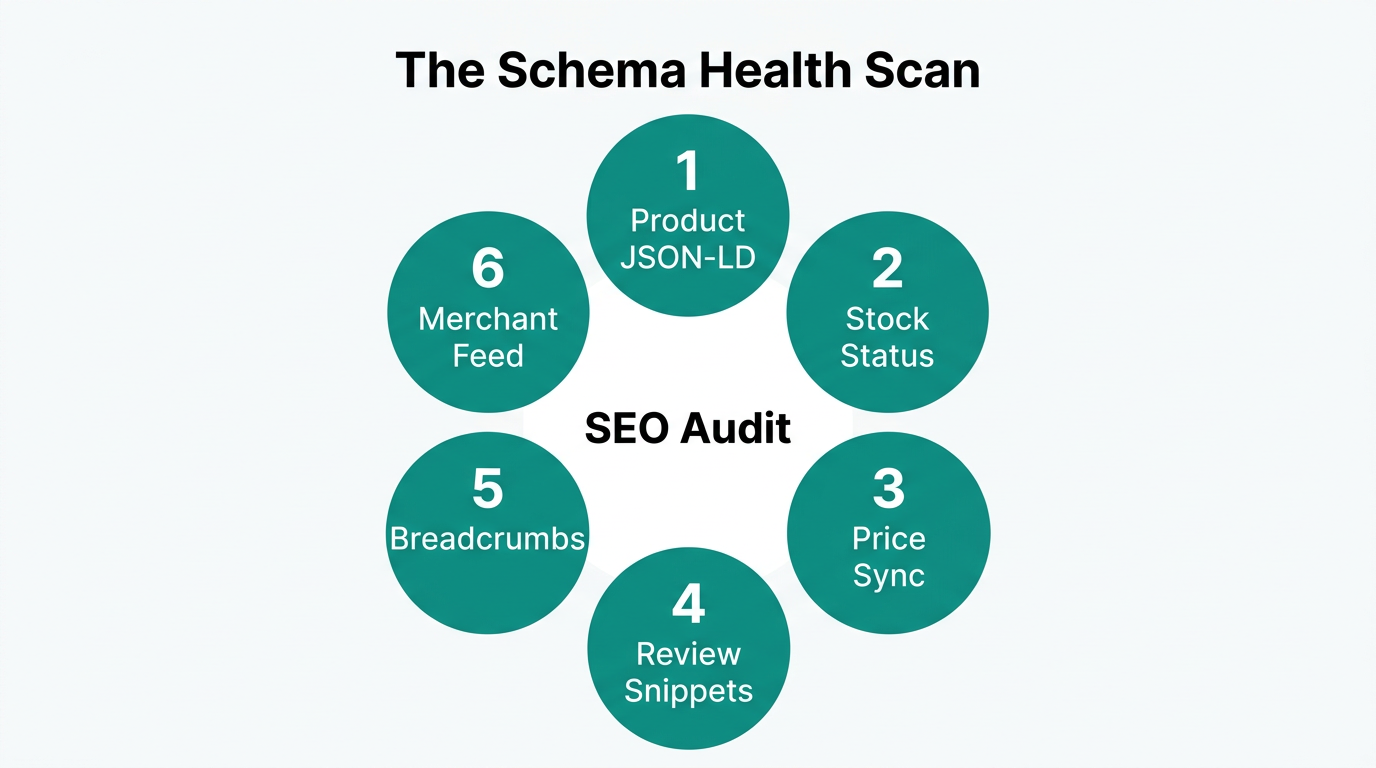
If you want your products to appear in Google's rich snippets or be recommended by AI assistants, your structured data must be flawless. Implementing proper AI-validated schema markup leads to an average 30% increase in clicks and conversions, according to Yuko.
An elite AI Shopify store audit tool will perform a "9-Point Schema Scan," checking for the following critical types:
- Product & Offer: For price and availability snippets.
- AggregateRating: To display those crucial star ratings in search.
- Breadcrumb: For better site structure visualization.
- Organization & WebSite: For brand authority.
- FAQ & Article: To capture informational real estate.
- ImageObject: To ensure your product photos appear in visual search.
Common Mistakes to Avoid in Your 2026 Audit
Even with the best tools, human strategy remains the pilot. Avoid these four common pitfalls that can tank your conversion efforts:
- The Bulk Content Trap: Using AI to rewrite 10,000 product descriptions without oversight. Google’s Helpful Content systems often flag this as "semantically identical," leading to de-indexing. As noted by Karan Goyal, human review is still critical for brand voice.
- Ignoring Product Taxonomy: AI audit tools fail if your tags and collections are messy. If your "Vegan" tag is missing on half your products, your personalization engine will fail, a warning highlighted by XgenTech.
- Code Bloat from Tool Sprawl: Every app adds JavaScript. Too many "AI tools" will slow your site down, hurting the very conversion rate you're trying to fix. Experts at Charle Agency recommend consolidating into unified platforms.
- Treating Audits as Static Events: Theme updates often break schema markup. Obsess AI recommends monthly automated technical scans to catch these breaks before they impact sales.
Scaling Beyond the Audit: Fueling the Top of the Funnel
Once your store is audited and converting at a 3.2% clip, the challenge shifts to finding high-quality traffic to pour into that optimized funnel. This is where User-Generated Content (UGC) becomes your greatest asset. High-converting stores don't just use stock photos; they use real videos from real creators on platforms like TikTok and Instagram Reels.
Platforms like Stormy AI streamline this process by allowing brands to discover and outreach to creators who align with their newly audited "buyer intent." By pairing an optimized Shopify store with a steady stream of AI-vetted influencer content, DTC brands can scale their revenue while maintaining a low customer acquisition cost (CAC). For example, finding a niche fitness creator on Stormy AI who can address the specific "pre-sale objections" identified in your audit creates a seamless, high-converting loop.
Conclusion: The Road to 3.2%
Achieving an elite 3.2% conversion rate in 2026 requires more than just a good product; it requires a commitment to autonomous optimization. By using an AI Shopify store audit tool to map buyer intent, resolve pre-sale objections like Peter Sheppard Footwear, and validate complex schema, you move from being a "standard" merchant to a market leader.
Stop guessing why customers are leaving your site. Deploy an AI audit today, clean up your taxonomy, and start scaling your DTC revenue with the precision that only artificial intelligence can provide.