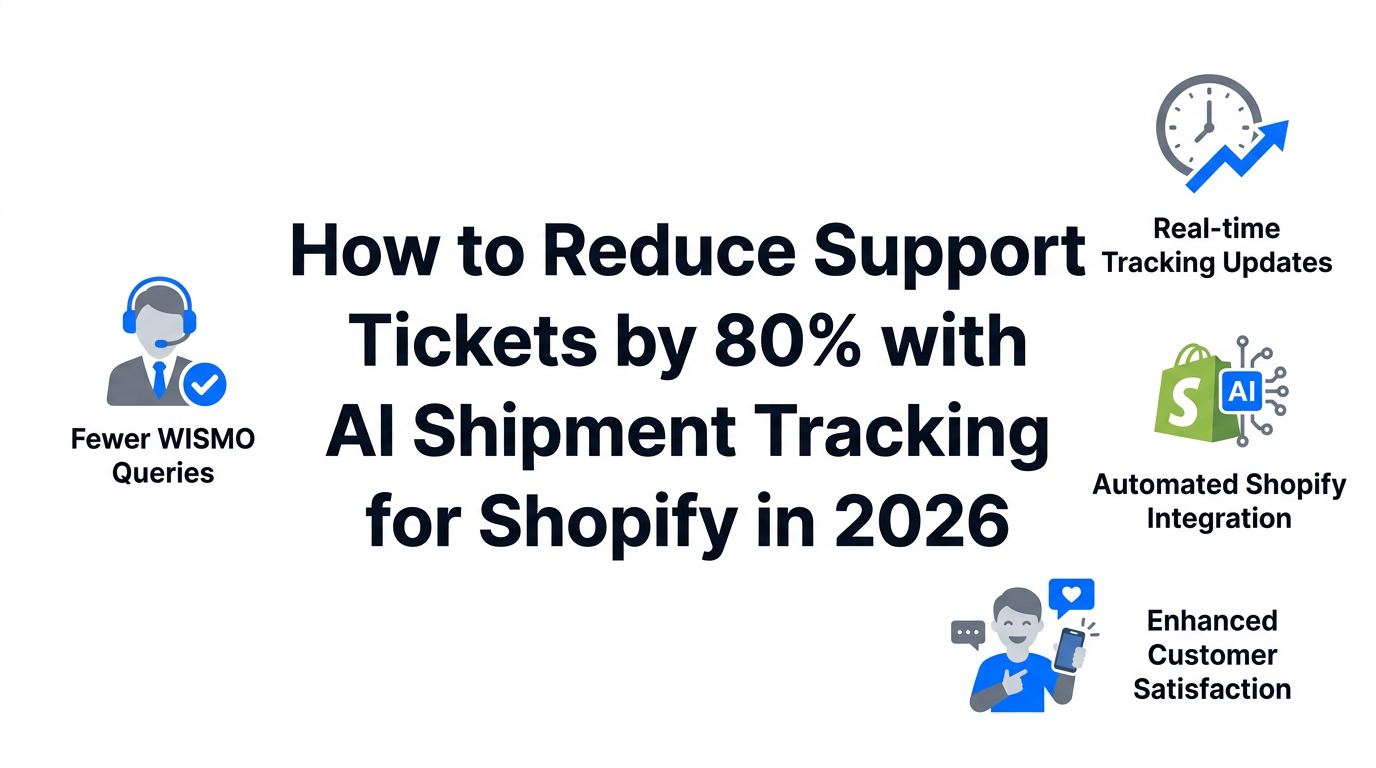
In 2026, the scale of global e-commerce has reached a breaking point where manual human intervention in logistics is no longer just expensive—it is a competitive liability. With the AI-enabled e-commerce market surging to an estimated $22.6 billion by 2032, the winners in the Shopify ecosystem are those who have successfully transitioned from reactive customer service to proactive, autonomous logistics orchestration. The most significant bottleneck for any scaling brand remains the dreaded "Where Is My Order?" (WISMO) inquiry, which historically consumes half of a support team’s bandwidth. By deploying AI shipment tracking for Shopify, brands are now achieving what was once thought impossible: an 80% reduction in support tickets while simultaneously increasing customer lifetime value.
The 2026 WISMO Crisis: Why Manual Tracking is the #1 Growth Killer
As we navigate through 2026, customer expectations for delivery transparency have hit an all-time high. It is no longer enough to provide a tracking number that links to a generic carrier website. Static tracking is dead. Today, consumers expect real-time, predictive updates that account for weather, port congestion, and carrier backlogs. Statistics show that WISMO inquiries typically account for 30–50% of all customer support volume for mid-market Shopify brands. This volume creates a "support debt" that prevents teams from focusing on high-value sales or complex customer needs.
"In 2026, the cost of a single human-led support ticket often exceeds the profit margin of the order itself. Automation is no longer an option; it's a survival mechanism."
Furthermore, the rise of Agentic Commerce means that customers aren't just checking tracking pages themselves; they are using AI personal assistants like ChatGPT or Perplexity to monitor their deliveries. If your Shopify store doesn't provide structured, AI-readable delivery data, these agents cannot provide answers, leading to frustrated customers and manual ticket spikes. Modern brands must treat their logistics data as a strategic asset to stay relevant in this autonomous era.
Deploying an 'Operational Brain': From Tracking to Predictive Logistics
The core shift in 2026 is moving away from simple "tracking" and toward predictive logistics. An "Operational Brain" is an AI layer that sits between your Shopify store and your carriers. Instead of waiting for a customer to complain about a delayed package, the AI identifies a potential exception—such as a package stuck at a sorting facility—and proactively alerts the customer with a revised delivery date or a discount code for the inconvenience.
Platforms like AfterShip and Parcel Panel have evolved into these operational brains. They use machine learning to analyze historical lane performance and real-time data to provide AI-powered Estimated Delivery Dates (EDD). This level of predictability is proven to increase checkout conversion rates because customers value predictability over raw speed. When a customer knows exactly when a package will arrive—and that they will be notified if that changes—the psychological urge to file a support ticket vanishes.
| Feature | Legacy Tracking (2023) | AI Shipment Tracking (2026) |
|---|---|---|
| Update Frequency | Carrier-dependent (Delayed) | Real-time AI synchronization |
| Delivery Dates | Static windows (3-5 days) | Predictive, dynamic EDD |
| Issue Resolution | Reactive (Customer emails first) | Proactive AI exception handling |
| Customer Interface | Carrier Website (UPS/FedEx) | Branded, AI-driven tracking page |
Step-by-Step Guide: Automating 80% of WISMO Tickets
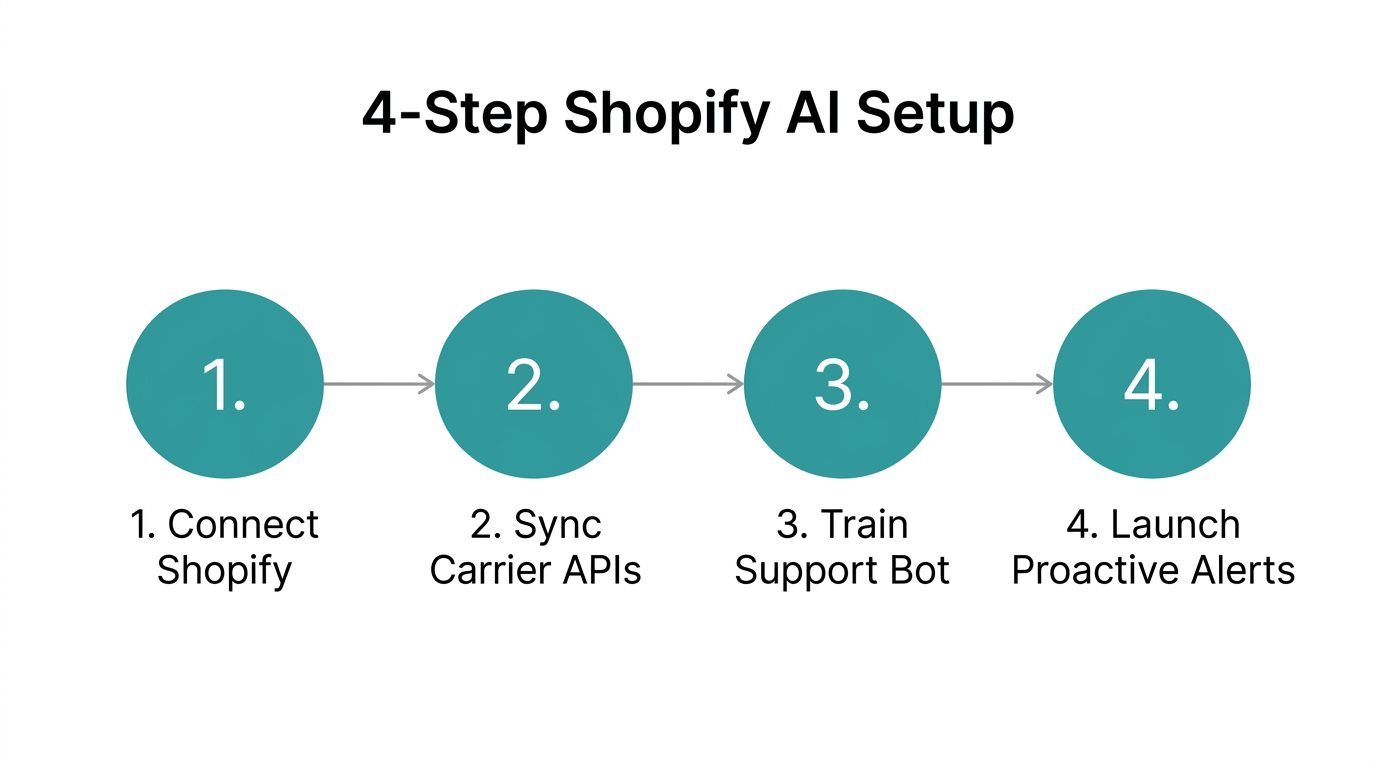
Scaling your Shopify brand without increasing headcount requires a clear playbook for autonomous ticket resolution. Follow these steps to implement shopify support automation 2026 effectively:
Step 1: Integrate an AI Agent for Autonomous Resolution
Connect a tool like Gorgias to your Shopify backend. Their AI agents can now handle end-to-end WISMO resolution by pulling real-time data from your tracking provider and responding to customer inquiries in natural language without human oversight. This can reduce support load by up to 40% immediately upon deployment.
Step 2: Monetize the Branded Tracking Page
Never send a customer away from your ecosystem. Use your tracking page as a marketing channel. By implementing AI-driven product recommendations on your branded tracking page (using tools like Track123), you can capitalize on the fact that customers check their tracking status 3-5 times per order. Remember, repeat shoppers generate up to 300% more revenue than first-time buyers.
"The tracking page is the most underutilized piece of real estate in e-commerce. In 2026, it’s not a cost center; it’s a conversion machine."
Step 3: Enable Proactive Exception Alerts
Configure your AI logistics tool to trigger automated flows when a "Shipping Exception" occurs. If a package is stalled for more than 24 hours, the AI should automatically email the customer: "We noticed a slight delay in your shipment due to weather in Chicago. Your new delivery date is Friday. Here is 10% off your next order for the wait." This eliminates the need for the customer to reach out entirely.
While you are automating your logistics, don't forget that the content driving your sales should be just as optimized. High-growth brands often use Stormy AI to discover and manage the UGC creators who provide the social proof needed to drive these high-volume orders in the first place.
Case Study: How Princess Polly Mastered Support Efficiency
Fashion retailer Princess Polly provides a masterclass in ecommerce customer experience strategies. By deeply integrating their Shopify store with AI-powered support and tracking tools, they were able to automate a massive portion of their post-purchase workflow. They focused on "Self-Service First," allowing customers to track orders, initiate returns, and modify shipping addresses through an AI-powered portal.
The results were staggering: Princess Polly achieved a 40% increase in support team efficiency. Their agents stopped answering "Where is my order?" and started focusing on personalized styling advice and loyalty programs. This shift is a prime example of how AI shipment tracking for Shopify allows a brand to scale its revenue 10x without 10x-ing its support staff.
Data Hygiene Checklist: Making Your Shopify Data 'AI-Ready'
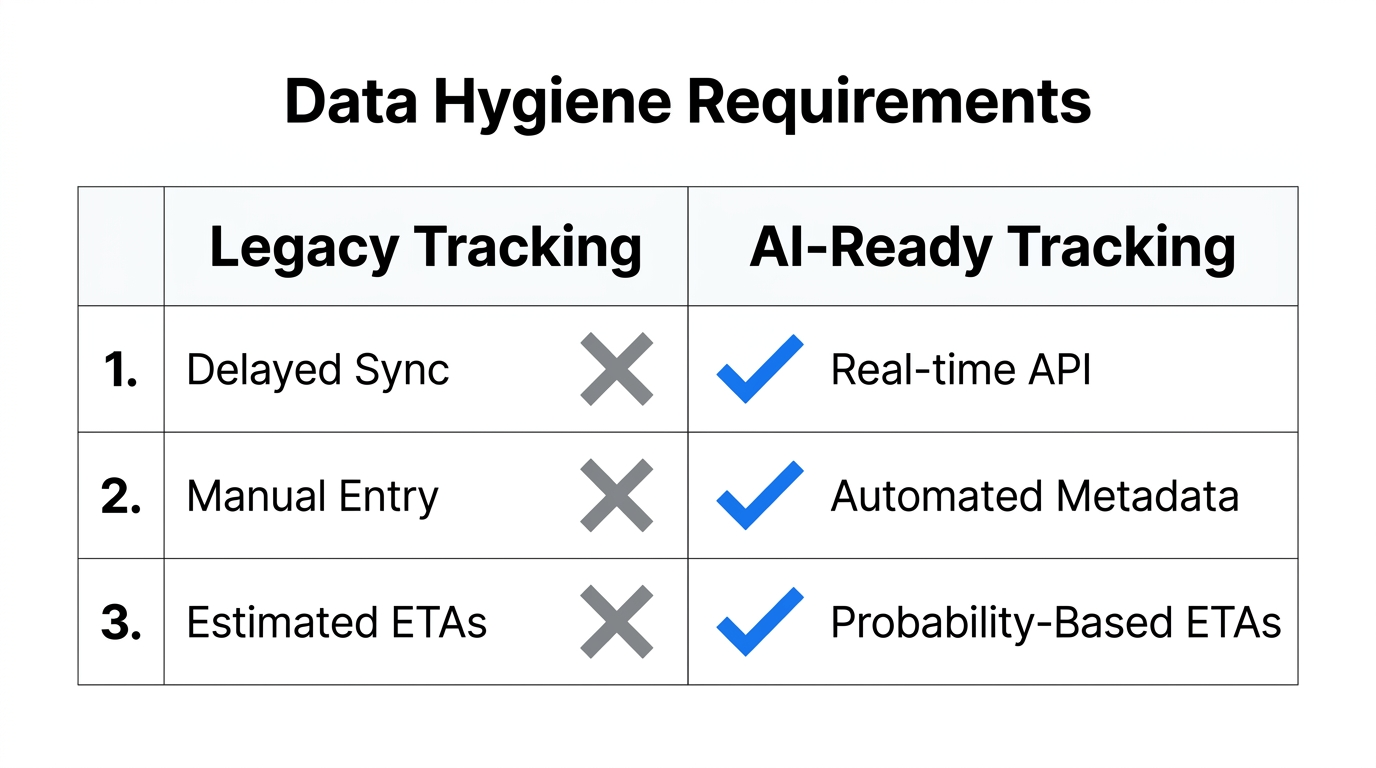
AI models are only as effective as the data they consume. In 2026, "AI hallucinations" in customer support usually stem from fragmented data across different apps. To prevent this, your shopify support automation 2026 strategy must include a rigorous data hygiene routine.
- Consolidate Your Tech Stack: Avoid using separate apps for EDD, returns, and tracking. Use unified platforms like AfterShip or ShipStation to ensure a single source of truth.
- Standardize Delivery Statuses: Ensure that your carrier status updates map correctly to your AI agent's logic. A "delivered to porch" status must be interpreted correctly by the AI to avoid confusion.
- Optimize for Mobile: With 79% of Shopify traffic coming from mobile devices, your AI tracking widgets and support bots must be lightning-fast and mobile-responsive.
- Continuous Training: Regularly review your AI agent’s logs to identify where it might be struggling with specific carrier codes or international shipping nuances.
"Data hygiene is the difference between a helpful AI agent and a customer service nightmare."
Conclusion: Scaling to the Future of E-Commerce
Reducing WISMO tickets by 80% is no longer a futuristic dream—it is the baseline for success in 2026. By implementing AI shipment tracking for Shopify and moving toward a model of predictive logistics, you are not just saving on support costs; you are building a resilient brand that can weather any supply chain storm. Start by deploying an operational brain, monetizing your tracking experience, and ensuring your data is clean enough for the next generation of AI agents. The brands that scale today are the ones that let AI handle the tracking while humans focus on the vision. For those looking to fuel that vision with top-tier creator content, Stormy AI remains the essential partner for discovery and outreach in the creator economy.