2026 Growth Playbook: Monetizing AI Shipment Tracking for Shopify to Boost LTV
Learn how to turn AI shipment tracking for Shopify into a high-converting revenue channel. Boost LTV with predictive logistics and post-purchase marketing in 2026.
In 2026, the traditional boundaries of the ecommerce funnel have completely dissolved. The moment a customer clicks "buy" is no longer the end of the transaction; it is the beginning of the most critical marketing phase in the modern customer journey. As the AI-enabled ecommerce market scales toward a staggering $22.6 billion by 2032, savvy Shopify merchants are shifting their focus from simple acquisition to hyper-personalized post-purchase orchestration. The secret weapon? AI shipment tracking for Shopify.
Gone are the days when a tracking link simply pointed to a generic carrier page. Today, the post-purchase experience is the ultimate frontier for ecommerce conversion rate optimization. By leveraging predictive logistics and AI-driven engagement, brands are transforming "Where Is My Order?" (WISMO) anxiety into "What should I buy next?" excitement. This playbook outlines exactly how to monetize your shipment tracking real estate to drive unprecedented Long-Term Value (LTV).
The Branded Tracking Page: 2026's Most Undervalued Real Estate
For years, retailers viewed shipment tracking as a logistical burden—a cost center focused on reducing support tickets. However, recent data suggests a massive shift in consumer behavior. Gorgias reports that WISMO inquiries typically account for 30–50% of all customer support volume. While automating these inquiries is essential, the real opportunity lies in where that automation happens.
When you keep customers within your own branded tracking environment, you maintain their attention during their "peak excitement" phase. According to recent Shopify 2026 trends, repeat shoppers generate up to 300% more revenue than first-time buyers. By using Track123 or similar tools to host these pages, you aren't just giving them a status update—you're giving them a reason to come back. This is a foundational shopify retention strategy for the current year.
"The tracking page is the only piece of marketing real estate that enjoys a 100% open rate and multiple visits per customer. Leaving it blank is like leaving money on the table."
How AI Recommendations Drive a 300% Increase in Repeat Revenue
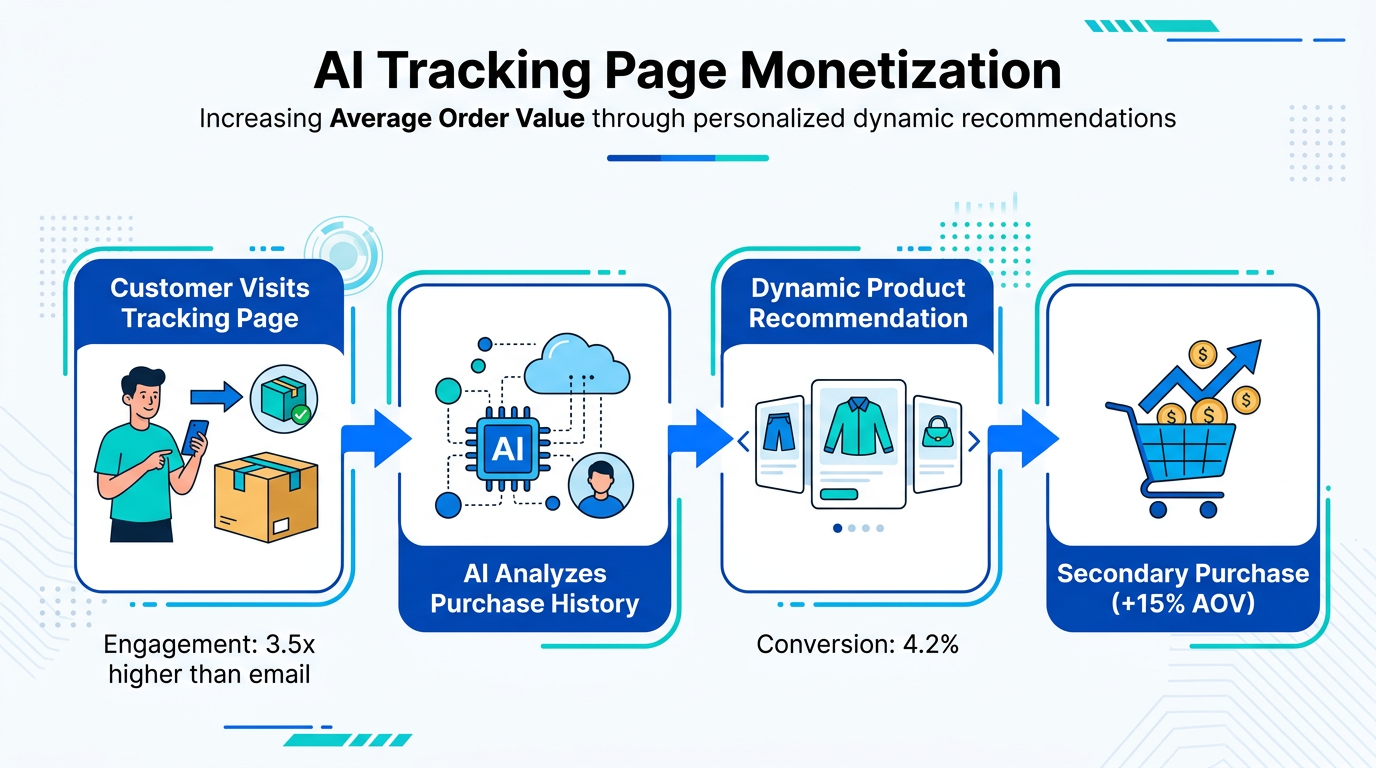
In 2026, static "You might also like" widgets are obsolete. Modern AI shipment tracking for Shopify uses deep machine learning to analyze a customer's purchase history, browsing behavior, and real-time intent to serve hyper-personalized offers. This isn't just cross-selling; it's predictive commerce.
Platforms like AfterShip utilize AI to dynamically adjust the products shown on the tracking page based on the shipping status. For example:
- In Transit: Show complementary accessories (e.g., "Your camera is on the way! Do you need a tripod?").
- Out for Delivery: Show a high-value "next-step" product for their collection.
- Delivered: Trigger a time-sensitive discount code for their next order to capture the dopamine hit of the unboxing experience.
This level of personalization is why 78% of organizations have now integrated AI into their core business functions, as noted in the latest AI adoption reports. By treating delivery data as a strategic marketing asset, you move from reactive logistics to proactive revenue generation.
Predictability Over Speed: The Power of AI EDD
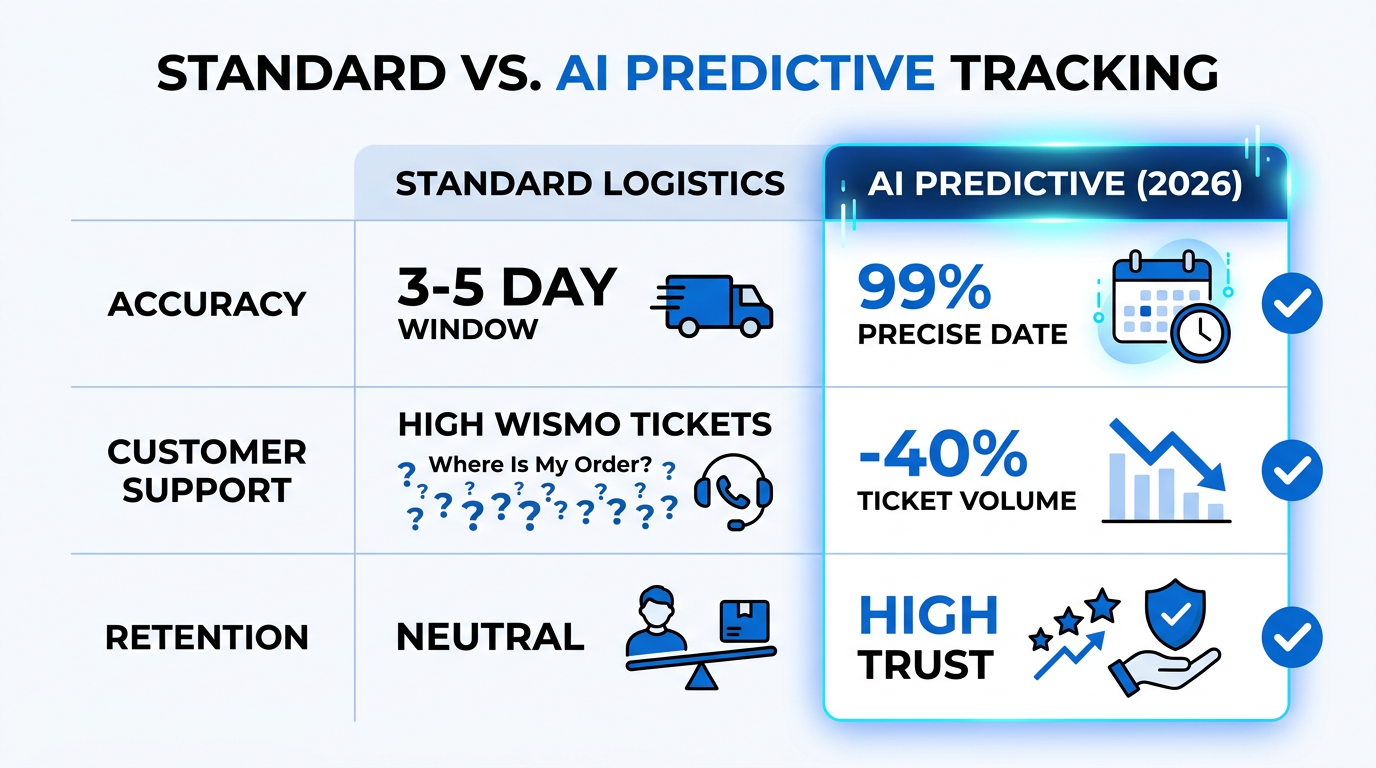
While "fast shipping" used to be the primary differentiator, 2026 consumers value certainty above all else. Predictive Delivery Dates (AI EDD) have become a cornerstone of ecommerce conversion rate optimization. Instead of offering a vague "3-5 business days," AI analyzes real-time variables—carrier backlogs, weather patterns, and historical lane performance—to provide a precise date.
According to research by Parcel Perform, providing a precise delivery date at checkout significantly increases conversion rates. Consumers are more likely to complete a purchase when they know exactly when to expect their package, even if that date is a day or two later than a competitor's "estimated" window.
| Feature | Legacy Tracking | AI-Powered Tracking (2026) |
|---|---|---|
| Delivery Estimates | Static 3-5 day windows | Real-time AI-calculated dates |
| Customer Interaction | Reactive (Customer checks status) | Proactive (AI alerts for delays) |
| Revenue Impact | Neutral/Cost center | Up to 300% repeat revenue growth |
| Support Load | High (50% WISMO tickets) | Low (60-80% automated resolution) |
For brands looking to scale, integrating tools like ShipStation for predictive fulfillment ensures that the "operational brain" of your business is always one step ahead of the carrier. This level of transparency builds the trust necessary for a sustainable shopify retention strategy.
The Playbook: Implementing Smart Upsells During 'Peak Excitement'
To truly monetize AI shipment tracking, you need a structured approach. Follow these steps to turn your tracking page into a profit machine:
Step 1: Centralize Your Data
AI is only as good as the data it ingests. Ensure your Shopify store is synced with an orchestration platform. Avoid fragmented stacks where your helpdesk and tracking apps don't speak to each other. As noted by experts at Maersk, 2026 is the year of "AI Enablement," where unified platforms like Parcel Panel orchestrate the entire network.
Step 2: Deploy an AI Support Agent
Reduce human overhead by implementing an autonomous agent. Gorgias allows for 60-80% autonomous resolution of shipping queries. This frees your team to focus on high-value sales conversations rather than repetitive status updates.
"The shift from 'Chatbot' to 'Operational Brain' means AI now re-routes parcels to avoid delays before the customer even knows there is a problem."
Step 3: Integrate UGC and Social Proof
During the transit phase, reinforce the customer's buying decision. This is a perfect place to feature User-Generated Content (UGC). Brands often use platforms like Stormy AI to discover creators who can produce authentic unboxing previews to show on the tracking page, keeping the hype alive while the package is in flight.
Measuring the ROI: Moving Beyond Cost Savings
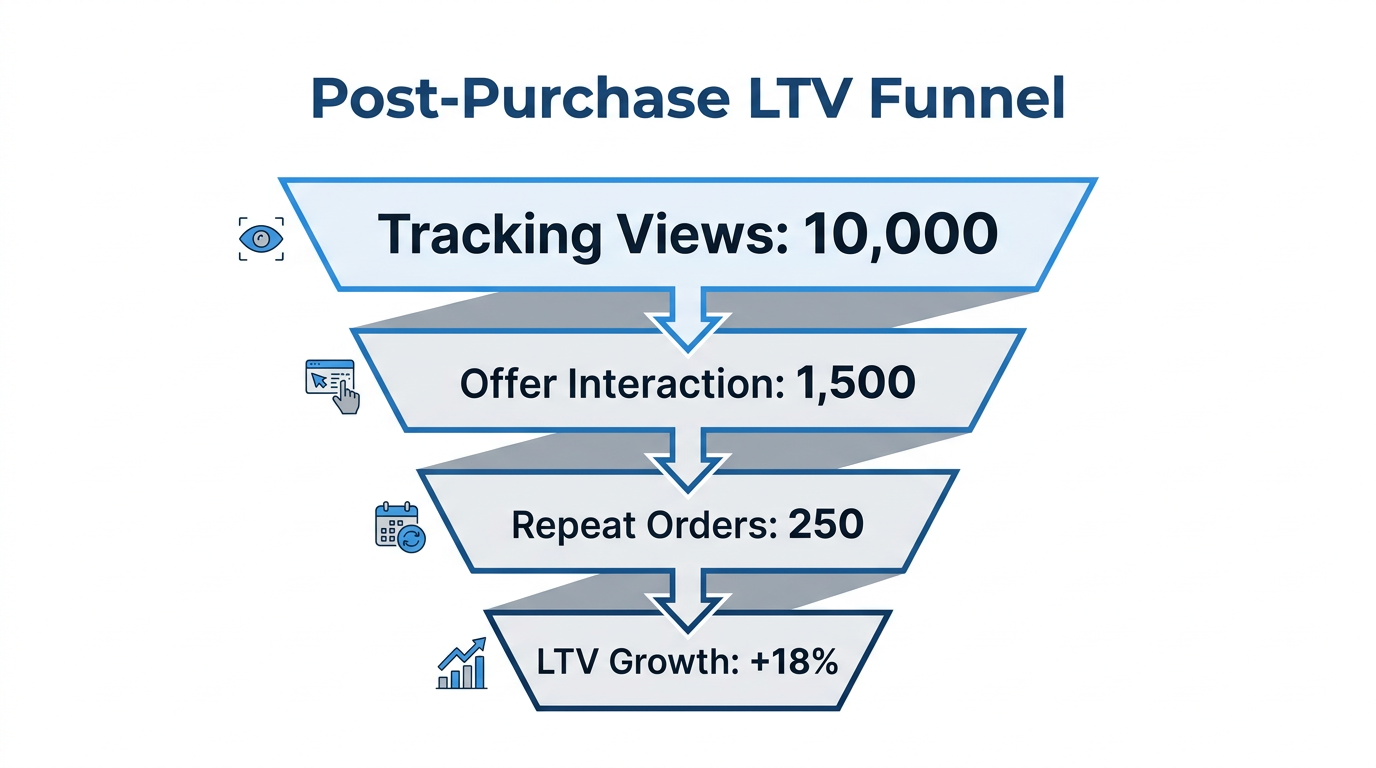
The success of AI shipment tracking for Shopify should be measured by more than just reduced ticket volume. In 2026, the primary KPIs are Post-Purchase Click-Through Rate (CTR) and Attributed Repeat Revenue.
Consider the case of Balance ONE, a merchant that used machine-learning systems to decrease cost-per-order by 32% while simultaneously boosting engagement. Similarly, fashion giant Princess Polly saw a 40% increase in support efficiency by integrating AI into their order management flow. These efficiencies directly translate into a healthier bottom line and higher LTV.
Avoiding the "AI Washing" Trap
As you build your 2026 growth strategy, beware of "AI washing." Many tools claim to be AI-powered but are simply using basic rule-based automation. To see real gains in ecommerce conversion rate optimization, look for tools that use genuine machine learning to improve their predictions over time.
Another common mistake is neglecting data hygiene. If your Shopify store doesn't provide clean, structured data to your AI agents, they will "hallucinate" and provide incorrect shipping info. This destroys trust faster than a lost package. Ensure you are using 17TRACK or similar multi-carrier syncs to keep your data stream consistent across all global carriers.
"AI is only as good as the data it ingests. Clean data is the fuel for the 2026 ecommerce engine."
Conclusion: The Era of Agentic Commerce
We are entering the era of Agentic Commerce, where AI-driven orders are surging by 11x. In this environment, your shipment tracking strategy cannot remain a static logistical checkbox. It must be a dynamic, AI-powered engine for growth.
By implementing AI shipment tracking for Shopify, providing Predictive Delivery Dates, and monetizing the tracking page with smart upsells, you turn every delivery into a new sales opportunity. The merchants who win in 2026 will be those who treat the post-purchase experience as the most important part of the funnel. Start by auditing your current tracking experience—is it a dead end, or a doorway to the next purchase?
For those looking to fuel these high-converting pages with fresh content, using an AI-powered influencer platform like Stormy AI can help you source the UGC creators needed to keep your customers engaged from checkout to unboxing and beyond.