The sales floor of 2026 looks nothing like the high-energy, phone-ringing pits of the previous decade. Today, the battle for B2B market share is fought in the silicon, where autonomous agents and AI SDRs execute micro-segmented campaigns with a level of precision and speed that no human could ever match. As organizations scramble to optimize their go-to-market strategies, the debate between maintaining a traditional human sales force and migrating to an Autonomous RevOps Agency model like OpenClaw has reached a tipping point.
With 72% of B2B organizations expected to augment or replace human-only SDR teams this year (Gartner), the data is clear: the OpenClaw ROI isn't just a marginal improvement; it is a fundamental shift in the unit economics of growth. This article breaks down the data-driven comparison between AI vs Human SDRs in 2026, exploring costs, response times, and the massive ROI of hybrid automation.
The $150,000 Gap: Human vs. AI SDR Costs
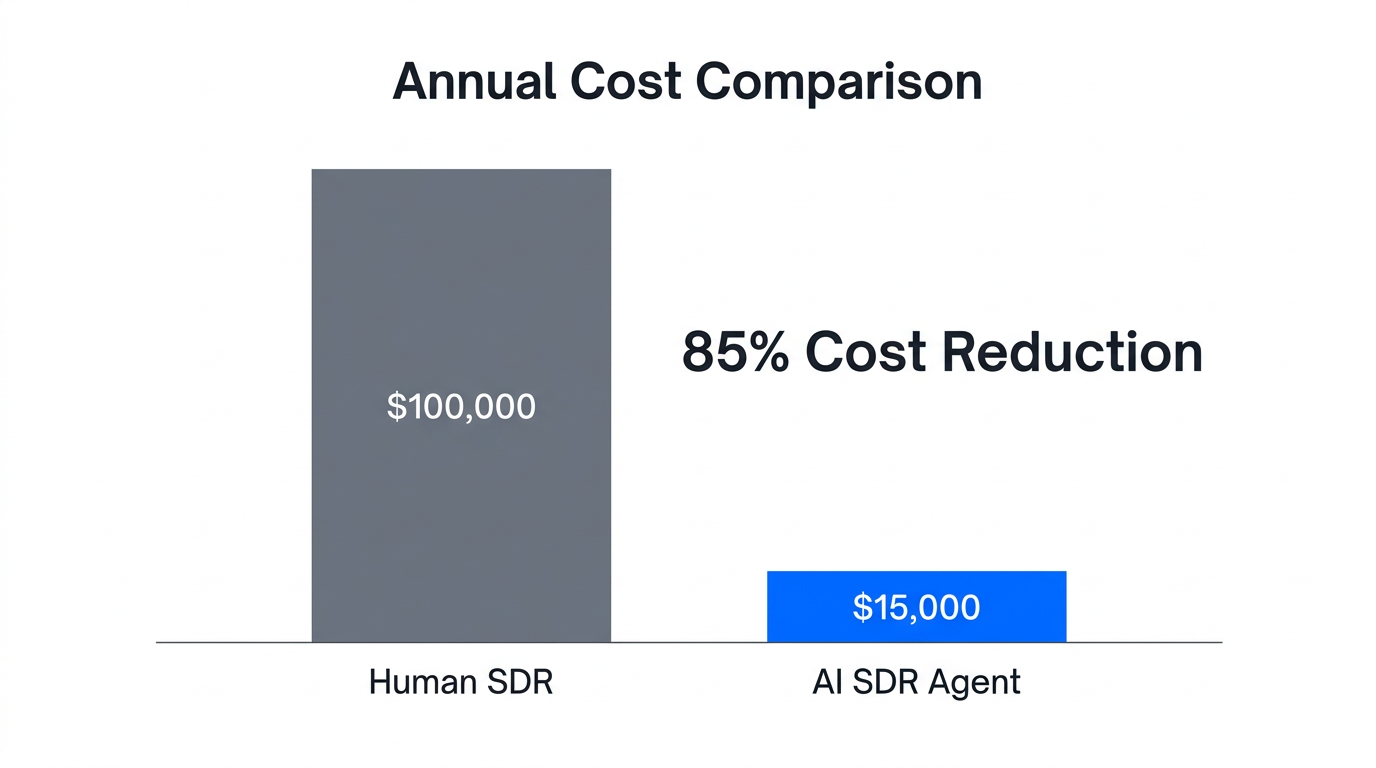
In 2026, the fully loaded cost of a human SDR—including salary, benefits, tech stack, and overhead—ranges between $98,000 and $173,000 according to Glassdoor's latest market reports. When you factor in the high turnover rates—often exceeding 30% annually as reported by The Bridge Group—and the months required for onboarding, the financial burden on a scaling company is immense. Conversely, an AI SDR Agent operating within an automated framework typically costs between $6,000 and $24,000 per year.
| Metric | Human SDR (2026) | AI SDR (OpenClaw/Stormy AI) |
|---|---|---|
| Annual Cost | $98k – $173k | $6k – $24k |
| Cost Per Qualified Lead | ~$262 | ~$39 |
| Onboarding Time | 3–6 Months | Hours/Days |
| Turnover Risk | High (30%+) | Zero |
The primary driver here is the 85% reduction in cost per qualified lead. While a human rep might set one or two meetings a week, an AI-first agency model allows for the automated orchestration of thousands of touchpoints across Apollo.io and Clay, ensuring that your pipeline never runs dry.
"By 2026, the role of the SDR has become that of an 'AI Orchestrator.' If you are still manually writing emails, you are already obsolete."
The Speed Advantage: 60 Seconds vs. 42 Hours
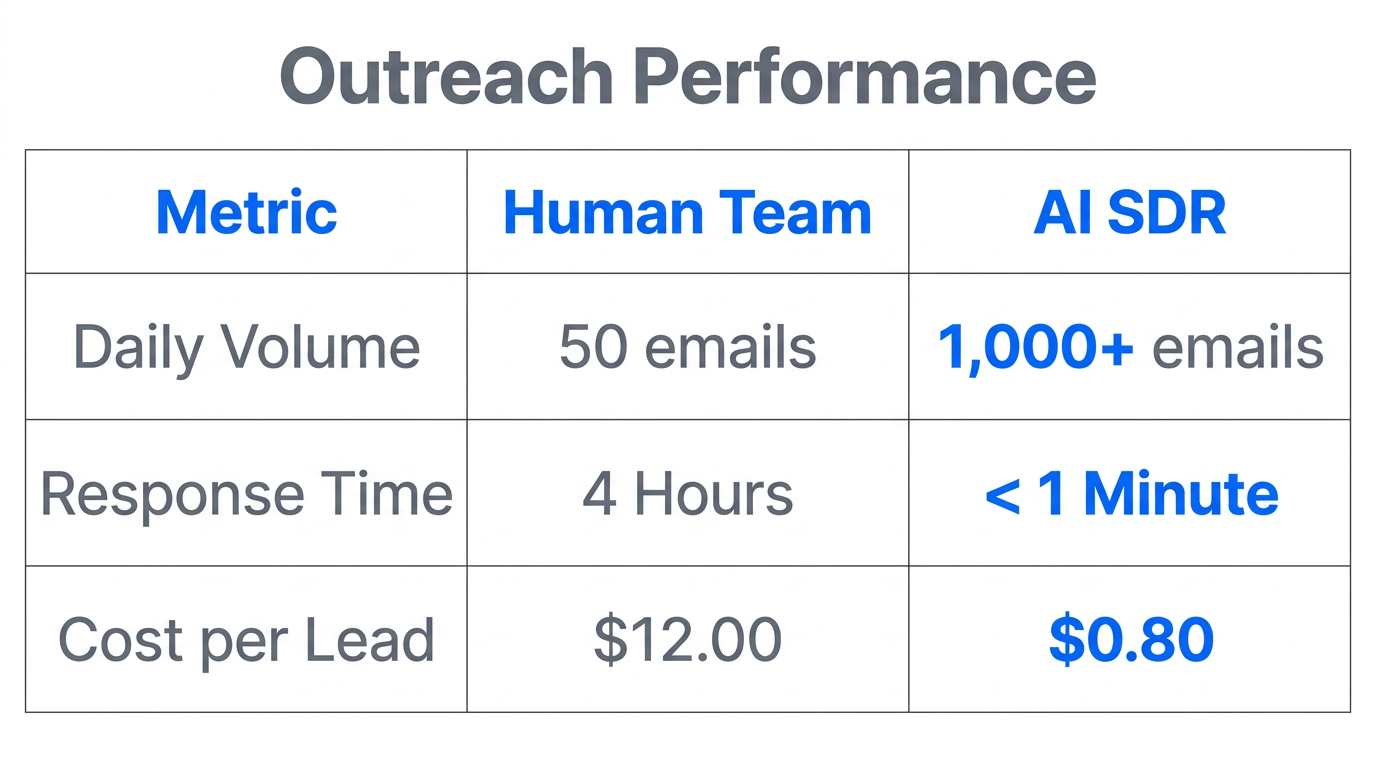
Response time is the single most important factor in lead conversion. Research published in Harvard Business Review suggests that the average human response time to an inbound inquiry is still a staggering 42 hours. In 2026, that delay is a death sentence for a deal.
An AI SDR Agent responds in under 60 seconds, 24/7. This instantaneous engagement ensures that the prospect is contacted while their intent is at its peak. Furthermore, where a human is capped at 50–80 daily outreach attempts, tools like Stormy AI and OpenClaw enable a 10x increase in daily outreach volume, often exceeding 1,000+ contacts per day without sacrificing quality.

Unlike the "batch and blast" methods of the past, 2026 AI agents use hyper-specific triggers. They can scrape UserGems to find prospects who recently changed jobs or analyze a company's latest 10-K report via Stormy AI's Analysis engine to find the perfect value proposition.
The Hybrid Alpha: Why Humans and AI are Better Together

The most successful companies in 2026 aren't firing their entire sales team. Instead, they are adopting the Hybrid Alpha model. In this framework, AI agents handle the top-of-funnel discovery, vetting, and initial outreach, while human closers step in only when a lead is highly qualified and ready for a deep-dive conversation.
This model leverages the best of both worlds: the infinite scalability of AI and the nuanced negotiation skills of a seasoned sales professional. While OpenClaw provides the raw automation power, Stormy AI provides the essential influencer and creator intelligence needed to bridge the gap between cold outreach and authentic partnership.
Navigating the 'Deliverability Hell' of 2026
The landscape of email marketing has changed drastically. Google and Yahoo now enforce a strict 0.10% spam threshold (Google Sender Guidelines). If your AI-generated emails look like every other bot on the market, your domain will be blacklisted in hours by services like Spamhaus.
Winning agencies avoid this by using Pattern Randomization and Burner Domains. Platforms like Instantly.ai and Smartlead are used to distribute the load across hundreds of subdomains. Stormy AI takes this a step further by ensuring every email is hyper-personalized based on real-time social data, which dramatically lowers spam complaints.
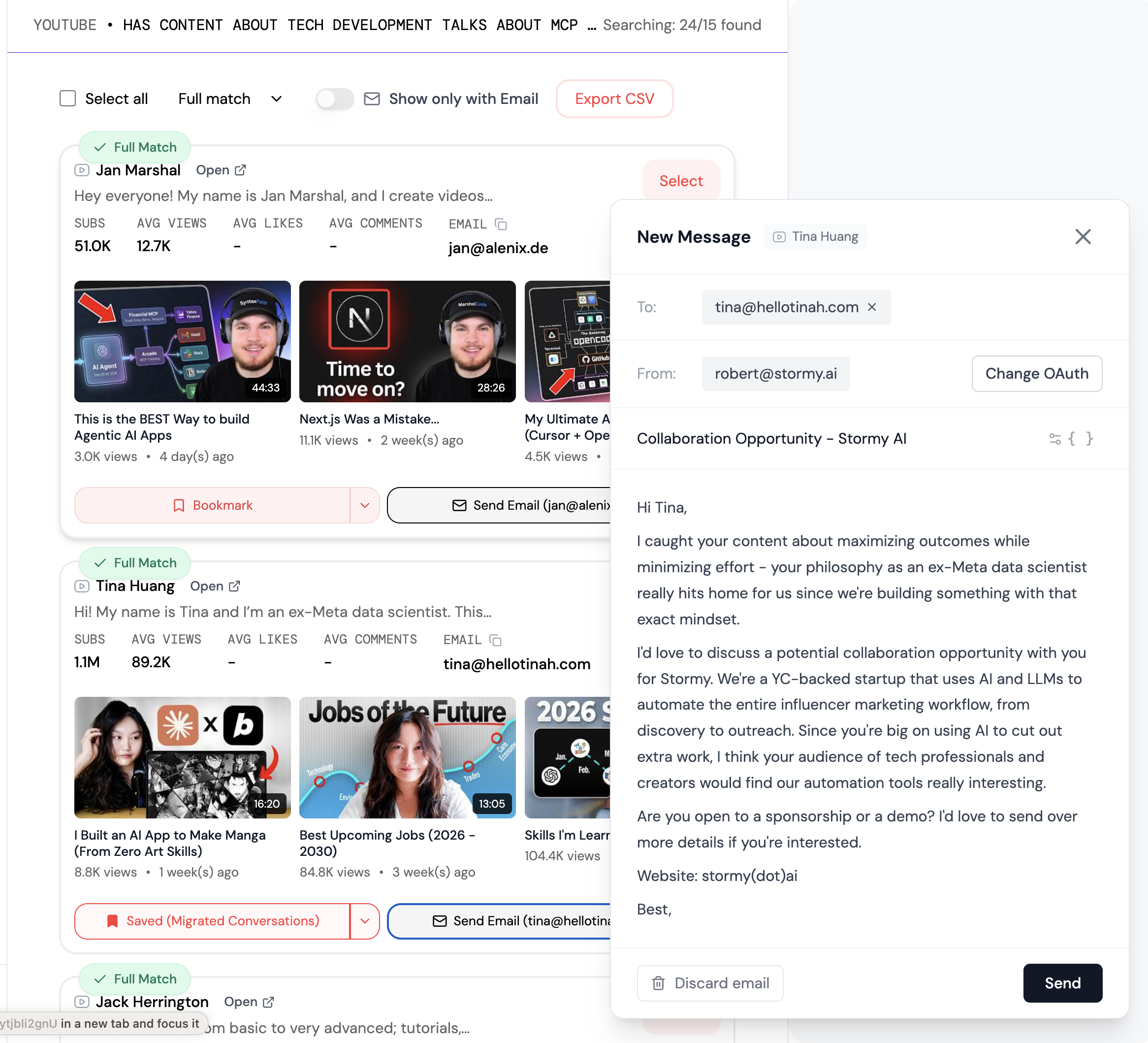
By automatically enriching every lead with valid email addresses using tools like Hunter.io and personalizing the hook with data from a creator's latest TikTok or YouTube post, Stormy AI ensures that your message lands in the inbox, not the junk folder. This is a level of "Technical RevOps" that the old-school human SDR teams simply can't manage at scale.
"Relevance is the new personalization. In 2026, AI allows us to be relevant at a scale that was once physically impossible."
The 2026 AI Growth Stack Playbook
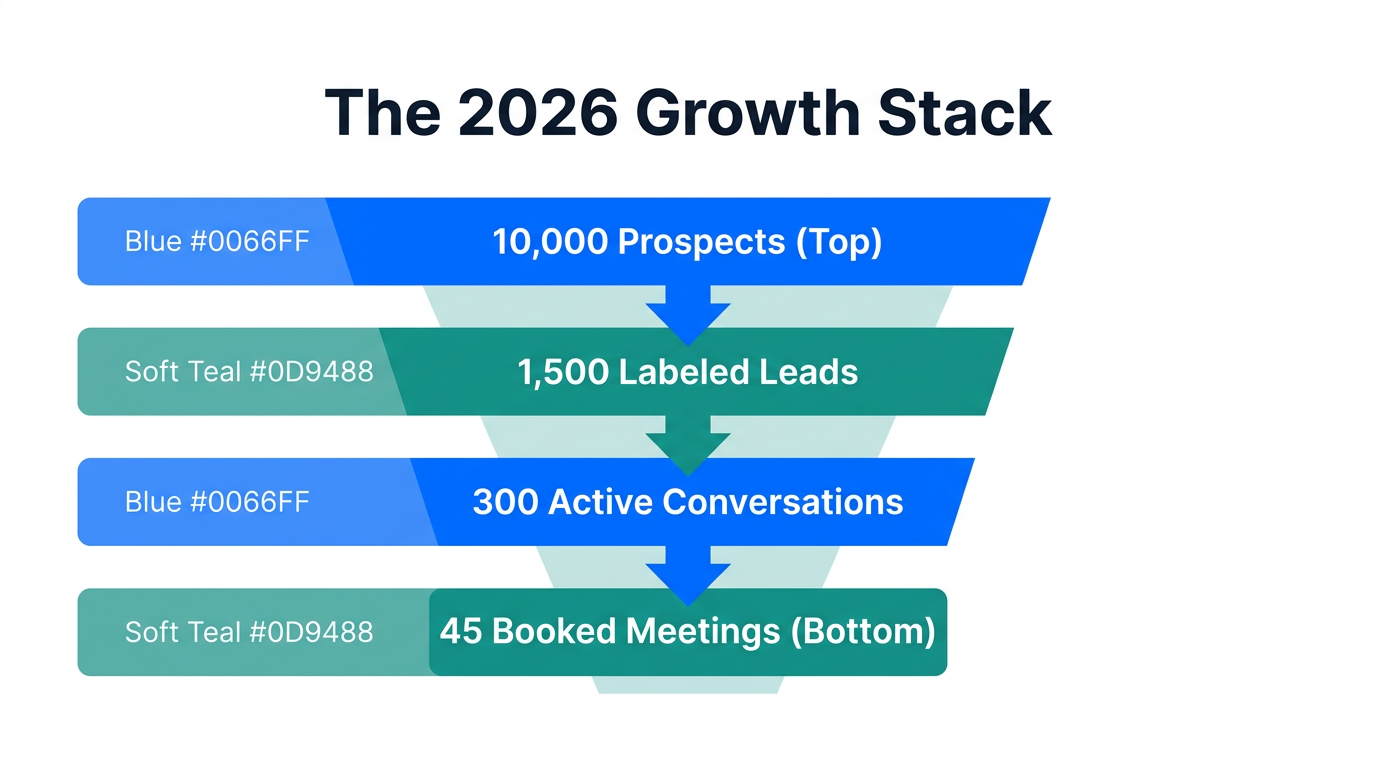
If you are looking to build an Autonomous RevOps Agency in-house, you need a structured approach. Following the OpenClaw model, here is how you should structure your engine:
- Intelligence Gathering: Use Stormy AI to find creators or prospects based on natural language prompts.
- Waterfall Enrichment: Connect to Clay to verify emails using multiple sources like Apollo and Hunter.
- AI Personalization: Feed the prospect's LinkedIn or social feed into an AI agent to generate a unique, relevant hook.
- Multi-Channel Execution: Sequence the lead through Smartlead for email and LinkedIn voice notes for maximum impact.
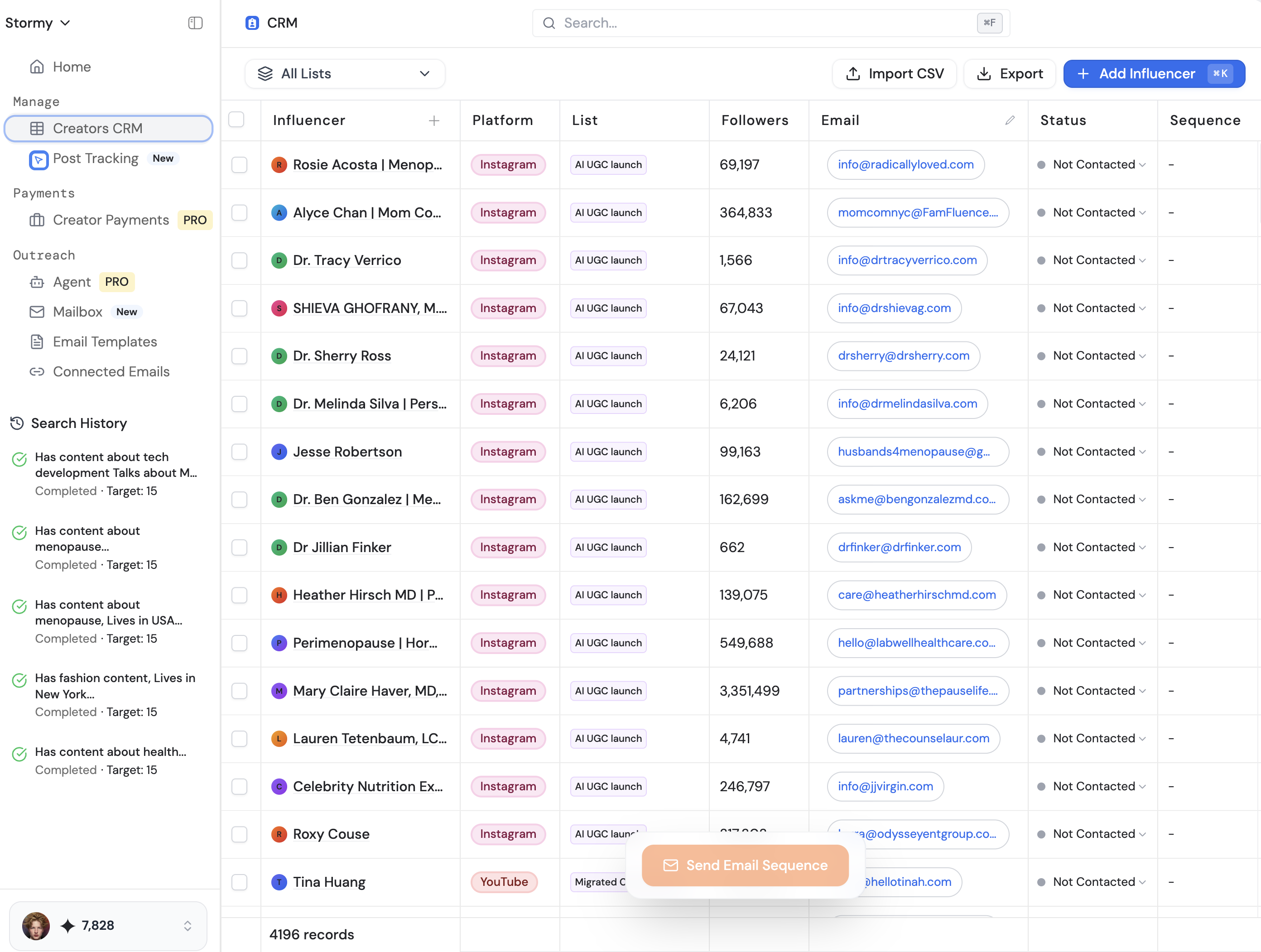
- Continuous Tracking: Monitor performance using an AI-powered CRM to see which creators are driving the most ROI.
The Great Disillusionment: Risks of Pure AI
It is not all magic and easy money. By mid-2026, many companies are facing a "Great Disillusionment" with AI SDR tools. Research indicates that basic AI SDR tools are seeing 50%–70% annual churn as users struggle with generic outputs. This is often due to the "Uncanny Valley" effect—prospects are getting better at spotting AI-generated fluff.
This is where Stormy AI outperforms open-source models like OpenClaw. While OpenClaw offers "God Mode" shell access that can lead to security vulnerabilities, Stormy AI provides a secure, enterprise-ready environment for outreach that is grounded in real, vetted data.
Conclusion: The Winner of 2026
In the head-to-head battle of AI SDR vs. Human Sales Teams, the winner is neither a lone human nor a generic bot. The winner is the Data Engineer who understands sales psychology, equipped with a platform that can handle the heavy lifting of discovery, analysis, and outreach.
While OpenClaw paved the way for autonomous agents, Stormy AI has perfected the application for the creator economy and high-growth tech brands. By reducing costs by 85% and increasing volume by 10x, Stormy AI isn't just a tool—it's your entire SDR department, automated and optimized for 2026.
Ready to see how an AI SDR can transform your pipeline? Try Stormy AI today and start your first autonomous outreach campaign in minutes.