In 2026, the barrier to entry for launching an AI-powered startup has effectively vanished. With sophisticated LLMs from OpenAI and no-code tools, anyone can build a "GPT wrapper" in an afternoon. However, the real challenge isn't the build—it’s the survival in a market dominated by 800-pound gorillas like Apple and Google. To succeed, founders must move beyond generic features and find a specific, defensible angle. This is where the Jake Knapp Design Sprint methodology, specifically the "Foundation Sprint," becomes the ultimate weapon for AI product differentiation.
The current landscape is crowded with tools that all promise to be faster, smarter, or easier to use. But in a world where tech giants integrate AI directly into the operating system, a startup’s only hope for a competitive advantage in AI is to be radically different, not just marginally better. By following the framework developed by Jake Knapp, former Google designer and author of Sprint, and popularized via the Google Ventures (GV) Design Sprint, founders can peel back the layers of their idea to find the "sauce" that makes a product worth paying attention to.
The Basics: Defining the Problem Before the Tech
 9:18
9:18
Before diving into neural networks or vector databases, the Foundation Sprint requires founders to anchor themselves in the "Basics." This phase is often skipped by developers who are "drunk on the fog" of a new idea. According to the team at Character Capital, identifying the exact customer and the friction point they face is the first step toward a GTM strategy for startups that actually works.
Take the example of a hypothetical AI app called "Hit.me." Instead of being a generic productivity tool like Notion, the founder identifies the customer as "entrepreneurs aged 25-40" and the problem as "digital addiction and overconsumption." By narrowing the scope, the founder moves away from a one-size-fits-all solution and toward a product with a clear identity. Using tools like Miro to map these basics allows the entire team to see the vision with clarity.
When defining your basics, you must identify your special capability. Are you a funnel master? A design expert? A data scientist? This capability, combined with a unique insight, forms the foundation of your moat. For instance, while most people use Google Trends to find keywords, a founder might use a tool like Glimpse to identify that searches for "phone addiction" have skyrocketed to over 100,000 per month in 2026. That trend is your signal.
"Most startups dive right into the tech stack, but the core thing is: Does this solve a problem, and are people excited for the solution? Tech matters, but the problem is the foundation."
Analyzing the Classic Differentiators: Speed, Intelligence, and Ease
44:41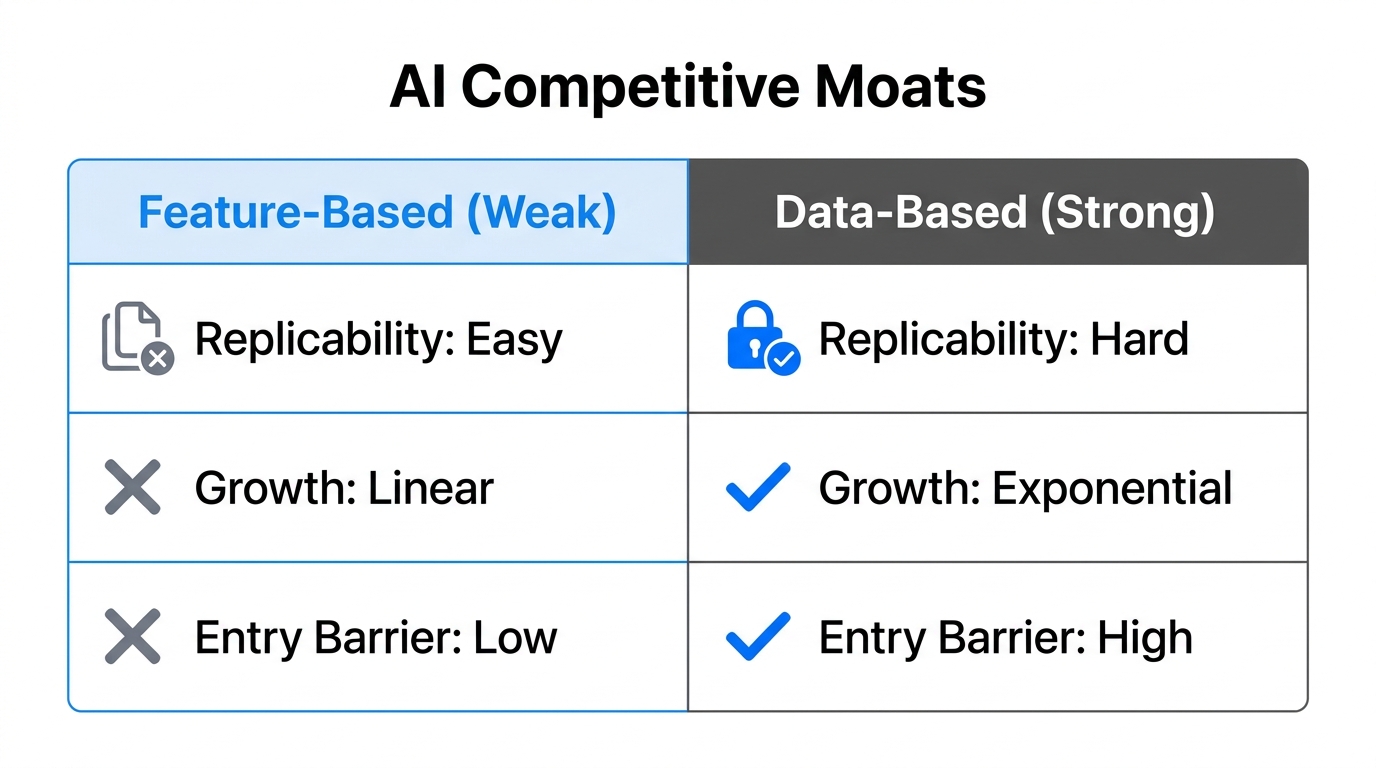
In the Knapp framework, the first step to differentiation is evaluating your product against "Classic Differentiators." These are the categories consumers instinctively use to compare products. However, in 2026, many of these have become table stakes for AI apps. To find a competitive advantage in AI, you must decide which bars to push to the extreme and which to leave in the middle.
| Differentiator | Traditional View | The 2026 AI Startup Reality |
|---|---|---|
| Speed | Faster is always better. | Hard to beat Apple/Google; often not a primary motivator. |
| Intelligence | Must have the best LLM. | Intelligence is now a commodity; opinionated logic matters more. |
| Ease of Use | Minimal clicks to value. | Required, but simple design is no longer a differentiator. |
| Price | Cheaper than the rest. | 'Free' remains the most irrational growth trigger. |
Founders often fall into the trap of trying to be "smarter" than the competition. But if you are building a wrapper on top of Claude or GPT-5, your intelligence is essentially the same as your competitor's. Instead, focusing on focused, simple, and siloed experiences can often be more effective than trying to build a complex, integrated platform. Using automation tools like Zapier to create narrow workflows can often solve one specific problem for one specific user group—like entrepreneurs trying to reduce screen time—making you more effective than generic tools.
Why 'Free' is the Most Irrational Growth Trigger
46:07In the Knapp Design Sprint matrix, the "Price" scale is a powerful lever. While many founders want to charge a premium for their AI expertise, 'Free' remains an incredibly powerful psychological trigger. As discussed in Predictably Irrational by Dan Ariely, people act in wildly irrational ways when they see a $0 price tag. For a new AI app trying to acquire users from established giants, a free entry point is often the only way to break through the noise.
In 2026, the transition from Software-as-a-Service (SaaS) to Pay-Per-Use models is also a differentiator. According to research from ProfitWell, the friction-less nature of a free tier for initial AI product differentiation cannot be overstated. It allows users to experience your "Aha!" moment—which you should track via Mixpanel—without the barrier of a credit card. Once the habit is formed, you can transition them to a paid tier or a token-based model managed through processors like Stripe.
If you aren't charging for the product, you are charging for the value. By making the product free, you can scale rapidly on platforms like TikTok Ads or Meta Ads Manager, where the lower the friction, the higher the virality. Founders can use Stormy AI to find creators who specialize in reviewing free utility apps, driving massive top-of-funnel awareness without the heavy CAC associated with premium software.
Custom Differentiation: Shifting from 'Removing' to 'Replacing'
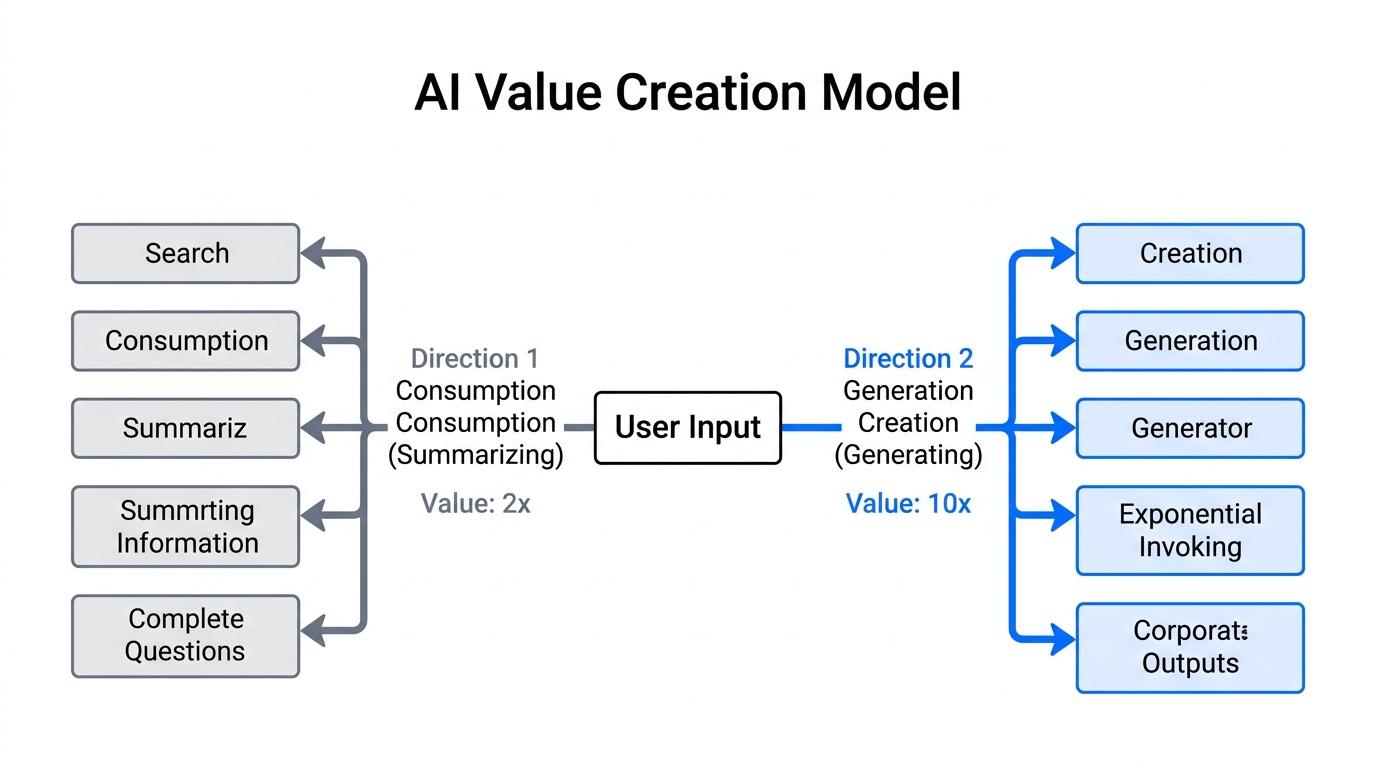
The real magic in the Jake Knapp methodology happens during the "Custom Differentiator" phase. This is where you move beyond generic traits and look at the underlying philosophy of your product. For the "Hit.me" app mentioned in the research, the differentiator wasn't just "blocking apps." It was the shift from Removing Distraction to Replacing Consumption with Creation.
Most competitors in the digital wellness space focus on removal—blocking the phone, greyscale modes, or time limits. A differentiated AI app focuses on replacement. It identifies when you are about to doomscroll and suggests a creative task instead. This is an opinionated design choice that tech giants like Apple, who profit from device usage, are unlikely to implement.
When you define a custom differentiator, you create a new 2x2 matrix where you are the only occupant of the "Winning" quadrant. Everyone else is in "Loserville" because they are still playing the old game of distraction removal. To market this, you need strong positioning that resonates with your niche. Tools like Canva or Beehiiv can help you communicate this unique value proposition through visually compelling newsletters and ads.
"If you don't have clear differentiation, you need to be a god-tier marketer to sell. If you have clear differentiation, the product almost markets itself."
The Founder’s Edge: Leveraging Unique Insights as a Moat
17:24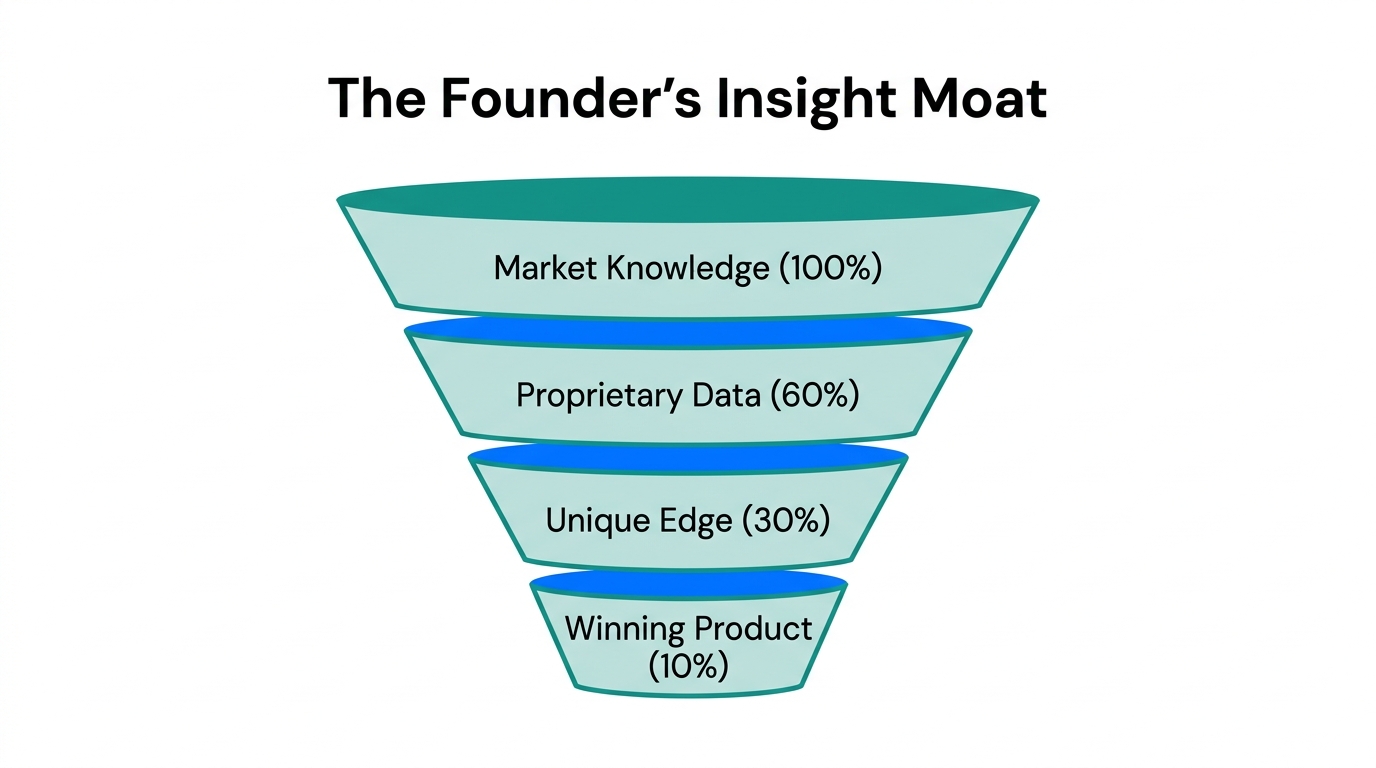
The final layer of AI product differentiation is the "Founder’s Edge." This is the intersection of your personal motivation, your unique insights, and your "human trumpet" (your ability to broadcast your message). Knapp emphasizes that the most successful startups are often those where the founder is "hair on fire" about the problem.
If your motivation is purely financial, it is difficult to maintain the conviction required to build a unique, opinionated product. However, if you are building a tool to solve your own generalized anxiety or digital addiction—as seen in the "Hit.me" case study—your personal motivation becomes a competitive moat. You understand the nuances of the problem in a way that a product manager at a big tech firm never will.
To amplify this founder's edge, you must turn your insights into a narrative. This involves:
- Identifying the niche: Who else feels this specific pain?
- Testing with prototypes: Using a Design Sprint to put a mockup in front of real users.
- Broadcasting the mission: Using platforms like Stormy AI to identify micro-influencers who share your philosophy and can help you build a community around your differentiated solution.
By the time you finish the Foundation Sprint, your vision should shift from a blurry idea to a sharp, actionable strategy. You aren't just building a "GPT wrapper" anymore; you are building a tool that helps entrepreneurs replace consumption with creation, backed by a unique founder story and an irrational price point.
Conclusion: Turning Clarity into Success
In the 2026 AI gold rush, the winners won't be the ones with the most features, but the ones with the most clarity. Using the Jake Knapp Design Sprint matrix allows you to stop fighting for space in crowded markets and start building in a quadrant of your own. By analyzing the basics, leaning into the power of 'free,' and identifying a custom differentiator like "Creation vs. Consumption," you can beat the 800-pound gorillas through specialized focus.
Don't build a Homer Simpson car—a product with everything that ultimately satisfies no one. Instead, use these frameworks to find your "sauce," test it through rapid prototyping, and launch with a GTM strategy for startups that emphasizes your unique founder's edge. The fog will lift, and when it does, your product should be the only clear choice for your target customer.