For years, the influencer marketing industry operated on a cocktail of intuition and superficial data. Brands would scroll through feeds, find a creator with a high follower count, and hope for the best. But as the global influencer marketing industry hurtles toward a projected $47.32 billion valuation by 2025, according to data from Eminence, the margin for error has vanished. We are entering the era of predictive analytics marketing, where the success of a campaign is no longer a guessing game but a mathematical probability. This shift is being driven by the realization that follower counts are often nothing more than vanity metrics—easily manipulated and frequently detached from actual sales or brand affinity.
The Death of Vanity Metrics and the Rise of Predictive ROI
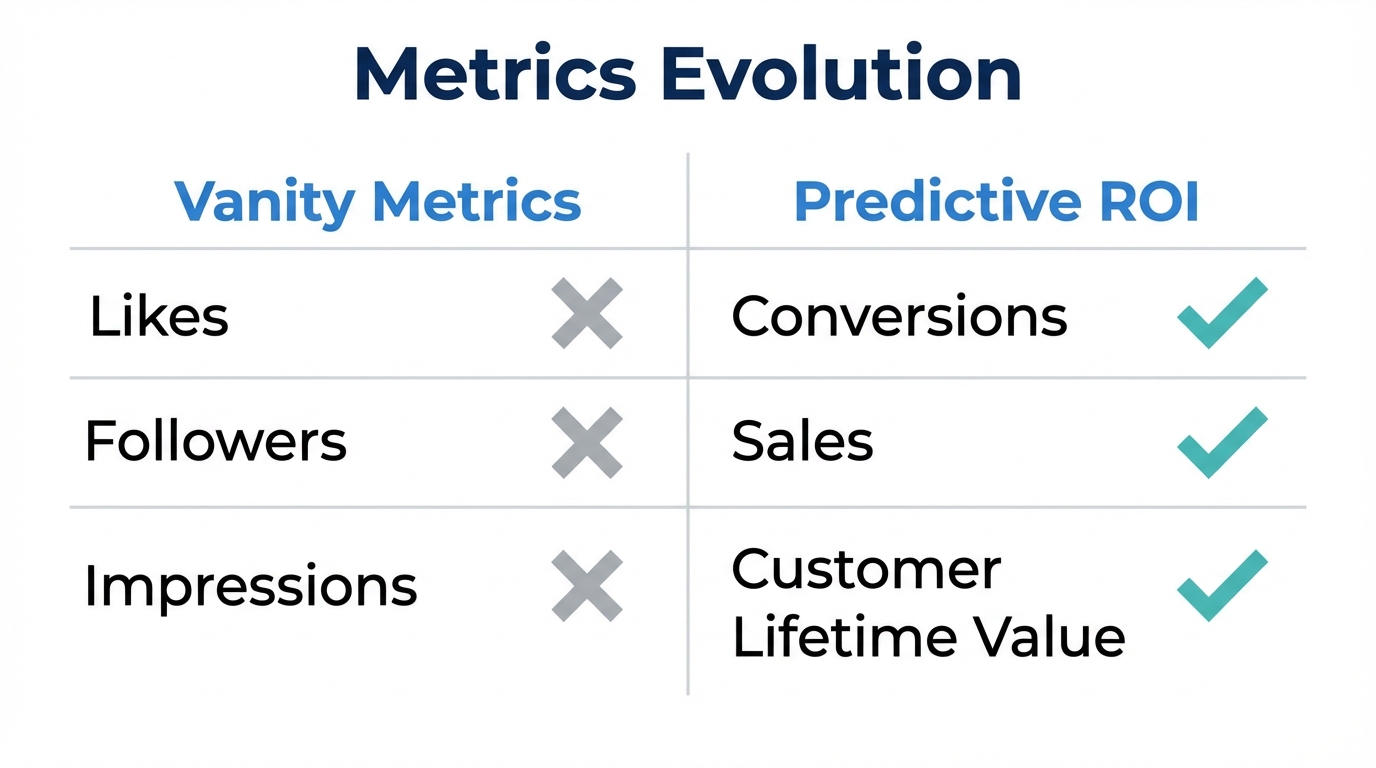
The transition from manual selection to social media analytics automation is fundamentally changing how we define success. Traditional metrics like likes and follows are being sidelined in favor of predictive performance modeling. This technology doesn't just look at what a creator did yesterday; it forecasts what they will do for your specific brand tomorrow. Recent industry surveys suggest that brands are increasingly using massive database searches with precise demographic filters to ensure every dollar spent is backed by data.
"AI-driven campaigns report 37% higher engagement rates and 37% more efficient targeting compared to traditional manual methods."Predictive modeling works by analyzing thousands of data points—from historical conversion rates to the sentiment of the creator's last hundred comments. This level of granularity allows marketers to move beyond the "post and pray" method. By using advanced influencer vetting tools, companies can now see a creator's potential ROI before a contract is even signed. Research from MoEngage indicates that approximately 60.2% of marketers are already using AI for influencer identification and campaign optimization to capture this predictive edge.
Beyond Keywords: Visual and Semantic Search for Aesthetic Matching
In the past, finding a creator meant typing "fitness" or "tech" into a search bar. This keyword-reliant approach often yielded generic results that didn't align with a brand's unique visual identity. Enter visual and semantic search. Modern discovery engines have pioneered the ability to find "lookalike" creators through aesthetic matching. Instead of searching by text, a brand can upload a mood board or a specific image, and the AI will scan millions of profiles to find creators who share that exact visual DNA.
This is particularly crucial for lifestyle and high-fashion brands. For instance, legacy platforms like Impact.com highlight that hyper-personalization at scale is the next frontier. AI can generate dozens of unique campaign hooks to see which resonates with specific micro-segments of a creator's audience. This semantic understanding ensures that the brand fit is deeper than just a shared category; it's a shared vibe. Whether it's the specific lighting used in a TikTok or the composition of an Instagram post, AI can identify patterns the human eye might miss during a manual search.
| Feature | Traditional Search | AI Semantic Search |
|---|---|---|
| Discovery Basis | Keywords & Hashtags | Visual DNA & Aesthetic Matching |
| Matching Accuracy | Low (Generic categories) | High (Niche alignment) |
| Scalability | Manual & Time-consuming | Instant & Automated |
| Primary Tool | Spreadsheets & Search Bars | AI-Powered Search Engines |
The Billion-Dollar Problem: Influencer Fraud Detection
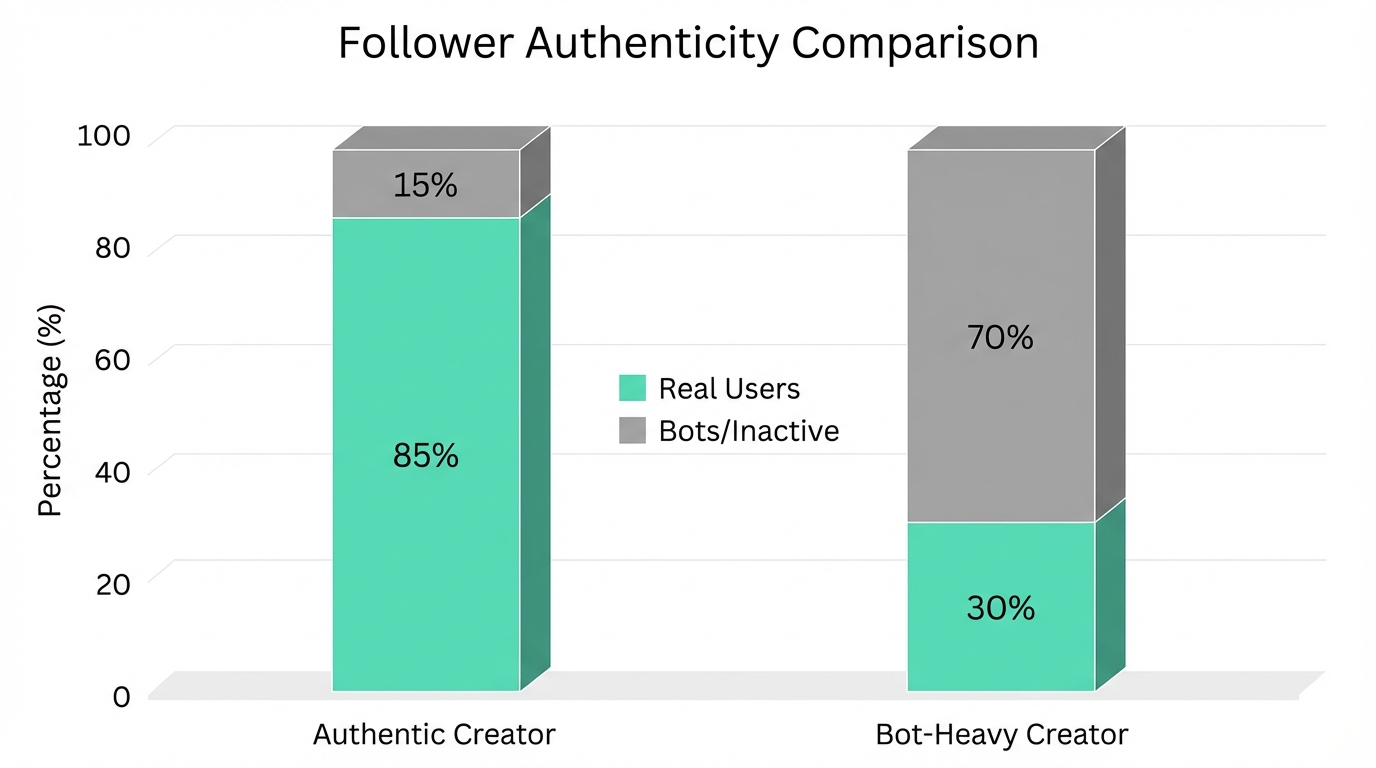
Influencer fraud remains one of the greatest threats to influencer marketing ROI. From bot accounts to engagement pods, the methods for inflating numbers have become sophisticated. However, influencer fraud detection powered by AI is fighting back. Platforms like Stormy AI perform deep audits that detect fake followers, spam accounts, and engagement fraud automatically.
These tools analyze the growth patterns of an account. A sudden spike of 50,000 followers in one night is a red flag, but AI goes deeper, looking at the quality of the engagement. Are the comments relevant to the post, or are they a series of emojis from bot farms? Audience sentiment analysis can reveal if a creator's followers are truly invested in their content or if they are simply a passive, inactive audience. According to the IAB UK, there is a growing demand for this level of transparency to maintain consumer trust and ensure that brand safety is prioritized.
"Automating social listening can capture nearly 100% of Instagram and TikTok content, potentially saving brands over $150,000 annually in manual labor costs."The financial impact of this automation is staggering. Beyond just avoiding fraud, automated social listening and data cleaning help brands reclaim thousands of hours. Research shows that platforms with these capabilities can save large enterprises upwards of $150,000 per year by eliminating the need for manual monitoring and reporting. This allows marketing teams to focus on strategy and relationship-building rather than data entry.
The Playbook: A Step-by-Step Guide to AI-Powered Vetting
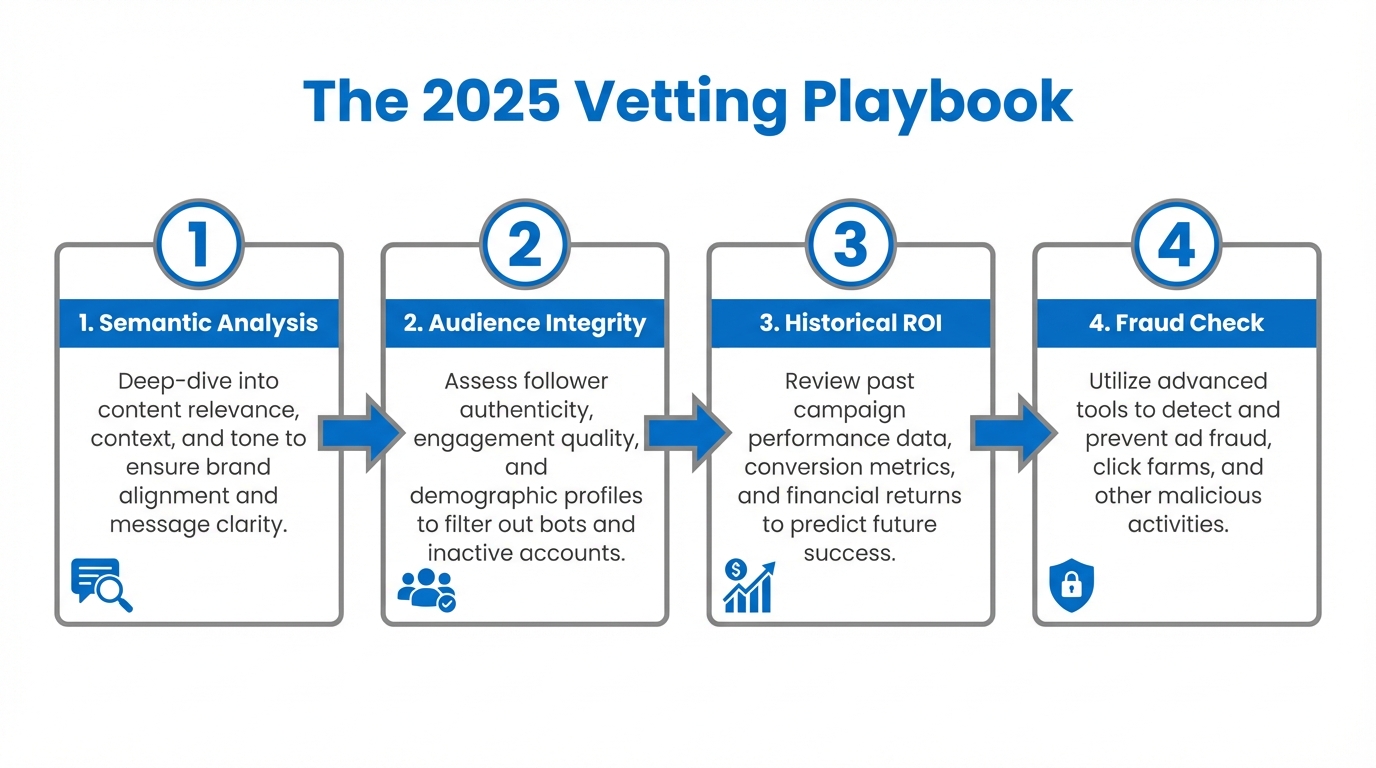
To successfully integrate predictive analytics marketing into your workflow, you need a structured approach. Follow this playbook to ensure your influencer selection is airtight.
Step 1: Define Your Lookalike Profile
Don't start with keywords. Start with your best-performing existing content. Use visual search tools to find creators who naturally produce content that matches your brand's top-performing assets. This ensures a seamless transition for the creator's audience when they see your sponsored post.
Step 2: Audit Audience Quality
Before reaching out, run every profile through a fraud detection tool. Check for "Audience Overlap"—if you are hiring five creators in the same niche, you don't want them all reaching the same 100,000 people. You want incremental reach. You can manually inspect profiles or use automated vetting systems to verify that a creator’s following is genuine and active.
Step 3: Predict Performance Before You Pay
Look for tools that offer conversion forecasting. Analyze the creator's historical engagement rate against their audience size to see if they are trending up or down. A creator with a declining engagement rate is a risky investment, regardless of their follower count.
Step 4: Automate the Logistics, Not the Relationship
Use comprehensive influencer management tools to handle the heavy lifting of content collection, rights management, and global payments. However, as industry experts warn, don't let AI write your entire outreach strategy. Personalization is what secures the best talent.
The Human-AI Synergy: The Co-pilot Mindset
While the data-heavy aspects of influencer marketing are being swallowed by AI, the human element remains irreplaceable. Experts suggest that AI should be viewed as a "co-pilot." It excels at fraud detection and social listening, but it cannot replace the human-to-human trust that defines the creator economy. For example, brands like Heinz have used generative AI creatively (the "AI Ketchup" campaign) to prove brand dominance, but the strategy was ultimately driven by human insight into consumer psychology.
We are also seeing the rise of virtual influencers like Lil Miquela and Rae, which Samsung and Prada have successfully utilized. These AI-generated personas offer brands total control over their image, but they still rely on human creative directors to resonate with audiences. The goal is to automate the logistics—the vetting, the payments, the tracking—so that your team has more time to cultivate real relationships with creators who actually drive the needle.
"The future of influencer marketing is not AI replacing humans; it is humans using AI to eliminate waste and maximize ROI."Conclusion: Investing in a Data-First Future
The days of gambling on influencer campaigns are over. By leveraging predictive analytics marketing and influencer fraud detection, brands can finally treat influencer marketing as the performance channel it truly is. Whether you are using integrated analytics dashboards for unified reporting or specialized discovery engines, the objective remains the same: minimizing risk and maximizing return.
As you scale your creator programs, remember that the most successful marketers will be those who use social media analytics automation to handle the data while they handle the storytelling. Start by auditing your current roster for audience quality and engagement fraud, and begin moving your budget toward creators whose performance is backed by predictive models rather than just vanity metrics. The data is there—it's time to use it.