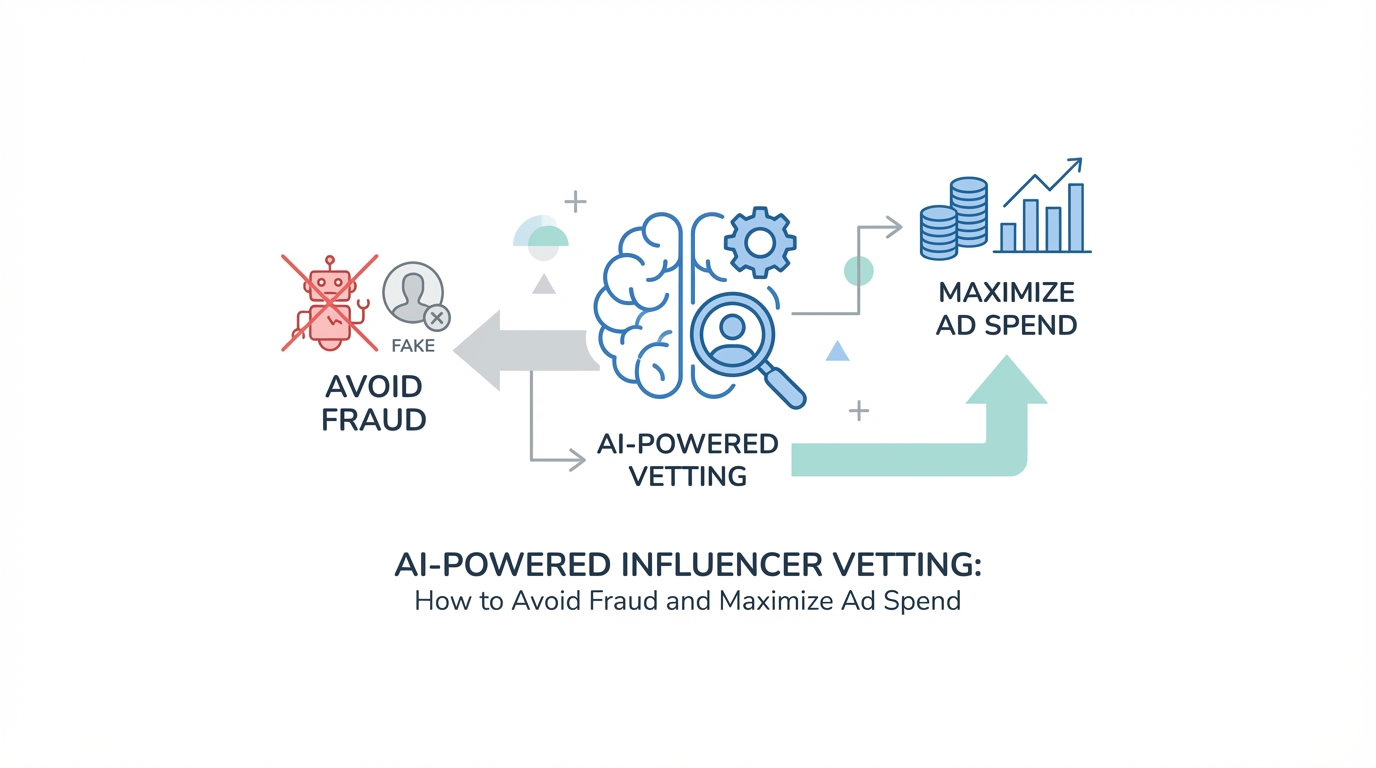
The integration of Artificial Intelligence (AI) into influencer marketing has moved from a "nice-to-have" experimental phase into a mission-critical operational standard. For years, marketers relied on manual spreadsheets and surface-level engagement metrics to guide their spending. However, as the industry matures, the complexity of influencer fraud detection has evolved. By 2025-2026, AI is expected to manage the majority of the influencer lifecycle, from discovery and vetting to autonomous negotiation and ROI measurement. Brands that fail to adopt ai influencer analytics risk falling behind in an increasingly competitive digital landscape.
The stakes have never been higher. As the market valuation for AI-powered influencer marketing is projected to reach $108 billion by 2028, growing at a 29.3% CAGR, the need for precision is absolute. Marketing budgets are being reallocated toward creators who can prove their value through data, not just aesthetics. In this deep dive, we will explore how to clean your influencer databases and ensure every dollar of your marketing budget is spent on authentic human audiences.
The Cost of Vanity Metrics: Identifying Purchased Audiences
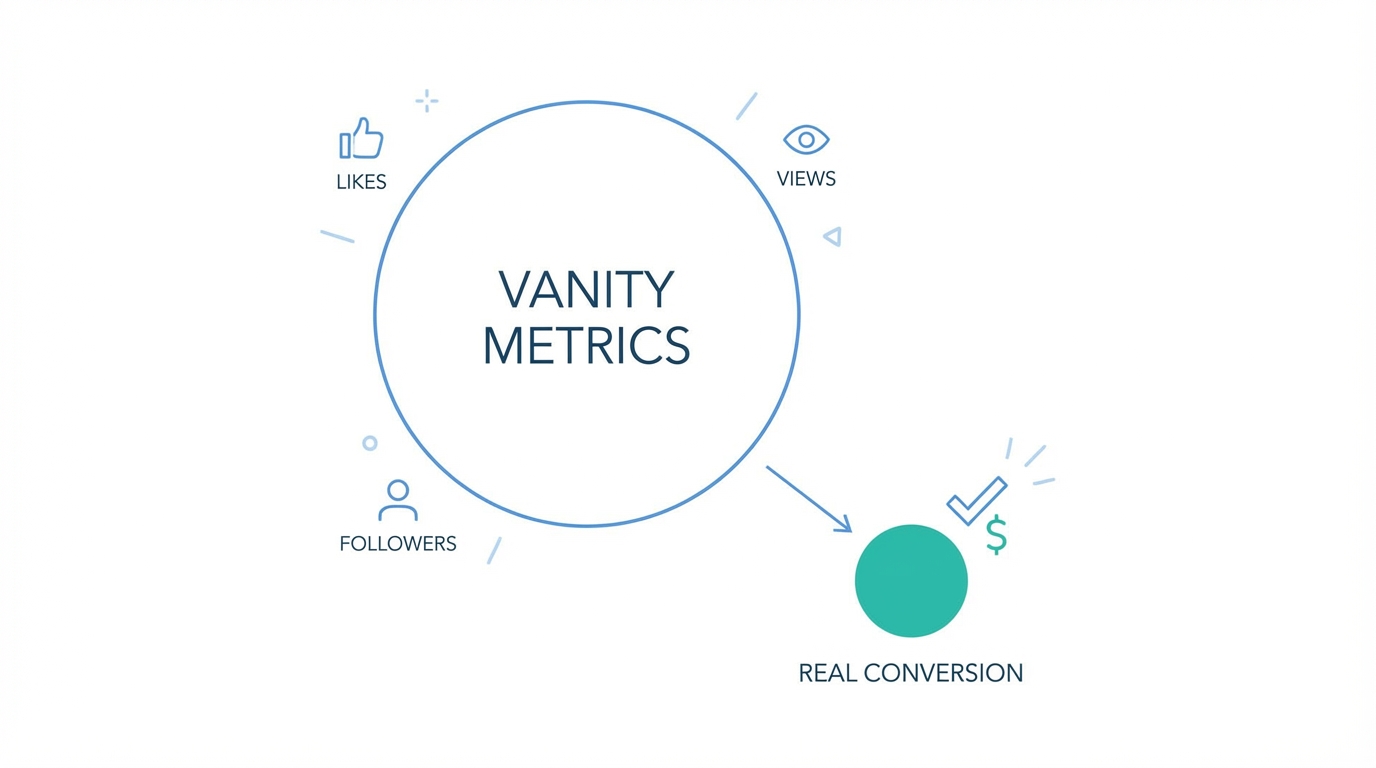
For a long time, follower count was the gold standard of influence. We now know that this is a dangerous fallacy. According to data from Archive, approximately 25% of influencers have purchased followers or engaged in artificial growth tactics. When a brand partners with these accounts, they aren't just losing money; they are shouting into a void of bots and inactive accounts. This is the primary driver of wasted ad spend in the creator economy.
Relying on vanity metrics leads to a fragmented marketing strategy. While an influencer might show 1 million followers, their actual reach among target consumers might be less than 50,000. AI-driven platforms now allow marketers to peel back the layers, identifying patterns of "follow-unfollow" loops and sudden spikes in follower growth that signal inorganic activity. This shift toward audience quality score as a primary KPI is what separates high-growth brands from those stagnant in old-school methodology.

"AI won't replace humans, but humans with AI will replace humans without AI." — Karim Lakhani, Harvard Business SchoolImplementing 'Deep Vetting' Protocols for Brand Safety
Beyond fraud, brand safety marketing has become a top priority for CMOs. A creator might have a clean recent history, but what lies in their archives? Manual vetting of years of content is impossible at scale. This is where AI-powered deep vetting protocols come into play. These systems can scan thousands of historical posts, comments, and video transcripts in seconds to flag potential risks such as hate speech, controversial associations, or content that contradicts brand values.
Modern ai influencer analytics go beyond keyword matching. They utilize natural language processing (NLP) to understand context. For example, an AI agent can distinguish between a creator discussing a controversial news topic objectively and one endorsing a problematic viewpoint. This level of nuance is essential for maintaining long-term brand reputation in a hyper-sensitive social media environment. Research shows that as of 2025, 60.2% of marketers actively use AI for these identification and optimization workflows, with 92% stating they are open to using it for all workflows.
The Role of Historical Content Scanning
Deep vetting isn't just about avoiding disaster; it's about finding alignment. AI tools can analyze the sentiment of a creator's audience over time. Are the followers supportive? Is the community toxic? By evaluating the vibe of the comment section through AI, brands can predict how their own sponsored content will be received. This proactive approach to brand safety marketing ensures that partnerships are built on a foundation of mutual values rather than just temporary relevance.
"The future of AI isn’t human vs. AI—it’s human with AI." — a leading industry marketing executiveBenchmarking Engagement Rate vs. Audience Authenticity
A high engagement rate is often seen as a sign of success, but it can be misleading. Engagement can be faked just as easily as follower counts through "engagement pods"—groups of users who agree to like and comment on each other's posts. To combat this, marketers must benchmark Engagement Rate (ER) against Audience Authenticity. If an influencer has an ER of 5% but an authenticity score of only 40%, it is highly likely the engagement is coming from bots or pods.
Brands leveraging AI report 37% higher engagement rates and a 20-30% higher ROI compared to traditional manual methods. This is because AI can filter for "Human Engagement"—real conversations, questions about the product, and genuine community interaction. Tools like Stormy AI can help source and manage UGC creators at scale, providing AI-powered quality reports that detect engagement fraud automatically, ensuring you only work with creators who have real influence.
Utilizing TikTok Smart+ and Automated AI Targeting

The next frontier of influencer marketing roi is automation in ad placement. Platforms like TikTok have introduced solutions like Smart+, which use machine learning to automate audience targeting and creative optimization. This takes the guesswork out of which creator content should receive paid boosting. For instance, Sephora utilized TikTok’s Smart+ AI solution to bridge the gap between organic creator content and paid performance.
The results were staggering: a 53% increase in ROAS and a 14% rise in conversion rates. By allowing AI to determine the best audience-content match, Sephora maximized the impact of their influencer collaborations. Similarly, Nike's "Never Done Evolving" campaign used AI to create a virtual match between different versions of Serena Williams, resulting in a 1082% increase in organic reach. These case studies prove that when AI handles the data and distribution, the creative output reaches its full potential.
Agentic Discovery: Finding the Perfect Match
We are moving beyond simple keyword searches into "Agentic Discovery." Instead of searching for "fitness influencer," marketers now use AI agents to find creators based on complex brand voices. You can now prompt an AI to find creators who prioritize sustainable packaging and have a conversion-heavy Gen Z audience. This level of granularity ensures that your influencer marketing roi is protected from the start by selecting creators with the highest statistical probability of conversion.
"The most successful marketers will be those who seamlessly integrate AI while maintaining the irreplaceable human touch." — Angeley Mullins, Forbes CouncilThe Influencer Roster Audit: A Step-by-Step Playbook

If you are currently managing a list of creators, it is time for a data-driven audit. Use this checklist to ensure your roster is high-quality and fraud-free:
- Analyze Audience Growth: Look for sudden, unexplained spikes in followers. AI-powered vetting tools can flag these as potential bot purchases.
- Calculate the Comment-to-Like Ratio: A healthy post usually has a consistent ratio. Too many likes with zero comments is a red flag.
- Check Geographic Alignment: If your brand sells in the US but the influencer's audience is 90% in a different continent, your ROI will suffer.
- Perform a Brand Safety Scan: Use AI to search for keywords or themes in historical content that may pose a risk.
- Verify "Human" Engagement: Ensure at least 80% of the audience is categorized as authentic humans by an AI vetting platform.
Managing these steps manually for dozens of creators is impossible. This is why a creator CRM is essential. Platforms like Stormy AI provide a full CRM for managing creator relationships, where you can track every interaction, negotiation, and quality score in one place. By centralizing your data, you can see which creators are driving real value and which are merely providing vanity metrics.
Avoiding the Authenticity Paradox and Common Mistakes
While AI is powerful, it is not a complete replacement for human judgment. One of the biggest mistakes brands make is the "Authenticity Paradox"—using AI to generate every caption, response, and comment. This can make a creator seem robotic and alienate their audience. Transparency is key; as of 2025, not labeling AI-generated content can lead to legal penalties and a total loss of trust.
Another common pitfall is ignoring the "sales-lift" model. AI-driven attribution is shifting the industry from flat fees to performance-based pricing. Brands should use ai influencer analytics to track actual sales lift rather than just impressions. Even virtual influencers, like those seen in BMW's partnership with Lil Miquela, which reached 8.2 million followers, are held to these rigorous performance standards. Whether the creator is human or virtual, the data doesn't lie.
Conclusion: Protecting Your Budget with AI
The era of "guessing" in influencer marketing is over. To achieve a competitive ROI in 2025, brands must embrace influencer fraud detection as a core competency. By implementing deep vetting protocols, focusing on audience authenticity over vanity metrics, and utilizing automated targeting tools like TikTok Smart+, you can ensure that your marketing budget is an investment, not an expense.
The goal is to build a roster of creators who offer brand safety marketing and high-quality human engagement. By combining the creative spark of human influencers with the analytical power of AI, brands can scale their reach while maintaining the authenticity that makes influencer marketing so effective in the first place. Stop wasting budget on bots and start investing in real influence today.