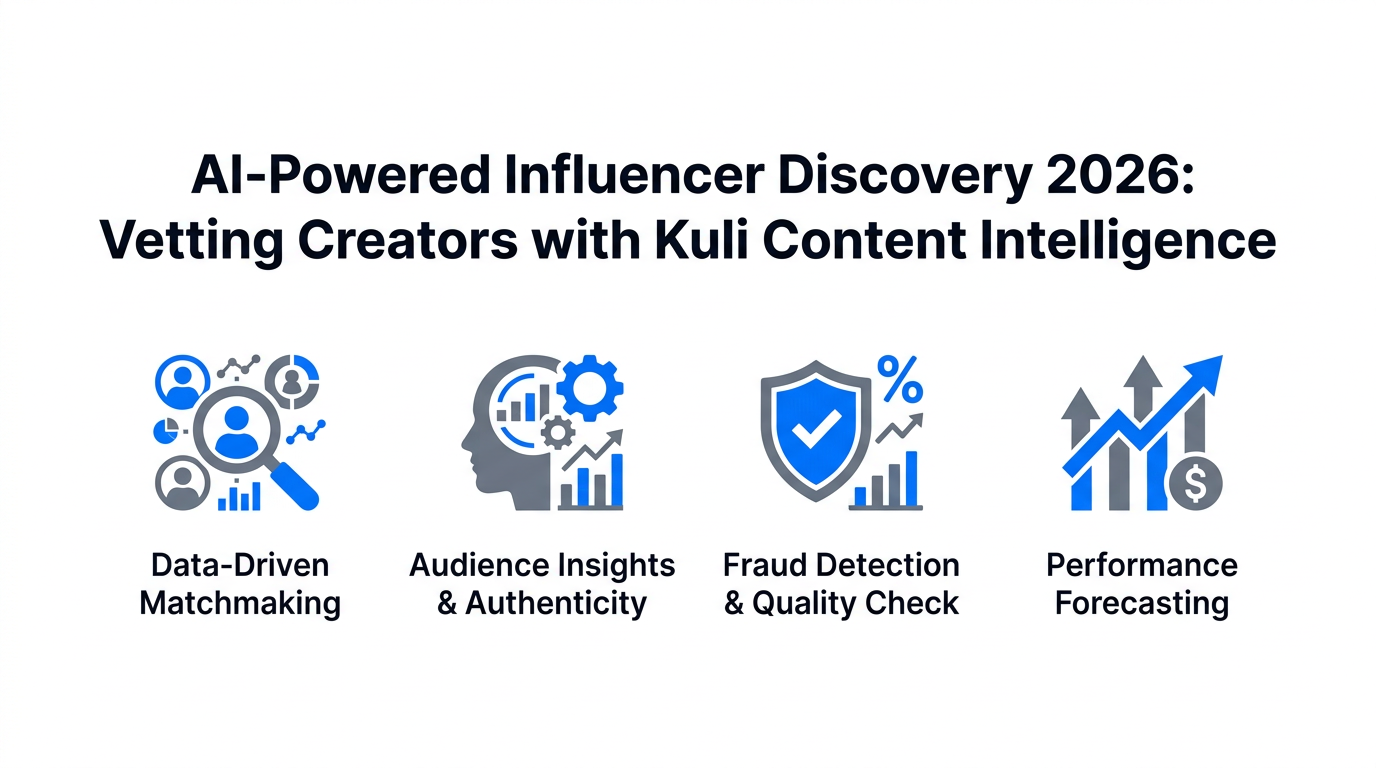
In 2026, influencer marketing has transcended the era of basic hashtag searches and follower counts. We have entered the age of Content Intelligence, where AI agents no longer just read profiles—they "watch" every frame of video to ensure perfect brand alignment. With the global influencer marketing industry projected to exceed $40 billion this year, according to Influencer Marketing Hub and CreatorIQ, the stakes for brand safety and ROI have never been higher. For modern marketers, the challenge isn't finding creators; it's vetting them with surgical precision to avoid the costly pitfalls of tonal misalignment or engagement fraud.
The Evolution of Content Intelligence in 2026
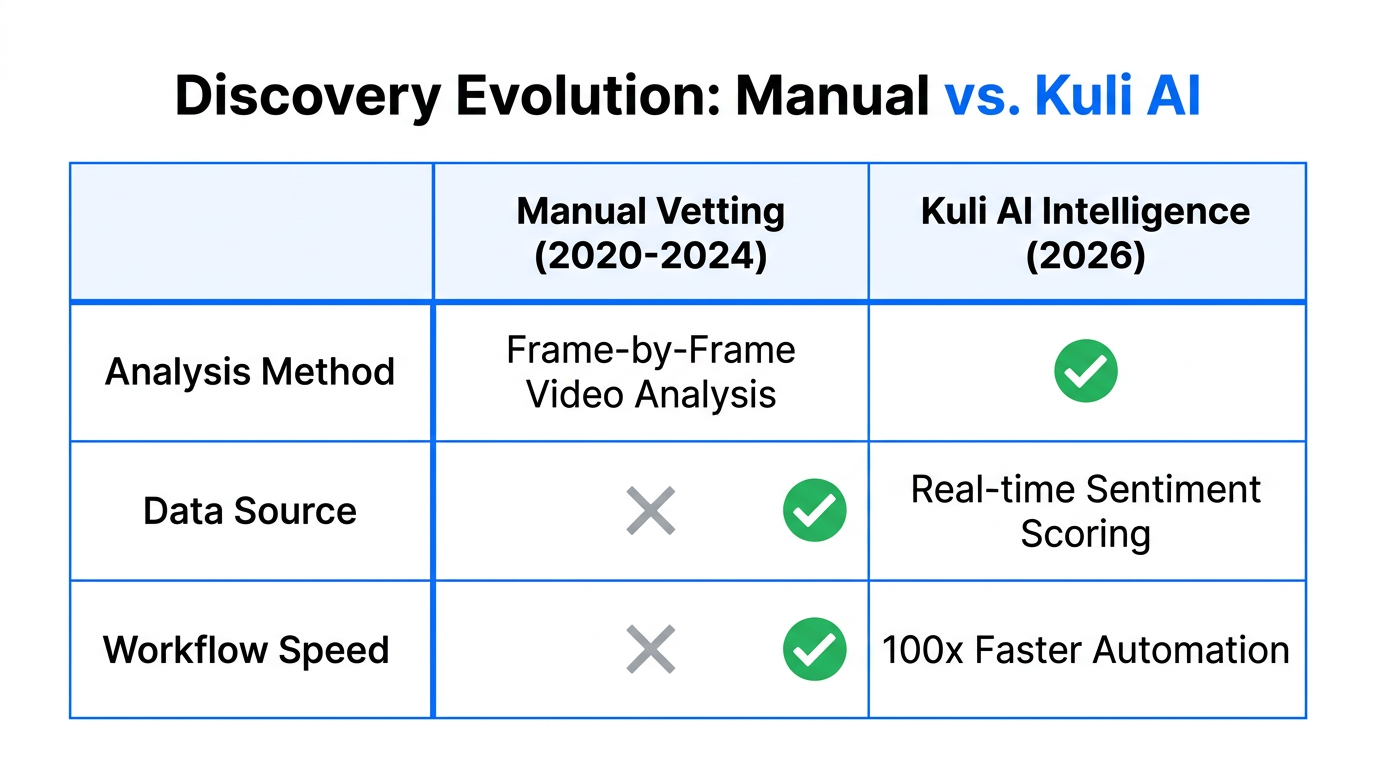
The traditional method of vetting influencers by scanning their bios and recent captions is officially obsolete. Modern AI agents, such as those used by content intelligence platforms, now perform deep video analysis, scanning a creator's entire visual history. This technology identifies objects, detects brand logos, and analyzes the sentiment of spoken dialogue in real-time. This shift from metadata to true visual comprehension allows brands to understand a creator's aesthetic and values before a single email is sent.
"AI is becoming the 'infrastructure' of the creator economy. It’s not replacing human creativity; it’s pressure-testing narratives and aligning creators and brands before production even begins." — Amber Kai, Founder at Sequincial.
By leveraging tools like Favikon for cross-platform discovery and specialized vetting agents, brands are seeing a massive shift in efficiency. Statistics from Statista show that AI-powered platforms are cutting manual research time by 60–80%, allowing lean marketing teams to manage hundreds of creators simultaneously without sacrificing quality control.
| Feature | Manual Vetting (Legacy) | AI Content Intelligence (2026) |
|---|---|---|
| Analysis Depth | Bio, Hashtags & Captions | Frame-by-frame visual & audio |
| Processing Speed | Hours per creator | Seconds per profile |
| Brand Safety | Subjective/Manual sampling | Automated 50-video history scan |
| Fraud Detection | Basic bot checks | Semantic sentiment analysis |
Vetting for Brand Fit: Scanning the Last 50 Videos
One of the most powerful applications of AI-powered influencer discovery 2026 is the ability to perform a "Competitor & Conflict Scan." Modern AI agents can ingest the last 50 videos of a creator and flag every instance of a competitor’s logo, a controversial keyword, or even a tonal shift that doesn't match your brand's voice. This is no longer about avoiding "bad" content; it's about finding the exact aesthetic match for your campaign.
For example, if you are a sustainable fashion brand, you can use AI to verify that a creator hasn't promoted "fast fashion" brands in the last six months. This level of vetting is critical because 60.2% of marketers are now actively using AI for campaign optimization, as noted by archive.com. If you aren't using these tools, you're competing against brands that have perfect visibility into their partners' digital footprints.
Beyond the Like: Measuring Audience Sentiment Quality
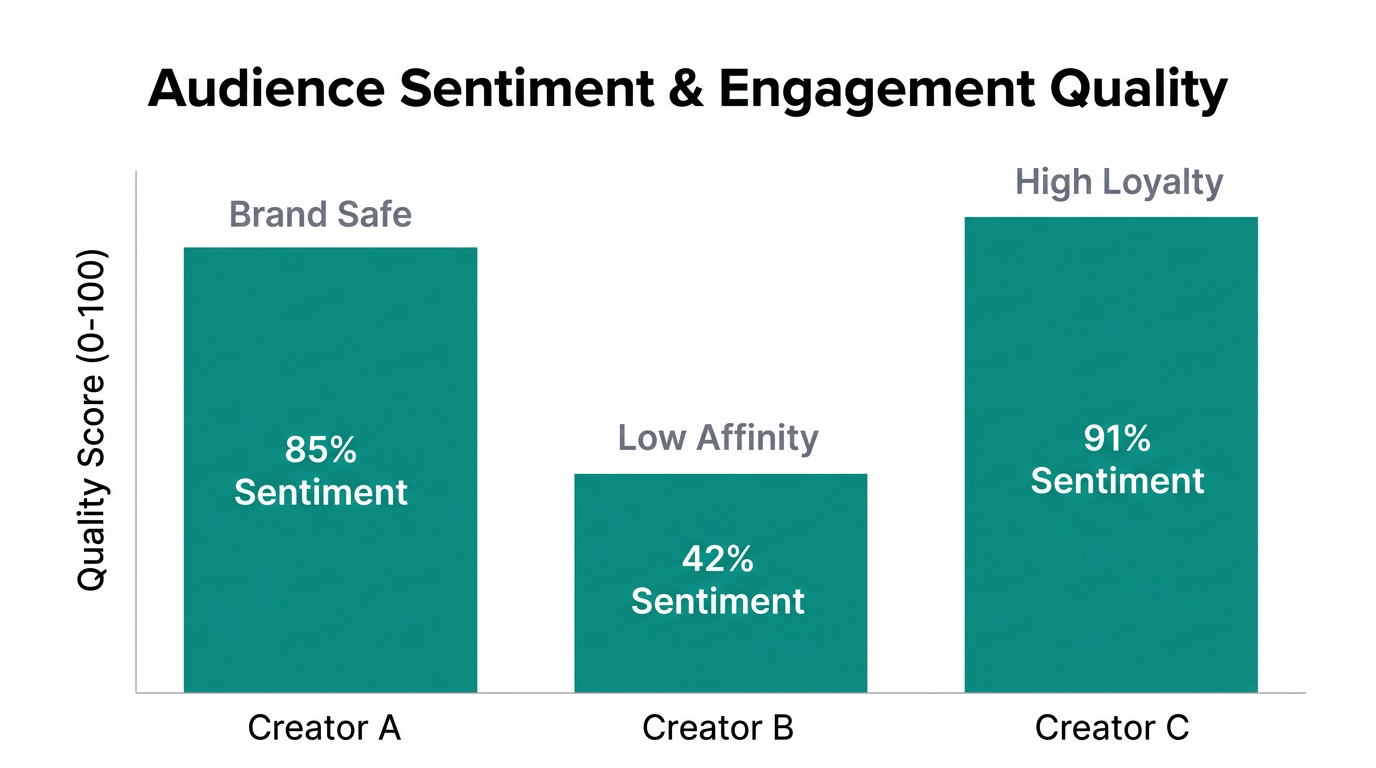
The industry has finally moved past the "vanity metric trap." In 2026, Engagement Quality is the only metric that correlates with actual ROI. AI now distinguishes between bot-generated "Great post!" comments and meaningful community engagement where users ask specific questions about products or share personal anecdotes related to the content.
Research from autofaceless.ai and reports on Socialinsider highlight that nano-influencers (under 10k followers) on TikTok command a massive 10.3% average engagement rate, compared to just 1.2% for mega-influencers. However, that 10.3% is only valuable if it consists of high-sentiment interactions. AI-powered vetting tools now provide a "Sentiment Score," which aggregates how much trust a creator has built with their audience regarding product recommendations.
"The key to ROI in 2026 isn't reach; it's the density of trust within a creator's comment section."
The 'Zoom-Proof' Test: Vetting Virtual Influencers
As virtual influencers and AI personas become mainstream—with luxury brands like Prada and tech giants like Samsung leading the charge—vetting has entered a new dimension. Brands are now looking for "human imperfections" in digital creators to maintain consumer trust. This is known as the Zoom-Proof Test.
Successful AI personas in 2026 intentionally include 1–3% human imperfections, such as slight facial asymmetry, micro-expressions, or non-scripted "stutters" in their digital delivery. According to Seagull Advertising, influencers like Lil Miquela generate massive engagement specifically because they bridge the gap between digital innovation and relatable humanity. When vetting these creators, your AI tools should analyze whether the persona's digital "soul" aligns with your brand values or if it feels too "plastic," which can trigger consumer distrust.
The 2026 Discovery Playbook: Step-by-Step Vetting
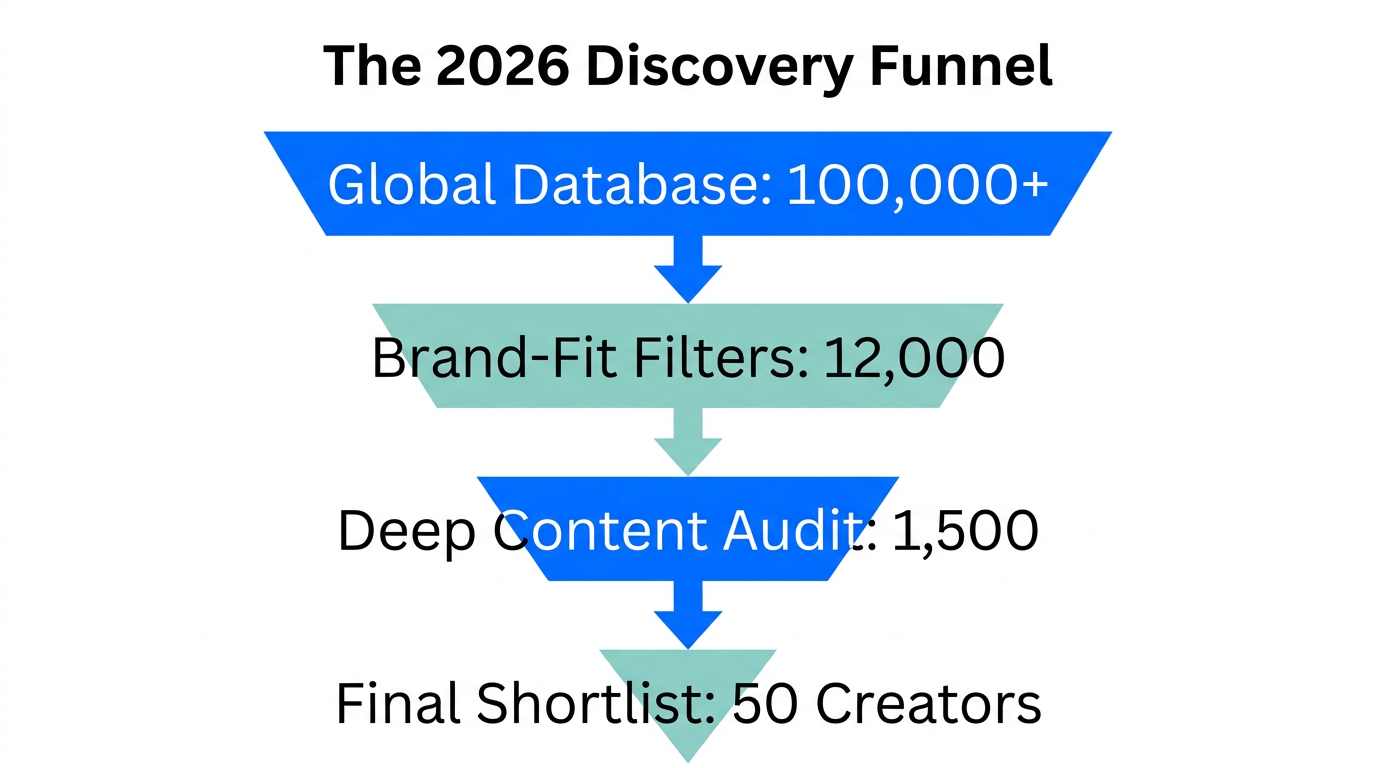
To stay ahead of the curve, marketing teams must adopt a structured workflow for AI-powered influencer discovery. This playbook ensures that every creator you partner with is vetted for both performance and safety.
Step 1: Define a Semantic Brief
Forget keywords like "fitness" or "travel." Instead, describe the vibe. For instance: "Identify 10 micro-influencers in the US Pacific Northwest who post about organic gardening, use high-quality cinematic editing, and have a high sentiment score regarding product trust." Platforms like Afluencer and their CreatorGPT tools allow for this level of strategist-level discovery.
Step 2: Execute a Frame-by-Frame Video Analysis
Use content intelligence tools to scan the creator’s recent content for aesthetic consistency. The AI will look for recurring color palettes, lighting setups, and editing styles (like fast cuts vs. long cinematic takes) to ensure their content will look native alongside your brand assets.
Step 3: Analyze Audience Overlap and ROI
Before signing a contract, check for audience lookalikes. If one creator has performed exceptionally well for you, use AI to find their "digital twins." Tools focused on ROI measurement, such as iqfluence.io, show that brands earn an average of $5.78 for every $1 invested when they use data-backed selection processes.
Scaling with Automated Outreach and Management
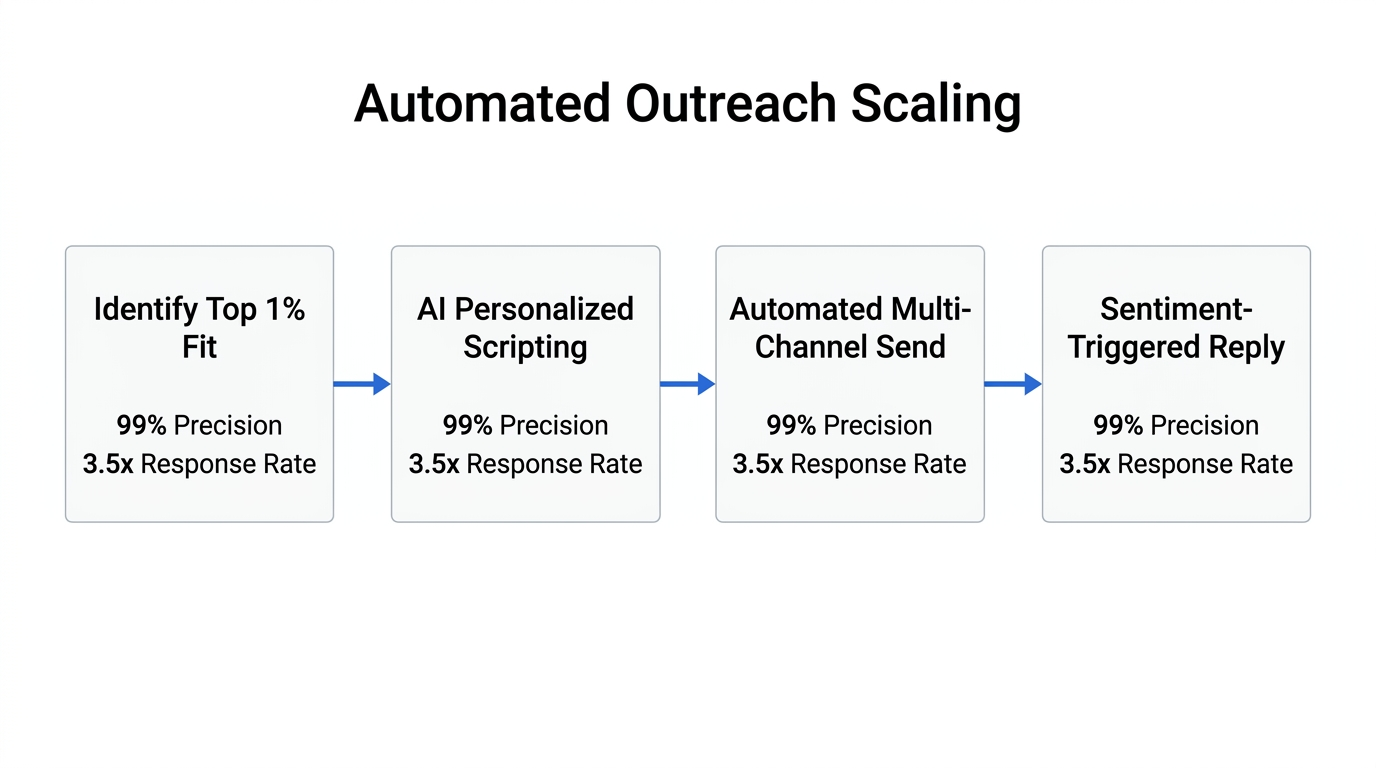
Vetting is only half the battle; scaling your partnerships is the other. In 2026, the transition from discovery to outreach must be seamless. This is where all-in-one platforms like Stormy AI become indispensable. By combining AI discovery with automated, hyper-personalized outreach, brands can contact hundreds of vetted creators while they sleep.
Modern workflows involve using Impact.com or Stormy AI to manage the full creator lifecycle—from the initial AI scan to final payment. This integration prevents "data silos" and ensures that the vetting data you gathered during discovery is used to inform the creative brief and contract terms.
"AI is like a super virtual assistant that ingests billions of data points to answer: 'Where should you spend your time tomorrow?'" — Brian Klais, Founder at URLgenius.
Conclusion: The Future of Brand-Creator Alignment
The year 2026 has proven that precision beats volume every time. By utilizing video content analysis and sentiment-based vetting, brands are moving away from the "spray and pray" influencer models of the past. Tools like Kuli AI and Stormy AI allow you to find creators who aren't just popular, but are quantifiably safe and aesthetically aligned with your mission.
As you build your influencer strategy this year, remember that the goal of AI is not to remove the human element, but to protect it. By automating the technical vetting of thousands of videos, you free up your creative team to focus on what really matters: building authentic stories that resonate with your audience and drive long-term growth.